Star Trek: 10 Things We NOW Know About The Holodeck
3. It Generally Creates Realistic Background Characters - But Don't Push Them Too Far
While episodes like The Big Goodbye and 11001001 introduced smarter, interactive holographic characters to the holodeck, they were a far cry from truly sentient lifeforms. Moriarty may have been designed to defeat Data but Minuet was only ever a test for Riker (a memorable one at that.)
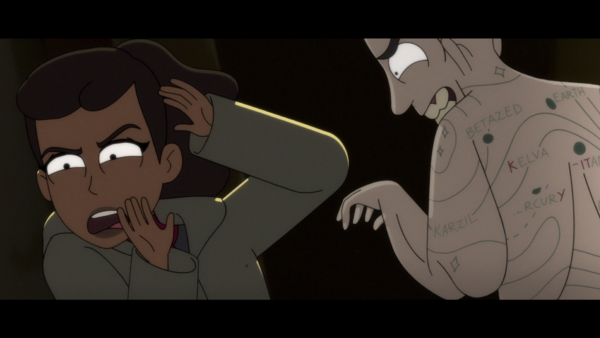
By the 2380s, holographic technology had advanced significantly, but holodeck programs still had their limits. Aboard the USS Cerritos, Brad Boimler took charge of the sequel to Beckett Mariner's 'Crisis Point' program - to varying levels of success.
As Bucephalus Dagger, Boimler was fully capable of leading. However, encumbered with the 'death' of his 'twin', Boimler suddenly found himself unable to operate within the parameters he himself had set out. No longer interested with the spy and search plot, he instead switches his focus to the meaning of life.
Those poor holograms really weren't prepared for that. Cue a journey in search of Ki-Ty-Ha, the existential destination putting Sha-Ka-Ree to shame. However, unlike the greatest Trek film of them all, the eventual reveal that the holographic characters manage to come up with was the reveal that Ki-Ty-Ha was, in fact, a sign reading Kitty Hawk, and their destination was the Wright Brothers's plane.
Confused? You should be, because those holograms were too. The moral of the story was holodecks and holograms are adaptable, but everything has its limits.
It's ok though. The Horsey is going to bite you now.