Star Trek: 10 Things You Didn't Know About The Kobayashi Maru
9. What Will The Neighbours Say?
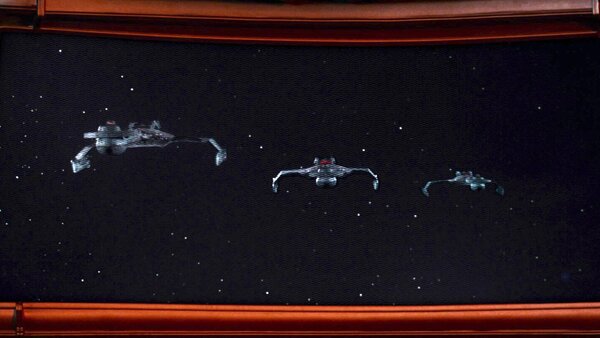
The Kobayashi Maru is all about the neighbours, doubly so. First, it wouldn't be much of a test, nor half as much fun, if it weren't for those pesky Klingons next door (even in the Star Trek: Prodigy version). Second, according to an article in Starlog Magazine #67, Jack Sowards, the man who invented the Kobayashi Maru, named it, named the ship, after his former neighbours in Hancock Park, Los Angeles. We're not sure if the Kobayashi family was pleased about that fact or not!
'Kobayashi' is, in fact, one of the most common surnames in Japan. Though this is no doubt incidental to its use in Star Trek, 'Kobayashi' can also be translated as 'small forest/woods'. 'Maru' has several meanings, such as 'circle,' 'round,' or the notion of 'correctness'. The word is also sometimes used as a suffix in Japanese ship names — sort of like adding 'USS'. "Maru' does not mean 'ship/boat,' however, and 'Kobayashi Maru' should not be translated, even roughly, as 'little wooden ship'.
In the neighbourhood or not, during the simulation, the Kobayashi Maru gives its position as "nineteen periods out of Altair VI". Altair VI was the planet Kirk was ordered to in Amok Time. Another no-win scenario of sorts, in that episode, Kirk disobeyed orders and diverted to Vulcan to save Spock's life. No pon farr in Star Trek II, but Altair VI was perhaps a little extra foreshadowing of the engine room demise.