The Flash: 8 Mistakes It Must Fix In Season 3
The Flash needs to fix more than its timeline.

After a soft-introduction in Arrow, The Flash made a blistering start to life as its own series. As you might expect from a show centred on The Fastest Man Alive, it came bursting out of the gate, and sprinted to the finish.
Across its first season it was fun, fast, and full of incredibly comic book-y moments that similar series simply weren't attempting. It zigged when most other superhero properties were zagging, with a fun, upbeat tone that embraced its comic roots. The challenge, then, was to repeat the trick in Season 2, but it unfortunately fell at a few different hurdles.
Although part of the problem wasn't really its fault, as like Arrow it was bogged down in having to setup Legends of Tomorrow, it made a number of poor decisions throughout its sophomore year. It introduced the legendary Jay Garrick, but it wasn't really him, and had a similar villain to Season 1, only rather less personal and not as captivating.
It wasn't a bad season by any means, with some truly standout moments, and fantastic performances from the likes of Grant Gustin, Tom Cavanagh, and Carlos Valdes. But rather than getting better and moving forward, Season 2 found itself too often standing still, and occasionally going backwards. If Season 3 truly wants to succeed, then it's going to have to course-correct a number of wrong turns.
8. An Inconsistent Season

Season 2 wasn't so much a bad season as it was a wildly inconsistent one. One it was good, it was great, delivering the towering highs of Enter Zoom, which stands as one of best episodes of the series, and the wonderfully whacky Earth-2 two-parter.
On the downside, it also had the show's worst episodes so far: Fast Lane was good, but it's a rose between three thorns, coming during the run of episodes that featured Trajectory, Versus Zoom, and Back To Normal, which was a really weak run.
Then there were some episodes that were just ok, which is more of an issue with these shows struggling to fill their 23-episode run, as filler seems to be often inevitable.
Season 1 had weaker episodes too, but they were mostly early on when the show was finding its feet, and it built some incredible momentum heading into the finale, which is when Season 2 lost quite a bit of it. Going forward it needs a clearer path in place, and to make sure capable of delivering a season that isn't totally uneven.
7. Kicking Caitlin To The Curb

Although her character didn't get the funny lines that Cisco did, Caitlin still felt like a valuable member of STAR Labs during the first season of The Flash. There was a clear team dynamic that she slotted into, and she was wholly necessary as part of that, while getting some of her own moments as well thanks to the return of Ronnie.
Tragedy struck in Season 2 when it was revealed that Ronnie had died in order to close the singularity that had opened up above Central City, so it wasn't surprising when Caitlin was a downbeat figure. However, the show never did much with the character after that, as she entered into a flirtatious relationship with not-Jay Garrick. That was about the bulk of what she got to do for most of Season 2, until, well, she was then taken prisoner once Jay revealed his true self. No time was really given over to her struggles or the PTSD she was suffering from, with the show half-exploring it but never fully committing. It's no wonder Danielle Panabaker took such clear delight in playing Killer Frost, because it meant she really got to do something fun and different.
Whether it's giving Caitlin a meatier storyline, or maybe even making her Killer Frost on Earth-1, the show needs to do something more with one of its original main characters.
6. Bland Villains-Of-The-Week

Some of the villains from The Flash Season 2: Sand-Demon, Griffin Grey, Turtle, Trajectory, Rupture. Not all of the villains were bad, but the one-and-done lot were mostly a bust. Sure, King Shark was good purely because of how outrageous it was to see the character on screen, but apart from that there was quite a bit of blandness. The better weekly villains were those who'd already been established, such as Grodd, Weather Wizard and the Trickster.
It's an issue seen across both this show and The Flash, that they can struggle to create compelling and challenging villains, and often it feels as though they put one in because they feel they have to, without them offering anything to the episode. The Flash is known for having one of the biggest and best galleries of rogues in comics, and they really need to tap into that to greater effect, rather than some of the instantly forgettable foes they've been serving up.
5. Boring Romantic Subplots

Barry and Patty! Caitlin and Jay! Cisco and Kendra!
Does anyone care? It's understandable that romantic entanglements are going to be a part of this show, for a couple of different reasons: firstly, you need things for the heroes to do outside of them being heroes, and also a CW series is going to have slightly soap-y elements.
Even with that in mind, the show did not make it work this year. Barry and Patty clearly had chemistry, but the writers had absolutely nowhere to go with that relationship and turned it into a complete dead end, while Barry constantly (and infuriatingly) lied about his identity along the way. The other two relationships were no better: an attempt to branch the characters out, they ultimately fell flat. Cisco has plenty of heart and charisma, two things lacking from Kendra, and the less said about the fake Jay Garrick the better.
The show does have romantic relationships it could explore - obviously Iris and Barry will happen at some point, and it'd be good to see Joe get a little love - but when they're both distracting from the main action and rather boring, then the show needs to cut them out.
4. Playing Fast And Loose With Time Travel
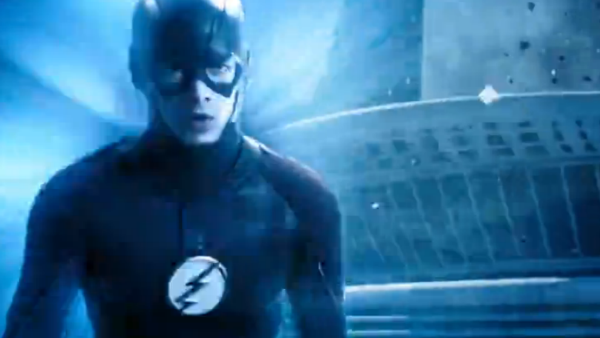
What are The Flash's rules when it comes to time travel? It's stated that time travelling can have massive, irreversible effects, but characters continue to do it anyway, and so far not an awful lot has changed. Or sometimes, things do change, but only when the plot necessitates it. It decided to have Time Wraiths show up, but they'd never appeared before. Likewise, looking too deep into the machinations of time remnants can get a little messy.
Largely it's easy to forgive, because, well, time travel is cool, and it has been used to good effect in terms of handling the Reverse-Flash storyline, but it can be frustrating when there are no obviously rules in place. That's going to become more pertinent in Season 3, now that Barry has massively altered the past by saving his mother. That should change everything, and if they're doing Flashpoint, it will have done. The Flash, Arrow, and Legends of Tomorrow should all feel the impact, though admittedly it's harder to carry out across multiple shows. But whether it's on all of them or just The Flash, we need to be able to see clearly the effects of Barry's decision, and some consistency applied to time travel throughout (because it's probably gonna have to happen again to reverse Flashpoint).
3. An Uninteresting Big Bad

Enter Zoom was the sixth episode of Season 2. Versus Zoom, meanwhile, was the 18th.
In terms of creating a villain that serves as the Big Bad for an entire season, they should be stronger (as a character, not necessarily power-wise) the closer it gets to the finale and the ultimate showdown. So of these two episodes, which share a similar title and focus on the main baddie, it should be the latter that's the better of them.
Instead, Enter Zoom stands as a high watermark for Season 2, and Versus Zoom as one of its low-points. And that points to a big problem with the villain: he's just not interesting. When first introduced, they're an electric air of mystery surrounding him, and we don't know who he is or what he wants, but he's either to completely destroy Barry. That first fight (though it's so one-sided it can hardly be called that) is a devastating takedown of our hero, and a fascinating, frightening introduction to Zoom.
Gradually, as the layers are peeled away, he becomes way less magnetic. His story gets caught up in the weird way the character even exists, with doppelgängers and time remnants, and his motivations are rather lacking and muddled: he wants to steal Barry's speed, he wants to be the only speedster, he serves as a dark parallel to Barry, he's going to destroy the multiverse. Zoom was at his best when he was behind a mask and we knew hardly anything about him; the more he became a character, the worse he got.
Season 3 needs to craft a villain that can pose a huge threat to Barry and co., but also be an interesting, layered character in his own right.
2. The Main Villain Being An Evil Speedster

One of the problems with Zoom, aside from that he ended up being rather uninteresting, is that he really suffered by comparisons to Reverse-Flash.
The first season's Big Bad was also an evil speedster with a mysterious identity, and pushed Barry Allen in every way imaginable. However, he was aided by the fantastic performance of Tom Cavanagh pretending to be on Barry's side, and there was a personal and emotional side to the conflict that elevated beyond simply being a fight between two guys who could run really fast. Zoom could not live up to that, nor could he be interesting enough to stand on his own as something different.
Season 3, basically, cannot go down this route again. It'll have speedsters, as evidenced by the recent confirmation that Wally West will become Kid Flash, but the Big Bad can't be yet another evil speedster. Seeing Barry go up against a villain who can test him in others ways, either with a completely different power set or on a more mental level, would be better than repeating the same speedster method.
1. Saving Nora Allen

Oh Barry, what have you done?
The Flash came close to saving his mother in the Season 1 finale, but ultimately decided not to, because of the chaos and damage it could cause. It was the most emotional moment of the show to date, helping to make the episode one of the series' very best, and leaving a lasting impact upon Barry.
In the Season 2 finale, Barry once again goes back to the night of his mother's murder, but this time chooses to save her life. Not only does it undo the emotional work of the Season 1 finale, but it's going to have a huge effect on the storyline, as evidenced by the fact that they're calling the Season 3 premiere Flashpoint.
That the show is tackling Flashpoint is an exciting development, and shows that the writers and producers aren't afraid to be bold in their storytelling (or that's how it seems, though it depends how much they commit to it). However, one thing that they do need to fix, however they do it, is reinstating that emotional impact, because it was a major moment and because Nora's death is an intrinsic part of Barry's character. Flashpoint needs to be worth making this change, and needs an emotional payoff as well.
What do you think The Flash needs to fix in Season 3 (if anything)? Share your thoughts in the comments.