The Walking Dead: 4 Things "Spend" Got Right (And 6 It Didn't)

Oh right, this show is supposed to be about zombies...

This is a show that marches to the beat of its own drum. It's just that the person playing the drum tends to vary, with the sticks being passed from the solid and steady Ringo Starr type (who delivers exactly what you expect) to free jazz improvisers (who will throw in some shocks and surprises but still with a familiar structure) to someone who doesn't really know what they're doing and is just filling time before somebody who knows what they're doing turns up. The Walking Dead's fifth season has been building to something all along, even when it didn't seem it. The first half painted the group into various corners and watched them escape; the back half has them in another difficult situation, but for a longer stretch, with the upcoming 90-minute season finale at the end of May promising a showdown between the Rick Grimes Group and the people of Alexandria. Which is the steady beat and the weird stuff locked up: the opening was a different direction for the show, and now it's settled into something more familiar. But it already feels like they're just treading water before that finale, spinning their wheels with relatively nothing storylines. This week's episode of The Walking Dead had its moments but, after a run of the best hours in the history of this series, it was a bit disappointing. Here are four things that €œSpend€ got right, along with the six it didn't.

The Good...

4. Consequences For Eugene

About time, right? Eugene is the mullet-headed hill-billy who attempts to defy expectations by claiming to be book smart, which usually comes out in his incredibly obnoxious dialogue which at times sounds like that episode of Friends where Joey goes through every word in a letter with the thesaurus to sound more intelligent, only for the result to be an unreadable mess. There's more to hate Eugene for than his unnatural speech patterns and poor style choices, however. This is, after all, the cowardly character who lead a faction of Rick's group on a wild goose chase halfway to Washington DC, claiming he was a scientist working on the possibility of a cure. It turned out that was a claim formed of whole cloth and yet, besides being (rightfully) cold-cocked by Abraham and a brief coma, he's had no comeuppance for getting a bunch of people killed. €œSpend€ finally gave Eugene some screen time following his betrayal, and his fellow survivors have yet to forgive and forget. As well they shouldn't.

3. Finally, More Zombies

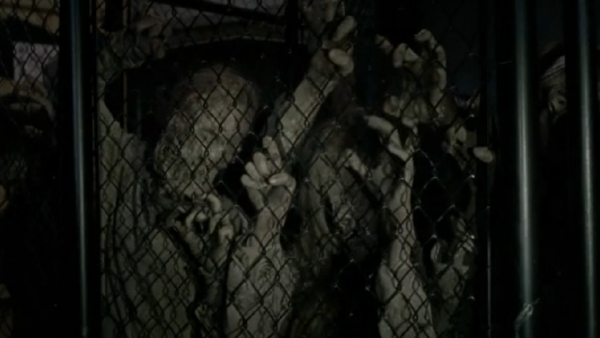
For a show about zombies, there sure haven't been a lot of zombies in The Walking Dead as of late. Partly that's down to the brilliance of the Alexandria Safe Zone's wall which protects the entire town from attacks, undead or otherwise €“ and the sub-plot about Abraham keeping that first line of defence in tact was a nice change of pace €“ but it goes deeper than that. As time's gone by the survivors have become so adept at dealing with zombies that, a couple of weeks ago, they were totally unconcerned with a huge gathering of the buggers that was tailing them. They just aimed to walk fast enough that they'd never catch up. When you've established that a major threat can be defeated with a brisk pace, they're no longer much of a threat. So the aborted supply run by Glenn, Noah, Eugene, Tara Aidan and Nicholas was a much needed comeback for the undead. In fact this is the first time that a large group of walkers has posed any sort of threat since season one, when Glenn and Rick did the same whilst smothered in zombie guts. Even when that massive horde got let out of the barn in season two they barely batted an eyelid.

2. A Genuinely Horrifying Death

And with the return of zombies that do something other than act as set dressing (admittedly, that bit in the woods in that recent episode was also rather tense, but that was mostly thanks to the darkness they were skulking around in than the monsters themselves being anything to worry about) comes disastrous consequences. Goodbye, Noah, we hardly knew ye. Whilst it was a shame to knock off a character so soon after he'd been introduced €“ and after showing as much promise as Noah did €“ the method of his demise is not to be forgotten any time soon. The gruesome dismemberment of Tyler James Williams' character recalled the likes of classic scenes in George Romero's Day Of The Dead. It wasn't just gore for gore's sake, though €“ that wouldn't have been cool. Instead, Noah's vicious death scene served to shake a complacent group of characters (well, Glenn specifically) out of their relative comfort, and to remember this is a world that's already succumbed to violence and chaos. Even if everyone else is talking about pasta machines.

1. The Coming Battle

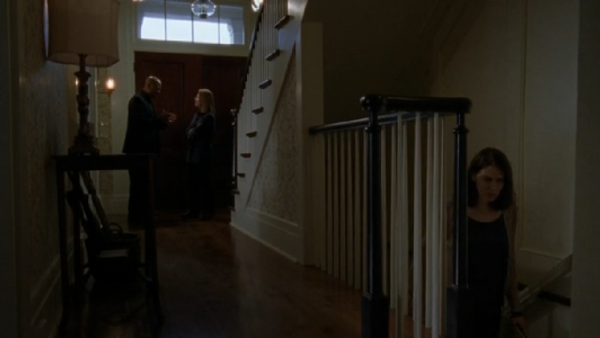
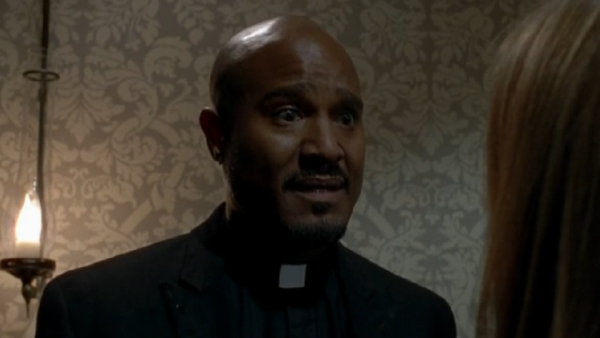
If the beginning of this series was about testing the characters in a handful of different, tense scenarios, and the second half is building to some sort of brutal climax, then this is the episode where we tread water a little. That doesn't always have to be a bad thing, with some of the sub-plots throughout €œSpend€ doing some nice little world building for Alexandria and character development. Mostly, though, it had the feel of slowly moving all the pieces on a chess board into place. Rick didn't have to appear all that much in this episode, because his position on this new settlement (ie he doesn't trust them) has already been made clear, and to a degree proven right by Nicholas trying to leave the rest of his team to the walkers. The final scene was a bit on the nose, with Father Gabriel continuing to go full caricature in railing against the group's Old Testament evil to town leader Deanna, but it did well to illustrate the divide between Rick's gang and the Alexandria lot. The season finale is almost certainly going to be when the two finally come to blows. Besides that last scene, they've set it up well. The group have seemingly infiltrated every part of the city: Rick as cop, Abraham working on the wall. They're not gonna go without a fight.

The Bad...

6. Your Budget Is Showing

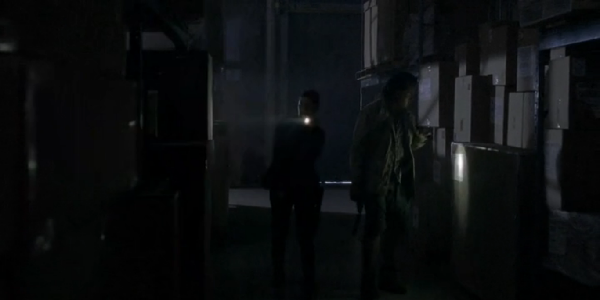
Whilst that Noah death scene was impressive, it's clear that's where the producers decided to funnel most of the money for this episode. Which is fine, because if they'd skimped on the special effects in that particular scene it would have the overall effect of turning one of the most heartbreaking character deaths in recent Walking Dead memory into something cheesy and crap. That said, it seems like a significant amount of the money set aside for €œSpend€ was blown on that one brief sequence, and it really shows in the rest of the episode. The zombie extras, finally getting their due once more, were fantastic €“ but everything else suffered as a result. For the most part, the scenes made use of small, existing sets of location work. No bad thing, but where it really started to fall apart was with stuff like the €œexplosion€ in the warehouse that sets the main plot in motion...which happens off-screen and makes it hard to tell what's going on, with the poor lighting during that sequence also robbing that whole story of most of its tension.

5. What Is This, Desperate Housewives?
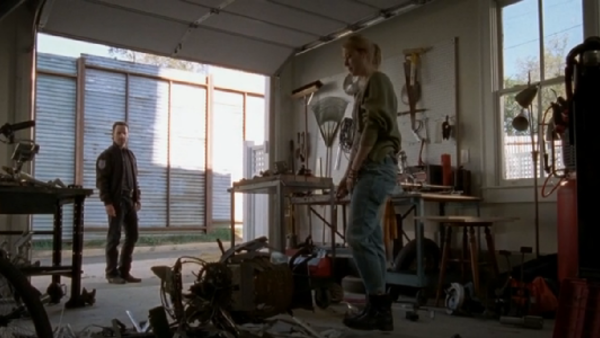
Last week's episode seemed like a turning point for The Walking Dead, as it set its targets not on the usual nihilistic €œLOOK WHAT MONSTERS HUMANS BECOME WHEN ALL THE LAWS HAVE BEEN TAKEN AWAY€ angle on its antagonists, but the more subtle and creeping trouble of when people pretend like everything's fine, playing house and continuing their upper-crust existence whilst the world crumbles around them. It wasn't particularly subtle in putting that across, with Daryl literally €œoutside€ the swanky party being thrown by the Alexandria lot, and Sasha freaking out about everyone treating a missing pasta machine as the most desperate problem in a world where the dead are returning to life and eating people. That angle was lost a little this week, when the drama served less as a wider commentary on the state of things and instead seemed like the sort of suburban satire of Desperate Housewives with its Alexandria-set stories. Somebody broke an owl? There's a drunk doctor? Who cares? Why did they think viewers would?

4. Poor Attempts At Comedy

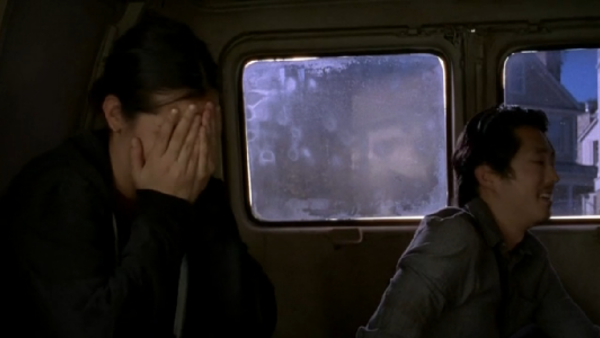
Sometimes The Walking Dead writers will try something new and it'll work. Aaron, their first gay character, has been one of the most exciting additions to the cast, simply because he has something of a personality and cracks wise every once in a while (and the diversity is nice too). The first half of this season broke from their usual story structure tradition, and it really paid off. Then there are the times they venture outside of their wheelhouse and it doesn't work, as it the case with the pained attempts at comedy in €œSpend€. The dubstep mix being played in the van on the way to the supply run felt very much like an older writing team trying to be down with the kids, and hoping being relatable will stand in for actually making a joke. The lack of an actual joke meant that the call-back later on fell flat as well. The Walking Dead's funniest moments continue to come in the unintentional comedy, like Jessie's son Sam who keeps following Carol around and asking her for cookies, which plays as if transplanted from a totally different show (maybe that episode of Mad Men where the neighbourhood kid fancies Betty Draper), or the hilariously pantomime pained faces Father Gabriel made whilst talking to Deanna.

3. Character Development Right Before Someone Bites It
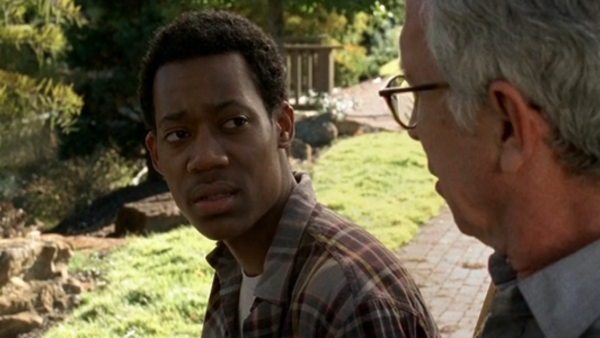
Another of The Walking Dead's more unfortunate habits is focussing on a hitherto-ignored character at the start of an episode. By now it instantly raises a red flag, because in almost every single instance they've done that so far, that's a warning the character in question is about to be killed off, so it's about time you learned more about them and started caring, isn't it? In this case the victim in question was Noah, who appeared in the cold open chatting to Deanna's husband about being an architect, with the figurative passing of the baton and literal passing of a notebook implying that the young man had a bright shiny future helping to maintain Alexandria's wall. No dice. Not only is it emotional manipulation of the most obvious and easily avoided sort, it's also just sloppy storytelling. The same happened for Tyreese during the mid-season premiere; at least they had the decency to suggest Beth might make it out alive. They could confound expectations by using this sort of thing as a red herring, but nada. Disappointing.

2. Moving Very Slowly

The TV renaissance has been slowly training audiences to accept a slower pace than they're used to. Television comedies are twenty minutes long, racing through multiple plot lines in that time; police procedurals, the hardy perennial of network TV in the US, have a familiar structure and fast pace for every episode; meanwhile the likes of The Wire and Breaking Bad take things slow. These character studies, these treaties on society and the human condition, have a lot to say. By slowing things down they're making a power play, the equivalent of the boardroom tactic of speaking quietly to draw people in, to make sure they're properly paying attention €“ by moving at a snail's pace, telly shows get you watching closely. Usually that's all the better for then pulling the rug out from under you when it gets to the end of the season. That's the tactic The Walking Dead has long been using, but it doesn't work so much with such a heavily serialised show, and one that has twice as many episodes per season as most dramas. €œSpend€ especially suffered from feeling so slow as to be static.

1. Nobody Cares About The Priest

Why is Father Gabriel even still on this show? They had the perfect chance to kill him off before the mid-season break, when he freaks out about his church being chopped up to fortify it better and stumbled into the woods, where he nearly got devoured by like a dozen zombies before he saw the crucifix around his neck and managed to escape thanks to some sort of divine intervention. Not only was that a missed opportunity, it was also really, really stupid. There probably is an interesting story to be told about a man of the cloth losing his faith in the face of the zombie apocalypse, but The Walking Dead hasn't opted for that. They've opted for Generic Hysterical Priest #1, the character spending most of the episodes since the mid-season finale in the background, which is where he belongs. Because he's not really a character, not a real member of the cast. He's a walking plot device, and the only reason he gets deployed during this episode's opening (where he tears pages out of The Bible because, as previously discussed, symbolism has to be bash-you-over-the-head-obvious to stand a chance in this show) and at the end is to further the divide between Rick's group and Deanna, rabbiting on about how they've all done terrible things for some reason. Nobody cares about Father Gabriel because The Walking Dead has never tried to make him into an actual character. Now he's become integral to the part, it's difficult to care about that by association.

Contributor
Contributor

Tom Baker is the Comics Editor at WhatCulture! He's heard all the Doctor Who jokes, but not many about Randall and Hopkirk. He also blogs at http://communibearsilostate.wordpress.com/