10 Greatest CGI Moments In Doctor Who History
We always talk about the awful CGI in Doctor Who, but what about the times it was a great success?
It’s easy, and often amusing, to point out the less-than-stellar examples of CGI used in Doctor Who’s history but that isn’t to ignore the times when it has been executed phenomenally. For while the flaws are glaringly obvious, the successes are designed to blend in and maintain the illusion that these impossible worlds and creatures could absolutely exist. The aim is to not be noticed, but that also means they aren’t often praised.
The vast majority of the classic era relied on practical effects to achieve these otherworldly creations but as technology evolved so too did Doctor Who. So, when the 2005 revival came around, the creatives had a whole new wheelhouse to experiment with. For as much as practical effects are intrinsic to the show, the past 20 years have proven that computer-generated imagery can elevate the world-building to entirely new heights.
From elaborate spaceships to giant insects, the modern era of Doctor Who is full of incredible CGI moments that deserve a moment in the spotlight - away from the looming shadows of talking babies and sticky wheelie bins...
10. The TARDIS Collapsing (Eve Of The Daleks)

While the TARDIS interior has always been a practical set, by 2022 the CGI skills and technology available allowed for incredible sequences like the collapsing of the TARDIS control room in Eve of the Daleks.
This moment looks fantastic, with the walls cracking and collapsing as Jodie Whittaker runs in slow motion through the chaos. The editing must also be commended for seamlessly cutting between the footage shot on the physical set and the sequence created in post production. It blends together so well that it’s impossible to tell where reality ends and CGI begins!
In the past, a scene calling for the collapsing of the TARDIS interior would probably have required the destruction of the physical set (looking at you The End of Time Part 2) and so to be able to achieve the complete implosion of the TARDIS without damaging a single round thing is both remarkable from a technical standpoint, but also from a practical one too. We all know Doctor Who loves to penny-pinch.
Gone are the days when the best substitute for the TARDIS set was hanging up a sheet and turning the lights down in the hope that no one noticed. How times have changed.
9. Giant Wasp (The Unicorn And The Wasp)

When we think about insect-like creatures in the classic era of Doctor Who it’s difficult not to picture the likes of the Zarbi or the Wirrn – either blatantly obvious men-in-costumes or giant puppets made from pipe cleaners and papier-mâché. The modern era, however, had the luxury of CGI at its fingertips and aimed for more realistic creations.
You might not remember it being this good in your head, but the giant wasp in Series 4’s The Unicorn and the Wasp was incredibly accurate and believable despite its impossible size. It neither looked fake, nor did it look out of place in the scene. Creating an entirely new CGI monster or alien comes with a degree of freedom and artistic license in your designs but to recreate a believable image of an existing creature requires an arguably greater level of skill. We know what a wasp looks like. We know how wasps make us feel. So, it’s important for this CGI version to accurately replicate that.
The development of CGI technology opened up entirely new avenues for Doctor Who storytelling. Episodes like The Unicorn and the Wasp simply wouldn’t have been possible with only practical effects available – the giant wasp would never have looked believable or realistic as a man in a costume or a puppet on some string... just ask The Web Planet.
8. Spaceship Fleet (The Pandorica Opens)

The Stonehenge speech is arguably one of Matt Smith’s greatest moments as the Eleventh Doctor, and so it's only fitting that it also features some remarkable CGI to boot.
You’d be forgiven for overlooking the alien spaceships when up against the epicness of the rest of the scene but therein lies the secret – great CGI blends into the scene without detracting or distracting from it.
This moment is powerful. It highlights Eleven’s intelligence and ingenuity. It would not have achieved these things if the alien ships he's giving a verbal spanking looked fake or comical or egregiously out-of-place. Instead, the vast expanse of CGI buzzing and whirring around Stonehenge elevates the scene and emphasises the scale of the threat the Doctor faces.
It's also worth noting the variety of ships on display. The scene calls for all of the Doctor’s enemies to be assembled, and so there is great attention to detail to ensure that an array of alien vessels are seen whizzing around their greatest foe. We can see Dalek ships, Sontaran ships, Judoon ships, and even the Atraxi vessel from The Eleventh Hour!
The attention to continuity should be applauded. This is a level of realness and attentiveness that classic Who simply couldn't achieve but with CGI, modern Who has excelled at worldbuilding like this, even in scenes where most wouldn’t have even noticed.
7. The Pting (The Tsuranga Conundrum)

No, this isn’t a joke!
While most Whovians have grown accustomed to seeing The Tsuranga Conundrum appear on plenty of “worst” lists, it does have one saving grace which could genuinely be considered “great” – the Pting.
Say what you will about the episode itself but the Pting is one of the most convincing CGI creations we’ve ever seen in Doctor Who! The early years of the modern era were still finding their feet when it came to CGI creatures – cast your minds back to the likes of the Krillitane or the Mighty Jagrafess of the Holy Hadrojassic Maxarodenfoe – the detail was less defined and the movements were often janky and simplistic.
By 2018 however, the skill and technology available was far more advanced. Just look at the detail on the Pting design. The texture of its skin, the shine in its eyes, the smooth & realistic body movements. For all intents and purposes, this looks like a real animal and blends into the scenes seamlessly without any tell-tale signs that it’s entirely computer generated – other than being an alien, of course. And all this on a notoriously tight BBC budget!
The Tsuranga Conundrum is never going to be a winning episode and as much as it pains me to praise it, the Pting deserves to be recognised for the glorious feat of CGI it turned out to be.
6. The Colony Ship (World Enough And Time)

We’ve seen our fair share of spaceships in Doctor Who but few are as impressive as the colony ship in World Enough and Time. The CGI for this behemoth is superb. Specifically the opening shot which really conveys the scale of the ship with its many different floors and dizzying length.
In the early years of the modern era, shots of computer-generated things were often shown very briefly with lots of quick cuts made to avoid lingering on and exposing any imperfections. Here though, we spend extended periods of time focussing and zooming in on this creation, inviting extensive examination and attention.
And then there’s the black hole. It looks fantastic. The attention to detail, the colours, the depth and magnitude all make it feel epic and grand in scale. Compared to the black hole seen in The Impossible Planet/The Satan Pit, this is a vast improvement in CGI. The skill and technology on display here is top-notch – just look at the attention to detail and quality in only a reflection of the black hole in a window, let alone the shots of the thing in its full proper glory.
For a story that ends in such a tragic way, it begins with some truly stunning imagery. An image of something so contradictory in its beauty and terror – a description most accurate for this entire two-part finale.
5. The Toymaker Flat-Packs (The Giggle)

By the time the 60th anniversary rolled around, CGI technology had expanded wildly since 2005 and so too had the Doctor Who budget. Now under the Disney umbrella, the possibilities were near-endless in what could be achieved. While some uses of CGI left me baffled as to what the hell they were thinking – looking at you, corridor scene in Wild Blue Yonder – others left me equally baffled as to how on earth they managed to achieve it.
This is absolutely the case with the Toymaker’s final moments in The Giggle. After the Fourteenth and Fifteenth Doctors defeat the Toymaker in an epic game of catch, he suddenly begins to flatten and fold up, before falling into his boxed prison. What’s so impressive about this scene is how seamless the merging of real life and CGI is. Neil Patrick Harris is delivering dialogue throughout this transformation which blurs the lines even further. You cannot tell where the practical performance ends and the CGI begins.
To this day, my mind is still boggled by this sequence. Full of the tongue-in-cheek charm so intrinsic to Doctor Who while also showcasing immense skill from the VFX team. This demonstration brought optimism for what Disney Doctor Who would look like moving forward... and then came along Space Babies a few months later.
4. Planets In The Sky & The Dalek Invasion (The Stolen Earth)

The Stolen Earth and Journey’s End have so many strengths – Daleks, Davros, double David Tennant and every modern companion you can shake a sonic at – and among all that epicness there is also some powerful CGI.
Firstly we have the stunning visuals of the planets in the sky. Right from the off as Rose stands in awe of the crazy plan the Daleks have concocted, this incredible image showed that the two-part finale to Series 4 was going to be something special.
The depth of the image, the colours, the way it blends into the live action footage – it's beautiful, but also quite scary. It makes you wonder how on earth the Doctor is going to fix this one, and that's because the CGI here looks so damn believable.
The arrival of the Dalek fleet also looks incredible. Entire CGI sequences from the perspective of space as the Dalek ships head towards Earth, a combination of live action and CGI as Rose walks down a London street and the planets can be seen overhead as a Dalek ship emerges and attacks – not once did this ever feel fake or unrealistic. It felt terrifying, and terrifyingly real!
And then we have the Medusa Cascade. Vibrant, vast, ethereal. It looks like an oil painting. This is a great improvement on even the CGI of the beginning of the modern era. How far they came in only the first few years, and how much further they’d go in the decade that followed.
3. Thirteen's Regeneration (The Power Of The Doctor)

The Thirteenth Doctor’s regeneration is, by far, the most visually stunning regeneration sequence in the history of Doctor Who. The setting, the colours, the music. No notes. Beautiful.
What's most impressive about the scene is that it was achieved almost entirely through CGI. Aside from the TARDIS and Jodie Whittaker herself, everything we see is not really there. For obvious health and safety reasons, filming on the very edge of Durdle Door was not an option but you would be forgiven for assuming that the sequence was shot on a similar clifftop location to double as the Jurassic coast landmark.
This wasn’t the case, however. All of Jodie Whittaker’s performing was filmed in a green screen studio in Cardiff, while the Doctor Who team were given permission to capture the aerial shots of Durdle Door to be added later in post production.
So realistic was the CGI, in fact, that the Lulworth Estate (private owners of Durdle Door) feared the scene would encourage fans to endanger themselves by attempting to reach the location, and they accused the BBC of dishonesty for not revealing the nature of the scene when requesting to film the drone shots. Not so great for the BBC but one heck of a complement to the VFX team!
Health and safety issues aside, the final scene is a sight to behold. The fiery regeneration energy blends into the sunset over the ocean beautifully and really was the perfect send-off for the bubbly, always-optimistic Thirteenth Doctor.
2. Dr. Constantine's Transformation (The Empty Child)

Perhaps this entry should come with a trigger warning for the entire generation of kids who were traumatised by this scene. Myself included.
Despite being an early use of CGI within modern Doctor Who, the scene in which Dr Contantine’s face transforms into a gas mask remains as terrifying and affecting 20 years later. While some examples of CGI body horror in the show have perhaps aged a little poorly and become more humorous – Miss Evangelista’s disfigured face, for example – there is nothing remotely comical about this scene, even in 2025.
As with the Toymaker, the combination of a real actor and the use of CGI blurs the lines between what is real and what isn’t and, again, has the audience wondering how this was achieved. How did they make it seem like the mask was forcing its way out of Constantine’s mouth? How did his eyes morph like that? For 2005, BBC budget VFX, this is an impressive achievement.
It may not be the most extravagant or elaborate uses of CGI in Doctor Who’s history but it has remained one of the most talked about scenes of the revival era and that is all down to the impact of this computer-generated transformation, as well as the chilling writing and performance of the scene that surrounds it.
Now, if you’ll excuse me… I need to find my mummy.
1. Mr Ring-A-Ding (Lux)

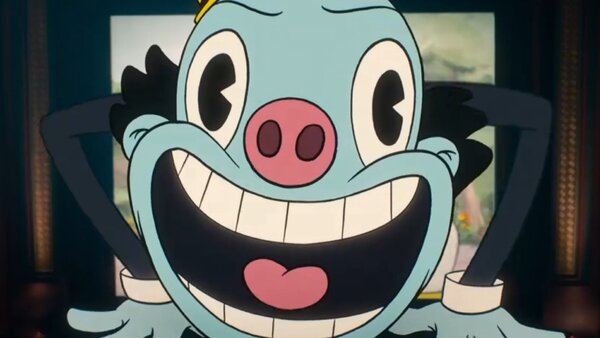
Lux brought something entirely new to Doctor Who – an impressive achievement for a show that’s been running for over 60 years. Animation combined with live action isn’t a new concept by any means, but the Disney dollars meant that it was now possible to explore in the Whoniverse, and explore it they did.
Mr Ring-a-Ding wasn’t a CGI creature with limited screentime and quick cuts in the edit to avoid noticing any inaccuracies in the VFX, he was a main character with plenty of dialogue and plenty of screentime. There was no room for error here and the final result was remarkable. The attention to detail in the cartoon design, the seamless combination of Ncuti Gatwa and Varada Sethu’s live-action performances with the added animation, the entire old-school cartoon aesthetic, complete with film grain and flicker – this episode, and this character, was a sight to behold.
Sometimes the oldest tricks work the best and that is certainly the case here. Mixing cartoons with live-action is a technique as old as Doctor Who itself but with the development of computers and computer-generated imagery, it’s a technique far easier to achieve nowadays and one which delivered one of the strongest episodes of Season 2 and one of the greatest examples of CGI used in Doctor Who history.