10 Dream Survivor Series Matches That Should Have Happened

What if we could turn back the clock?

Wwf Vs Wcw Survivor Series Have you ever wondered who would win if a Superstar from this generation squared off with Superstar from a previous era? How about what would go down if this wrestler from WWE battled that wrestler from WCW? Of course you have! Dream match discussions make for some truly outstanding conversation starters and ignite debate among fans of different ages and products. But what would happen if the opportunity presented itself to see factions such as DX and the New World Order battle it out for sports-entertainment supremacy? Who would win a high-profile bout between Evolution and the Four Horsemen? What if we turned the clock back to 1996 and WWE battled WCW in a take-no-prisoners elimination tag match? These are questions no fan will ever have the answer to but that does not mean that those matches, those epic clashes between the greatest that the industry has ever seen, cannot live on in the dreams of fans. "What if" is a powerful question asked by millions every day. Now, this writer joins those millions, taking a look at the long and illustrious history of professional wrestling and bringing together its biggest and brightest stars for 10 dream Survivor Series matches. Who made the cut? What legendary Superstars would clash in these hypothetical bouts? Take a look by tapping the "next" button to your right.

10. D-Generation X vs. The New World Order

The late 1990s featured the rise of two of the most rebellious factions in professional wrestling in D-Generation X and the New World Order embodied everything about the edgier direction the business took in the second-half of the decade and became incredibly popular as a result. They were anti-authority, cool and interesting in a way that the more traditional babyfaces and villains simply were not. They represented the all-important 18-35 demographic that was tuning into Raw and Nitro in record numbers and sold a boatload of merchandise in the process. It was not uncommon to see shirts featuring the iconic nWo logo or the €œSuck It€ catchphrase that caused parents, teachers and bosses everywhere to cringe in unison. With members of the infamous Kliq serving as the nucleus of each group, both DX and the nWo dominated the industry at a time when it was enjoying unprecedented success. But the factions never interacted, not even when Vince McMahon brought Kevin Nash, Scott Hall and Hulk Hogan to WWE in 2002, thus leaving fans wondering who would win the battle for sports-entertainment supremacy. For the purposes of this match, DX would include the 1998 incarnation of the group, featuring Triple H, X-Pac, Road Dogg and Billy Gunn. The nWo would feature the aforementioned Nash, Hall and Hogan, as well as fellow mega star €œMacho Man€ Randy Savage. While the degenerates would have the edge in terms of youth, the invading faction would have experience and a meanness edge that would serve them well in an all-out war. The battle would be wild and chaotic but would likely come down to whether or not Nash and Hall could convince X-Pac to jump ship, much in the same way he did in 1996. If so, DX would stand no chance.

9. The Von Erichs vs. The Harts

As stars for Fritz Von Erich€™s World Class Championship Wrestling, Kerry, David, Kevin and Mike Von Erich became rock stars and heartthrobs to the people of Dallas, gaining great fame and notoriety for their rivalry with the villainous Fabulous Freebirds. Kerry achieved the greatest success, capturing the NWA heavyweight championship from Ric Flair. Unfortunately, the so-called €œVon Erich curse€ took he, David and Mike from fans and family far too early, robbing fans of memorable moments and matches for years to come. The Hart brothers enjoyed a comparable climb to the top of professional wrestling. Bret, Owen, Keith and Bruce were all wrestling and, like the Von Erichs, experienced varied degrees of success. Bret was the star, a five-time WWE champion for Vince McMahon€™s sports-entertainment empire and Owen enjoyed his fair share of success in the company, acquiring titles and feuding with his brother in a marquee program in 1994. Keith and Bruce had their success limited to their father€™s promotion but both have made appearances in WWE. The two teams are polar opposites, with the Von Erichs utilizing a more energetic, dynamic, crowd-pleasing offensive arsenal while the Harts were very technically based. They would attempt to pick each brother off by keeping them grounded, working over their joints and scoring submission wins or surprise pinfall victories off of surprise rollups. Whether the Texans would be able to muster the resiliency they demonstrated in their days spent battling the Freebirds or not would be the question. If they could, they would be in a position to upset the Harts. That the legendary Canadian can tout to legitimate main event stars who have competed against the best the industry has to offer may be just enough to swing the odds in their favor.

8. WWE's Hardcore vs. ECW's Extreme

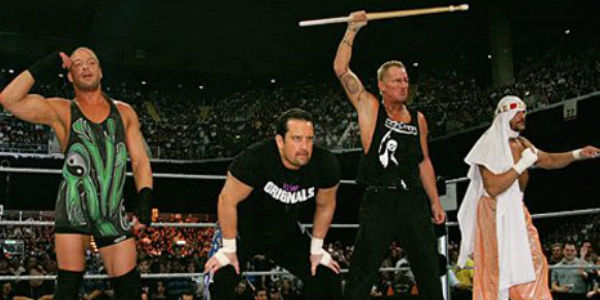
The rise of Extreme Championship Wrestling in the mid-1990s brought with it an extreme style that captured the attention of a blood-thirsty audience bored by the cartoonish nature that Vince McMahon€™s World Wrestling Entertainment and Ted Turner€™s World Championship Wrestling had adopted. The revolutionary promotion, headed by passionate loudmouth Paul Heyman, was very in-your-face and proud of the fact that they introduced a violence not seen since the glory days of Abdullah the Butcher and Bruiser Brody. The stars of the Philadelphia-based promotion used everything from chairs to tables to VCRs and cheese graters. Blood was spilled regularly and the fans ate it all up, to the point that they chanted the promotion€™s initials every time WWE or WCW rolled into the City of Brotherly Love. McMahon recognized the influence the small company was having on the industry. Eager to incorporate elements from Heyman€™s show into his own, thus capturing the 18-35 demographic that ECW appealed to, McMahon introduced hardcore wrestling to his company and a championship to boot. Quickly, it became one of the most entertaining and popular elements of his show. While Sandman, Sabu, Rob Van Dam, Tommy Dreamer and Raven were most closely associated with ECW, Big Boss Man, Road Dogg, Hardcore Holly, Steve Blackman and Al Snow rank among the greats of McMahon€™s hardcore division. Who would win the battle for chair-swinging, blood-spilling supremacy? Fans will never find out, though the star power and credentials of the ECW crew is difficult to deny.

7. The Federation Stars vs. The Attitude Era Stars
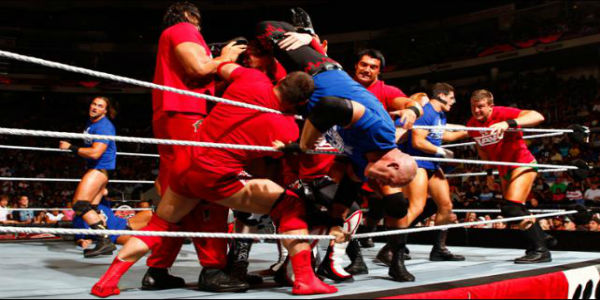
The two biggest boom periods in professional wrestling history occurred in the mid-to-late 1980s and the late 1990s. The first featured the stars of the then-World Wrestling Federation, the cast of characters and performers such as Hulk Hogan, Randy Savage, Ted DiBiase, Andre the Giant, Jake Roberts, Junkyard Dog and Roddy Piper that helped bring the world of sports-entertainment to the living rooms of households across the country. The second was the Attitude Era, a period of time that is unparalleled in terms of financial and creative success. Superstars such as "Stone Cold" Steve Austin, The Rock, Triple H, The Undertaker, Mankind and Sable helped carry professional wrestling to heights it had never experienced before. In the process, McMahon's empire became and international entertainment juggernaut. It is impossible to convince fans of one era that the other was better, thanks to both nostalgia and loyalty to the stars and stories that solidified their fandom in the first place. But what if the stars of each the two generations could come together for a match that would determine once and for all which era was the greatest in pro wrestling history? The sheer star power alone would be something to see, not to mention the action itself. Throw Vince McMahon and Jim Ross on commentary and let Howard Finkel handle the ring introductions as only he can and you would have the most epic of epic matches in sports-entertainment's long and illustrious history. With Austin and Hogan captaining teams, Rock and Savage sharing the same ring and The Undertaker looking up at Andre the Giant in a face-to-face showdown, the contest would be chocked full of goosebump-inciting moments.

6. The Hart Foundation vs. D-Generation X

Everyone knows about the incredibly tension and passionate dislike between Bret Hart and Shawn Michaels leading into the 1997 Survivor Series but one thing never really exploited during that rivalry was the potential for matches between the other members of the Hart Foundation and Michaels and Triple H of DX. Add to that the fact that Road Dogg, Billy Gunn and X-Pac joined the degenerates just months after the Hitman's departure for WCW and one can not help but wonder what may have played out had all involved been able to work together without the tension. The Hart Foundation was one of the greatest and, in hindsight, most underrated factions in wrestling history. Hart was the leader but brother Owen, brother-in-laws British Bulldog and Jim Neidhart and family friend Brian Pillman were not only among the most respected stars in the industry, they were some of the best. The idea of them squaring off with DX in a series of tag bouts is not only appealing but one that may have helped further intensify the success the company experienced during the Attitude. There is no telling who would have won or if the egos of those involved would allow them to lose graciously so that a finish not involving Vince McMahon, referee Earl Hebner and timekeeper Mark Yeaton could be reached. The storytelling, the angles and the wrestling itself between the two factions would be so incredible that winner and loser would almost become secondary. At least to fans.

5. Team Raw vs. Team SmackDown

In 2005, fans of WWE watched this very match unfold before their eyes at the Survivor Series event. On that night, Randy Orton was the sole survivor for the third consecutive year, pinning Shawn Michaels to pick up the win for the blue brand. As much fun as that match may have been, however, it came at a time when Raw and SmackDown no longer had different identities. There was a time, shortly after the brand extension of 2002, in which Raw and SmackDown were two entirely different shows. Raw was very sports-entertainment heavy, with absurd storylines trumping the actual in-ring content of the show, while SmackDown was all about the wrestling, with story mixed in for good measure. Raw had the focus and attention of Vince and Stephanie McMahon and Brian Gewirtz while SmackDown was Paul Heyman's baby, and it showed. The latter was clearly the superior show, combining all of the elements that make for a superb product and as a result, SmackDown became more popular than Raw. No, really. As shown in the 2014 DVD release "Ladies and Gentlemen, My Name is Paul Heyman," SmackDown actually began beating Raw in terms of viewership, meaning more people subscribed to and appreciated Heyman's booking philosophies than those of the McMahons and Gewirtz. Unfortunately, fans were never treated to a battle of the brands, likely because those in power were content with letting the shows build their own identities rather than rushing them into war with one another. Now, some twelve years after witnessing the rise of SmackDown, one cannot help but wonder what would have happened if the two brands took to the ring for a high profile match three years earlier than the contest that unfolded in 2005. Who would have made up the teams? Well, Raw's most dominant stars consisted of Triple H, Chris Jericho, Booker T, Kane and Rob Van Dam. The argument could be made for Shawn Michaels but he was still very much coming off his back injury at the time that this match would have taken place. SmackDown would have featured the likes of Kurt Angle, Chris Benoit, Eddie Guerrero, The Undertaker and Brock Lesnar putting their differences aside to wage war with the brand valued more by management than their own. Would the technical wrestling of Angle, Benoit and Guerrero and the sheer power and brute force of Lesnar and Undertaker be enough to overcome the cerebral nature of Triple H and the drive and determination of Jericho, RVD and Booker? The more important question is whether The Game would be able to prevent his team from falling apart, especially considering the fact that he spent months making the lives of his partners a living hell in 2002.

4. WWE Tag Teams vs. NWA Tag Teams

Tag team wrestling exploded in the 1980s, thanks to a wealth of quality teams and two showcases in the form of WWE programming and Jim Crockett Promotions' Saturday night show on TBS. Vince McMahon promoted teams as Demolition, The Rockers, the Hart Foundation and the British Bulldogs while Crockett was home to the likes of the Road Warriors, the Rock and Roll Express, the Midnight Express and the Four Horsemen's Tully Blanchard and Arn Anderson. Who in their right mind would not want to see those eight teams battle it out in a traditional Survivor Series elimination bout reminiscent of the tag team-centered bouts that were a huge part of the annual November pay-per-view? The workrate alone would help make the match one of the best of all-time but beyond that, the potential for historically significant interactions exists. The Rockers had long been referred to as a ripoff of the Rock and Roll Express, as were so many tag teams during that era. A match pitting WWE's tag teams against the NWA's tag teams would give Shawn Michaels and Marty Jannetty the opportunity to not only prove that they were not only more than ripoffs but, perhaps, better than the originals. Add to that war between the Road Warriors and Demolition, rather than the disappointing results fans witnessed when both teams were in WWE in 1990, and the first interaction between Jim Cornette's Midnight Express and the tag teams of WWE and there would be more than enough to keep fans of both sides happy and invested.

3. WCW vs. ECW

Ecw Vs Wcw Anyone who has seen the Rise and Fall of ECW documentary (now available on the WWE Network) knows that Paul Heyman and Eric Bischoff are not exactly what one would call friendly. Issues between Heyman and WCW led to his departure from the company. It worked out well for Heyman, who landed with the upstart ECW promotion out of Philadelphia and quickly set out to make it the revolutionary force it eventually became. But tension between he and WCW president Eric Bischoff mounted over the years, especially as Bischoff continued to acquire Heyman's talent, leaving him with little advanced warning or compensation. It worsened an already poor relationship. WCW and ECW were polar opposites in every way imaginable. Bischoff's company relied heavily on name talent and over-the-hill veterans while ECW succeeded on the backs of young stars never really given a second look by either of the two big promotions. Bischoff has a reputation for being poorly managed from a creative standpoint while Heyman was a creative genius. The only similarity between the two was the fact that both were bleeding money at the time of their demise. What better way to tell the story of the two promotions than in a traditional elimination tag bout? Imagine the classy Ric Flair, the face-painted and kid-friendly Sting, Lex Luger and his phenomenal physique and the brute force and intensity of the Steiner Brothers squaring off with the beer-drinking Sandman, the enigmatic wacko Raven, the never-say-die attitude of Tommy Dreamer and the ridiculousness of the Public Enemy. While all of Team ECW sans Dreamer eventually worked for WCW, they were simply shells of their extreme selves. Watching them embrace their inner hardcore and attempt to knock off the more traditional, southern-style competitors would make for such a styles clash that disastrous results would be guaranteed. And disastrous results are ALWAYS entertaining.

2. Evolution vs. The Four Horsemen
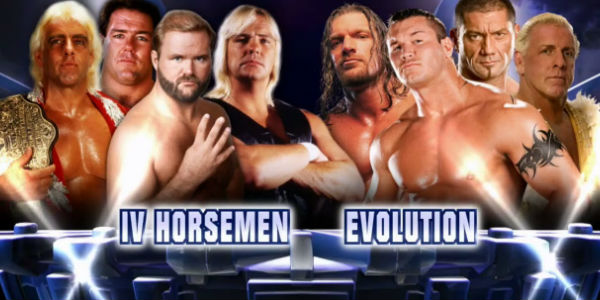
The Four Horsemen is the most influential faction in professional wrestling. Their antics made fans of anyone tuning into Superstation TBS at 6:05 throughout the mid-1980s. The group was headed by "Nature Boy" Ric Flair and featured Arn Anderson, Tully Blanchard and Ole Anderson (later Lex Luger or Barry Windham depending on the time), a who's who of National Wrestling Alliance greats. They dominated the promotion, making life a living hell for babyfaces such as Sting, Magnum TA and Dusty Rhodes. At the same time, they embodied excellence in the professional wrestling industry and set the bar incredibly high for anyone tasked with following them. In 2004, Triple H took a page from his idol's book and even recruited Flair to give him a hand. Hoping to put together a historical faction of his own, he and Flair focused on the future, choosing Randy Orton and Batista to carry the mantle for sports-entertainment into the next decade and beyond. Featuring the past, present and future, Evolution very much dominated Monday nights over the course of two years, battling Chris Benoit, Eugene, William Regal, Tajiri, Mick Foley, The Rock and Shelton Benjamin as the product began resembling the old NWA shows that Flair was such an integral part of. Flair's allegiances would be tested as Evolution squared off with the Horsemen. Whose side would Flair choose? Could he possibly set his ego aside and settle for being No. 2 in Evolution as opposed to the leader of the greatest foursome of all-time? Most importantly, could anyone really trust Flair either way? After all, the guy has a long history of betraying those who align themselves with him. Would youth and athleticism overcome experience? Unfortunately, we will never know.

1. Team WWE vs. Team WCW

By now, everyone knows just how big a creative blunder the Invasion angle wound up. Vince McMahon's unwillingness to let his Superstars appear weaker than the former WCW led to one-sided booking that often ended with the invaders beaten, brutalized and humbled by the likes of Undertaker and Kane. Don't believe me? Go back and check out Diamond Dallas Page's pay-per-view debut at King of the Ring 2001 and the way he is pummeled from pillar to post by the Deadman. Go ahead. It's available on WWE Network. I'll wait. All finished? Good. The fact of the matter is that WWE managed to screw up the easiest storyline in wrestling history, a feud that should have issued WWE the license to print money. Instead, it is a footnote in history and one of the biggest black eyes in the company's 50-year history, at least from a creative perspective. The talent simply was not there, nor was McMahon's ability to set aside personal feelings and do what was best for business. But what if they were. What if the WCW stars fans wanted to see shortly after their demise did migrate to WWE and what if McMahon did manage to set his ego to the side for a dream match that would not only excite fans but lead to, perhaps, the biggest buy rate in all of pay-per-view. Imagine a scenario where the two company, treated as equals, came together for a Survivor Series elimination tag bout that brought the biggest stars of all-time together for a single match, WCW would be represented by Hulk Hogan, Sting, Goldberg, Ric Flair and the aforementioned DDP while WWE would tout Steve Austin, The Rock, Shawn Michaels, Bret Hart and Undertaker. After decades of fans arguing over which promotion was better, they would have the opportunity to get their answer in the biggest main event ever.

Contributor
Contributor

Erik Beaston is a freelance pro wrestling writer who likes long walks in the park, dandelions and has not quite figured out that this introduction is not for Match.com. He resides in Parts Unknown, where he hosts weekly cookouts with Kane, The Ultimate Warrior, Papa Shango and The Boogeyman. Be jealous.