10 Genius Vince Russo Creations

Often criticised yet rarely lauded, but the 'other' Vince had some great ideas...

Vince Russo is one of the most commonly derided names in all of pro wrestling. It seems a day can't go by without someone sparking up conversation with a friend, or even complete strangers on the internet, about how truly asinine Russo's ideas were when overseeing the creative division in WCW. In the words of the man himself, it's "become cool" to criticise him, similar to how it's become commonplace for music fans to laugh at the likes of Limp Bizkit, secretly jamming out to 'Break Stuff' in their room late at night. The butt of many jokes, Russo nonetheless has to stand up and accept some degree of blame for a lot of the truly horrendous television WCW wheeled out in the latter months of 1999. In the same breath however, wrestling fans should remember that this is the man who helped revolutionise the ailing World Wrestling Federation, writing a lot of TV that started to turn the screw for the company, making millions of dollars in the process. Whether people like him or not, Vince Russo deserves at least some praise for creating some of the most dynamic episodes of wrestling programming that people have ever watched. This article explores the good side of the Russo coin, showing appreciation for some of the genius which helped spark a ton of money coming into company coffers, or even kick started a career.

10. Marc Mero Is Jealous Of Sable

Entering the WWF in 1996, 'Wildman' Marc Mero was flanked by his super-hot wife, who went under the gimmick of Sable. Right from day one, Sable was treated as the focal point, fans only had to listen to the announcers sat at ringside to get that impression - cast as almost a successor to Miss. Elizabeth, there was nothing Sable could do wrong in the eyes of Vince McMahon and company. It was difficult for male fans to truly get behind Mero, simply because he seemed to have it all going for him. Not only did he have an excellent physique, but he also had a complete and utter babe on his arm. Realising that the wrestler was starting to come under fire from fans, Vince Russo decided the best course of action would be to shift gears. In late-1996, Mero returned from injury as 'Marvellous' Marc Mero, using a boxing gimmick. Suddenly, the man was ultra jealous of his wife, which only served to kick start Sable's rise to superstardom in the promotion, even crossing over to pose for Playboy and becoming a genuine attraction all in her own right.

9. Booker T As A World Champion

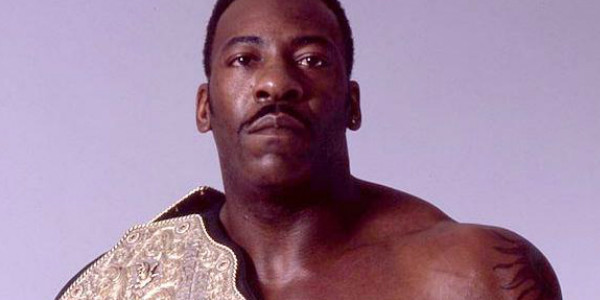
For years, Booker T was one of the most popular names in WCW, but couldn't get anywhere close to the main event picture. It's difficult to imagine that the management team didn't realise the man had a shed load of talent, that was obvious for everyone to see, but he nonetheless wasn't pushed as a feature attraction. The nWo were on top when Booker started to break out as a singles star, and the man would have to carve out his own niche as the Television Champion, having excellent matches against all-comers. Reportedly, Russo had earlier tried to coax Booker to the WWF in 1998, but any deal that was proposed would fall through. Upon joining WCW in 1999, the writer was instantly interested in making Booker T a star attraction. It's therefore baffling that Russo would make Booker return to his roots as 'G.I Bro', but he did later book him to win his first World Title, finally making him a fully-fledged main event talent.

8. Too Cool

Previously both lower-card wrestlers working as part of the WWF's Light Heavyweight division, both Scott Taylor and Brian Christopher were far more effective as a tag-team. Initially, the pair were thrown together as 'Too Much', a heel unit which wasn't much different from the arrogant persona Christopher had previously played. Aligned with Jerry Lawler briefly, Too Much quickly morphed into 'Too Cool', and whilst the men still stayed villains, fans started to really dig what they were doing. Turning babyface, the duo were joined by Rikishi, and the rest is history - audiences loved dancing along with the hip-hop inspired 'Scotty 2 Hotty' and 'Grandmaster Sexay'. In essence, Vince Russo made an excellent decision to switch things up and reinvent the tag-team, who weren't really going places as Too Much. Previously a jobber-to-the-stars kind of tandem, Too Cool became household names as part of the WWF's tag ranks.

7. Resetting Ric Flair & Hulk Hogan

Ok, so this entry would never fully materialise, but it was a major idea Vince Russo had for WCW when he came on board in the late-90's. Feeling that both Hulk Hogan and Ric Flair had lost a lost of their remarkable draw with fans, Russo envisioned pressing the reset button on both men, helping them regain some of their lost magic. It cannot be denied that hardly anyone was over in WCW by the time Russo was drafted in. The company was pretty much a mess by this point, and nobody was really drawing money for the promotion, regardless of how much dough they'd pulled in over the years. Apparently, both Flair and Hogan felt Russo was going to put them out to pasture, but his idea was to leave them off television for a while, making fans miss them and yearn to see them once again. Hindsight makes it simple to guess what may have happened, but the fact is people wanted to like these stars, yet WCW weren't giving them any reason to. Russo tried to change that, but - especially in the case of Hogan - it'd go horribly wrong.

6. The Rock Joins The Corporation

After joining up with The Nation Of Domination, The Rock started to show glimpses of the superstar he'd go on to become years later. Comfortable on the microphone and starting to improve in the ring, The Rock of 1998 was a far cry from the bland, unexciting Rocky Maivia of 1997. Things were looking up for the man, and Russo could see dollar signs in his future. One of the absolute best decisions the company ever made was to reignite The Rock as the figurehead of The Corporation. Winning the WWF Heavyweight Title at the 1998 Survivor Series Pay-Per-View, Rocky turned his back on the people, joining forces with Vince and Shane McMahon. In the group, The Rock was able to show further how good he was at talking, and his reputation was only enhanced through association with the McMahons, performers the WWF fans knew to take seriously whenever they were on screen. This would be the launching pad for a fantastic rivalry with Steve Austin heading into WrestleMania XV.

5. Eric Bischoff Has Power Over Vince McMahon
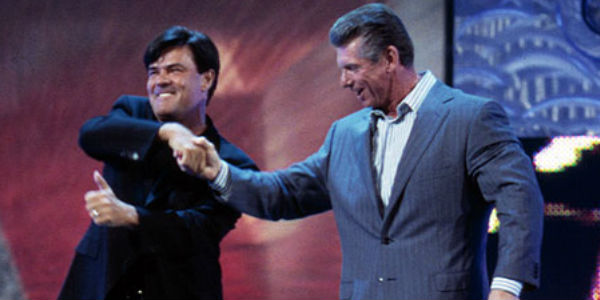
Writing in a blog entry about his horror when watching Eric Bischoff debut on WWE television, Russo later revealed one storyline he pitched that was turned down by the company. Feeling that fans didn't want to see Bischoff and Vince McMahon see eye-to-eye, the writer penned an angle which would see Bischoff bring back WCW and go to war with Vince. Sure, the Invasion story had been an undeniable flop, but it's likely there would still have been sufficient interest in seeing WCW vs. WWE once again, certainly with Bischoff now at the helm of the former. Better yet, the likes of Ric Flair and the nWo were already in the promotion, so there was room to incorporate them into proceedings. Russo's one big idea was to have Bischoff dominate McMahon, which is perhaps why it wasn't greeted favourably in Titan Towers. This brief return to WWE in 2002 didn't really last all that long, and it's the last time Russo has been associated with the McMahon family in a working capacity.

4. RAW Magazine

Hired on as the editor of the WWF's magazine division in 1993, Vince Russo would butt heads with company management on more than one occasion, all because of content he decided to place in the pages of his magazines. One interview with Bret Hart in 1995 directly asked him about the chances of him working for WCW, which infuriated Vince McMahon, understandably so. Crazily, this behind the scenes element was the crux of an entirely new magazine. WWF RAW Magazine debuted in May, 1996, initially as a bi-monthly release. Contrasting heavily the more tame WWF Magazine, RAW featured far more emphasis on the real lives of the wrestlers, pulling the curtain back somewhat. This kind of thing was unheard of in an official magazine, but the success of it would later lead to Russo being installed as the chief writer for WWF programming. Vince McMahon may have had issues with the magazine content before - pun intended - but he realised the worm was turning somewhat, and his company had to address problems which had led to it being stagnant.

3. Spreading The Wealth

Even though there were clear headliners in the WWF whilst Russo was writing, the man had the idea of providing a 'something for everyone' kind of show. This meant that even the most lowly names on the WWF totem pole would have something to sink their teeth into, even if it was simply a feud against another guy in a similar position. This was evident through the sheer amount of factions and groups that emerged whilst Russo was overseeing the creative team. From the nosebleed heights of D-Generation X, to The Nation Of Domination, then even further down the card to Al Snow's J.O.B Squad, there was clear stress placed on ensuring fans could easily identify the differences between each member of the roster. The 'Gang Wars' of 1997, pitting The Nation, The Disciples Of Apocalypse and The Boricuas against one another was arguably the start of this trend, but by having numerous different stables floating around, Russo and his staff made sure that there weren't many stars without a story to fall back on, giving their appearances purpose and meaning.

2. Goldust

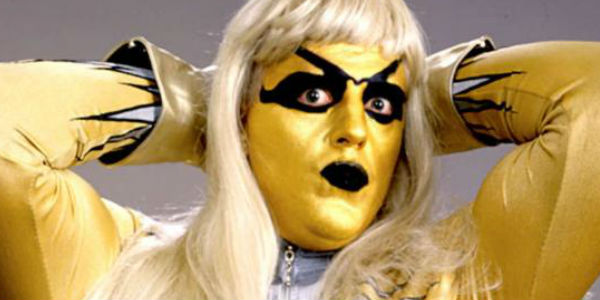
Speaking of the mid-90's, there are few more daring creative ideas than the one Vince Russo had in mind for Dustin Runnels. During his previous tenure with the WWF, and throughout his run in WCW, Dustin had been playing it relatively straight, his cowboy gimmick not being very far away from his real life. Set to make his reappearance back in the WWF in 1995 however, the man was tasked with playing the role of Goldust. Androgynous and drenched in Hollywood mystique, Goldust was one of the most polarising characters to ever come out of a WWF creative team meeting. For his part, Russo took it upon himself to really research the character, helping it stand out from the pack. It's a testament to how well Russo prepared the character, and how well Runnels performed under the guise, that people were genuinely freaked out by it. This was different, very different, but has been one of the most enduring characters in wrestling.

1. WWF Attitude

It's surprising to imagine, but there were numerous articles in the old WWF Magazine that had Russo, writing under his pen name 'Vic Venom', discuss how he felt the promotion was feeling a little tired. Noting that he truly believed things needed to change, what the man was waxing lyrical about was pretty much what the 'Attitude Era' later represented. As the head writer, Russo had a lot of say in what direction the company was taking, and he ran wild with it. As if overnight, the previously lacking WWF started to show some serious spunk, and the anti-authority tone of the 90's was reflected in pro wrestling more heavily than ever before. This was what people wanted to see, not just wrestling fans, but regular folks who previously wouldn't have even glanced at an episode of Monday Night Raw. 'Raw Is War' became the flagship, 'Stone Cold' Steve Austin was on fire, and a whole host of other characters were every bit as important. Obviously, Vince Russo didn't solely create this era of Attitude, but he did play a very important role in how it was shaped. Vince McMahon was only too happy to push the envelope, the time was right, and Russo - along with his writing partner Ed Ferrara - were churning out hit story after hit story. What other great Vince Russo ideas do you recall? Do you think he deserves to be as lambasted as he is? What did you make of the entries on this list? Let us know down in the comments section below!

Contributor

Lifelong wrestling, video game, music and sports obsessive who has been writing about his passions since childhood. Jamie started writing for WhatCulture in 2013, and has contributed thousands of articles and YouTube videos since then. He cut his teeth penning published pieces for top UK and European wrestling read Fighting Spirit Magazine (FSM), and also has extensive experience working within the wrestling biz as a manager and commentator for promotions like ICW on WWE Network and WCPW/Defiant since 2010. Further, Jamie also hosted the old Ministry Of Slam podcast, and has interviewed everyone from Steve Austin and Shawn Michaels to Bret Hart and Trish Stratus.