10 Greatest Comebacks In Wrestling History

Defying the odds and making history.

Wrestling loves a great comeback story. We get them all the time: performers leave a promotion and then return, or are injured and make a recovery to resume their place on the card once more. Some of the biggest and best moments in wrestling history have involved surprise comebacks€ sometimes they€™re not always exactly real surprises, but we€™re pro wrestling fans. We€™re used to pretending. When discussing the greatest comebacks in wrestling, the question becomes: how do you define a comeback, and what constitutes a great one? Here, I€™m looking at wrestlers who make a return to their former glory from supposedly career-ending injuries; wrestlers who pull out of a doomed, drug-addled downward spiral to get their lives back; and even wrestlers who find themselves with a new lease of life after it was presumed that they€™d long since left the spotlight. How do you rate a great comeback? Well, you compare the success the performer had before, the size of the obstacle they overcame, and the success they had after they made their triumphant return. All three need to be on a high level in order for it to be an impressive comeback. If there€™s no prior success, there€™s nothing to come back to, if there€™s no major obstacle or problem to get past, there€™s nothing to come back from and if there€™s no major success after returning, then it€™s no real comeback at all.

Honourable Mention:

It's not really a comeback at this stage, but sixty-year-old former fearsome monster heel Big Van Vader tweeted this on January 3rd:
The picture on the left was taken in his prime in 1987, and the picture on the right is from late last year. Hall of Fame this year, anybody? IT€™S TIME, IT€™S TIME, IT€™S VADER TIME.

10. Bad Times Don€™t Last, But Bad Guys Do

At twenty-five years old, Scott Oliver Hall was working as a bouncer at the Doll House strip club, when he was involved in a serious dispute over a female acquaintance. The other guy had smashed all of the windows of Hall's car, and when Hall found him around the corner of the parking lot and hit him, the man went down... and pulled a gun. Hall grabbed for it, and the two fought, only for the larger man to get the upper hand. Scott Hall took his rival's .45 from him, and shot him in the head at point blank range. Although the charges of second degree murder were dismissed for lack of evidence, that brutal, bloody moment stayed with him for the next quarter of a century: through his time in the AWA as 'Big' Scott Hall, WCW as the Diamond Studd, the WWF as Razor Ramon and back in WCW again with the NWO as Scott Hall once more, displaying on the way one of the keenest minds for the business around. Sadly, by this time he was in a handicap match against cocaine, prescription painkillers, downers and booze, and Hall was getting creamed. After WCW collapsed and was purchased by the then WWF, Hall would spend short periods in various promotions and organisations, rarely for long stretches of time. WWE released him in 2002. TNA released him in 2010. Hall went through a dozen attempts at rehab, WWE having spent in the six figures sending him to various expensive retreats - according to Stephanie McMahon, that€™s the most they've spent on anyone. By 2013, Hall was so far gone that people didn€™t think he€™d live that much longer. One of those people was Hall himself. It took an intervention from old friends Diamond Dallas Page and Jake €˜The Snake€™ Roberts to place Hall back on the road to recovery again in 2013. He managed to cut out the booze and drugs, lost a little weight, had a total left hip replacement that took care of a lot of the pain he€™d been masking by getting wasted. In late 2015/early 2016, Scott Hall is dealing with a lot of the demons that drove him over the decades, and focused almost exclusively on staying healthy and supporting his son Cody in his own dream of becoming a pro wrestling megastar.

9. Hulk Hogan Turns Heel

Once the biggest star in professional wrestling, Hulk Hogan€™s star had begun to fade after his involvement in the steroid scandal of the early nineties. He€™d left the WWF in late 1993, sitting out the remainder of his contract, and in June 1994 had signed with WCW for a vast amount of money, winning the WCW world heavyweight championship from Ric Flair in his first match back. It was a dream feud that WCW wasted by hotshotting a heel turn for Flair so that they could get a singles match for the title as soon as possible. The match itself was pretty horrible, Hogan no-selling most of Flair€™s offense and doing his own tired Hulking up schtick to win at the end. He€™d remain WCW champion for fifteen months, until Halloween Havoc the following year. Hogan€™s appearances for the company became more sporadic after that€ his vast salary wasn€™t really being reflected in his value to the company. Ratings remained the same after he dropped the title to The Giant at the end of October 1995. Something needed to change€ The Outsiders, Scott Hall and Kevin Nash, were the catalysts for that change. The pair of recruits from the WWF came in on the takeover angle, roughing people up and causing mayhem. The storyline was gathering steam, leading up to the Bash At The Beach pay-per-view in July 1996 where Sting, Randy Savage and Lex Luger represented WCW against The Outsiders and their mystery partner. At the event, that partner was revealed to be Hulk Hogan himself, when he performed the big leg drop on Savage and turned heel for the first time in fifteen years, leaving Hulkamania behind. It was a risk for Hogan, alienating what was left of his fanbase, but it paid off like gangbusters, and the NWO angle became the hottest thing in wrestling for a while afterwards. WCW began to bear the WWF in the ratings, show attendance soared, and for a while Hogan was on top of the business once more.

8. Hell Freezes Over

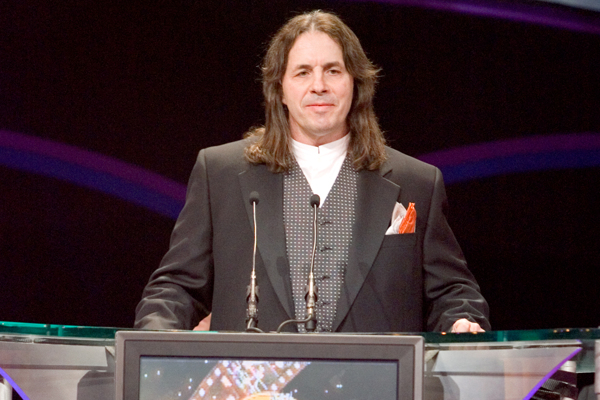
Bret €˜The Hitman€™ Hart€™s life went to hell at the end of 1997, when the lucrative new contract he€™d signed with the WWF was suddenly withdrawn. Vince McMahon had had to tell him that the company couldn€™t afford it after all, and that he should find out if WCW€™s previous offer was still on the table. It was a crushing blow to the Hitman€™s colossal pride, after being at the centre of a bidding war, being told that the company whose offer he€™d accepted had thought better of it. But the WCW offer was still open, and Hart headed for the door. The only question was going to be when, where and how to drop the WWF Championship? There€™s a lot of he said/she said surrounding the reasons for the Montreal Screwjob at Survivor Series in November 1997, and I€™m not going to waste your time by going into them here. McMahon didn€™t trust that Hart wouldn€™t suddenly appear on WCW Nitro with the WWF€™s top title in his hands and do something outrageous, and took matters into his own hands, calling for the bell and awarding the win to Hart€™s opponent and nemesis Shawn Michaels when no submission had been made. Hart was livid€ and remained livid for several years afterwards, because no one holds a grudge like Bret Hart. Fast forward through Owen Hart€™s tragic death in May 1999€ Bret€™s lacklustre WCW career and forced early retirement in late 2000 due to a career-ending concussion€ his 2002 stroke and rehabilitation. Hart couldn€™t do much of anything during this time, as his health fluctuated so alarmingly. He first heard that WWE intended to put together a hatchet job DVD collection on The Hitman when they contacted him asking him if he wanted to be involved. The choice was simple: get on board, or get run over. If Hart didn€™t return to help put together the DVD, they€™d use negative recorded interviews and footage to paint a terrible picture of his career, the same as they had that year with the Self-Destruction Of The Ultimate Warrior DVD. Some might consider that he had no choice, but Hart€™s legacy in the business was far too important to him to continue to hold onto his anger over the way he€™d been treated in 1997. One thing led to another, and he finally accepted WWE€™s invitation to be inducted into their Hall Of Fame in April 2006: one of the WWF€™s greatest ever performers, returning home to be honoured by the company after nearly a decade at loggerheads.

7. The Rock Brings It Back

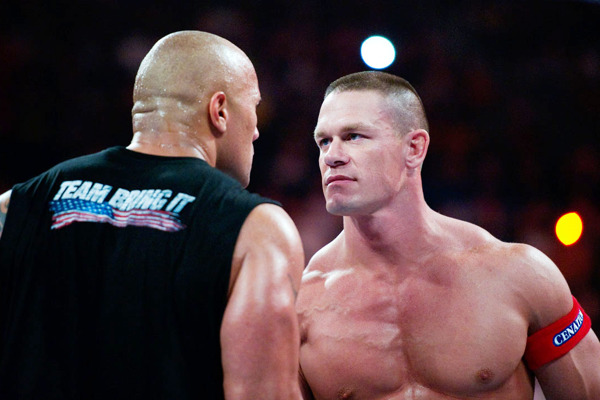
Dwayne €˜The Rock€™ Johnson, one of the biggest stars in pro wrestling history, had left the business to pursue a career in Hollywood in the early twenty-first century, and had what was considered at the time his final match in WWE at Wrestlemania XX in April 2004. He€™d pop back for a cheap pop every so often, when his schedule permitted, but only for promos and to deliver the odd People€™s Elbow here and there. In February 2011, however, it was revealed that The Rock would be returning to guest host Wrestlemania XXVII. At the time, Johnson€™s film career was going well - he had a reputation as a man who could save a flagging franchise - but not to the degree that it has since. Fast Five was released weeks after Wrestlemania XXVII, and became the highest grossing film in the series and Johnson€™s biggest hit to date. Wrestlemania saw The Rock overshadow the main event WWE Championship match and take out John Cena, leading to the historic agreement the next night on RAW to meet at the main event of Wrestlemania XXVIII, a Once In A Lifetime match for bragging rights. The Rock won the match that year: the following year, he€™d face Cena in the main event once more (this time for the WWE Championship) and drop the title to Cena in return for the previous year€™s rub. Thanks in large part to The Rock, Wrestlemania XXVIII became the highest grossing live event in WWF/E history and the most purchased pay-per-view event in wrestling history.

6. The Last Ride That Never Was

In late summer 1999, Mark €˜The Undertaker€™ Calaway suffered a serious tear to his groin. By September, he was forced to take time off to rehabilitate the injury€ and while he was doing so, he suffered another nasty injury, this time to a pectoral muscle. For all practical purposes, the peculiar location of both injuries made it impossible for the big man to train or work out, and since he wasn€™t a genetic freak like some of his wrestling colleagues, able to maintain a physique without effort, Calaway began to lose conditioning and size. The Undertaker would be away from WWE television for eight months. During that period, he considered for the first time in his career whether it might be time to call it a day. In recent years, Calaway had shifted to working a stiffer, faster, more, intense style befitting the change to the Undertaker character. Despite his height, he had a fairly normal physique: he tended towards tall rather than jacked, and it took a ferocious amount of training to change the shape of his body to the more ripped, cut look that WWF main eventers tended towards. Moreover, he€™d been at or near the top of the WWF card for nearly ten years. He€™d done everything he was asked, had worked through minor injuries to keep his spot and to give back to the company that had placed its faith in him. He was battered to hell and back, and now these two serious injuries had caused him to doubt whether he could carry on at all.
€œAbout a year or so ago I went through two really serious injuries, serious enough to where I contemplated retirement. Anyway, I took this ride and I was just, like, everything that€™s happened over the past ten, eleven years has for some reason brought me to this point. I didn€™t want to go out in the midst of self-doubt and whether my body was going to hold up anymore. The thought came over me, you know€ and it was like, you know what? You€™re gonna make a comeback. You€™re gonna go back to the top of the pile, you€™re gonna be the big dog in the yard and there€™s no two ways about it.€ €“ This Is My Yard, 2001
Calaway decided this wasn€™t his moment: that he wanted his career to mean more than this. When the Undertaker did return to WWE, it was under the most controversial gimmick variation in his whole career to date. The debut of the American Badass took place at the Judgement Day pay-per-view in May 2000, the Undertaker returning in leather and denim as a more realistic, hardass biker character, which added years onto his career and allowed him to redefine what the Undertaker meant to the WWE and the industry as a whole.

5. Latino Heat Rises From The Ashes

One of the most beloved WWE superstars of all time, inside and outside the industry, Eddie Guerrero had a problem with alcohol and painkillers that wrecked his body, his marriage and very nearly his career. When drunk, Eddie could pick a fight with anyone or anything, his Latino temperament getting him into all kinds of trouble. On drugs, he crashed his car and nearly killed himself, suffering injuries that might have paralysed anyone else. Guerrero returned to wrestling sooner than was safe, increasing his dependency on prescription drugs and booze to kill the pain. From all reports, when Eddie was sober he was the greatest guy on earth; the greatest husband on earth; the greatest father on earth. When wasted, he was a living nightmare, aggressive and out of control. By 2001, he couldn€™t hide his problems any longer. He was on the verge of being thrown out by his wife Vickie, and his friends and colleagues were fed up with covering for him. Informed of his many problems, the WWF forced Guerrero , into a months-long in-house rehabilitation programme. He wasn€™t ready to get straight then and there, and relapsed almost immediately upon his release, being arrested for driving under the influence. The WWF promptly released him, and Vickie told him to go. Faced with losing everything, Eddie Guerrero turned his life around so quickly that he nearly added whiplash to his list of injuries. He developed a new reputation for professionalism on the independent scene so quickly that the initial demand for his services became a clamour. That noise reached the WWF, and the company rehired him almost immediately, placing him into a programme for the Intercontinental championship and a feud with €˜Stone Cold€™ Steve Austin. When Austin walked out on, that feud went away€ but Eddie didn€™t fall apart or relapse with frustration, as he might have done before. His name was made from that moment on. One of the best and brightest professional wrestlers in the world, a fierce and charismatic presence in the ring and on the mic, and over like clover with the WWE fanbase, Eddie Guerrero became the poster boy for inspirational comebacks, even sorting out his marriage and reuniting with Vickie, the love of his life.

4. The Return Of The Beast

Pushed to the moon in WWE from the moment he debuted in March 2002, Brock Lesnar was assured of being the next big thing in pro wrestling: so much so that it became his in-ring nickname. He won the King Of The Ring tournament three months after his main roster debut, and by August he€™d destroyed Hulk Hogan on his way to beating The Rock at Summerslam for the Undisputed WWE Championship. But Lesnar hated the WWE€™s unrelenting schedule and constant travel. He€™d never been a pro wrestling fan as a kid or a young man, and the business was just a means to an end, not an end in itself. In March 2004, Lesnar asked for his release and had his final match with WWE for eight years at Wrestlemania XX, leaving afterwards to attempt a career in the NFL. He€™d only been wrestling for four years, and out of developmental for two. The NFL didn€™t work out, and it was only after reaching a fraught settlement with WWE over the non-compete clause in his contract that he was able to wrestle again and make a living. After some time spent with New Japan Pro Wrestling, Lesnar decided to begin a career in mixed martial arts in 2007, and was signed by UFC less than a year later. Whether you believe that Lesnar€™s MMA career was impressive or not is up to you - many people do, many people absolutely do not. Regardless, the Beast returned to WWE on Monday Night RAW on a lucrative part-time contract the day after Wrestlemania 28, F5ing John Cena out of his trainers without a word. His first year was a little rocky: pushed as a monster heel, he nonetheless lost to Cena at Extreme Rules 2012, suggesting that the company felt he had a little crow to eat regarding his decision to leave in 2004. By the end of 2013, business was picking up - he€™d come out on top of a trilogy with Triple H, and defeated CM Punk at Summerslam. In December, he began challenging for the WWE championship, destroying first Mark Henry, then the Big Show€ and then the Undertaker at Wrestlemania XXX to end the Streak, in a poor match ruined by the Dead Man suffering an early concussion. He would finally win the WWE World Heavyweight Championship at Summerslam 2014 when he absolutely annihilated John Cena in what amounted to a long squash match. The Beast had arrived: the most overpowered wrestler in WWE history.

3. Never Turn Your Back On A Snake

Anyone who€™s seen the documentary Beyond The Mat knows the story of Jake €˜The Snake€™ Roberts and his dark, tormented life. To say he€™s battled drug and alcohol addiction for decades is not quite accurate€ for a long time, drugs and alcohol had him beat. Almost a massive star in the late eighties and early nineties, Roberts€™ issues meant he could never properly capitalise on his popularity. He€™d go on to kick and relapse time and time and time again during the nineties €“ at one point he had it licked with the help of old school religion, returning to the WWF to put over €˜Stone Cold€™ Steve Austin before leaving again in 1997. In 1999, Beyond The Mat showed Roberts at his lowest ebb: a crack addict, ruining every relationship around him. He€™d screw up in the ring and out, exposing himself to fans, having drunken breakdowns. By summer 2012, he was considering suicide€ and that€™s the rock bottom moment where he reached out to his old buddy and protégé Diamond Dallas Page. Page is one of wrestling€™s good guys: a foul-mouthed, big-hearted guy passionate about the business and everyone in it. He took Roberts into his home, and made it his business to help bring him back to life again, instilling in him the precepts of his DDP Yoga system to lose weight and regain fitness, health and vitality. More than that, Page helped Roberts to care about himself again, care about his past and his present to realise that, in his late fifties, he still had a future. When Diamond Dallas Page inducted Jake €˜The Snake€™ Roberts into the WWE Hall of Fame last year, ramrod straight, clear-eyed, healthy and hale, there was barely a dry eye in the house. His speech, brutally honest and utterly heartfelt, brought the house to its knees: one of the greatest masters of psychology in professional wrestling still had what it took to make a crowd feel just what he was feeling. Jake turned sixty a few weeks ago, and the WWE needs to recognise his talents; as the manager of a heel stable, €˜The Snake€™ could still mesmerise the WWE Universe.

2. The Miracle Kid

Shawn Michaels was never supposed to wrestle again. During a casket match at the Royal Rumble in 1998, the Heartbreak Kid had herniated two discs in his lumbar spine after taking a bump out of the ring and onto the edge of the casket. It appeared as though one of the most brilliant wrestlers in history would have his career ended prematurely. Such a terrible waste. But fast forward the action to 2002, and a return was imminent. Amazingly, it seemed as though Shawn Michaels might return to the ring properly, rather than for one-off appearances and the odd superkick. A return match at a major pay-per-view - let alone a full-time return - following over four years away from the ring, after a horrible back injury like that€ it was almost unheard of. But that€™s exactly what happened. HBK was in the care of his best friend, Triple H, for his comeback. Following a well-crafted, highly personal build, the best friends turned (kayfabe) bitter enemies put together a near perfect hardcore style match. No one could have expected such a return to form under such circumstances. And it wasn€™t the only such match. The Heartbreak Kid was back€ wrestling more carefully, but far smarter and more creative. Pundits and fans alike agree that Michaels was actually a better wrestler and worker when he returned. His return turned into a renaissance, a restoration: a rejuvenation. And it was just the beginning. At Survivor Series, Michaels would win the WWE Championship for the first time in eight years. He€™d have red hot feuds with Chris Jericho, John Cena and Hulk Hogan, be chosen to retire €˜the Nature Boy€™ Ric Flair, and have two of the best Wrestlemania matches in history with the Undertaker, the second of which he selected as his own retirement match. At peace with himself, his legacy and the world in general, 2016€™s Shawn Michaels is happy and fulfilled without wrestling, and good luck to him.

1. To Be The Man

It was supposed to be just another quick local flight. On October 4, 1975, a small Cessna 310 plane carrying promoter David Crockett and wrestlers Tim €˜Mr. Wrestling€™ Woods, Johnny Valentine, Bobby Bruggers and a young Ric Flair left Charlotte, North Carolina for Wilmington, North Carolina to make it to an evening show nearby. However, as they approached their destination, it became apparent that the plane had simply run out of gas. It transpired that the pilot, Joseph Farkas, hadn€™t properly distributed the weight of the passengers before taking off, and had had some problems getting off the ground. Rather than sort out the weight issues responsible for the lag, he€™d simply jettisoned fuel, confident in their ability to make the short hop to Wilmington. It appeared that confidence was misplaced. The plane cut across several trees and a telegraph pole before hitting the ground, hard. Seats buckled and were thrown loose, and the passengers were tossed around like dolls. Flair was in the front seat of the plane, having traded places with Johnny Valentine. Had he not done so, he might have suffered the same career ending injury as Valentine: both he and Bruggers had their backs broken and never wrestled again. Flair€™s back was also broken - in three places - and he would initially receive the same prognosis from doctors. He was told that his recovery time would be around a year, and that the severity of the injury meant that even after rehabilitation, he would never perform in the ring again. But doctors always underestimate the resilience of professional wrestlers€™ bodies. They train every day. They take bumps every day, and the inside of a wrestling ring is canvas on mats on boards on wood on girders: not exactly fluffy pillows. Flair, in particular, was always proud of his conditioning. He was the sixty-minute man long before he wrestled sixty-minute Broadways. The crash changed some things for good. Flair became a better, more fully rounded wrestler, no longer able to rely on the power brawling style that was his trademark before the crash. You€™ll have noticed, too, his odd habit of landing on his hip and side after a slam or suplex: that€™s a bumping style he adopted after the crash to protect his back from being reinjured. Prior to the crash, Flair was being groomed to be a top star in the business, and he had ambitions of reaching the very top of the NWA. He knew, as every wrestler does, that taking time off means losing your spot, which means placing your dreams on the back burner until you return. Despite the doctors€™ dire predictions, Ric Flair returned to wrestling full time in February 1976 to begin the feud with Wahoo McDaniel that he€™d been set to start before the crash. Three months later in his home town of Charlotte, Flair defeated McDaniel in a hair vs. title match, winning the NWA Mid-Atlantic Heavyweight title. Two years later, he was calling himself €˜the Nature Boy€™ and challenging the actual Nature Boy, Buddy Rogers, who would pass the gimmick on to him. The rest is history.

Contributor
Contributor

Professional writer, punk werewolf and nesting place for starfish. Obsessed with squid, spirals and story. I publish short weird fiction online at desincarne.com, and tweet nonsense under the name Jack The Bodiless. You can follow me all you like, just don't touch my stuff.