10 Nastiest Sibling Rivalries In Wrestling

Cain and Abel were only the first. No one hates like brothers do...
There are a whole lot of family connections in the wrestling business, and not all of them are real. That€™s everyone€™s first lesson when becoming a fan of professional wrestling: learn to tell the difference between storyline actions and connections and real life actions and connections. Of course, sometimes the line between a work and a shoot becomes blurred, and sometimes (especially in WWE) storylines will be retconned and change over time. It€™s nothing if not confusing, even for us scarred and grizzled veteran fans. That said, one of the greatest kinds of angle that can exist in the world of pro wrestling is the sudden enmity between members of the same family€ but, this being pro wrestling, they don€™t actually have to be related in real life to be able to take advantage of that connection. In WWE€™s current storylines, twin tag partners Brie and Nikki Bella have split and are engaged in a highly personal feud, a storyline that perfectly encapsulates how best to handle a nasty schism between siblings in a pro wrestling feud. It€™s an absolute shame that it€™s being handled between these two, of course (the Bellas having the acting ability and natural charisma of rotten driftwood), but their lack of ability doesn€™t invalidate the sheer power of the angle. To commiserate with fans having to sit through Brie Bella€™s crying face and Nikki Bella€™s angry face for the next few weeks of RAW, we proudly present the family feuds that have lit wrestling on fire over the years: the nastiest sibling rivalries in history.

10. The Bad Breed Have Bad Blood (Axl & Ian Rotten) - ECW
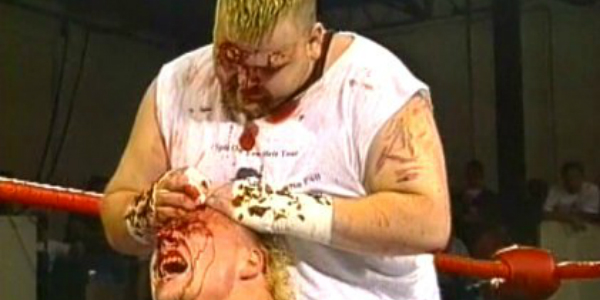
Storyline brothers, Brian €˜Axl Rotten€™ Knighton and John €˜Ian Rotten€™ Williams were real life mentor and protégé, Knighton having recruited and trained Williams in the early 1990s in order to have someone with chemistry to tag with. It was their jump to Extreme Championship Wrestling in 1993 that cemented their names in wrestling history. The Bad Breed, as they were known, had a solid run as tag team partners for over a year in Paul Heyman€™s fledgeling ECW, until the fateful feud with the Pit Bulls in late 1994. A series of losses culminated with the blow-off match in Philadelphia in January 1995 having the stipulation that the losing team would be forced to split. In the storyline, each Rotten brother blamed the other for the historic loss. In real life, Williams and Knighton had significant friction, and weren€™t working or playing well with each other at all. They would feud with one another for an impressive five months from that point, having their first match against each other at Double Tables in February 1995, Ian pinning Axl. The next half a year or so would see a variety of gimmick matches take place in this vicious feud €“ hair versus hair, barbed wire, chairs and other weapons would come into play in an angle covering fourteen nasty, brutal matches that Pro Wrestling Illustrated named 1995€™s Feud Of The Year. Axl would consistently come out of top during the feud. The angle finally came to a close in July 1995, at the Hardcore Heaven pay-per-view, when Axl and Ian Rotten took part in a Tapei Deathmatch, each man covering their fists in shards of broken glass. A significant amount of blood was spilled, even for ECW €“ but Axl emerged victorious once again to end the angle. Only a few months later, the two would reconcile and wrestle together again. That€™s €˜brothers€™ for you.

9. The Colons Feud Over WWE

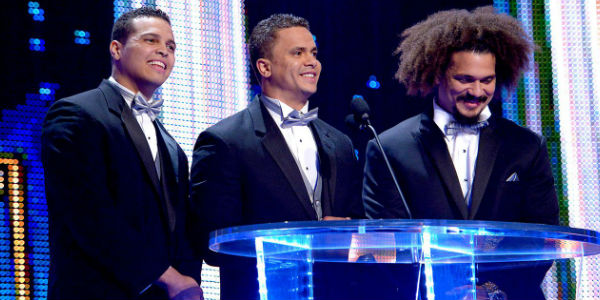
When Carlos €˜Carly€™ Colon Jnr. left his father€™s World Wrestling Council promotion in Puerto Rico to start with the WWE€™s developmental territory OVW in May 2003, many of his countrymen saw it as a massive betrayal. The future Carlito Caribbean Cool would cheerfully admit in interviews that he didn€™t care, so setting the scene for his heel turn in his home country. WWE allowed Carly to return home to participate in matches for his father while he was in developmental, leading to the fascinating development that the boss€™ son€™s defection to the big leagues in summer 2003 gradually became WWC€™s biggest angle of summer 2004. A year after Carly had debuted for OVW, WWC began running a backstage storyline where dirtsheet gossip began to trickle down to his (real life) younger brother Eddie that Carly Colón was secretly wrestling for OVW as a heel. Although initially evasive, Carly would confirm to his sister a month later that he had no intention of returning to WWC, his father or Puerto Rico, officially turning heel in his home country as well as OVW. Eddie then travelled to Ohio Valley Wrestling to take the matter up with Carly, only for the hotel clerk to inform him that his big brother wouldn€™t see him: Carly Colón had no brother. When both he and his father were thrown out of the building, the feud was on. Carly returned to Puerto Rico as a full-fledged heel, burying his family and his hometown in promos in the ring. Eddie and Carly€™s first match, headlining the Aniversario event in August 2004, ended with Carly€™s hand raised in victory after cheating. Two more rematches would follow, the reactions more and more heated, and the storyline would no doubt have continued had WWE not elected to call Carly up to the main roster in October 2004, effectively ending his developmental run with its free reign to work for WWC. Eddie would later join WWE as well, becoming Primo and reuniting with his brother. While Carly Colón left WWE some years ago, Eddie Colón continues to work there, currently under the Los Matadores gimmick as Diego with their cousin Orlando.

8. The Hardy Boyz And A Huge Missed Opportunity
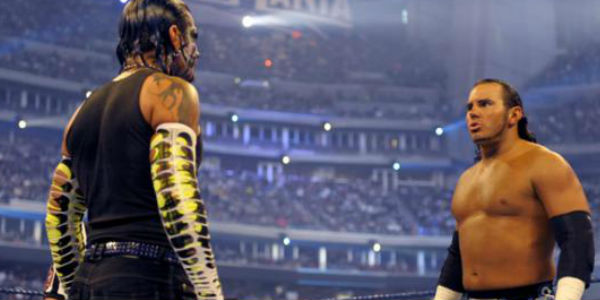
Matt and Jeff Hardy were a match made in heaven from an early age, when they ran their own local promotion, OMEGA Wrestling. They debuted with WWF, as it was then, in the mid-nineties as teenage jobbers, but hit the main roster properly in 1998 as The Hardy Boyz. With Matt€™s girlfriend Lita joining them, Team Xtreme would quickly become central to the WWF/WWE tag team division, the pair being incredibly popular with fans. Their high profile ladder matches with Edge & Christian and the Dudley Boyz are still legendary to this day, culminating in the invention of the TLC match at Summerslam 2000, representing each of the specialities of the three teams: tables for the Dudleys, ladders for the Hardys and chairs for Edge & Christian. Jeff, however, was the star. Far more popular than his older brother (who was nonetheless the more capable technical wrestler), the high-flying risk taker would enter into a minor feud with the Undertaker and then go straight for the Intercontinental title in 2003. Matt would tease a feud at that time, but WWE weren€™t prepared to go with it, and Jeff would be released due to his notorious drug problems shortly afterwards anyway. The pair would reconcile upon his return, sporadically teaming up as Jeff€™s star rose, while Matt was relegated to the C brand, the WWE€™s anaemic version of ECW. The family feud everyone had been waiting for finally hit around five or six years too late in early 2009, when Jeff was already in main event competition. Matt finally snapped at always playing second fiddle to his younger brother, turning heel on him and costing him the WWE title, but audiences had been told to view the older Hardy as a midcard attraction for years, and weren€™t interested in the blood feud between the two any longer. Jeff was too over, and they wanted him in top level matches. A series of gimmicked matches followed through Wrestlemania that year, but the time had passed. What could have been the hottest ticket of 2003 or 2004 became a disappointment and a distraction in 2009.

7. Redneck Hillbilly Family Feuds

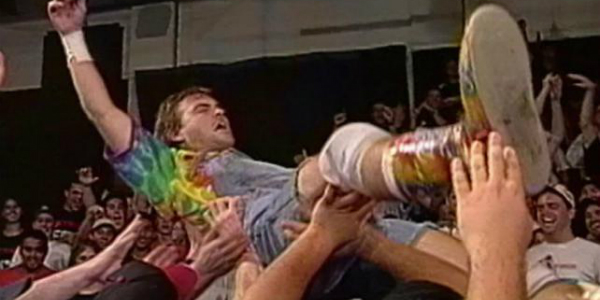
When Matt Hyson debuted in ECW as Spike Dudley in August 1996 to join the increasingly eclectic hillbilly family of the Dudleys, he quickly developed a reputation as a heroic underdog €“ a giant killer. Well, almost anyone was a giant to Spike. The highlight of his ECW career saw him thrown bodily from the ring by Bam Bam Bigelow, only to have the hardcore faithful in the crowd catch him, and crowdsurf him back into contention again. Dudley would go on to win that match, and after his storyline brothers Bubba Ray and Devon turned on him, he would have exciting underdog matches with them too, winning the ECW tag team titles twice in 1999 while teaming with Balls Mahoney. When Devon and Bubba Ray got the call to WWF and ECW folded, Hyson was despondent€ until, strangely, he too got the call. Spike Dudley debuted in professional wrestling€™s land of the giants, a scrawny 140 pounds, and continued as if he€™d never left off, joining his brothers once more only to engage in further blood feuds with them on and off for the next few years. Always exciting and bloody, their gimmicked matches became a highlight for many viewers, the fearless Hyson willing to do anything to get the match over and the always-underrated Devon and Bubba Ray likewise completely committed.

6. Edge Goes For Gold

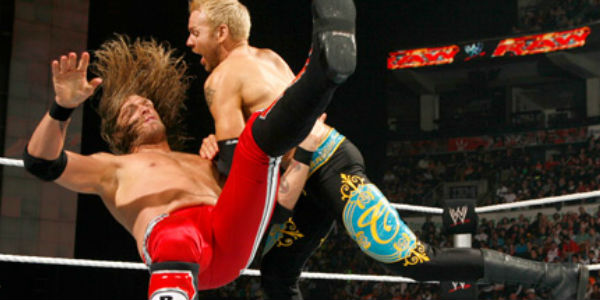
The other most entertaining tag team of the Attitude Era, Adam €˜Edge€™ Copeland and William €˜Christian€™ Reso, would find themselves the centre of attention in late 2001 when Edge won the King Of The Ring tournament. While the two were equally charismatic and talented, Edge was always the larger and most obviously groomed for solo stardom. His real life best friend, storyline brother and tag team partner would need to be dealt with first, however, and a split was teased for several months afterwards, culminating in Christian turning on his €˜brother€™ and a feud between the two in September 2001. The pair would feud for Edge€™s Intercontinental championship over the next few months, trading it back and forth. Fans loved the hot angle between the two, especially when Christian would tease €œsomething being wrong with their mother€ to blindside Edge, in true heel fashion. Unfortunately, WWF weren€™t interested in Christian as a singles main eventer, and so saw no appreciable value in continuing the feud past October€™s No Mercy pay-per-view, where Edge went over in a thrilling ladder match. The entire brilliant angle lasted for only around six weeks: a transitional storyline to end their partnership and prepare Edge for greatness.

5. Harlem Heat Get Hotter

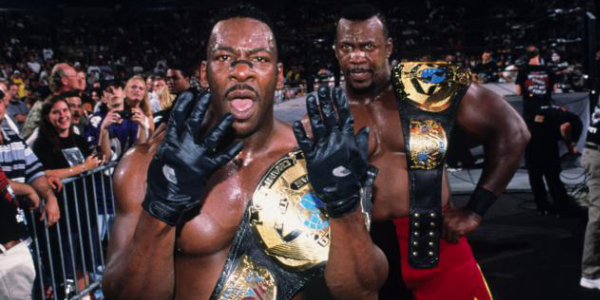
Real life brothers Booker and Lash Huffman began their wrestling careers feuding in the Western Wrestling Alliance promotion in the late eighties, with Booker delighting in the name G.I. Bro, and Lash cringing under the monicker Jive Soul Bro. They then tagged as The Ebony Experience in Global Wrestling Federation, and finally moved to WCW as Harlem Heat in 1993. The pair would go on to become historic ten time WCW tag team champions over the coming years, staples of the tag team division as Stevie Ray and Booker T. Sidelined in January 1998 by injury, Stevie Ray would cool his heels while Booker T went single, but Harlem Heat would reunite once again in 1999. However, by the end of that year Harlem Heat had added a new member to their number €“ a female wrestler called Midnight. In a classic pro wrestling teased split, Booker was into the new addition while Stevie Ray most certainly was not. Arguments arose and Stevie Ray challenged his partner to a match€ only, bizarrely, it was Midnight he wanted to fight, not his brother. The outcome would see who stayed with Booker in Harlem Heat. Sadly for Stevie Ray, he€™d lose the match after being rolled up into a small package out of nowhere (the de rigueur finish for intergender matches during the Monday Night War/Attitude Era, female wrestlers being treated roughly on a par with midgets €“ only forced to wear bikinis). Ousted from his own tag team due to his own match stipulation, Stevie Ray completed his heel turn on Booker and Midnight by forming rival stable Harlem Heat Inc. with three other African American stars, taking the hefty Big T as his new tag team partner in €“ surprise, surprise €“ Harlem Heat 2000. In a typically WCW storyline, Booker T would be screwed out of his own name when he lost a match to Big T for the right to the Harlem Heat name, and also the use of the letter €˜T€™. Stevie Ray wouldn€™t have that many matches left in him, and would have left WCW only a few months later, retiring completely by 2002. In real life, he and Booker would catastrophically fall out over the next few years, and by the time they reconciled in early 2013, had not spoken to each other in around six years. Stevie Ray and his brother would resolve their differences just in time for Lash to induct Booker into the WWE Hall Of Fame.

4. The Poffos Set Up An Entire Promotion Around Their Feud
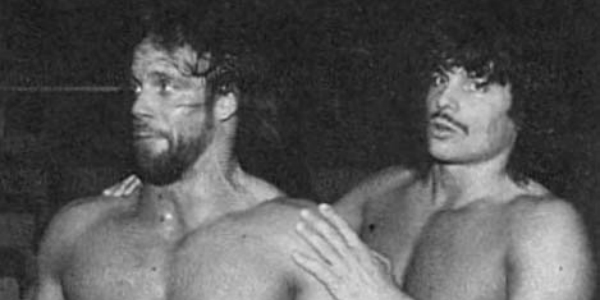
While Edge & Christian and The Hardy Boyz saw backstage politics and favouritism ruin the potential for their own brotherly feuds, siblings Randy and Lanny Poffo had the complete backing of their boss for their long-running angle on top in the late seventies and early eighties. After all, the head booker and promoter of Kentucky€™s International Championship Wrestling was their father, retired wrestler Angelo Poffo. An outlaw promotion, ICW wasn€™t affiliated with the National Wrestling Alliance, and regularly strayed into territories marked by the NWA€™s own members and attempted to poach talent from them. And ICW had its fair share of names on the roster between 1978 and 1984, including Bob Orton, Ronnie Garvin, Rip Rogers and Crusher Broomfield. Nonetheless, in time-honoured nepotistic tradition, the ICW World Heavyweight Championship was The Randy And Lanny Show. They would trade the title between them for almost the promotion€™s entire six-year run, and remain the focus of the card throughout the entire of the time that this version of ICW remained in business. Randy would go on to international superstardom in the WWF as €˜Macho Man€™ Randy Savage, while the high-flying, poetry-reading Lanny would see lesser success as €˜Leaping€™ Lanny Poffo and €˜The Genius€™. Lanny shouldn€™t be disappointed with his career, though. Far ahead of his time, he€™s credited with bringing the moonsault to North America years before anyone else.

3. The Steiners€™ Delayed Reaction Split

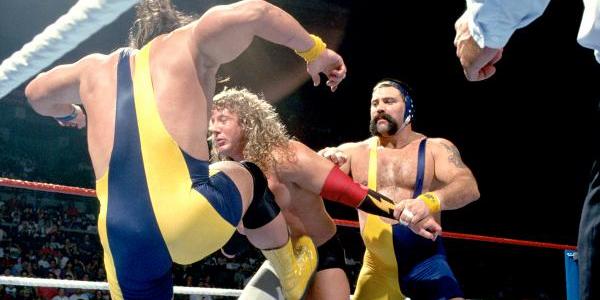
Teaming almost from the beginning of their professional careers, the former amateur wrestlers Robert and Scott Rechsteiner would go nearly ten years as a team before finally getting the go ahead to try singles careers. During that time, they would become known as one of the most dynamic and highly-regarded tag teams in the history of professional wrestling. Scott was always the one being groomed as a singles star, but for years the pair wouldn€™t stay in one promotion long enough to get the necessary push. They would nearly make it in their first WCW run from 1988 to 1992, but feeling insulted at what they considered to be a lowball offer on their new contracts, they upped ship to WWF. The WWF of 1992 was a competitive time for tag team wrestling, with such luminaries as the Headshrinkers, Money Inc., the Smoking Gunns and the Quebecers on the roster. As proficient all-rounders, The Steiners slotted in nicely, their power finishing movies, excellent technical skills and individual speed and agility making them a comfortable match for any other team they were asked to work. Their star fading around 1994, as the tag division began attracting less booking attention, the Steiners signed to the newborn Extreme Championship Wrestling the following year for a few months, and in 1996 were back in the WCW fold. However, it was Scott€™s dramatic change in appearance and persona which signaled the beginning of his singles push and split from his brother in late 1997. Significantly increasing his size, cutting his hair and feuding with Buff Bagwell over who had the more impressive musculature, Scott would develop a short fuse in the storylines as well as in real life. He would begin to refuse to tag Rick into matches at all, sometimes wrestling entire matches on his own with his brother standing impotently at ringside. Matters came to a head at Superbrawl VIII in 1998, when Scott blindsided Rick during a match with the Outsiders and deliberately dropped the straps to their opponents, joining the NWO in the process. The Steiners€™ feud would continue for most of the rest of the year, interrupted only by a minor injury on Rick€™s part, and involving the many members of the NWO. Meanwhile, Scott€™s increased musculature had cost him much of his former agility, but he€™d more than made up for it in strength and sheer aggression. The best tag team in WCW in the 1990s made formidable opponents for each other.

2. Sheer Hart Attack

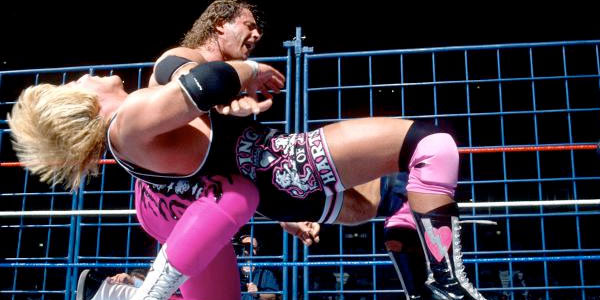
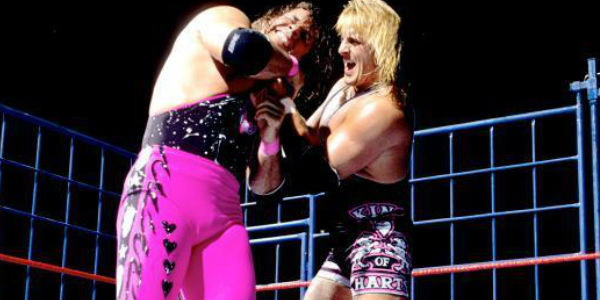
At Survivor Series 1993, Bret €˜The Hitman€™ Hart and his younger brother Owen clashed in more ways than one when they accidentally collided in a traditional Survivor Series elimination match and angrily confronted one another afterwards. The conflict set the scene for a feud between the two brothers that would result in some of the most heated matches of their career. The high-flying, reckless Owen carried the majority of the heat, as the heel and the better promo man, while the Excellence Of Execution concentrated on delivering blistering match after match. With a classic younger-brother-in-older-brother€™s-shadow storyline to play with, the two faced off at Wrestlemania X in 1994, Owen managing to cleanly pin The Hitman. The two would feud for the rest of the year, Owen failing to take Bret€™s WWF title from him, but costing him the belt at Survivor Series in November. He would cost Bret the title again at the Royal Rumble, before finally blowing off their feud with a loss to his older brother in the following weeks. Heated and intense, lasting for over a year and famous for a five star cage match at 1994€™s Summerslam, there aren€™t many sibling feuds €“ real or kayfabe €“ that compare with Bret and Owen Hart€™s classic.

1. The Long War Of The Brothers Of Destruction

But there€™s just no sibling rivalry in professional wrestling that can compete with the long, complicated history of The Undertaker and his kayfabe half-brother Kane. Initially competing as adversaries when the Dead Man€™s feud with former manager Paul Bearer blew up in 1998, Kane would debut at the In Your House: Badd Blood event in October 1997, interfering with the climax of the first ever Hell In A Cell match (a five star classic with Shawn Michaels) by ripping the cell door off and pulverising a gobsmacked Undertaker. The massive Glenn €˜Kane€™ Jacobs was the first partner that Mark €™Undertaker€™ Calaway had had who really seemed to be more than a match for him, and would prove it over the long years following his debut. Two Wrestlemania matches would see the Dead Man victorious, as would the two Inferno matches they produced, while Kane€™s punishing offense during and after matches would see his older €˜brother€™ sidelined (while Calaway rehabbed nagging injuries) for months on two separate occasions. Between feuds €“ usually started by the crazed antics of the glacial Undertaker€™s mercurial younger brother, whose maniacal pyromaniac/serial killer gimmick would fluctuate in madness depending on whether he was playing heel or babyface €“ the two would regularly team as the Brothers Of Destruction, one of the WWF/WWE€™s most dominant tag teams. But it€™s their feuding that we€™ll remember them for most, Calaway always getting the best from the slower Jacobs, their monolithic sibling rivalry helping to define both their careers against one another. Do you have a favourite brother on brother feud in wrestling? Tell us all about it in the comments€

Contributor
Contributor

Professional writer, punk werewolf and nesting place for starfish. Obsessed with squid, spirals and story. I publish short weird fiction online at desincarne.com, and tweet nonsense under the name Jack The Bodiless. You can follow me all you like, just don't touch my stuff.