10 Reasons Everyone Hated Kevin Nash In WCW

You don't get into the WWE Hall of Fame without making some enemies.

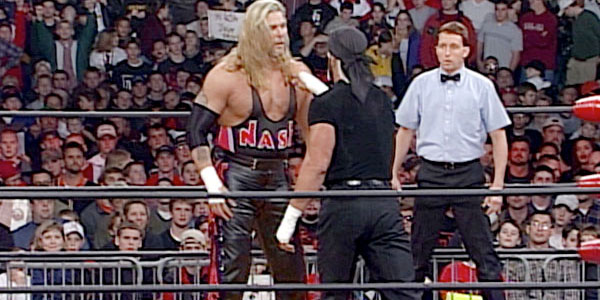
When it comes to Kevin Nash, whether you love him or hate him, you likely have a strong opinion of the guy. "Big Sexy" has a penchant for getting under the skin of his co-workers, and he's an incredibly polarizing figure among the pro wrestling fan base. With rumors circulating that he'll soon be inducted in the WWE Hall of Fame - likely as Diesel rather than Kevin Nash similar to his friend Scott Hall's induction last year - there's going to be plenty of talk about all of his positive contributions to the wrestling industry. And make no mistake, he's a pivotal figure in its history, spearheading the wildly successful angle that jumpstarted the Monday Night War and largely set the standard for giants who were also gifted on the mic. That being said, his detractors will also want to make their opinions heard about the man many have leveled a portion of the blame for WCW's demise on. For a guy who forged such a tight-knit bond of friends during his time in the industry, he also managed to alienate, annoy and anger a much larger percentage of the men he worked with. Read on and find out why he was such a target of controversy during his time in WCW.

10. "Big Lazy"

When it came to his in-ring performances, Kevin Nash had a reputation among his peers for phoning it in, earning him the derisive nickname. Even his former boss got it on it, as Eric Bischoff called him out for it in his book Controversy Creates Cash, and Scott Steiner used the name in a promo. In a business where guys go out and legitimately injure themselves to get a reaction from the crowd and put 100% into every match, it was obviously frustrating that someone of Nash's stature could get over on genetics, drawing larger reactions than many of his detractors for doing far less. Nash claims to be unfazed by the criticism, citing the money he's made in the business, and made this statement: €œIf you asked me if I could have the career of a critically-acclaimed actor or be Sylvester Stallone, I€™m going with Stallone,€ he added. €œI want to be that guy that brings in the blockbuster money.€ And he definitely did that. Which brings us to our next point...

9. Big Money Contract

When Nash made the jump to WCW alongside fellow outsider and best friend Scott Hall, he did so for a tremendous guaranteed money contract, something at the time that was practically unheard of, at least for WWE talent. Vince McMahon famously offered "no guarantees; only opportunities." Hall and Nash negotiated an incredible salary for themselves and even managed to get a favored nations clause, stating that no one could ever be paid more than them, so anytime anyone's wages increased to surpass theirs, their contracts would be adjusted accordingly. It was a brilliant move but one that bred resentment from guys who had been busting their tails for years and never even sniffed paychecks like those. In the final years of WCW, Nash was reportedly earning a whopping $1.625 million per year on a sinking ship that should have been drastically cutting costs and slashing expenses, not continuing to hand out money they could no longer afford.

8. Defined The Cool Heel

Before the nWo came around, heels were despicable villains who were largely cowards that audiences utterly despised and paid their hard-earned money in hopes of seeing them get beaten senseless. Kevin Nash and his New World Order buddies weren't having any of that. Despite being the antagonists in the WCW vs. nWo story, they still carried themselves like anti-heroes; too cool for school bad*sses with a lot of swagger. While it may have made the company a ton of money on merchandise and kept interest in the faction and the angle at a fever pitch, it also made fundamental changes to the business and cut the heels (no pun intended) out from under other bad guys whose traditional tactics no longer held the same weight, as well as doing detrimental damage to the babyfaces who were opposing them. Which brings us to...

7. He Always Made WCW Look Stupid

When the nWo first declared war on WCW, they insulted the fans as well as the company, intending to put it out of its misery. Eventually, after continually mocking WCW in promos the tide started to shift a bit and fans started to side with the cool kids, so to speak. Add to that the fact that only two guys - Diamond Dallas Page and Sting - were ever really allowed any comeuppance on the nWo for quite a while, including during altercations where they were horribly outnumbered, and the audience was running out of reasons to support the home team. It's similar to how today's WWE has painted themselves as the heel in the minds of the fans. It may be a good idea in the short term, but eventually it backfires and then you have to face the repercussions.

6. Struggles With The Giant

A battle between the two seven footers was a natural when Kevin Nash and the man now known as The Big Show locked horns in WCW. We can start with the urban legend that Big Sexy fakes a heart attack to get out of laying down and doing a job for The Giant. Supposedly Nash was so intent on on not putting over his opponent for their pivotal Starrcade 1997 match that he pretended to go into cardiac arrest and went to the hospital. Kevin contends that he ate an entire pan of pot brownies and had a bad reaction, leading to a misdiagnosis from the attending cardiologist. "Imagine who is at the hospital on Christmas Day. Who gets that job? The worst cardiologist. If you€™re working Christmas, you€™re absolute sh*t. He€™s telling me I had a heart attack, I don€™t know. I look over and my heart looks completely fine, no irregular heartbeat." His other mishap involving The Giant was when a botched powerbomb almost led to a broken neck for the larger man. While most of the heat was on Nash for the maneuver going badly, in retrospect one can say that The Giant didn't hold up his end of the move and was equally responsible. Kevin also says that he didn't want to do the spot and proposed a different finish but that his opponent insisted citing that he had taken the powerbomb from him before and ignoring Nash's observation that he'd since gained 80 pounds. Nevertheless, when you're a heat magnet like Big Sexy was in those days most of the blame is going to fall your way.

5. Unmasking Rey Mysterio

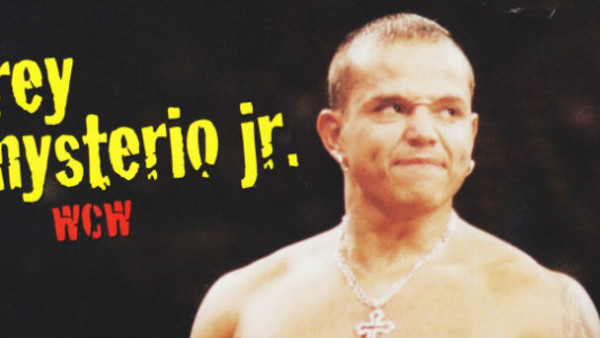
One of the in-ring highlights of WCW from throughout their hottest period was Rey Mysterio. The diminutive luchador was incredibly captivating in the ring and his breathtaking style was revolutionizing what U.S. audiences were used to witnessing. His extremely small size made him the ideal underdog and someone the fans could easily rally behind. For those unfamiliar, the masked tradition among the luchadores is very important, and the removal of one's mask for any reason can be seen as a disgrace in some ways. Mask vs. mask matches in Mexico are a huge deal, and once someone loses their mask they must honor that stipulation for the remainder of their career. WCW booked Kevin Nash and Scott Hall against Rey and Konnan in a mask vs. hair match, in which the luchas lost and Rey was forced to reveal his face. He was unhappy about the decision, and has been quoted as saying: "I was strongly against it! I don't think WCW understood what the mask meant to me, to my fans and to my family. It was a very bad move on their behalf. The fans wanted Rey Mysterio with the mask and losing it hurt me a lot. It was also frustrating that it didn't come as the climax to a feud with another masked wrestler, but in a throwaway match. I think the fans understand that I was in a position where I had no option. I either had to lose my mask or lose my job.on where I had no option. I either had to lose my mask or lose my job."

4. Vanilla Midgets

The "smart" wrestling fanbase has long a held a strong appreciation for the elite workers who often get passed over in favor of the more charismatic personalities in the business. Daniel Bryan is this generation's example, and guys like Chris Benoit and Dean Malenko were classic examples from years past. While fans loved watching these guys put on thrilling matches, men like Kevin Nash vocally expressed their doubt that they could carry a promotion at the top of the card, coining the term "vanilla midgets". While Nash may or may not have actively worked to hold these guys down, he became the symbolism of their martyrdom and still gets blamed for it to this day. The issue was revisited in 2012 when, during an interview with Grantland Big Sexy said that wrestling died at WrestleMania XX when Benoit and Guerrero hugged and walked out with both championships. He's since backtracked a bit and called the comments a "double work", but Nash loves stoking the flames of the fan base.

3. Ending The Streak

There are two creative decisions that are constantly bemoaned as being massively detrimental to WCW as a whole, and we're about to discuss them both. In 1998 Goldberg was as massively over as any wrestler has ever been, just squashing guys doing little in the ring and talking even less. He was absolutely on fire and by Starrcade 1998 was the world champ and still in the midst of a lengthy undefeated streak that was up to 173 consecutive wins. Kevin Nash would not be 174. Part of the uproar comes from people believing that Nash was in charge of booking by that point, but he contends that he didn't take over until February of 1999. Either way, he justifies the move by saying that he was as over as Goldberg was at the time and the fans were starting to turn on him, forcing WCW to pipe in chants and the choice was made that it was time to end the streak. Was it a good business decision? Maybe, maybe not. But it definitely gave his critics more ammo to fire at him.

2. The Fingerpoke Of Doom

If Nash's assertions are correct, he also wasn't in charge of the booking at the time of this infamous angle either, but there's no denying that the two men involved held tremendous sway with WCW decision-making regardless. On January 4th, 1999, rather than the scheduled rematch between he and Goldberg, WCW ran an angle where the former champ was arrested for stalking Miss Elizabeth, and Hulk Hogan - assuming the role of returning hero - stepped up to challenge Big Sexy for the title. But we didn't get a match. We got Hogan poking Nash in the chest and the champ taking a dive to put the belt back on The Hulkster and re-re-re-re-reform the nWo. It wasn't what anyone wanted to see at that point and all the anticipation for the return clash between Goldberg and the man who killed the streak was sapped out of the audience in favor of a retread of an angle that was long past its expiration date. Much has been made about this event, with some going so far as to call it the official nail in WCW's coffin. That's a little extreme, but you can't argue it didn't negatively impact the company's business.

1. He's Not A Mark For Himself

What it all boils down to is that Kevin Nash has rarely been considered a mark for himself. He's the total antithesis of a guy like Bret Hart who looks at his championships and victories as actual real-life accomplishments, priding himself on the quality of his matches. Nash doesn't care about any of that; the bottom line is his bottom line. It's the only reason he got in the wrestling business and he did very well for himself. He continues to manage his money properly, estimating that he's going to earn just over half a million dollars per year in retirement. And people hate that, especially his peers because most of them were possessed by an admirable burning passion for the art of professional wrestling, and Kevin Nash was just in it for the money. And he made a lot more than practically everyone else.

Contributor
Contributor

Brad Hamilton is a writer, musician and marketer/social media manager from Atlanta, Georgia. He's an undefeated freestyle rap battle champion, spends too little time being productive and defines himself as the literary version of Brock Lesnar.