10 Ridiculous Decisions That Killed WCW

How the place where the big boys played was burned to the ground.

They say history is written by the victors, and that€™s certainly the case when it comes to the eventful history - the rise and fall - of World Championship Wrestling. World Wrestling Entertainment is largely in charge of the narrative: at the very least, they€™re the ones shouting loudest about how and why WCW died, so their voice (for better or worse) is the one most people hear. The weird thing is, the real story is more entertaining than the diet version WWE tells: there€™s a convincing argument to be made that that it makes Vince McMahon and the WWF/E look a lot better, too. This isn€™t that argument though, and it€™s not the point of our article€ except to say that WCW wasn€™t always the headless turkey it became in the last year or two. In fact, the promotion of announcer Eric Bischoff in 1993, first to Executive Producer and then Executive Vice President of the company was the catalyst for huge things for WCW as the promotion squared off against the complacent, boring WWF. He ushered in the live Monday Nitro to compete directly with the taped Monday Night RAW, and made sure that it started earlier to grab the WWF€™s viewers before RAW could begin. He was responsible for hiring major stars normally associated with the WWF, including Hulk Hogan, Randy Savage, €˜Rowdy€™ Roddy Piper, Lex Luger, the Ultimate Warrior and Bret Hart. He created the ultimate cool heel stable, the New World Order, made stars of Kevin Nash and Scott Hall and revitalised Hogan€™s career. He popularised the concept of the heel authority figure when Vince McMahon was playing a squeaky-clean announcer in a WWF blazer. He brought in the best young wrestling talent in the world to form the cruiserweight division, meaning that WCW had the most skilled midcard in the business. Initially at least, it was Bischoff€™s innovation and chutzpah that built WCW into the behemoth it became, and led to Nitro€™s 84 week ratings winning streak against Monday Night RAW €“ well over a year and a half. Buy rates for pay-per-views had soared too, and attendance at live events was through the roof. And then it all began to collapse. Here€™s a breakdown of the points that helped to kill the place where the big boys played.

10. Choosing To Ignore Traditional Wrestling Booking
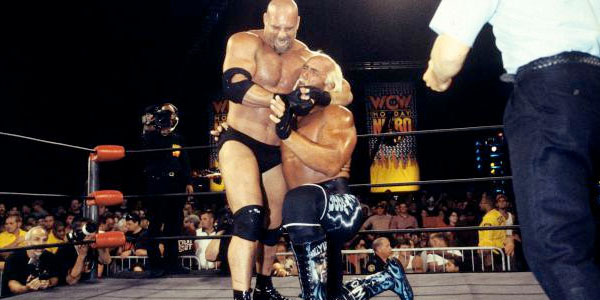
Tasked with upping the moribund ratings, Bischoff took one gamble too many when he ignored basic pro wrestling wisdom and repeatedly booked pay-per-view quality matches onto free television, often without any real advertising in advance. While to begin with the gambit would be rewarded with a spike in the ratings, it became apparent that it wasn€™t a one-off: Bischoff didn€™t understand that television built the storylines and characters and persuaded fans to pay to see angles blown off at special events. It was basic booking 101. The worst came when the epochal Goldberg versus Hogan WCW championship match fans had waited for was broadcast on Nitro in July 1998. A match that should have made millions was given away free, as a ratings boost. Imagine if Daniel Bryan had had his Wrestlemania moment on Monday Night RAW instead; that€™s the level of stupidity we€™re talking about. Bischoff€™s successor was journalism graduate and former magazine editor Vince Russo, who€™d recently defected from his position as head writer for the competition. His tenure at the WWF had been marked by controversy and increased ratings: Attitude, basically. What people didn€™t realise until too late was that Russo had been reined in by McMahon in the WWF: everything went past Vince, who micromanaged to a ridiculous extent. Under Russo, the company€™s championships would leap from wrestler to wrestler like coked up groupies. Title changes occurred so often that they stopped bothering to change the names on the belts. Not only did that make it difficult for fans to know who the champion was at any given time, it meant they didn€™t care. The constant switching removed any sense of importance that the titles had, and if the fans weren€™t interested in the championships, how could they be expected to be interested in the storylines detailing who was fighting for them? It also meant that the WWF€™s championships seemed of a much higher stature by comparison... especially when it came to David Arquette's appearances for WCW...

9. Over-Reliance On Swerves And Worked Shoots
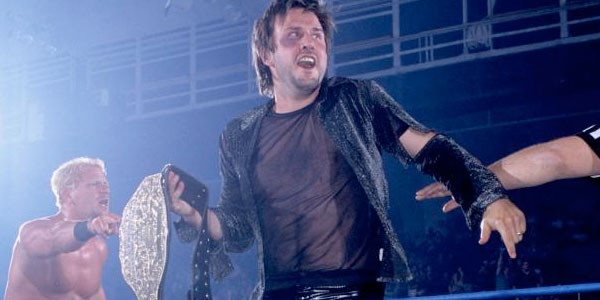
Both Bischoff and Russo liked their swerve booking and insider storylines, but Russo took it to the extreme with his WCW version of the €˜crash TV€™ angles he€™d run during his stint in the WWF. Without a big boss to keep him on track, Russo went off the rails in a big way. Heel turns, multi-man interference, run-ins and referee bumps became the norm, and dirty (not to mention Dusty) finishes the expected outcome: the WWF would milk the controversy surrounding the Montreal Screwjob for years, but WCW was first, managing to reference it as a part of the notoriously messed-up main event of Starrcade 1997 only a month after it had taken place. Worse, the WCW booking team would throw worked shoots around like Halloween candy, with talent regularly breaking the fourth wall and exposing a semi-worked version of the backstage politicking that plagued the company. The stars at the top of the company, protecting their spot no matter what, would also regularly work the boys, lying to the rest of the roster about who was doing what. Fans couldn€™t follow the storylines half the time, and felt cheated and disrespected when they could. There€™s the €˜Robin Hood Nitro€™ on January 13th 1997, which saw the main event of Hogan versus Paul €˜The Giant€™ Wight broadcast during the commercial breaks of the next show on the network€™s schedule. There€™s the infamous €˜Fingerpoke Of Doom€™ angle on the main event of the notoriously awful January 4th 1999 Nitro. There€™s the First Blood match from Uncensored 1999 that saw Flair defeat Hogan by pinfall long after both men had begun bleeding. There€™s the convoluted circumstances that led to middling actor David Arquette winning the WCW world championship on Thunder in April 2000. There€™s the bizarre events at the Bash At The Beach pay-per-view in July 2000 that led to Hogan quitting WCW for good and suing Russo over a worked shoot that turned into a legit shoot. There are more €“ far, far, far more €“ but we€™d need a whole other article.

8. Failing To Make Room For New Stars
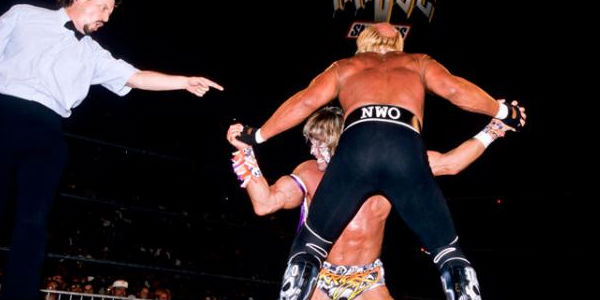
Professional wrestling promotions the world over have serious form for failing to keep the ball in the air when it comes to planning for the future. The usual deal is that a major star comes along and is immediately milked for all they€™re worth and worked practically to death: usually with the complete cooperation of the wrestler concerned, who believes they have a spot for life. Inevitably, after a while over-exposure sours the fanbase on the star, whose appeal has waned dramatically. Business begins to tank because there€™s no one and nothing there to replace them, as the fading star won€™t let slip their grip on the main event long enough to make the next big star. WCW would exemplify this shortsighted trope to the nth degree. The old guard €“ Nash and Hogan, especially €“ held onto the main event like drowning men to driftwood, kicking out at anyone treading water too near them. In fairness to Bischoff, he was responsible for the build of two proper homegrown stars in Goldberg and Sting. Neither man was a WWF cast-off, a man already familiar from the competition who€™d arrived in WCW with the promise of one of Ted Turner€™s guaranteed contracts: they were WCW through and through. It was a shame that Hogan and Nash were standing in their way€

7. Burying The Biggest Angle In WCW History

Often talked about as the greatest wasted opportunity in pro wrestling history, Sting€™s build up to bomb as WCW€™s biggest babyface star is a cautionary tale for the ages. The NWO had been around for a while, and the angle had bloated€ instead of a stable of four or five talented men, the faction had swelled to encompass half the roster. Overbooked and overexposed, fans were dying to see the heels taken out. And Sting was the man to do it. Sting had taken on a new persona: a black-clad Crow-lookalike in a long leather coat, lurking in the rafters of Monday Nitro, rappelling down to kick NWO ass with his trademark baseball bat every so often. The fans knew that Sting was going to kick the NWO€™s stale, irritating ass €“ it was just a question of when. Incredibly, Bischoff managed to hold off on pulling the trigger for a full eighteen months from start to finish. Crowd reactions grew louder and louder, expectation reaching near breaking point. This was going to be something special. Finally the match everyone had waited for was booked: Hollywood Hulk Hogan versus Sting for the WCW championship at Starrcade 1997 (WCW€™s equivalent of Wrestlemania). The story wrote itself: Sting hits the ring like a human hurricane, beats the tar out of Hogan and sees off NWO interference long enough to get the clean pinfall, establishing himself as the biggest babyface star in the business, revitalising the NWO as heels and setting up lucrative storylines for the next calendar year. Instead, what we got was a tired, television-style main event match, Hogan dominating the challenger with his dated, unconvincing offence until he suddenly pinned him clean: 1, 2, 3. Inexplicably, temporary referee Bret €˜The Hitman€™ Hart showed up, claiming a fast count and restarting the match, which Sting then won. The only problem was that the count hadn€™t been fast. It would appear that Hogan had gotten to referee Nick Patrick, persuading him to count normally. What would have been a starmaking moment in WCW for both Hart and Sting became a confusing mess, as it appeared to fans as though babyface Hart had cheated to restart a match that babyface Sting had lost cleanly to heel Hogan. After that demoralising anti-climax, Sting never fully recovered his momentum: he€™d remain a star, but never at the level he€™d reached before Starrcade 1997.

6. Breaking Goldberg€™s Streak The Wrong Way

The following year, a suspiciously similar issue arose. For around eighteen months, Goldberg had been built up as an unstoppable tank of a man, running through 173 (kayfabed) victories in a row in one of the most celebrated pro wrestling winning streaks in history. He€™d won the WCW world championship from Hogan during this time (incredibly, on Nitro rather than on pay-per-view), and was heading into Starrcade 1998 on a massive high to defend the title against€ Kevin Nash. Nash, who€™d recently been appointed booker, and begun to write himself back into the main event. The result was a foregone conclusion, but it smarted nonetheless: Nash would beat Goldberg, take the title and end the monster€™s undefeated streak after some teeth-clenchingly bad interference (Scott Hall tasered the big man to take him down before Nash delivered the powerbomb to end the match). Clearly the streak had to end sometime, but was Nash the right person to do it? Fans smelled a rat, as did the boys backstage. Nash was still over to a degree as a babyface, but certainly no more than Goldberg. Everyone knew he€™d booked himself to slay the dragon because he could. A week later was the infamous Worst Nitro In History, January 4th 1999. The Fingerpoke Of Doom saw Nash turn heel again, lying down for Hogan to return, casually take back his title and reunite the NWO to a chorus of dismay and anger. It was the beginning of the end for WCW.

5. Yet More Misuse Of Talent

Sadly, Sting and Goldberg weren€™t buried alone. The best thing about WCW programming for years and years was the cruiserweight division. While the big boys played in the main event, the rest of the card would see some of the most exciting high flying and technical wrestling in the world. But the main event was out of bounds, no matter how talented the upper midcard were. There was no way Nash and Hogan would pass the torch to someone as small as Jericho or Benoit: both men famously had to go to the WWF to get the push that their talent deserved, as did Paul Wight. Incredibly, WCW let the giant€™s contract expire, and he jumped to the competition, to be renamed The Big Show. Meanwhile, creative had nothing for Stunning Steve Austin, who was fired while rehabbing an injury at home. He€™d take that anger and frustrated ambition and channel it, force it deep within, turn the fire inside into stone cold rage and become the biggest star the business had seen since the heyday of Hogan himself. Bret Hart was one of the hottest properties in wrestling after the Montreal Screwjob in November 1997, and was booked like an afterthought upon arrival in WCW until his career was dramatically ended due to injury and he was fired. Diamond Dallas Page, another proper homegrown star, was turned heel when arguably he was as hot a babyface as he€™d ever been. Ric Flair, the face of the NWA and a WCW man through and through, who€™d carried the company on his back in the lean times, was jobbed out over and over and over, disrespected like no legend has been before or since, treated like a worthless has-been. The sad thing is, we could go on again€ but again, that€™s a whole other article in itself.

4. Throwing Money At The Problem

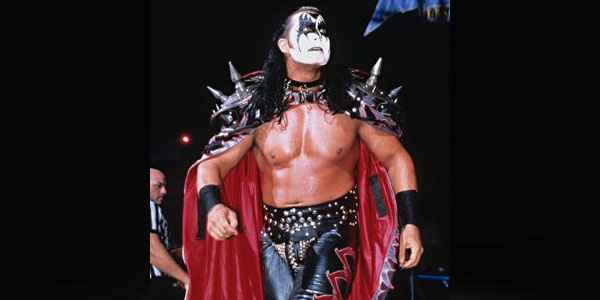
When the WWF began to inch past WCW in the ratings in mid-1998, Bischoff tried a few things to claw back the ascendancy the company had been enjoying. You have to understand that ratings were still pretty damned fantastic at that time: wrestling was in a massive boom period. WWF and WCW€™s war hadn€™t split a niche pro wrestling market in the States, it had swelled that market to huge proportions. But it wasn€™t enough for Bischoff. Aside from giving away Goldberg versus Hogan in July (a tactic that worked for a week €“ it gained them a 6.91 rating, the highest rating since the Monday Night War began), Bischoff€™s main solution to the problem was to throw more money at it, delving into Ted Turner€™s legendarily deep pockets. He€™d arrange for celebrity appearances and musical endorsements, paying through the nose for MTV€™s cross promotion. Megadeth, the Misfits, Master P and the No Limit Soldiers stable he headed, the Insane Clown Posse (who at least were diehard wrestling fans) and, most infamously, Kiss all made appearances on WCW programming. Kiss brought The Demon with them, a new WCW wrestler that was branded for the band, and who they€™d negotiated a big push for€ it didn€™t translate to ratings, though, their August 1999 appearance on Nitro causing a new low in ratings as wrestling fans turned over to a channel where there was wrestling happening. All of this cost the earth, of course. Kiss were paid a cool half million dollars for wasting everyone€™s time, while Master P received a million dollars in one month for appearances on WCW television (to say nothing of the money paid to his henchmen and entourage, the No Limit Soldiers). James Brown netted $25,000 for his brief, unadvertised appearance at Super Brawl 2000 €“ which couldn€™t have pulled in any additional buys, as no one knew he€™d be there. Dennis Rodman was signed for a vast amount of money, and barely showed up. There€™s Jay Leno, Karl Malone. Michael Buffer was allegedly paid between $25,000 and $100,000 to introduce main event matches in his inimitable fashion. Many of the wrestlers on WCW€™s gargantuan roster were paid large guaranteed contracts to barely appear for the company. Lanny Poffo, the Macho Man€™s brother, was paid $150,000 a year and never wrestled for the company. At its height, WCW had over 260 wrestlers on the roster, many signed €“ astonishingly €“ simply to prevent them signing with the WWF, with little to no intention of ever using them. There was no physical way even half of them could appear on WCW television, for a start.

3. Bizarre Booking With No Accountability
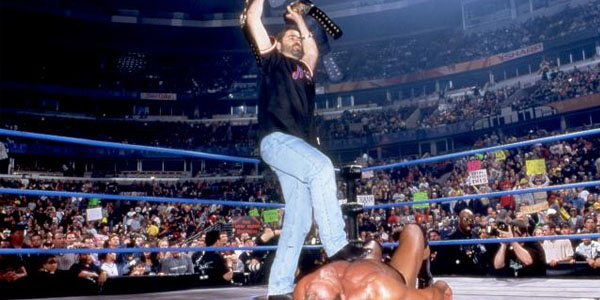
In fairness again to Bischoff and Russo, the odd angles and storylines that plagued WCW didn€™t start with their involvement with the company. Ole Anderson and Dusty Rhodes were both partial to the utterly nonsensical €“ it€™s one of the pitfalls of being a professional wrestling fan, having to try and suspend disbelief in the face of some of the weirdest storylines known to man. Vince Russo was in a league of his own, though. If you weren€™t emotionally invested in WCW as a product, in Nitro as a TV show or in any of their roster as performers, Russo€™s creations were a thing of damaged beauty, making almost no sense to anyone, least of all the poor fools who had to try and work those storylines and angles in the ring. He and Ed Ferrara had been under Vince McMahon in the WWF. It€™s impossible to overstate how hands on McMahon was and continues to be even in 2015. He barely ever sleeps, he gets things done while he eats and travels: he even works while he works out. Nothing got from Russo€™s desk to WWF television without Vince McMahon€™s enthusiastic approval, which in turn meant that the worst excesses of Russo€™s fevered mind landed firmly in the wastepaper basket. Not so at WCW: as Anderson, Rhodes and Bischoff had before him, Russo had free reign to come up with whatever brainwrong he liked and see it on TV mere minutes later. Without that accountability, you€™ve basically got no filter between you and the audience: and everyone needs an editor. A vast amount of the problems this article raises with decisions made at WCW would have been averted if there had only been someone in place willing and able to say €˜no€™. In mid-2000, knee deep in the worst year in the company€™s history and enthusiastically heading into making it much, much worse, Russo would actually receive a report detailing a year€™s worth of market research into the fanbase: what they liked, didn€™t like and wanted to see more of. It transpired that the wrestling audience wanted more proper wrestling on their wrestling show. Russo threw the report out. Clearly he knew better.

2. Mergers, Takeovers And Other Corporate Shenanigans

In 1995/1996, Turner Broadcasting merged with Time Warner to create a monolithic enterprise, becoming the largest media group in the world. Turner were the owners of WCW as well as the networks €“ TNT and TBS €“ that broadcast WCW€™s television programming, and Ted Turner, the maverick billionaire who bankrolled the promotion, was the single biggest supporter of WCW and what they represented in the marketplace: a viable, competitive, even more successful rival to Vince McMahon€™s WWF. McMahon and Turner had some bad blood dating back to McMahon€™s acquisition of many of his rival territories in the mid-1980s. Both men had reputations for being idiosyncratic forward thinking innovators, as well as egotistical blowhards: the difference was that Turner was worth in the region of $8 billion, and Vince McMahon€™s fortune at the time amounted to a tiny fraction of that amount. Turner also loved the wrestling. Wrestling had given his networks a shot in the arm just when they needed it most, and he felt obligated to return the favour, hence his purchase of WCW and continued support in the face of overwhelming financial losses. When in early 2001 Time Warner merged with AOL, Turner would find himself left with a figurehead post, and no actual power. The lion of Turner Broadcasting would be neutered. For years, he€™d been hiding the losses suffered by WCW by spreading them around the far more profitable arms of his businesses, but he wouldn€™t be there any longer to extend a protective arm around WCW and the money pit it had become. Fresh, unsympathetic eyes took a long look at the WCW as a product, as a brand and as a business, and they did not like what they saw€

1. Canceling The Television Shows

In spring 2001, new chairman and CEO of Turner Broadcasting Systems Jamie Kellner took over and took a long, hard look at the company he€™d been given to shepherd into the 21st century proper. One glaring thing stood out to him: World Championship wrestling. Estimates have the company losing $62 million in 2000 due to massive overspending and no corresponding increase in revenue to compensate. Fans had tuned out in droves due to WCW€™s ridiculous brand of professional wrestling nonsense, with pay-per-view buyrates and live attendance figures in the toilet and the television ratings not far behind. But there was more of an issue involved than simply their financial losses. Remember, this is multinational corporate politics we€™re talking about. $62million was a lot to WCW, and would have been enough to sink the WWF a year or so earlier: it was a drop in the ocean to Ted Turner, and it was a drop in the ocean to Time Warner. No, Kellner was intend on rebranding Turner Broadcasting€™s television networks. He came from Fox and from the WB, and had made his name on programming for the female 18-34 demographic. It was a television truism that advertisers didn€™t want their commercials running on pro wrestling programming, no matter what the ratings were like: it was considered low rent, low brow€ just low. Vince McMahon had found the same problem to be the case, even in the boom times, and the issue continues to this day. A week into his new job, Kellner simply cancelled all WCW programming completely. No more Nitro, no more Thunder: and without a viable television show, the promotion was torpedoed, dead in the water. At that time, Eric Bischoff had put together a concern with a definite shot at buying WCW from Turner Broadcasting and attempting to save it from self-destruction: without a TV deal, the finances behind his offer fell apart like wet cake. There you have it. Creatively screwed into the ground, haemorrhaging money left right and centre, without a decent fanbase or executive support and having no television deal of any kind, WCW was easy prey for the insultingly low offer WWF made for it in April 2001. The rest is history. Vince McMahon bought out his dying rival and set about cheerfully, vindictively destroying what was left, throwing the pieces to his son to play with. Do you have an opinion on what killed WCW? Let us know all about it in the comments!

Contributor
Contributor

Professional writer, punk werewolf and nesting place for starfish. Obsessed with squid, spirals and story. I publish short weird fiction online at desincarne.com, and tweet nonsense under the name Jack The Bodiless. You can follow me all you like, just don't touch my stuff.