10 Things You Didn't Know About WCW In 1995

Which WCW mid-carder beat both 'Stone Cold' and 'The Game' in '95?

World Championship Wrestling, for all its faults, is a loss to the pro wrestling industry. Ever since the promotion closed doors and was eaten alive by Vince McMahon's deep pockets, WWE hasn't really had any competition to speak of. That's a shame, because it's fair to say that competition is something the juggernaut has thrived on over the years. McMahon is at his best when he's being pushed to be, in other words. Rewind to 1995 and WCW wasn't quite ready to compete yet. Since effectively taking over a few years before, Eric Bischoff had managed to somewhat turn the company around. Money was now in a much more plentiful supply, which led to the signing of free agent Hulk Hogan in 1994. The likes of 'Macho Man' Randy Savage and Lex Luger would follow before the end of '95. That year was a big one, as WCW also debuted their brand new Monday night show. Dubbed 'Nitro', the broadcast would go head to head with Monday Night Raw, creating the infamous 'Monday Night Wars' that have become so celebrated. This article looks at 10 different things wrestling fans may not have known previously about WCW in 1995. There's a lot of ground covered here, looking at the likes of Hogan, Luger, Bischoff and even Alex Wright. 1995 may have been a strange year for wrestling over all, but it's an incredibly interesting 12 months to analyse, especially in WCW.


10. Eric Bischoff Pitched Nitro Out Of Panic

When Eric Bischoff attended a meeting with Ted Turner in 1995, a Monday night prime time show wasn't what he was looking to get. Instead, Bischoff was simply put on the spot by his boss, and reacted in a typically brazen way. Incredibly, Turner went with the idea, one which Eric felt he had no chance of getting. Out of nowhere, 'Monday Nitro' was born. During the meeting, Turner asked Bischoff what he felt was missing in WCW. Going further, 'Billionaire Ted' asked his employee what it would take to compete head-to-head with Vince McMahon and the WWF. Thinking quickly, Bischoff said WCW needed to hit McMahon where it would hurt most, eating into his monopolised Monday night market. In later years, Eric Bischoff would reveal that he never actually intended to go to war with the WWF. By contrast, Bischoff was looking to avoid that, feeling WCW would have no chance up against such a juggernaut. It's crazy to think that Nitro came about by complete accident, considering the impact it would have on the industry in a relatively short space of time.

9. Live Event Attendance Average Rarely Exceeded 3,000

As aforementioned, 1995 was far from a banner year for the top promotions in professional wrestling. Over in the WWF, McMahon was failing to create new stars in plentiful supply, and business was at an all-time low. The same could be said for WCW, who were struggling to find their own identity again after signing the likes of Hulk Hogan and a plethora of his pals. Throughout 1995, house show attendance was troublesome for WCW. So bad was the downward trend that the monthly average found it difficult to break the 3,000 mark. Fans may have become enthused by the WCW product later, but the mid-1990's were not a profitable period. Even the likes of Sting, Ric Flair and Randy Savage couldn't help matters. It was clear something needed to be done. Eric Bischoff's big idea was to reduce the amount of house shows and non-televised live events WCW were presenting. By contrast, other management figure felt there needed to be way more shows each year. Eventually, Bischoff would get his way, recognising that the house show market was not doing much for the brand.

8. Kevin Sullivan Was Responsible For Bringing In Loch Ness

One reason for a lack of fan enthusiasm over WCW was the barmy Dungeon Of Doom faction. Set up solely to feud with Hulk Hogan, the stable was full of misfit wrestlers who were planning to gang up on Hogan and force him out of the promotion. Kevin Sullivan, known as 'The Taskmaster' was the figurehead of the group, and he had one big idea in late-'95 to up the ante. A huge star during the heyday of British wrestling in the 1970's and early-1980's, Martin Ruane was known as 'Giant Haystacks'. Standing 6ft 11inches and weighing in excess of 600lbs (allegedly), Haystacks had rarely wrestled outside of Europe. He had earlier worked for Stu Hart's Stampede Wrestling in Canada, but Sullivan wanted to bring him in exclusively to WCW for a feud against Hogan. Redubbed 'Loch Ness', the gargantuan man was not a success in North America. The wrestler wouldn't actually make his way to WCW until 1996, but the whole idea was set up the year prior. Immobile and struggling with his size, Loch Ness only appeared a handful of times for WCW before returning to his native England.

7. Eric Bischoff Told Triple H He Was 'Geographically Undesirable'

Something Eric Bischoff was keen to do upon taking the reigns in WCW was restrict the amount of money the company were losing. One way he approached this was to limit the number of talents the promotion employed who lived great distances away from where WCW promoted shows. Paul Levesque was one of those performers, and it cost a lot of money to fly him in for appearances. This didn't sit well with Bischoff, who came up with a name for those who lived too far away. Dubbing Levesque and others 'GUDs', Eric reasoned that they were geographically undesirable. This meant that it cost WCW far more than it was worth to transport them to events. It's fascinating to imagine now that the man who would go on to become Triple H was discarded for this reason. However, back in 1995, Levesque wasn't quite the star he would later grow into. Instead, he was simply a mid-card level talent, one who didn't have the same draw or star power as some of his contemporaries. For that very reason, he was easy to chop from the roster.

6. Ric Flair Warned Management Over Steve Austin
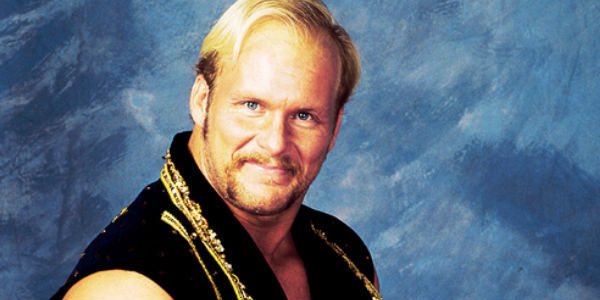
Another future headliner cut from the WCW roster in 1995 was none other than Steve Austin. Whilst recovering from injury, Austin was informed by Eric Bischoff's assistant that the company were terminating his contract. This led to a short spell in ECW, before Austin made his way to the WWF and eventually became the hottest character in the industry as 'Stone Cold'. In 1995, he was simply an excellent in-ring performer. According to Ric Flair, he routinely told WCW management behind the scenes that they had to do more with Austin. Unfortunately for both, there weren't too many who agreed with Flair's assessment of the wrestler, who wasn't viewed as a potential top star. The wrestling landscape could have been very different had those in charge listened to Ric Flair. Who knows where Austin could have ended up had WCW decided to push him and give him what he wanted. The man has made it clear that he did grow frustrated with life in the company, but it makes sense to imagine he would have stayed longer had management been interested in pushing him.

5. WCW Considered Changing Hulk Hogan's Look Before nWo
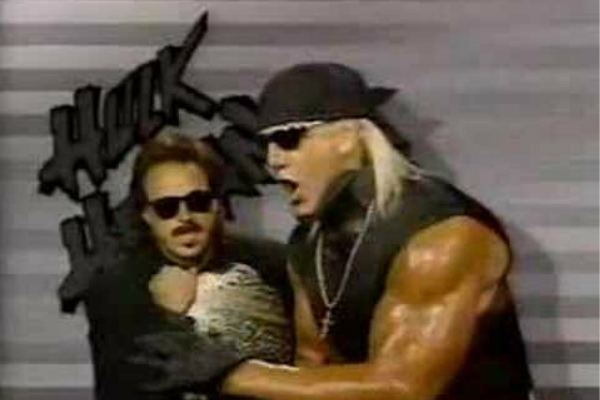
In the Summer of 1996, Hulk Hogan would unthinkably turn heel and help form the New World Order faction. The trademark red and yellow outfits of before would almost immediately be done away with, and the new 'Hollywood' Hogan started dressing in black and white. Stunningly, this wasn't the first time the Hulkster had done so in WCW. Less than one year before the formation of the nWo, Hulk Hogan started dressing in black and appearing as a darker version of his character. This was largely done to help develop his feud against the Dungeon Of Doom, but it's interesting to note that Hulk considered making the change permanent. According to Kevin Sullivan, there were discussions about making Hogan a less garish character. Long before the nWo heel turn, Hogan had been hearing a lot of booing coming from live crowds. The same red and yellow magic of before didn't seem to be cutting it in the mid-90's, and a change was clearly needed. Hulk needed to do something to freshen up his stale babyface act, but it's startling to imagine he considered changing up his in-ring attire so drastically.

4. Vader Worked Against Hogan In Excruciating Shoulder Pain
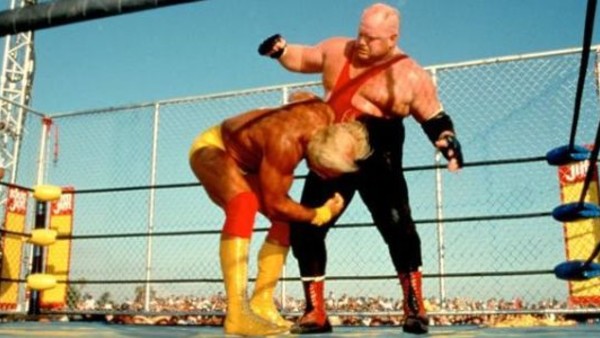
By the end of 1995, Big Van Vader would be gone from WCW. Later, he'd show up in the WWF, but his run there was nowhere near as fruitful as his one in Atlanta. Throughout the Summer of '95, WCW needed a huge opponent for Hulk Hogan, and Eric Bischoff reasoned that Vader was that man. There was only one problem, the big man had suffered a serious shoulder injury. Pleading with Vader to work at least some of the dates against Hogan, Bischoff didn't want to lose his big marquee feud. In the words of Vader, he worked through unbelievable pain at shows like the Bash At The Beach Pay-Per-View. Showing loyalty to the WCW cause, Vader also realised that there were few other heel options for mega-babyface Hulk Hogan at that time. In later interviews, Vader remarked that whilst he doesn't regret working through the pain, it didn't really do much for his career. He'd have a falling out with management anyway, following a backstage fight with Paul Orndorff. This would directly lead to the termination of his WCW contract, but Vader does deserve credit for working through the pain barrier.

3. Nitro Beat Raw In Ratings Multiple Times

The debut edition of Monday Nitro on September 4th, 1995 ran unopposed. That week, Monday Night Raw didn't air, and Nitro posted a 2.5 rating. It was a promising start for the program, one which would eventually become the hottest broadcast on wrestling television. Fans were excited for matches such as Brian Pillman vs. Jushin Thunder Liger, and wanted to see more. A lot has been made over the idea of WCW never beating the WWF until they captured lightning in a bottle with the nWo storyline. In truth, that's not strictly the case, because Nitro whipped Raw in the ratings several times before the end of 1995. In fact, on September 25th, Nitro posted a 2.7 rating to Raw's 1.9. In the main event of the WWF show, The Undertaker faced The British Bulldog. Over on Nitro, Meng defeated Lex Luger in the main event slot. It's strange to think that WCW beat the WWF on this occasion, especially considering 'Taker vs. Bulldog was the better bout. It wouldn't be the last time Nitro came up trumps, WCW won the ratings war 6 more times before the end of 1995. This isn't something that's often brought up when people discuss the 'Monday Night Wars'.

2. Alex Wright Defeated Both Triple H And Steve Austin

Ask any number of pro wrestling fans who Alex Wright is now, and only a certain generation will be able to provide you with an accurate answer. Known as 'Das Wunderkind' right off the bat, Wright was a German grappler signed by WCW in 1994. Straight away, there were high hopes that he'd be a major star of the future, but WCW fans never really took to the guy. That didn't stop management from attempting to push him relentlessly. Everyone from Ted Turner and Eric Bischoff, to many others at Time Warner were interested in making Wright a main event player. By 1995, things had slowed somewhat on his push, but the German did remarkably beat a pair of future WWE legends. In the space of less than a year, Alex Wright beat both Triple H and Steve Austin. In the case of Austin, he regularly wrestled Wright on the house show circuit. In WCW, Triple H was cast as Jean-Paul Levesque, and stared at the lights for 'Das Wunderkind' at Starrcade 1994. Later, he'd also lose several matches to Wright on live events and syndicated television shows. Alex Wright never became a big star, it's amazing that WCW chose to focus on him instead of Triple H or Steve Austin.

1. Lex Luger's Debut Smirk Irked Hulk Hogan
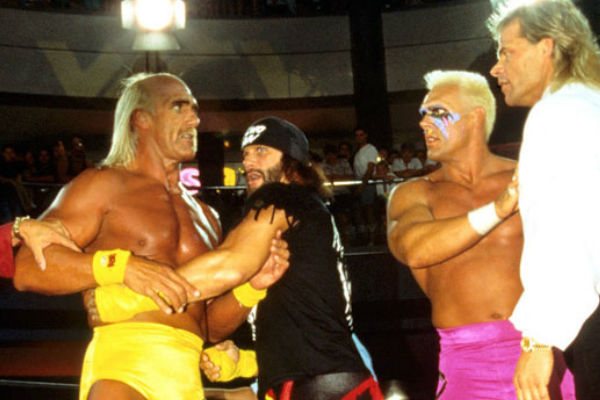
For the very first episode of Monday Nitro, WCW needed something big. Looking to create a shocking moment, the company signed Lex Luger from the WWF, right under the nose of Vince McMahon. Luger had appeared just days earlier for McMahon, but he strolled out on Nitro, fresh off signing a contract with the competition. Going face-to-face with Hulk Hogan, Luger had a serious stare down with the WCW World Champion. The fan response was excellent, and the program went off the air without a hitch. Everybody was delighted with how the broadcast had turned out, everyone that is aside from Hogan. Irate with Luger behind the curtain, Hulk was frustrated that Lex had visibly smirked on camera. According to Luger, he thought the show had gone off the air by the time he smiled. In Hogan's mind, this ruined the confrontation, one which was built around the idea that Lex was coming to supplant Hulk as the top babyface in the company. It's unlikely many fans read into things the same way as Hulk, but there was an argument behind the scenes over what had happened.

Contributor

Lifelong wrestling, video game, music and sports obsessive who has been writing about his passions since childhood. Jamie started writing for WhatCulture in 2013, and has contributed thousands of articles and YouTube videos since then. He cut his teeth penning published pieces for top UK and European wrestling read Fighting Spirit Magazine (FSM), and also has extensive experience working within the wrestling biz as a manager and commentator for promotions like ICW on WWE Network and WCPW/Defiant since 2010. Further, Jamie also hosted the old Ministry Of Slam podcast, and has interviewed everyone from Steve Austin and Shawn Michaels to Bret Hart and Trish Stratus.