10 Things You Learn Binge Watching Every WWE Raw From 1996
ULTIMATE diminishing returns and light at the end of the tunnel.

If 1995 was a naff year that exposed the fragility of the WWF formula, then 1996 was a stunning turnaround, return to form and sign that things would get better. '96 saw debuts for future legends like The Rock and Mick Foley, provided a landmark moment in Steve Austin's career and introduced overweight plumber TL Hopper.
Yep.
For every gaze at brilliance to come one was allowed into the WWF's crystal ball, there was a character like The Sultan or the regrettable "Razor Ramon" and "Diesel" comebacks in September that somehow roped poor Jim Ross into their embarrassment. Across 51 episodes of flagship telly though, Raw was a huge improvement over '95.
It had to be. The WWF couldn't afford to produce another 12 months of that crap - not with WCW breathing down their necks and Nitro beginning to spank Raw in the weekly ratings by summer. Under pressure and knowing he needed to adapt if he was going to survive, Vince McMahon was nonetheless hesitant to move on from old, established ideas until later in the year.
Then, he went wild...
10. They Really Didn't Capitalise On Austin 3:16
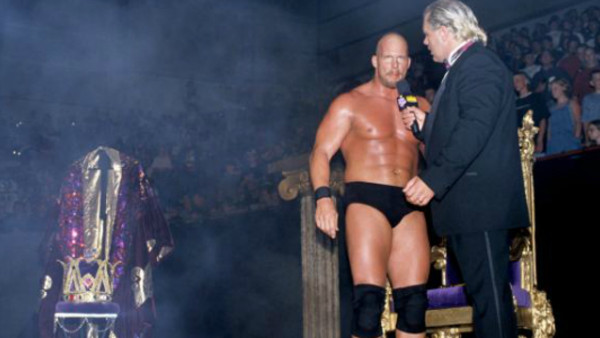
The popular WWE narrative suggests Steve Austin won that 1996 King Of The Ring and then immediately became a big deal. That's not the case. In fact, the immediate aftermath of that tourney win was dire for 'Stone Cold'. He lost to The Undertaker by DQ 24 hours later on the 24 June Raw then didn't appear on the show again until 22 July.
The presentation of him when he did show up was more worrying.
Austin played second fiddle to Goldust's interference against 'Taker, then got bumped down to third because Brian Pillman was busy working his new 'Loose Cannon' gimmick. The outright ignorance of Austin (who had just won the biggest tournament of the year, remember) is stunning to revisit.
It's been noted before that Austin suffered through some stumbling blocks after becoming 'King' and had a useless 'Free For All' scrap with Yokozuna at SummerSlam, but studying his career right before that is similarly startling.
9. Sycho Sid's Reunion With HBK Made Zero Sense
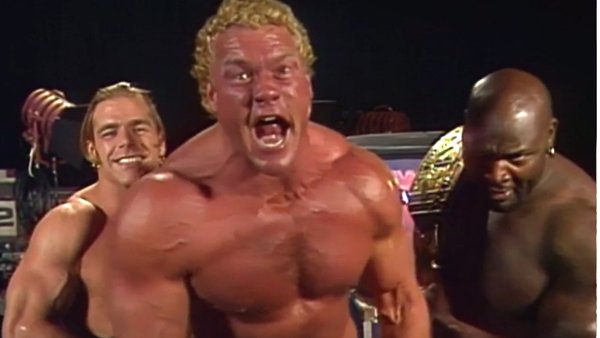
On 3 April 1995, big Sid stabbed Shawn Michaels in the back and helped turn the 'Heartbreak Kid' into the federation's latest face sensation. On 8 July 1996, Sid returned from his latest lay off and was revealed as Shawn and Ahmed Johnson's partner for the upcoming In Your House 9 pay-per-view.
Huh?
The WWF didn't even try to explain why Shawn and Sid were suddenly buddies again - the 'Sycho' one simply cut an explosive promo announcing his involvement at IYH and that was that. Behind the scenes, problems between Vince McMahon and The Ultimate Warrior had forced the company to find a replacement.
So long as that replacement was a major star, Vince didn't give a toss about who it was or the questionable storyline logic between old enemies. To make things even more confusing, Sid and Michaels became rivals again by the end of the year.
8. Seeing Bret Hart Work Triple H Is Weird

Bret Hart and Triple H worked quite regularly together on house show loops in 1996 and 1997, but they only had two televised matches with one another. The second took place on the 3 March '97 edition of Raw, but it's the 4 March 1996 original that goes under the microscope here.
It's... weird to watch.
Despite growing up around this time and actually watching Raw weekly, yours truly barely remembers Hart and Hunter working. They feel like they should've existed in totally different eras (possibly because Trips is still around today as such a huge part of the WWE machine). It almost feels like this shouldn't have happened.
It's worth a watch however, especially because Hunter wasn't in the WWF dog house due to the 19 May 'Curtain Call' just yet. His smooth transitions alongside Hart show what might've been achievable had his name not become mud a few months later.
7. The Significance Of 8 April

According to guys like Kevin Nash, Vince McMahon no-sold every damaging episode the WWF suffered. If the boss wasn't going to sell a federal government investigation, then he damn sure wasn't going to let his roster see how much pressure WCW was putting him under by 1996.
Privately, it was a different story.
McMahon could see that Eric Bischoff was getting the jump on him by putting Nitro's start time forward by three minutes to 8.57pm. So, Vince had a chat with suits at the USA Network and convinced them to do the same for Raw. On 8 April they did, but the show ran unopposed.
Nitro was pre-empted that night and didn't air, so the ploy probably only succeeded in making regular viewers miss the first few minutes. Late-comers tuning in at the usual 9pm slot would've seen a Yokozuna vs. Vader match in progress.
6. Faarooq Didn't Need A Manager
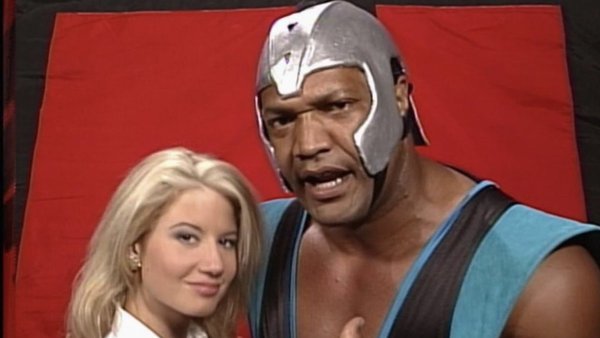
Ron Simmons might just win the prize for 'Worst Wrestling Outfit Of 1996'.
His foam gladiatorial helmet and mis-matching singlet didn't exactly scream "WWF Superstar" on paper. In actuality, it made the debuting Faarooq look like a total fool when he marched out on the 22 July episode of Raw and became the fed's latest midcard heel.
Just look at Sunny's face in the screenshot above - it says everything. Even she must've known that this gimmick wasn't a good fit for her character; before linking up with NERF salesman Faarooq, Sunny had been either seducing or tricking her clients into doing her bidding. She wasn't going to do that with Ron, so it wasn't a great fit.
Also, Simmons could promo his ass off. His distinctive, barking voice was commanding, and he didn't need anyone to rock the mic for him. In retrospect, the first few months of his WWF career were an absolute shambles.
5. Vader's Attack Started A Trend
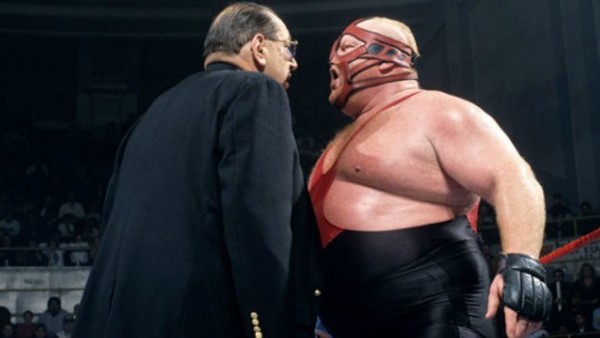
Conversely, the first chapter of Vader's WWF career was his best.
24 hours removed from debuting in the 1996 Royal Rumble, the big man squashed Savio Vega and assaulted everyone in sight on the 22 January Raw, including ageing WWF President Gorilla Monsoon. Ol' Gorilla took quite the pasting from Vader, and it's pretty special to look back on now.
Authority figures had never really been beaten up like that on WWF television, so Monsoon was a bit of a trendsetter. He'd pave the way for the kind of capers Vince McMahon, Sgt. Slaughter and countless others would get up to over the next several decades.
Perhaps the only downside to this is that Vader was kayfabe suspended (he actually needed to rehab from surgery) and didn't show back up for another few weeks. By that point, it was clear to see that he still wasn't 100%, but the WWF didn't want to wait any longer.
4. The Gun Angle Remains Shocking
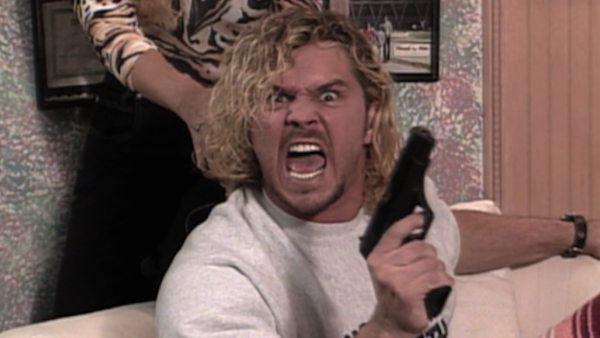
In between standard WWF fare like Marc Mero vs. "Razor Ramon" and Alex Porteau vs. The Sultan, Brian Pillman decided to whip a gun out and try to murder Steve Austin on the 4 November episode of Raw. This gun business remains shocking, and it seemed totally out of character for the WWF.
Attempted murder wasn't exactly family-friendly entertainment.
It's a little jolting to watch for somebody who has been chronicling Raw from its humble beginnings in 1993. Back then, episodes were more likely to be stuffed with Gene Okerlund's charming inserts or cartoonish banter from Randy Savage. Three years on, and one of the Hollywood Blondes was trying to shoot his old partner.
This isn't something the WWF should've tried. That might be easy to say now, but it didn't really do anything to sell the rivalry. Think about it: Pillman tried to shoot Austin, so why would fans settle for a one-on-one wrestling match to blow things off?
3. Mankind's Coincidental April Fool's Day Debut

Did you know that Mick Foley's WWF debut came across as a rib?
Probably not. Foley's Mankind character was introduced on the 1 April '96 edition of Raw, and he defeated Bob 'Don't Call Me Thurman' Holly in a short bout. On commentary, Vince McMahon drew attention to the date and said it was "fitting" that Mankind was debuting on April Fool's Day.
McMahon's announcing probs wasn't supposed to, but he made it sound like the WWF were pulling everyone's leg with the gimmick and that Mick would be doing something else soon. Of course, that wasn't the case - Mankind was there to stay, and he'd go on to become a vital opponent for The Undertaker all year.
Anyone who has read Foley's first book will know that he had to fight to make some changes to McMahon's original vision for the Mankind persona. Was this Vince's way of pushing back and suggesting that the character Mick wanted to play would be short-lived?
2. Warrior's Return Was Totally Out Of Place

Triple H was rewarded for his fine efforts against Bret Hart on the 4 March Raw by being hand-picked to do the J.O.B for The Ultimate Warrior at WrestleMania XII. The next night, Warrior sprinted out, did his usual rope-shaking routine, thanked the fans for their support and then entered a feud nobody saw coming, against Goldust.
It was so odd.
Seeing Goldust attempt to flirt with Warrior (who was busy pretending 1996 was 1990) was a mindf*ck. The returning hero looked totally out of place in the WWF of '96, and his short run was akin to someone time-travelling to the wrong date. Warrior's old-school aura clashed horribly with almost everything else the WWF product had to offer.
Compared to athletic workhorses like Bret Hart and Shawn Michaels, he was slow. When placed side-by-side with supernatural feuds like The Undertaker vs. Mankind, he somehow looked boring. The guy just didn't fit, and it's hard to watch.
1. WCW Nitro Improved WWF Raw
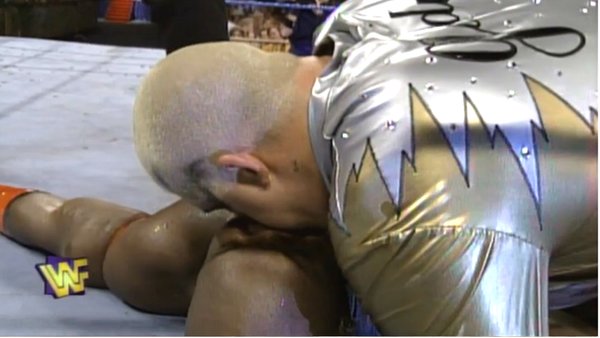
McMahon might not have brought Warrior back at all had he not been battling the oncoming threat of WCW Nitro on Monday nights. After initially palming the competition off and treating it like a short-lived pest, Vince realised that he had to change his style if Raw was going to remain on top.
By May, he was going all-in on a more raunchy product.
Angles like Goldust planting a kiss on Ahmed Johnson (which was controversial and shocking for the time) and Diana Hart alleging that top babyface Shawn Michaels had tried to sleep with her showed the way. Then, the WWF had Brian Pillman pull a gun on Steve Austin and tried smoke and mirror tactics with the return of "Razor Ramon" and "Diesel" later in the year.
Some of it (those cosplay fakes, for example) was rubbish, but 1996 Raw was a vast improvement generally over the seriously lame 1995. Nitro, even before it pipped Raw in the ratings for the first time in June, was pushing McMahon to try different things. That was for the best.
-
What caught your eye from Raw's fourth year on the WWE Network? For more like this, check out 10 Things You Learn Binge Watching Every WWE Raw From 1993, 10 Things You Learn Binge Watching Every WWE Raw From 1994 and 10 Things You Learn Binge Watching Every WWE Raw From 1995!