10 Things You Learn Binge Watching Every WWE Raw From 1997
Change everything.
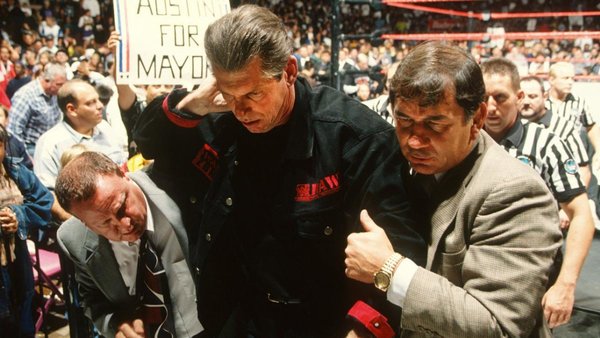
The WWF produced 50 episodes of Raw in 1997, but a handful changed everything.
'97 gave birth to D-Generation X, waved goodbye to company icon Bret Hart, introduced future legend Kane and changed the format of Monday Night Raw for good. It was a year in which Vince McMahon looked over at the success of WCW's Nitro flagship, muttered a quick, 'f*ck it' and ditched his family friendly vision in favour of something with a harder edge.
Though it wasn't quite called it at that point, the company were veering towards 'Attitude', and they were gathering pace by the week. 1996 had been a strange year that started with familiar cartoonish fare. Then, towards the end, McMahon started experimenting with shocking angles and controversial characters like he was on a one-man mission to get his show thrown off USA Network.
This new approach went into overdrive throughout 1997. The WWF even deployed some extremists to try and win back older fans from the clutches of the super-cool nWo; there was almost nothing McMahon wouldn't try.
Here's everything one can learn from binging countless hours of '97 WWF...
10. The Changes Were Needed
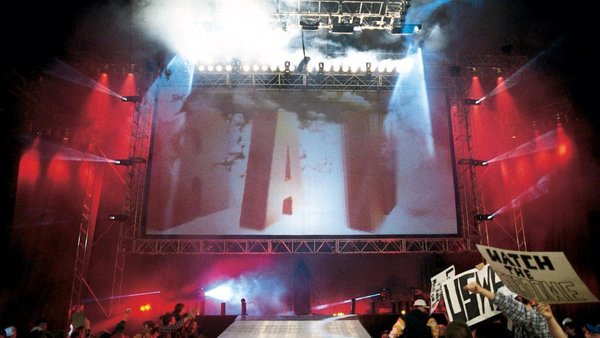
Raw went two hours for the first time on 3 February 1997, and the WWF followed that up by changing the show's look, stage, intro music and name on 10 March. Gone was the basic, stripped down look of before - that was replaced by a huge tron, enough fireworks to blow the 1995 budget and a bold declaration.
"Raw Is War", Vince McMahon barked.
This change is one yours truly was waiting on when he began the mammoth task of binging every single episode of Raw from the show's humble beginnings onwards. He couldn't wait to get through the pre-taped 3 March episode (held in Germany) and experience the excitement of change all over again.
The WWF badly needed this. Their flagship had started to look a bit old hat next to WCW's lively Nitro broadcasts, and it was clear that McMahon had to do something lest he slip too far behind Eric Bischoff's brash product. It worked a charm.
9. 1997 Featured A Landmark First

Before that, there was another landmark moment.
On 17 February, a mere 24 hours after the In Your House 13: Final Four pay-per-view, Sycho Sid (of all people) became the first man to win the WWF Title on Raw. His win over Bret Hart felt huge at the time, not least because most had expected Hart to headline that year's WrestleMania as either champ or challenger.
Of course, Shawn Michaels "losing his smile" earlier in the month necessitated Bret's win at In Your House. Then, apparently seeking a way to double up on attractions for 'Mania 13, McMahon decided to put the belt on Sid, program him against The Undertaker and pivot Hart back towards Steve Austin.
The amazing thing here is the title change itself. It took five years for Raw to book a World Title switch - meanwhile, over on Nitro, it had only taken WCW a few months. They had Randy Savage beat Ric Flair on the 22 January 1996 episode.
8. Some Of The WWF's Production Was Horrible
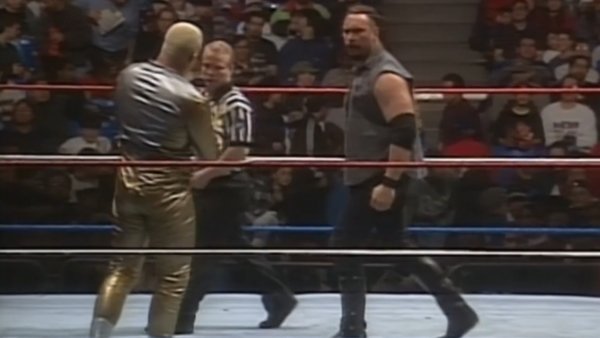
Eric Bischoff regularly claims on his '83 Weeks' podcast that WWE has always been at the forefront of production techniques, and that his WCW group found it difficult to compete despite being owned by a television company. 1997 says otherwise, Eric.
There are several episodes of Raw from '97 that look awful.
The 3 February edition taped at the SkyDome in Toronto, for example, is grainier than a bowl of Shreddies. Camera quality is seriously poor, and that makes watching the program a real chore. Then, on 3 March, the WWF hit up Germany for another pre-taped effort that looked like it was filmed using a 2002 flip phone.
Both editions, whilst international, were inexcusably amateurish. The WWF would clean that up by the end of 1997. Indeed, Raw started to have much higher production overall by the time they switched up the set and went live more often.
7. ECW's Invasion Is Retrospectively Weird

If anyone had suggested in 1995 or 1996 that Vincent Kennedy McMahon would let another promotion into his world, there'd be laughter for days. McMahon has always been notoriously insular when it comes to acknowledging other companies, and that's why ECW's mini-invasion during 1997 remains a shocker.
It went against Vince's own policies.
Paul Heyman led his troops into battle on WWF programming for the first time during the early months of the year, and it was every bit as weird as it sounds to see gritty, hardcore characters like The Sandman and Sabu on there. Looking back, it's even stranger when they're sharing screen time with the likes of The New Blackjacks and Aldo Montoya.
Yes, Montoya would go on to find ECW success as Justin Credible, but he was nothing more than a walking WWF cartoon at that stage. This had to be so damn odd for casual viewers reared to believe that nothing mattered outside McMahon's walls.
6. You Need To See A WrestleMania 13 Rematch
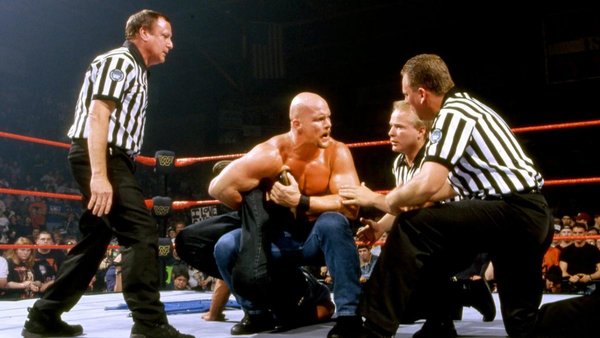
On 21 April, Steve Austin and Bret Hart worked a WrestleMania 13 rematch that's been forgotten about even by fans who lived through this era. That's a shame, because their 'Street Fight' was one of the most engaging, violent and fun brawls Raw has ever produced.
You need to see it.
Modern wrestling feuds could learn a lot from how both men tore into one another like they were genuinely plotting the other's demise. Everything, from Austin refusing to relinquish Bret's own Sharpshooter to the ambulance angle booked later in the same episode, is must see stuff.
'Mania 13's submission effort gets a lot of love, and rightly so, but this was a blistering third chapter that closely followed another banger 24 hours earlier at In Your House 14: Revenge Of The 'Taker. Seriously, enough chat - just go watch it.
5. How Odd It Is Seeing One IC Title Feud
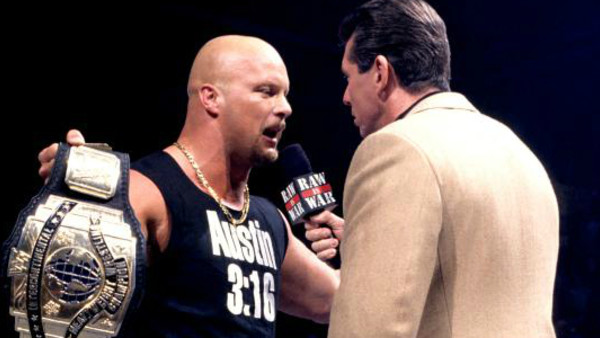
It was obvious to everyone that Austin would be WWF Champ eventually. His push quickened in 1997 (following a rather awkward second half of 1996), and fans couldn't get enough of his rebellious antics. The WWF, perhaps smartly, made everyone wait for 'Stone Cold' on top.
He had another job to do first.
Austin was programmed in the Intercontinental Title mix opposite fellow rising star Rocky Maivia. As strange as it is looking back, this rivalry was essential in the continued development of both men. It's also worth pointing out that you'd probably never get an IC Title program as good as this in 2020.
Austin and Maivia were turning heads before/by summer, but the WWF top line mix was still packed with names like Shawn Michaels, The Undertaker, Bret Hart and Sycho Sid before half those guys disappeared. That left some spots open at the top.
4. 22 September Had One Of The Best Half Hours Ever
Raw's three-hour length means WWE like to spread major moments out. If they didn't, then they'd struggle to fill each broadcast or leave anything in reserve for the coming weeks. That wasn't the case back in 1997 - the company were nearing their creative peak.
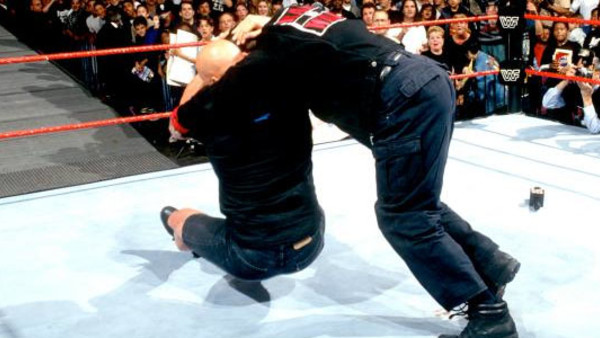
On 22 September, they booked two of the most awesome moments of the year back-to-back on the same episode. After everyone had been treated to Steve Austin's first Stunner on then-announcer Vince McMahon, the promotion put on a belter of a 'Falls Count Anywhere' scrap between Triple H and Cactus Jack.
How's that for a 30 minute segment?
Those two quarter hours showed what the WWF's future could look like. If they could continue to stack memorable skits and matches on top of one another like that, then they'd turn Raw into a Nitro-beater eventually. This was a far cry from the sparse excitement the show once produced.
3. The New Age Outlaws Sucked Pre-DX
Apologies, Outlaw-lovers, but it's true.
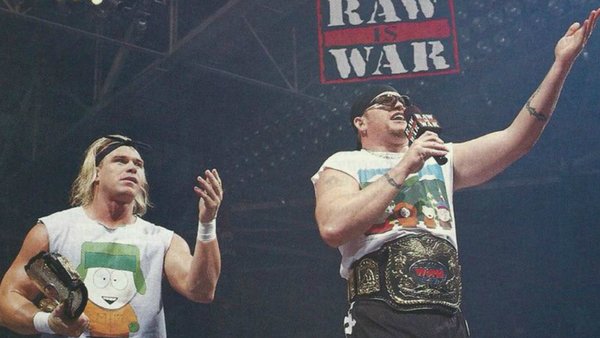
Before they joined up with Triple H to form a new version of D-Generation X in 1998, both Billy Gunn and Road Dogg were struggling to get over. It didn't help that their pre-tag gimmicks ('Double J' Jesse James and Rockabilly) had been received poorly by an audience tired of such hokey horsesh*t.
So, the New Age Outlaws were born, but things didn't get off to a hot start. Their entrances played before silence, and their one-note feud with LOD (during which they renamed the spike-wearing squash-match-machines "OLD", because... well, you get it) was sagging by the end of the year.
It'd take DX catchphrases and a babyface turn to make the Outlaws workable. Before that, the WWF could've been forgiven for thinking they'd made a mistake by shoving both singles flops together because they had no other ideas for them individually.
2. Rick Rude's Jump Was Messy

The common narrative surrounding Rick Rude is that he was left disgusted by the WWF's treatment of Bret Hart at Survivor Series 1997. Eager to stick it to the company, he arranged a hasty exit and jumped to WCW. Once there, Rude became the first man to appear on both Raw and Nitro simultaneously (the WWF's show was pre-taped on 17 November).
Makes sense... or does it?
On 10 November, one night removed from the shock of the 'Montreal Screwjob', Rude fawned all over Shawn Michaels and said he never quit on the pay-per-view because he was the best. If Rick was so unhappy with things in the WWF, then why did he agree to show up on Raw 24 hours after Survivor Series to work this gloating segment?
It doesn't add up. Did it take him a week before he decided he was mad enough to rant at McMahon, Michaels and the WWF on WCW Nitro, or was Rude playing everyone?
1. HBK's Little Dig (Sort Of) Backfired

On that same 10 November episode, Michaels said something rather interesting.
After busily bashing Bret Hart and crowing about how he'd sent the 'Hitman' packing to those other "dinosaurs" in WCW, Shawn looked right down the camera lens and berated Bret again by saying he'd "never beat up a 52 year old man". That was a reference to Hart punching Vince the previous night at Survivor Series.
Rather hilariously, Michaels went on to beat up a 60 year old man at WrestleMania 22 when he wrestled McMahon in a 'No Holds Barred' match. He couldn't possibly have known that in '97, obviously, but it's still funny to look back on in 2020 knowing what would happen next; to be fair, Bret topped him again by beating up a 64 year old Vince at 'Mania XXVI in 2010.
Shawn also said that his friends (Kevin Nash and Scott Hall) would beat Hart up whenever they pleased in WCW. They didn't need to - the WCW system gave Bret a kicking instead.
-
What caught your eye from Raw's fifth year on the WWE Network? For more like this, check out 10 Things You Learn Binge Watching Every WWE Raw From 1993, 1994, 1995 and 1996!