10 Times WWE Narrowly Avoided Disaster
In which Vince McMahon is saved from himself.

WWE is botch-proof in 2021.
To put into perspective just how botch-proof WWE is, perhaps a more accurate way of putting it is "WWE is so rich and the key television marketplace so desperate that they can f*ck up every last merch-selling babyface and make them look like infant-weak geeks, and they'd still come up sucking a pair of t*ts in a barrel of thumbs".
The age of rights fees has allowed the company to make the exact sort of mistakes that have nuked other wrestling promotions over the years and receive unprecedented financial reward for being absolutely f*cking useless. The mistakes WWE narrowly avoided in the past - as you'll read about here - could be repeated, and nowt would matter. Vince McMahon could bury an entire, ready-made generation of over talent tomorrow, and WWE will still be here. This isn't hyperbole; the mad lad did it two days a week between 2015 and 2021.
In even better news for the promotion, the "morally conscious" mainstream doesn't care about it, which in turn allows Vince to portray certain ethnic talents as punchlines and portray woman as whopper-t*tted airheads who don't give a sh*t about anything but an airbrush.
This is a multi-part story, in effect, of how WWE avoids getting in its own diabolical way...
10. WrestleMania I Kicks Out At 2.9

WrestleMania I really was do or die. An inveterate carny is right twice a day.
The WWF, per a superb long-form discussion between Dave Meltzer and the Lapsed Fan, would have, probably, backed by creditors, survived in some form or other had it failed. But Vince McMahon would not have retained the financial advantage (nor potentially the full influence) to run away with the wrestling war, ripping open the time/space continuum and creating a fascinating alternate timeline in which we wouldn't have had to sit through a single scripted promo, much less several every week for over two f*cking decades.
Despite Hulk Hogan's surging popularity and house show drawing power, the new, ambitious and experimental WrestleMania concept did little to generate significant or even sufficient interest; the majority of advances for closed circuit venues were poor, leaving the show and the World Wrestling Federation itself on the precipice of doom.
In a strange sequence of events, Vince averted disaster by almost creating one; the week of, Hogan drew huge press for bloodying and choking out Hot Properties host Richard Belzer, who questioned whether this wrestling deal was on the up, as Hiro Matsuda nodded sagely in appreciation.
This incident combined with a tremendous Hulkster performance on Saturday Night Live all but saved the day.
9. Prison Inmate Saves Vince McMahon From Prison

Due process is of huge importance.
Everybody has the right to a free trial.
And, while the complexities of the legal system are all too frequently exploited, the process is as arduous and as painstaking as it is because it losing one's freedom should only be taken away if they are guilty beyond a reasonable doubt.
This is why the judge didn't take one look at The Warlord and boot Vince McMahon into a cell then and there.
Indicted on charges of distributing anabolic steroids to his wrestlers, McMahon was in deep sh*t in '94. The Warlord and others admitted under oath that they enhanced their bodies artificially, where Rick Rude expressed his belief that Vince, without an explicit instruction, asked him to do so in a coded way.
What would have happened?
Bruce Prichard has disputed the widely believed Jerry Jarrett succession plan, which all but confirms the veracity of it. Vince wouldn't have stayed in the clink for long, and Jarrett was a diamond-sharp wrestling mind, but the carny sharks may well have chewed each to death in a mad bid for power.
Mercifully for the WWF, witness Nailz buggered it up for the prosecution by admitting he "hated" McMahon, torpedoing his credibility and that of the case.
8. Mankind Nearly Dies At King Of The Ring '98

Not that it's pleasant to recall the death of Owen Hart from anything but the perspective of a tragic and devastating loss of a family man, but it was disastrous for the WWF. A deserved and invited disaster, but a disaster nonetheless: the public perception of the company was never the same after May 23, 1999.
Mandatory silicone t*ts and racial caricatures were at best deeply unpleasant, but this repugnant Attitude schlock, in addition to eliciting what was only ever temporary hysterical posturing at the time, felt quaint and harmless in comparison. Many have never looked at WWE in quite the same way ever again.
A WWF independent contractor came shockingly close to death a year prior.
After taking the first, terrifying fall - an unhinged and dangerous stint, albeit one absorbed on a flat surface and timed to perfection - Mick Foley at King Of The Ring 1998 was plunged through the roof in an unplanned second bump. Under the force of an Undertaker choke slam, the roof was meant to only give way slightly, leading to a spot in which Foley was to dangle from the broken structure and fall to the old "concrete" canvas.
This didn't happen; the structure was more flimsy than they had reckoned, and Foley plummeted directly to the mat and missed the leg of a chair - an ostensible spike - by mere inches.
7. The Hiring Of Vince Russo (General)

1995 was a significantly worse year for the WWF than 1996, but Shawn Michaels endured a terrible WWF Title reign in terms of business, a fact only obscured by the unprecedented failure of Diesel in the top spot.
In 1995, the company was perilously close to the brink; business was in the sh*tter, RAW often played out in front of high school gyms, and fans were entirely unenthused about the pushed acts, who ranged from virtually immobile to woefully unconvincing. WWF fared better critically a year later, but the fans were still not interested to any appreciable, needle-moving extent. The March 3, 1997 "live" RAW emanated from Berlin, Germany, or an industrial dystopia, for how bleak it looked.
The worst thing about the show is that it was headlined by a classic pure wrestling peacock battle between Owen Hart and the British Bulldog, which drew an all-time bad rating. It was the distillation of unglamorous, dimly-lit wrasslin' - and it failed spectacularly, allowing an ambitious, enterprising Vince Russo to grow in influence.
The show's failure was proof of concept for his low-brow, zeitgest-y new vision, which virtually, ultimately saved the WWF from the slaughter to WCW Nitro.
Wrestling failed. That's why sports entertainment will never die :'(
6. The Hiring Of Pat Patterson (General)

'10 Times WWE Narrowly Avoided Disaster' is the title of the list, but in this instance, it's effectively the title of the entry.
In 1998, Vince McMahon fully evolved into the incredible Mr. McMahon character and, with perfect comedic flair, took credit for the WWF powerhouse from which he was intent on removing Stone Cold Steve Austin. In reality, Pat Patterson was almost as vital to its success.
"If you catch the heel by surprise in a fluke before retreating up the ramp in cowardice, the crowd will go banana!" Patterson never said, because he knew what he was doing.
His was a genius wrestling mind, one so sharp that it allowed the Fed to be an actually good and emotionally intense version of a big, daft cartoon. In addition to creating the Royal Rumble match, a veritable mathematical formula for generating multiple crowd pops, Patterson was the WWF's finish guy. In the halcyon days, every adrenalised sequence, crushing low and euphoric triumph was a Patterson special. He had the fans on stings. The WWF was never the most technically-minded league, nor the most athletic and bloody, but the drama was out of this world.
Prior to its reinvention as a PG property elevated by rights fees, the WWF tanked as a business when Steve Austin turned heel. It died as a creative force when Pat Patterson drifted away from the room.
Does the WWF win without him?
5. The Last Time WWE Was In Any Genuine Trouble
WWE is fine now in the medium and long term. The TV industry isn't getting any less desperate, the company continue to post record profits, and they continue to make money hand over fist by fisting uprooted families right in the f*cking ear.
You'd have to go back to 2014, possibly, to find a time when there was any sort of consequence to anything WWE did. That year, the company chatted sh*t and got banged; a bullish McMahon ultimately misled investors by over-pushing size of the expected rights fee. The deal signed with USA did not see the fees tripled, as suggested, which briefly nuked the stock price.
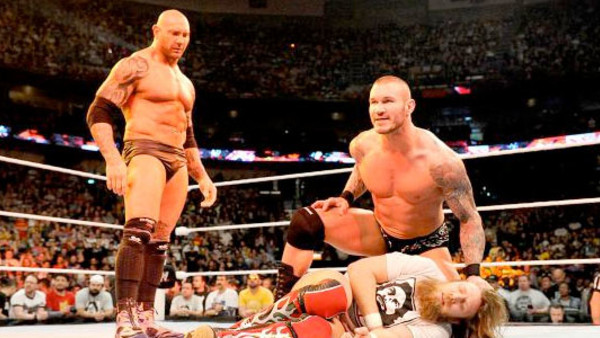
The company wasn't yet future-proofed. Consumer-driven metrics still mattered to a degree, and WWE almost pissed the consumer off to high heaven by planning a Randy Orton Vs. Batista main event at WrestleMania XXX. The prospect was considered so unfathomably uninspiring and removed from the pulse that social media platforms soon broke out in conversations of protests, hijacks, even a mass walkout.
What if they didn't cave to the pressure? What if fans actually walked out of the Superdome, which, together with the death of the Streak, might have converged to shatter all hope within the fandom? What does the already underwhelming rights fee look like then?
Even then, a corporate revamp had already set this new paradigm in motion...
4. Or Were They?

Stephanie McMahon was a toxic and horrendously counterproductive television character, just the absolute worst. Excruciating.
The snarl, the get-out-of-my-ring cadence, the relentless, oppressive heat, the sheer lack of an actual focus and purpose...why did she hate everyone, faces and heels alike? If she hated everyone, and she did because they all got slapped really, really hard, why did she hold an interest in promoting them in her guise as a wrestling promoter? Just do something else, Steph, Jesus.
You might even smile once in a while!
Not that it made the television any less brutal, but the arrogance of the performer was at least informed by her pivotal executive role. She actually did do something else, and she did it phenomenally well. As Chief Brand Officer, Steph did so much to extract those hundred of millions upon hundreds of millions of dollars from the TV industry as a result of her bloviating marketing-speak which, while odious perhaps to you or I, framed WWE as a legit, clean and philanthropic public corporation removed entirely from the old perception of a blood-soaked CTE-inflicting drug den. Under this revamp, WWE, beleaguered by the Chris Benoit double murder-suicide furore of 2007, became far more appetising to TV buyers, after which the money never did stop rolling in.
Mattel requested that WWE go PG; Stephanie executed that vision to a quite extraordinary degree.
3. NXT 2.0 Is Simply Too Unpopular To Admonish

In theory, WWE could run depraved hardcore pornography in place of 205 Live, and nobody would know the difference except the guy whose job it is to create GIFs on social media.
Depressingly, what remains of NXT is practically right there with it in terms of "give a f*ck," and the reality of the show isn't too far removed from that joke. It's exactly the sort of show that would get absolutely ethered in mainstream outlets, were mainstream outlets remotely interested in covering it. Mandy Rose and Toxic Attraction are written by old men and only care about being attractive. Rose is NXT Women's Champion, but she's more interested in how the belt itself looks good on her. Every camera operator in that building is a voyeur whenever the faction is onscreen, not that you'd even know which building it's in. All you know, from the close-ups, is that it is located in Upskirt City.
Ikemen Jiro is made to portray a complete f*ckwit who repeats the English phrases he has learned out of context and at inopportune moments, like a sentient '80s movie object. He is barely presented as a human being. Funny how Grayson Waller isn't playing that role, no? It's not on at all.
The show is sleazy, a '90s-adjacent special that is not remotely fit for the times, but procedural re-runs thrash it, so WWE escapes the scrutiny given to more respectable properties.
2. WWE Gets Away With Grooming Angle

While there are likely several dense tomes on r/SquaredCircle that seek to explain the true nature of the relationship between The Fiend and Alexa Bliss, what was presented in reality and on television was truly f*cked up.
Presented mere months after the #SpeakingOut movement of 2020, the Fiend - billed not from "Parts Unknown" but rather "Every one in two training schools in Britain" - targeted Alexa Bliss in a ploy to unsettle her friend Braun Strowman. Alexa reciprocated this, by touching the Fiend tenderly, but soon seemed to disassociate from her normal self as close friend Nikki Cross asked what had happened to her. Alexa was defensive and insisted she was fine. She, the victim, was in a state of denial, her instincts honed to protect her tormentor.
Eventually, Alexa turned full gloopy-tongued supernatural presence with little pretence of a suppressed personality. She and Bray even played babyface, together, with no regard as to how two sequential events were connected:
1) The Fiend targeted Alexa Bliss, who revealed her reciprocal "like a moth to a flame" attraction.
2) Alexa Bliss, once effectively controlled, began to display childlike tendencies.
What the f*ck.
WWE - probably unintentionally, since creative fell hard for Alexa's spooky horror kid ac-ting - penned a grooming storyline that didn't demonise the abuser, and somehow avoided a mainstream press outlet saying "Hang on, what the f*ck's this?"
1. Zero COVID Pushback

At time of writing, Novak Djokovic is getting horrendous press for, among other things, knowingly and uncaringly spreading the 'rona that he seems to think is no big deal.
WWE escaped a similar level of scrutiny and criticism for its piss-poor and potentially dangerous handling of the pandemic. To make this expressly clear: WWE did not allow talents who had tested positive to just walk around and carry on as normal...
...because, until several outbreaks affected the camp, they didn't conduct testing at all!
Despite availability - AEW tested easily enough in parallel - WWE for a time elected only to perform temperature checks just outside of its Performance Center Orlando, Florida residency.
"We're not in North Dakota pal, you're going to be a bit warm, come on in."
Kevin Owens had to ask for mask-wearing to become policy, and over a year later, WWE simply stopped testing per Fightful Select, despite the incredible pace of the omicron surge, on the "It's probably fine isn't it" principle.