10 Ways WWE Matches Einstein's Definition Of Insanity

Repeating the same mistakes time and time again obviously takes practice...

Roman Reigns Kevin Nash It's been said that the definition of insanity is doing the same thing time and time again, only expecting the results to change. Of course, rarely - if ever - do they change, which is the exact purpose of the phrase, to discourage people from beating their heads against the proverbial brick wall over and over again. In the world of professional wrestling, many fans feel WWE are doing a lot of things wrong in 2015, and have been doing so for a number of years now. Incredibly, even though it's blatantly obvious that the product isn't setting the world on fire right now, Vince McMahon and his band of merry staff feel the need to keep forcing things down the same path. On the flipside, maybe it's the wrestling fans themselves who are insane, repeatedly asking for the same changes which never come. Once again, insanity is repeating things over and over, expecting things to change, right? Although this is true, the fans are entirely justified, because it's really up to WWE to entertain people - there's more of a responsibility for WWE to give fans what they want than vice versa. So, what are the things the company are doing which would fit nicely into this definition of insanity?

10. Let's Recap...Again

Watch the average episode of Monday Night Raw and you're likely to see a lot of recapping. Few should have a problem with keeping viewers abreast of top angles, and it's fair to say that not everybody watches the program from the start, so there should - realistically - be some footage from earlier in the show aired again. With that in mind, the sheer volume of these 'here's what happened earlier' clips is worrisome, and quite often WWE will sacrifice the length of a match to recap what happened during the show's opening segment. Again, the thought process behind this is keeping fans just tuning in up to speed with the program, but it's almost like admitting that the core audience dips in and out of watching Raw, rarely watching the whole 3 hours. One suggestion would be to cut the amount of recaps (especially on Smackdown, which is almost like a Raw repeat), and encourage people to tune into the start of the show, because it's simply not to be missed. The amount of fans who have a casual attitude, not caring if they miss something, is far from a positive.

9. Monologues Opening Each Show

Way back during his run as World Heavyweight Champion in 2002-2003, Triple H was often blamed for hogging screen time at the start of each Monday Night Raw broadcast. Cutting lengthy promos each and every week, The Game would sometimes take as much as 20 minutes to get to his main point, something which infuriated a lot of fans, who turned to the internet as a tool in which to vent their frustrations. Incredibly, this is still happening, although it's now not only Triple H who is at fault. It's understandable that WWE would want to set the scene for a story to be told throughout each telecast, but the whole process feels a little too formulaic, and with Raw being three hours long nowadays, fans are treated to seeing the same speech over and over again throughout the duration of the show. When WWE decide to open Raw with a match, or something radical like that, it feels fresh. The problem is, speaking is such an important part of how the company tell stories and sell big matches, that cannot be denied, but they really need to keep the show feeling spontaneous, rather than like a re-run.

8. Instructing Announcers To Belittle Talent
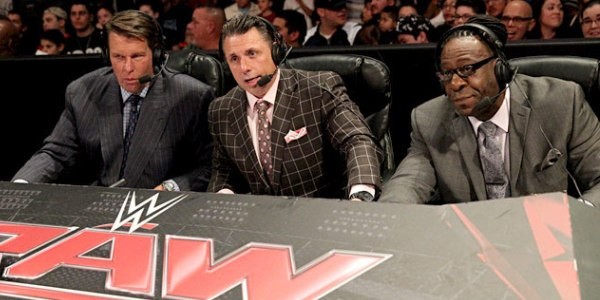
Sure, JBL's lambasting of The Ascension recently was part of a storyline, but there have been too many occasions on-air where the announce team are almost mocking what they're seeing in front of them. Maybe this is a damning verdict of WWE's own training regime, but it's not exactly conducive to fan excitement when Michael Cole is poking fun at the wrestling skills of one of the promotion's performers. Instead of having commentators belittle talent, WWE should be ironing out the kinks of their employees, ensuring that their performances are water tight. This approach is definitely insane, because it's almost like WWE repeatedly throw people into deep water situations, only to watch them struggle to stay afloat, then mock them for it and have the owner of the company say they're not ready for high-pressure situations on the WWE Network. That's backwards, and will not help WWE progress as a company. After all, how on earth can casual fans be convinced to part with their money to see some of these men and women if WWE have their on-air mouthpieces laugh when they make a mistake, making no attempt to shield the viewer and protect the wrestler?

7. Talk Show Segments End The Same Way
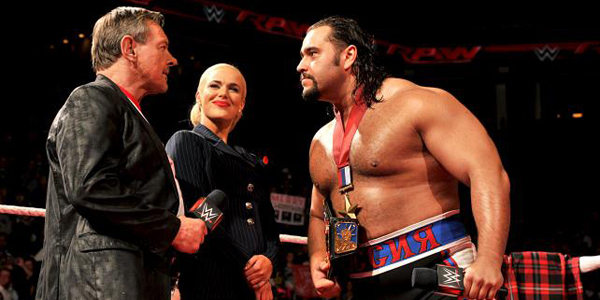
Whether it be Piper's Pit, Miz TV, The Highlight Reel or any number of talk show segments on WWE television, it's almost a given that they'll all end largely in the same fashion. If there's just one performer in the hot seat, it's likely they'll become flustered at the questions of the host. If there are two, forget about it, there's a brawl incoming. There's an argument to be made that criticising the way talk show segments are put together is looking into things just a little too much, and perhaps it is, but wouldn't it be nice to see some variation every now and then? Fans have been conditioned to expect certain things from talk show segments, exactly the same way as during contract signings for big matches. It all starts out calm, the heel gets flustered and flips the table, so on and so forth. It's routine, and routine can be pretty darn boring.

6. Stop/Start Booking Drives Fans Crazy

Talk about insanity, when Vince McMahon appeared on Steve Austin's podcast and borderline called out his current roster for not stepping up to the plate and working hard enough, the wrestling world was shocked. The main crux of this surprise came because the general consensus is that WWE aren't doing nearly enough themselves to create new money-earners for the company. A major part of the problem is the stop/start booking mentality, which - let's be honest - helps absolutely nobody. Take the case of Dolph Ziggler, for example. How many times have fans been expected to rally behind the bleach-blonde star, only for him to fail at the final hurdle, or worse yet, go on the dreaded losing streak? It's obvious that Ziggler is a proficient, popular performer, but it's madness to think he can get over with what the writing team are feeding him. It's a real lack of momentum which has swept throughout the roster, Dolph isn't an isolated case. Wrestling fans would dearly love for the company to fully get behind a few wrestlers they believe in, instead of changing the rules every two minutes.

5. Lack Of Long-Term Planning

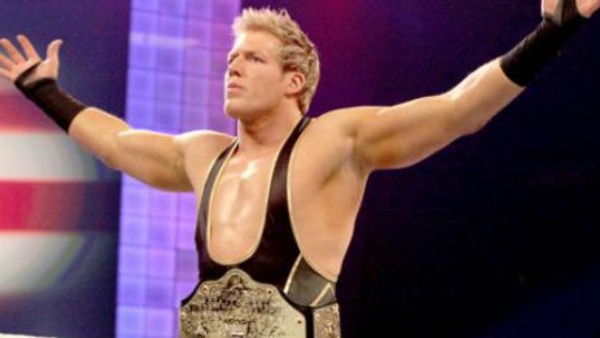
Feeding into the last entry somewhat, maybe the main reason for this stop/start process is due to a lack of long-term planning within the company. Obviously, on occasion the long term plans are clear - take the year long build to the first John Cena vs. The Rock match, for example. On other instances, it seems like ideas are simply pulled out of a nearby hat, then quickly discarded once the initial buzz of the magic trick has worn off. The classic example over the past five years would be the World Heavyweight Championship reign of one Jack Swagger. Winning the Money In The Bank Ladder Match at Wrestlemania in 2010, Swagger would cash in on Chris Jericho and win the gold. Jericho has remarked in one of his books that he was pretty surprised when McMahon told him the plans, as it seemed to come out of nowhere. Looking at Swagger's title reign, which ended just months later, proves there wasn't a long-term strategy.

4. Repeating Matches Over And Over

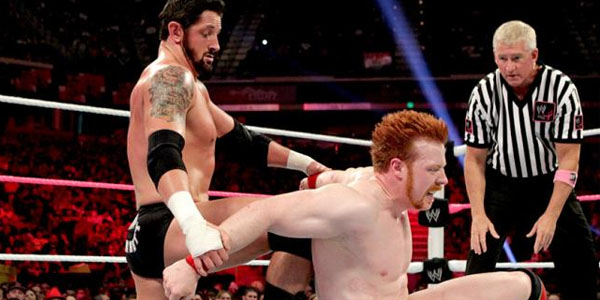
If WWE were to release a DVD package looking at matches between John Cena and Randy Orton, or Sheamus and Wade Barrett, it's likely there'd be enough content to fill three discs plus. In fairness, WWE only have a finite number of wrestlers under contract, and do produce a hell of a lot of content each week. However, that makes it even worse that fans are expected to sit through the same matches time and time again. Bruno Sammartino once said in an interview that during multi-night runs at Madison Square Garden against the same opponent, they'd switch things up a little, looking to give the fans (who were pretty much the same from the previous evening) a wholly different spectacle. Contrast that to the aforementioned battles between modern-day stars, who run through the same spots and transitions, only really mixing it up when it comes to the finish. Sure, Barrett vs. Sheamus is a smash mouth, entertaining match, but it loses a lot of appeal once you see it on Pay-Per-View, Raw then Main Event, all in the span of a few weeks.

3. Lack Of Pre-Planning For Lesnar

News recently hit every wrestling news site and magazine in the land that Brock Lesnar isn't advertised as heavily as fans may think before his rare WWE appearances. Only under contract for a select number of dates per month, and as the reigning WWE Champion, you'd think the company would be shouting from the rooftops every single time Lesnar is set to step foot in an arena. Instead, certainly on North American television, viewers are reminded shortly before Monday Night Raw goes on the air, which is almost WCW-like in its short-sighted execution. Back in the day, it was a given that the likes of Bret Hart or Steve Austin would be on the show, they were on full-time contracts. For Lesnar, it's different, and truly important that WWE let people know when he's going to be around. A simple way to do this would be to advertise, weeks in advance, that Lesnar is going to be on the show with something to say, or is there to pick a fight with someone like Roman Reigns. Immediately, this gives the appearance meaning, rather than just showing up out of the blue. Worse yet, even though his advertising leaves a lot to be desired, WWE will then express disappointment that not more fans were tuning in.

2. Booking Same Spots

In every single match the man has had since first starting to utilise the move, John Cena has ducked a punch, slammed his opponent and then nailed them with the Five Knuckle Shuffle. Far be it from anyone to rag on Cena for using the same moves match after match, it's happened throughout wrestling history, and is an acceptable part of the business. With that in mind, there's something wrong with the set-up for the move, which has Cena hit his foe with a pair of shoulder tackles, running off the ropes, before ducking that big punch from his rival. Wouldn't it make a lot of sense for John's enemy not to throw the punch, because it's clear he's going to duck it? It'd be nice to see someone simply kick him instead, catching Cena by surprise and building some heel heat, instead of acting like a complete idiot at a pre-determined time, just like every other opponent Cena has ever had. Wrestling is definitely all about suspending disbelief, but it's insane to repeatedly book supposedly super-smart heels to look like boneheads time and time again.

1. Not Listening To Core Fanbase

At the Royal Rumble 2014, fans were outraged that Batista had won the 30-man over the top rope encounter, desperately wishing that Daniel Bryan would take the honours. As a result of Bryan's omission from the match, the audience rallied around Roman Reigns, who had previously been cast as an utter bad-ass by the creative team, and had impressed during his time as the heavy hitter of The Shield. Fast forward just one calendar year, and those same fans were angry that Reigns had won the Royal Rumble, again unhappy that their beloved Daniel Bryan had been overlooked. Suddenly, Roman was public enemy number one, and not even a post-match endorsement from The Rock could help him win over the fans. Imagine if Vince McMahon had done the same thing in 1994, booking Lex Luger to overshadow the greatly more popular Bret Hart. Instead, McMahon listened to his audience, giving them exactly what they wanted, and Hart won the title at Wrestlemania X. Yes, Bryan had his 'Mania moment last year, but the fans are still nuts for him. WWE seem more intent on pushing Roman Reigns despite the best wishes of the fans, then wondering why there's a creeping malaise surrounding the product overall. What other moments of insanity can you think of prevalent in WWE? Do you agree with the entries on this list? Let us know down in the comments section below!

Contributor

Lifelong wrestling, video game, music and sports obsessive who has been writing about his passions since childhood. Jamie started writing for WhatCulture in 2013, and has contributed thousands of articles and YouTube videos since then. He cut his teeth penning published pieces for top UK and European wrestling read Fighting Spirit Magazine (FSM), and also has extensive experience working within the wrestling biz as a manager and commentator for promotions like ICW on WWE Network and WCPW/Defiant since 2010. Further, Jamie also hosted the old Ministry Of Slam podcast, and has interviewed everyone from Steve Austin and Shawn Michaels to Bret Hart and Trish Stratus.