10 WCW Wrestlers Who Were Ridiculously Overpaid
Thanks to court records, learn who WCW paid much more than they were actually worth.
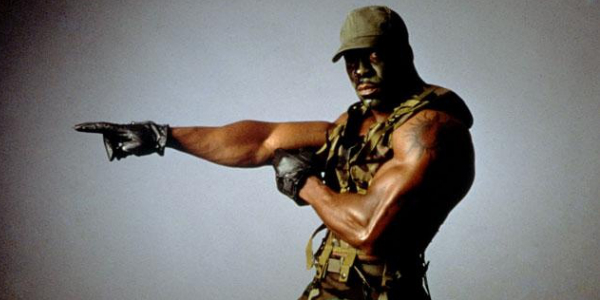
10. Tank Abbott - From Bad Fighter To Worse Professional Wrestler

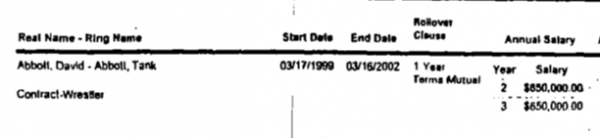 Cost: $650,000 per year guaranteed, with no appearance fees for individual events. For comparison, Mark Coleman, who was a much better fighter and also a fairly big name, was offered $104,000 plus $1,250 per appearance in March of 2000 to join the proposed "Knockout Club" stable.
 He turned them down.
9. Dustin Rhodes - A Great, Great, Wrestler At His Absolute Worst
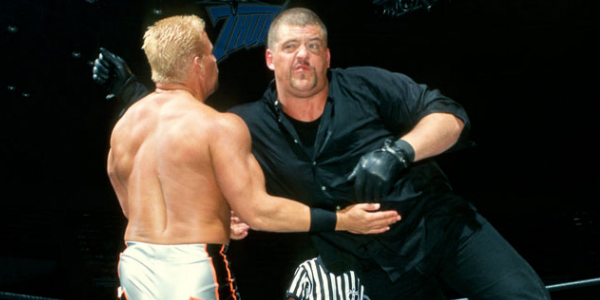
 Cost: $500,000 in the first year plus a $50,000 signing bonus, $600,000 for the second year, and $700,000 for the third year. It's not entirely clear if Time Warner continued to pay him. If so he got two full years out of the deal before returning to the WWF as Goldust and going on a tear. For comparison, Ric Flair made $500,000 per year guaranteed plus $4,000 per house show, $5,000 per TV taping, and and $12,500 per pay-per-view event.
8. Disco Inferno - Because Prelim Comedy Heels Get All The Money
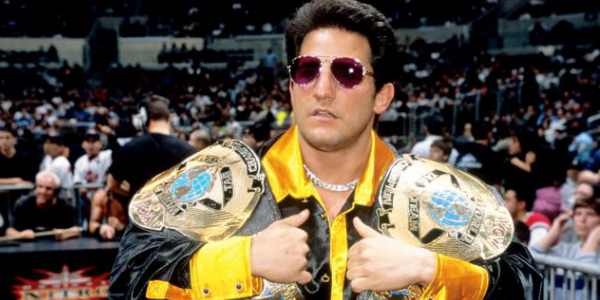
 Cost: After making money in the $100,000 per year range for a few years, he jumped up to $300,000 per year on his last contract, and would have made $350,000 in year three if WCW stuck around. Being that he was working for high profile promotions like the World Wrestling All-Stars overseas tours, it seems unlikely he was among the wrestlers still being paid by Time Warner after WCW was sold, but it's hard to be sure. Also, he somehow owed the company 94 cents in merchandise royalties in 2000. For comparison, the more talented and versatile Norman Smiley was never contracted for more than $120,000 per year, though he made about $175,000 in 2000 with royalties and bonuses thrown in.
7. Ernest "The Cat" Miller - "World Karate Champions" Don't Work For Free
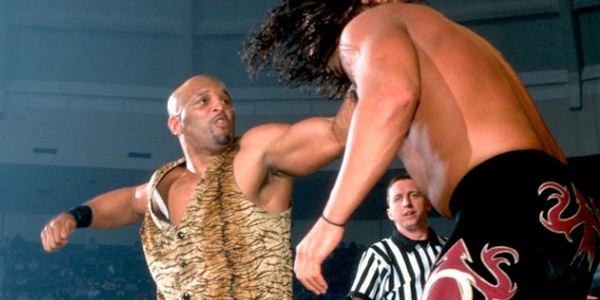
 Cost: He made close to $150,000 in 1997, but the number dropped in 1998 as he was used less. In 1999, he signed a deal that escalated to $400,000 guaranteed for the last year of WCW's existence and eventually $450,000 in the event he was still being paid by Time Warner after WCW folded. Like Disco, he somehow owed about a dollar for merchandise. For comparison, Chris Kanyon was on a $240,000 per year deal, Glacier earned in the $160,000 per year range, and Bryan Clark topped off at about $225,000 per year for year between his guarantee and appearance fees.
6. Swoll - Yes, I Realize That You Have No Idea Who This Is
http://www.dailymotion.com/video/x81nq4_no-limit-soldiers-debuts-wcw-14-6-9_sport In 1999, WCW got in the habit of paying way too much for various bands and other musical acts to appear on Nitro. Megadeth (performing "Crush 'Em," which briefly became Bill Goldberg's entrance music), KISS (to introduce the KISS Demon wrestling character), and country singer Chad Brock (who had wrestled in the past, doing jobs at WCW TV tapings) all performed, as did rapper Master P. For some reason, WCW had bigger plans for Master P, who was paid $200,000 per appearance to....I'm not sure, exactly. In theory, he was endorsing the No Limit Soldiers stable, which was named after his label, No Limit Records. The No Limit Soldiers consisted of Rey Mysterio (Jr.), Konnan, Brad Armstrong as a gangsta rapper named "B.A." (really), WCW Power Plant alumnus Chase Tatum, northeast indie worker worker Teddy Reade as 4x4, and some guy named Randy Thornton as Swoll. I always figured Swoll was just Master P's actual bodyguard, and I guess he was, because otherwise I don't see how he ended up getting the type of money that you're about to learn he made if he had nobody going to bat for him. http://www.dailymotion.com/video/x7cy4y_no-limit-soldiers-feud-with-west-te_spor However, in Googling for Swoll photos and Swoll information for this article (having never done so before, because, well, why?), I discovered that he had some wrestling experience, working a small AWA show right as that promotion died before going to New Japan Pro Wrestling with a boxer gimmick to wrestle Shinya Hashimoto and Masashi Aoyagi. I suppose it's possible this is some other Randy Thornton, but none of it is online unless some kind soul uploads the Hashimoto match. But anyway: Swoll was just a guy. There was no reason to sign him to a big money deal, but being that WCW was WCW and did WCW things, they did. Cost: He was signed to a deal that paid $350,000 for the first year in addition to a $50,000 signing bonus. He's shown as having been paid $30,890.41 in payroll, not listed on the WCW roster as of May 23, 2000, and only wrestled six matches in two months during the Summer of 1999 before disappearing, so it's likely he was cut not long after being taken off TV. Still, that's a hell of a lot of money for some random guy in six matches, all but one of which were at regular TV tapings. For comparison, others mentioned in the same new contracts and trainees memo from June 9, 1999 include Billy Kidman at the height of his stardom in the cruiserweight division for $300,000:
 And A.J. Styles as a trainee for $20,800:
 At least Swoll wrestled some matches for WCW...
5. Kevin Wacholz - The Beneficiary Of Pure Incompetence

 Cost: He was paid to do nothing, "earning" $144,360.85 in 1998 and $100,393.03 in 1999, with his contract being terminated on May 28th of the latter year. Since Steve McMichael was being paid about $250,000 each year, it's likely that Wacholz's contract called for about $200,000 to be paid in each one year term.
4. Big Vito - The Bonus Machine?
http://www.dailymotion.com/video/x4mi33_big-vito-full_sport Vito Lograsso was, for years, best known as WWF TV job guy and northeast independent wrestler Skull Von Krush, doing sort of a tongue in cheek take on the German gimmicks that exploded post-World War II. For years, he couldn't catch a break, but he started to build out more of a career in the late '90s in ECW as well as a tour of All Japan Pro Wrestling. As if right on time, one of his old friends from the indies got a lot of power in WCW: Vince Russo. Russo and Vito went back to Russo's days portraying his "Vicious Vincent" character, hosting his own wrestling radio show on Long Island and occasionally working as a manager on independent shows in the area. One young fan even got his parents to book Russo and Vito for his bar mitzvah. So it's only natural that with Russo in power, his old buddy got a job. The compensation is where it gets a little weird. http://www.dailymotion.com/video/x2s94k_lance-storm-vs-big-vito-hardcore-an_sport I've got nothing against Vito. He was a talented wrestler who could be fun on promos and was especially good in tag team matches with Johnny the Bull as the Mamalukes. Having said that, he was signed off a run as a opening match level comedy wrestler in ECW. He was not an in demand wrestler, and he should have been paid at the level of other journeymen in the company. Instead, he got a lot of bonuses that were unusual for his spot. Cost: Well, his annual guarantee was reasonable for his spot at $125,000 for the first year escalating to $130,000. However, he also received various bonuses that took him up over $243,000 in 2000, his only full calendar year with WCW. For comparison, Brad Armstrong made the same $125,000 with no bonuses even after many years in the company. Anyone else at that level should have had the same opportunities. It's not that Vito was a colossal waste the way others on this list were as much as he's an odd choice to have gotten those bonuses written into his contract.
3. M.I. Smooth - Everything I Said About Big Vito Only More So And Less Nice
http://www.dailymotion.com/video/x15ux6o_the-giant-vs-ice-train-wcw-heavyweight-title_sport In 1993, someone in WCW had a fairly unique idea to introduce a newcomer named Ice Train. They would do a single-camera shoot of his last independent match and air it on TV, showing how he was a hero to his local community and how beloved he was that there would be such a nice turnout for his farewell before heading to WCW. As much as it was a cool idea, he didn't really go anywhere and disappeared in early 1994 after coming out on the losing end of a feud with former friend Ron Simmons. He returned in 1996 after touring with Otto Wanz's CWA in Hannover, Germany in 1995. He returned in 1996 to team with Scott Norton as Fire and Ice. After a fun feud with the Steiner Brothers, Norton turned on him just like Simmons did, and the Train was derailed again, quickly relegated to B-shows before disappearing again around late 1997. https://www.youtube.com/watch?v=g5sOKyu9tPE He was re-signed on May 26, 1999 and sat at home collecting a paycheck for close to nine months, getting a win over Bobby Walker on Worldwide in February 2000 before disappearing AGAIN. Why did this guy vanish so often, anyway? https://www.youtube.com/watch?v=DVd3VGwYjcw He finally showed back up as a regular that June, reinvented as Ernest Miller's limo driver M.I. Smooth, usually just standing there looking scary and only wrestling occasionally. Sites like WrestlingData.com have no matches of his recorded after the death of WCW. Cost: $150,000 guaranteed for the first year escalating to $200,000 in year two and then $250,000 in year three. For ICE TRAIN. He was not a star in the least, sat at home for the year, made no impact...he was just a guy. For comparison, Crowbar made $75,000 per year with no escalations.
2. Stevie Ray - How To Get Rich On The Back Of Your Brother's Talent
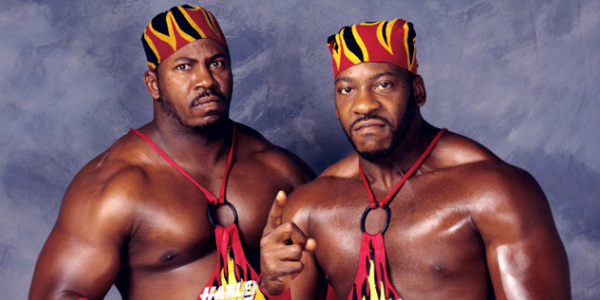
 Cost: So as you can see, when Stevie signed his new deal three months before this roster printout was generated, his pay was pretty reasonable for his spot on the card. That was actually a huge pay cut.
 He was in parity with his brother until that 2000 contract. Booker's contract started exactly a year earlier than Stevie's, so Stevie was likely renegotiated in 2000. Stevie Ray was, at best, an upper mid-card talent throughout his time in WCW, peaking as a member of the nWo's B-team but if he had the same $700,000ish contract as Booker, which it appears he did, he was making more guaranteed money than Ric Flair and that's insane. On that note...
1. Booker T - Great, But Was He Worth It?
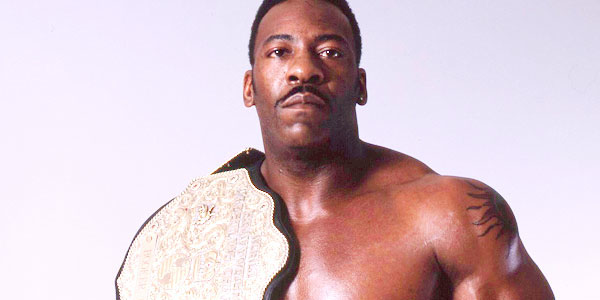
 He was at the TV championship level when he signed this deal. That's the third tier heavyweight singles title. Later on, in 2000, when Stevie Ray took the letter T from him, he was repackaged as G.I. Bro, basically a comedy gimmick that he had used as a rookie in Texas. How is that worth $700,000 or more per year guaranteed? Cynics suggested that his and Stevie's pay was inflated to somehow help combat the ever-present threat of racial discrimination lawsuits, if just because there weren't many good explanations. For comparison, fellow TV Title level star Fit Finlay made $250,000.