10 Wrestlers That Totally Broke The Mould

Those performers that left a unique and enduring impression on pro wrestling

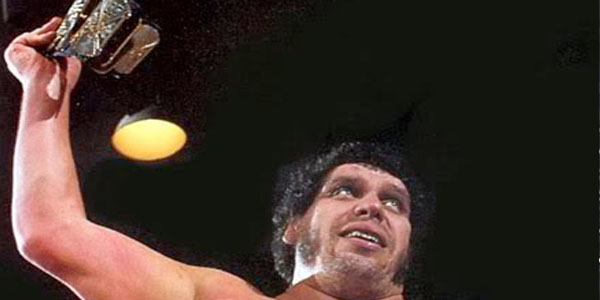
Andre Hair Professional wrestling is a mad, bad world to live and work in. As an industry, it has always attracted the weird, the wonderful and the downright strange. It continues to do so to this day... In addition to providing gainful employment and a measure of fame for people that just couldn€™t be taken seriously in board meetings, burger bars or bowling alleys, there are also the true originals, the guys that came up with something dazzling and were able to sell it to promoters and, crucially, to fans. Some of these wrestling outcasts, misfits, legends and monsters were able to transition into becoming industry legends - or even cultural icons - in their own right, whilst others still were simply chewed up and spat out the other side when their appeal had diminished. Hey, that€™s the wrestling biz for you. Its harsh and it usually isn€™t fair, but we love it all the same. Here then, are 10 performers that left (or are in the process of leaving) a unique and enduring impression on pro wrestling...

10. Sabu
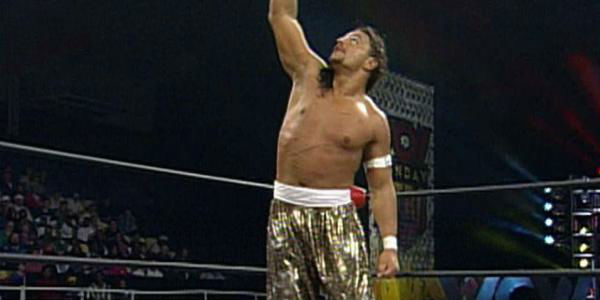
For around three decades, the acrobatic madman affectionately thought of by fans as being €˜suicidal, homicidal and/or genocidal€™ has thrilled and amazed us in equal measure. Taking his cue from his uncle Ed Farhat, who wrestled as €˜The Sheik€™ and is legendary for being one of the founding fathers of hardcore wrestling, the three-time World Champion€™s scar-riddled body reads like a hardcore wrestling roadmap. Japanese barbed wire scars zigzag painfully across his chest and stomach, while ECW€™s trademarked pale, hungry lines of haggard flesh adorn both arms as a visceral reminder of THAT arena in Philadelphia. The tough, leather like hide of his face is also weathered and deeply cut, each gash a memento from an indie card blade job, somewhere in the world. Sabu has become such a fixture of the global indie wrestling scene that it is easy to forget that he is one of the most influential figures in the history of professional wrestling. Without Sabu, it is doubtful that ECW would have gotten off the ground, or that any fans would have ever heard its rebel cry. Every time D€™Von gets the tables, or Rob hits a Vandaminator, or anyone, anywhere goes through a table; they ought to be sending Sabu a royalty cheque. If Terry Funk piledriving Ric Flair through a table at the very end of the 1980€™s was the first intentional use of wooden furniture in pro wrestling, then it represents a hastily sketched out, almost primordial version of what Sabu would later do to the concept. He turned breaking tables into an art and then decorated his body with the resultant scar tissue. As an architect of the modern hardcore style and, as a result, one of the most important wrestlers of the 1990€™s and beyond, Sabu deserves to be remembered as one of the sport€™s true geniuses.

9. Tiger Mask

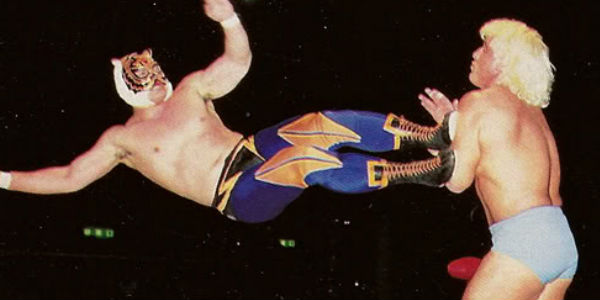
Satoru Sayama, the original Tiger Mask, is a strong contender for the title of greatest junior heavyweight wrestler of all time. Achieving his biggest fame by portraying the cartoon wrestler Tiger Mask in the early 1980€™s, Sayama€™s lightening fast acrobatics, technically unparalleled ring prowess and martial arts inflexed moveset would go on to essentially re-write the wrestling playbook. Echoes of Sayama€™s skills can be seen in today€™s wrestling more so than ever. Recent or current stars such as Daniel Bryan, Low Ki, Rey Mysterio (Sayama innovated The 619, known then as The Tiger Feint), Ultimo Dragon, Eddie Guerrero, Chris Jericho, Davey Richards and many others, all contain imprints of the Tiger€™s far reaching, international influence. In the early 1980€™s, the bosses at NJPW (New Japan Pro Wrestling) were looking to bring a younger audience to the matches. To this end, they decided to create a real-life version of the comic book wrestler known as Tiger Mask. Created by Ikki Kajiwara, the manga character had a mask that looked like an anatomically accurate tiger€™s head and had become so popular that he even starred in his own cartoon show. Somehow, Satoru Sayama was given the Tiger Mask gimmick and set about imitating the hard hitting, gravity defying wrestling style employed by his cartoon counterpart. In so doing, he completely reinvigorated the sport of professional wrestling. The Tiger Suplex, The Tiger Spin, in fact, any move with the name €˜tiger€™ in it, was probably innovated by Sayama during this time. He is unquestionably one of the most creative minds in wrestling history... After engaging in a series of superlative bouts with British wrestler Dynamite Kid, which are definitely among the best matches of all time, Tiger Mask abruptly departed NJPW. Allegedly disgusted by the backstage politics and dissatisfied with his spot, Sayama vacated his NWA Junior Heavyweight Championship, as well as its WWF equivalent and retired from wrestling in order to train martial arts fighters... He returned to wrestling a year later, working as The Tiger and Super Tiger for the tearaway Japanese promotion UWF (Universal Wrestling Federation) but soon disappeared once again to train shoot wrestlers. Sayama was a perfectionist both inside and outside the ring and he was a difficult personality to work with by all accounts. As a result, the Tiger Mask gimmick continued in NJPW without his involvement and, to date, three other men have played the character. Currently, Yoshihiro Yamazaki, a protégé of Sayama€™s, portrays the character as Tiger Mask IV. Sayama still occasionally wrestles in the indies as Tiger Mask or The Original Tiger Mask and often teams with the current incarnation. In 1995, however, he returned to NJPW in order to face his old nemesis Antonio Inoki once more, where he worked one of his greatest gimmicks, the Tiger King. As Tiger King, the old master (who was every bit as good as ever) wore a gold version of his original costume and, in so doing, became a great influence on Namco€™s Tekken video game series (he is the obvious inspiration for both King and Armour King). Tiger Mask is probably the greatest cruiserweight or junior heavyweight wrestler of all time, as well as the finest high flyer and the most accomplished martial arts-themed wrestler to ever live. Not bad, for a cartoon character.

8. The French Angel

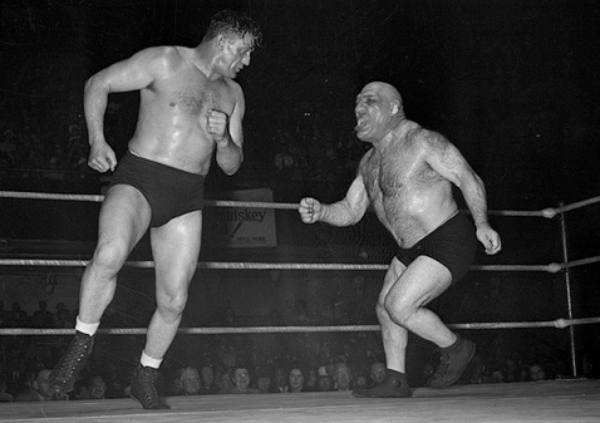
Born to French parents in the mountains of Russia in 1903, Maurice Tillet€™s life was never going to be an easy one. His father died when he was 14 and young Maurice and his mother were forced to escape to France following the Russian revolution. By the time he turned 17, his face and hands had contorted and grown to enormous size. It must have been an extremely painful time, both emotionally and physically, for the young man. Tillet was suffering from acromegaly, which is the same condition that famously affected The Big Show and Andre The Giant, as well as Abraham Lincoln. Instead of growing taller, however, Tillet simply became hugely disproportioned. Tragically, there was nothing that any doctors of his era could do for him. A fiercely intelligent young man (he spoke at least five, some sources say as much as fourteen, languages and was very well read), Maurice Tillet became a law student, but, as his condition slowly closed his vocal chords, he realized that practicing law would be impossible. He had a stint in the navy, acted in a few movies and, in his own words, €œtried a little of all professions without much success€. Tillet took out his frustrations by playing rugby, which developed his physical strength and conditioning. He also wrestled in France and England (where he was billed as €˜The Angel€™ or, rather unkindly, €˜The Ugliest Man In The World€™), but the outbreak of World War Two forced him to seek employment in America instead. Screen Shot 2014 09 28 At 12 46 00 In the US, Maurice Tillet became a star. Not only did he allow himself to be studied and measured by a team of Harvard professors, he also posed as a Neanderthal Man at the Museum of Natural History. Some may call this exploitation and, in large part, it was, but Tillet made good money from his appearances and attracted many to his wrestling shows by doing so. He also participated in strongman events, pulling trains and buses in order to demonstrate his physical prowess. Now being exclusively billed as €˜The Angel€™, which is what his mother used to call him, Maurice held a version of the World Heavyweight Championship three times (by our count €“ officially he is only listed as a two-time World Champ) in the Boston, Massachusetts area and was declared a World Champion in Canada as well. By the late 1940€™s, Maurice Tillet was America€™s highest paid sports figure. He was so popular in the 40€™s, that other promoters (in particular Jack Pfeffer) started ripping off his act and billing other deformed or odd looking wrestlers as €˜The Angel€™ (including Tor Johnson, The Super Swedish Angel €“ more on him later), this meant that Tillet had to wrestle as €˜The French Angel€™ and in retaliation, he eventually knocked Pfeffer out cold. Aside from that one incident, Tillet was pretty much a gentle giant. He loved children, had a lot of friends and had many girlfriends, although he never married. As a fascinating postscript, The French Angel is also at the centre of one of wrestling€™s greatest ghost stories.
Following his death in 1954, the ghost of the French Angel is said to have haunted one of three busts made from his enlarged head. According to Tillet€™s friend, businessman Patrick Kelly (who owned one of the busts), the ghost of The Angel would occasionally return and play chess with him. Tillet was an avid chess player and had especially enjoyed matching wits with Kelly. By the 1980€™s, Kelly, who still missed his old friend, had an electronic chess set setup next to his bust of Tillet. Allegedly, the device would deviate from its programming and use Tillet€™s favoured tactics...Especially when it wasn€™t plugged in. As long as the chess set was near the bust of Tillet€™s head, it would play against Kelly and play as Tillet would have played. Once the story caught on, the head was X-rayed by scientists and found to contain nothing but solid plaster. Spooky. Despite the many setbacks he suffered, Maurice Tillet had an indomitable spirit. He was in pain and ill health for much of his life and he only lived until the age of 45, but he rarely, if ever, let it get him down. In 1943, Tillet told the Oakland Tribune, €œSince I was a little boy old enough to know what it was about, I have been the object of curiosity. Long ago I accepted my appearance for what it was. No, I do not have an inferiority complex. I have not let my looks €“ how you say it? €“ down.€

7. Ricki Starr

https://www.youtube.com/watch?v=UFdpXCGCaa4 Ever wondered why wrestling video games feature ballerina moves in the €˜Create A Wrestler€™ section? If you have, then its high time you learned about Ricki Starr, the former ballerina who became a wrestling superstar... If you were going to scrape a living from the rough-and-tumble world of 1950€™s professional wrestling, you needed to be a tough guy. The stars of the first era of televised wrestling, guys like €˜Killer€™ Kowalski, Lou Thesz and Dick The Bruiser knew how to hurt a guy for real if the situation called for it. Ricki Starr was no exception. A boxer and champion amateur wrestler of some renown, ballet would seem a far cry from the macho pursuits one might reasonably expect from a man who beat the crap out of other men for sport. However, Starr was a successful ballet dancer, too. He toured Europe and featured in productions of Paint Your Wagon and Annie Get Your Gun. When he wasn€™t on tour, he wrestled professionally and when he wasn€™t wrestling, he danced and took dance classes. When he began to combine his ballet skills with his wrestling work in the 1960€™s, he became a superstar. Starr was an excellent technical wrestler and a great all round athlete, but he got over with audiences because nobody had seen a ballet dancing pro wrestler before... Starr was far too small to be a credible threat to the majority of his opponents, so the psychology of any match became that his foes would be dazzled and confused by his ballet dancing, which would allow Starr to get the pin. He was a success throughout America and Europe and, at the height of his 60€™s fame, was reputedly earning £35,000 a year (in 1960€™s money €“ which would obviously translate into a lot more today). Tumblr Mc3h4vdpzf1ru3vzto1 400 A smart businessman, Starr had his shtick well worked out. He never wrestled long matches and he never overexposed his gimmick. In short, he did just enough to leave the fans hungry for his next appearance. Once Starr€™s popularity in the US had faded, he became something of a national icon in the UK and was featured here regularly during the heyday of British pro wrestling. According to this fansite, he was reputedly the reason that the rock n roll drummer Richard Starkey chose the stage name €˜Ringo Starr€™...

6. €˜Classy€™ Freddie Blassie

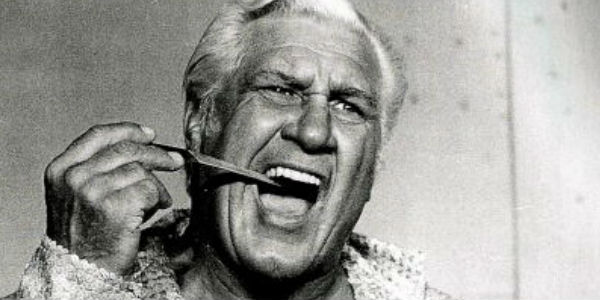
One of the most passionately loved (and violently loathed) villains of wrestling, in any era, €˜Classy€™ Freddie Blassie is probably best remembered by modern wrestling fans for his stint as a manager in the 70€™s and 80€™s WWF. During this time, he memorably guided the on-screen careers of stars like Nikolai Volkoff, The Iron Sheik, High Chief Peter Maivia (grandfather of The Rock), George €˜The Animal€™ Steele, Hulk Hogan and others. In this era, Blassie enjoyed a career renaissance by making a nuisance of himself at ringside and helping inexperienced or camera shy wrestlers get their characters/angles over. In his wrestling prime, however, Blassie was one of the most charismatic men to ever set foot between the ropes. He was that special kind of heel that had audiences eating out of the palm of his hand (at one point, he was even doused with acid by angry fans) and could make a crowd hate him simply by cutting a promo, or shooting an arrogant look at the camera. Towards the end of his wrestling career, Blassie became so notable for his roguish ways that he got over as a babyface, despite his best efforts. For decades, the fans had loved to hate him, now, however, they simply loved him...

5. Jake €˜The Snake€™ Roberts

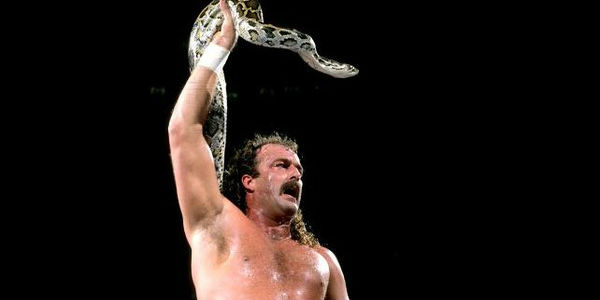
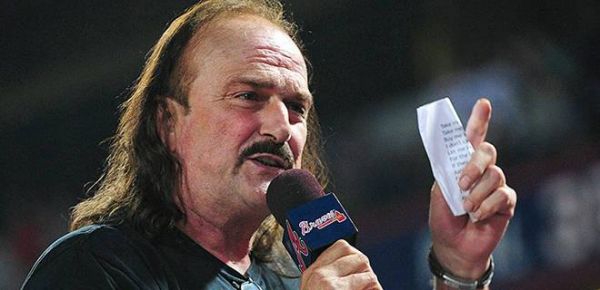
Jake The Snake is like the villain in a Sunday afternoon Western, only far more believable. As a wrestler, his appeal is odd. He isn€™t flashy looking, doesn€™t come across as especially charismatic and, in his prime, was neither a muscular slab of beef, nor an especially imposing figure. In fact, with his chicken legs, slight pot belly and thin, almost reedy arms, he never looked much like a pro wrestler at all. Then, seemingly out of nowhere, he€™d look straight at the camera with those callous, bullet-point eyes and just for a second, it was as if he was looking right at you, passing judgement on you through your television set. Then he€™d laugh that chilling, desert-at-midnight laugh and you€™d shiver in your seat. Few promos can freeze your blood and captivate your attention like an old school Jake Roberts promo. When that guy talked, you listened and the more you listened, the more afraid you ultimately became. In the ring, Jake€™s every move had logic and a dark purpose to it. Like the legendary samurai master Miyamoto Musashi, Jake €˜did not do anything useless€™. He stalked his opponents, large and small, with cat-like stealth and omnipresent, reptilian cruelty. His finisher, the DDT, was sold to audiences as the most dangerous move in wrestling €“ and on-screen WWF officials regularly discussed banning it. The DDT was probably the most legit and feared finisher in wrestling at that time. In short, Jake was a great worker and it was nothing short of an absolute joy to watch him ply his trade with such savagery and relish. With a windswept tangle of dark hair behind him and a hooked moustache under his lip, Jake was part wrestler, part outlaw. He looked the part and he lived the life. Sadly, that is where it all unravelled for a man who may well be the most compelling character in the history of the wrestling business.
A blurred tangle of sleazy sex, prodigious drug intake and an array of personal tragedies all took their toll on Roberts, both publicly and privately. Even his real-life conversion to Christianity quickly became tainted and made his on-screen persona come off as a travelling preacher who€™s faith had lapsed just enough that he slept with one eye open and a six-shooter tucked under his pillow. Go back and watch him in Barry Blaustein€™s excellent wrestling movie Beyond The Mat €“ his interview segments, even when he is high on a potentially lethal concoction of whisky, cocaine and abject self pity, are utterly fascinating and more than a little bit scary. Jake is the intersection, he inhabits that knife-edge, vanishing point on the wrestling horizon where the work ends and the shoot begins. He was always so compelling to watch. In the end, it was his gift as well as his curse... Thankfully, Jake€™s hard partying lifestyle is now firmly behind him. A combination of embracing Diamond Dallas Page€™s DDP Yoga initiative, as well as being inducted into the WWE Hall of Fame and successfully undergoing lifesaving surgery have fashioned Jake €˜The Snake€™ into a new man. His miraculous recovery has turned him from a cautionary fable into a true wrestling success story and, along the way, has inspired a lot of other people to turn their own lives around. As Jake€™s story proves, it is never too late for anyone to make a positive change...

4. George €˜The Animal€™ Steele

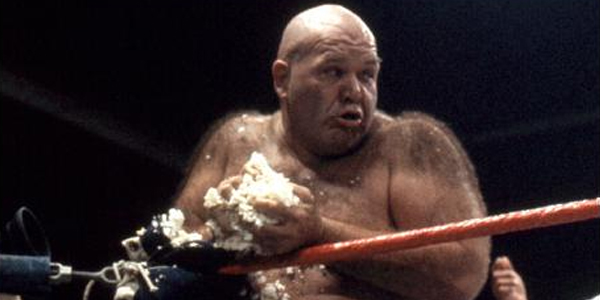
In real life, William Myers is a generally polite, friendly and surprisingly erudite sort of a guy. In interviews he comes across as thoughtful and somewhat sensitive. Despite being dyslexic, he holds a Masters Degree in Science and before becoming a wrestler; he worked as a teacher and coached high school football and amateur wrestling. In the ring, however, Myers would seamlessly morph into George €˜The Animal€™ Steele, a hulking brute with a carpet of thick brown hair covering his entire body, who, in many cases, would rather eat the turnbuckle pad than fight his opponent. Initially, Myers got into professional wrestling whilst he was teaching and would work mainly on school holidays. Being an amateur wrestling coach, he was a decent scientific wrestler who actually went head-to-head with Bruno Sammartino on a few occasions. However, it was as the bestial caveman George Steele that Myers truly got over... With his green tongue, permanently hunched back and a dazzling array of facial expressions, audiences loved to watch €˜The Animal€™. He was genuinely charming to watch and usually had fans roaring with laughter at his antics. Despite not doing much in the ring, Myers€™ grasp of ring psychology allowed him to do just enough (and at just the right time) to truly get his character across to the fans. In contrast to Myers€™ articulate interviews, George €˜The Animal€™ Steele was barely coherent, usually only making grunting, groaning noises and arching his eyebrows at the camera in a manner vaguely reminiscent of the titular character from the original King Kong movie. Still, Steele was a huge success by anybody€™s standards and actually played a reasonably big part in establishing Vince Jr€™s WWF as the major wrestling product. He also starred in the Tim Burton biopic of B-movie director Ed Wood in 1994, portraying fellow wrestler (and his own erstwhile lookalike) Tor Johnson, who had starred in several features directed by Wood.

3. Samoa Joe

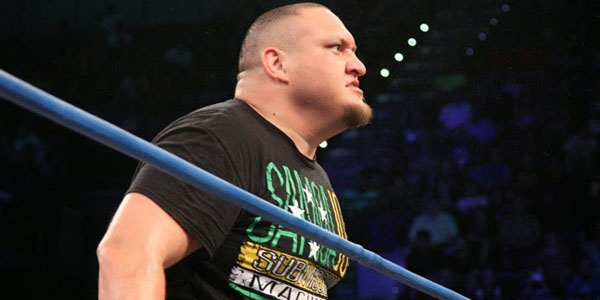
In an era of daredevil spot merchants and chiselled, protein shake musclemen, one man bucks the trend and stands alone. That man is Samoa Joe. Despite being consistently ignored by the WWE (presumably because he doesn€™t fit their increasingly identikit view of what a wrestling star ought to look like), Joe is rightly regarded by fans of ROH and TNA (where he is a former World Champion) as being one of the very best wrestlers working in the world today. Billed as €˜The Samoan Submission Machine€™, Samoa Joe is a true original. With a body type that hearkens back to the bullish frames of yesteryear€™s wrestlers and a moveset that combines decidedly old school holds and reversals with new school MMA, Joe is a headlong collision of what wrestling was and what wrestling is, combined with a unique flavour all of his own. In addition, despite his size and shape, Joe is able to move with cat-like agility. His flying shoulder drops, diving knee drops and flying kicks are a sight to behold. At times, it appears that Joe is capable of literally any wrestling move you care to think of. Equipped with one of the most devastating looking finishers in the business today (he calls it €˜The Muscle Buster€™), as well as his fearful arsenal of choke holds (in particular, The Coquina Clutch) Samoa Joe has been a major star in TNA for almost a decade. His matches with wrestlers like Kurt Angle and Low Ki are nothing short of exemplary and demonstrate that, despite what his critics may say, Joe is as fit or fitter than anybody in the business right now. His body of work also demonstrates that he is able to work convincingly with opponents of any size or weight class. In interviews and on camera, Samoa Joe is deadpan, always serious and exudes a general aura of danger about him. In short, he€™s a believable tough guy, with a hefty amount of old school wrestling in his heart. Joe neither looks like, nor works like, a wrestling star of today€™s era, but he€™s tough as old shoe leather and easily as good, if not better, than anybody out there.

2. Luther Lindsay

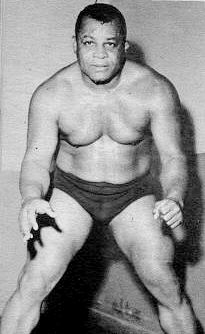
https://www.youtube.com/watch?v=-G2NQ-5Lqxk In a 2013 interview, Mark Henry talked about his time being trained by Stu Hart in the legendary Canadian wrestler€™s €˜dungeon€™. €œHe loved me,€ said Henry, €œI used to remind him of this guy Luther Lindsay. He used to carry a picture of him in his wallet. He says €˜that€™s the only guy that ever whooped me€™. I was like; €˜you carry his picture in your wallet?€™ He was like, €˜he was my friend€™€. Flick through any book of old wrestlers or wrestling statistics and Luther Lindsay€™s striking profile will immediately grab your attention. He just looks like a wrestling champion ought to look. Strong, chiselled facial features, a body seemingly sculpted from marble and arms like tree trunks amount to an amazing look for the pre steroid era. In the modern age, Lindsay€™s combination of legitimacy and transcendent popularity with fans would easily make him a candidate for WWE Champ and, if even half of the stories of his fighting prowess are true, he€™d probably be UFC Champ as well. There is only one reason why you€™ve probably never heard of him. Luther Lindsay was a black man in an era infested with bigotry and racial intolerance. In his autobiography, Hooker, legendary World Champion Lou Thesz (who wrestled Lindsay several times) called Lindsay the greatest black wrestler ever, saying that €œhis place in history is not because he was black, it is in spite of the fact that he was black€, high praise indeed, especially when one considers that he was apparently the only man to ever beat Stu Hart in a legitimate contest (and that Lindsay was recovering from a broken leg at the time). Outside the ring, Lindsay was the real deal. During one fight, Lindsay easily took out a professional boxer, sending his two friends (also boxers) running for their lives. In another tale, a local amateur wrestling coach thought he€™d put on a show for his students by effortlessly beating this €˜phoney€™ professional wrestler. The pin was made in seconds...And it wasn€™t the cocky coach doing the pinning.
Throughout the 1950€™s, Luther Lindsay was a major draw in several territories, especially in Washington and Oregon (where he was the regional Champion). He also drew well in Columbus, Ohio and throughout the Pacific Northwest. Lindsay had a great reputation as a top draw and was so legitimately tough that no overzealous white wrestlers ever got too cute with him, or else they suffered the consequences. In Dallas, Texas, late in 1955, he became one of the first wrestlers to integrate professional wrestling in the area by working a tag team match. Two nights later, he actually won the first ever mixed-race singles match in the Dallas region (the first mixed race match in the state was in El Paso and was won by Jack Claybourne a few months earlier). Yes, Luther Lindsay never wore a World Championship belt, but maybe a life spent defying bigotry and challenging stereotypes was a bigger, and more lasting, accomplishment. Lindsay wound down his career working as an undercard guy for Jim Crockett Promotions (the company that would later become WCW). He died directly after hitting his finisher and winning his last match, in 1972. According to wrestling historians Steven Johnson and Greg Oliver (from whom much of this information was sourced), even his outwardly racist colleagues showed up at the funeral to pay their respects.

1. Andre The Giant

Indisputably the most beloved wrestler of all time, Andre The Giant was a massive draw wherever he went. Reports vary as to his actual height, but he was usually billed as being 7,4€ and weighing 500lbs. His deep, rumbling, heavily accented voice only added to his mystique and his mischievous, yet strangely reassuring, grin (showing twice as many teeth as most people have) got him over with the fans that were too afraid to sit in the front row. Afflicted with gigantism caused by acromegaly, young Andre Roussimoff (yes, the face on all the Shepherd Fairey €˜Obey€™ merch) was always going to stand out. At the age of 12, he stood at over six feet tall and weighed more than 200 lbs. In wrestling, Andre played the part of the gentle giant, who, when angered, became an unstoppable force of nature. This wasn€™t much of a far cry from his real life personality. Andre could be grumpy (especially as he was frequently stared at and suffered from constant pain), but he loved his fans and he loved the wrestling business. However, if somebody tried to test him, they would quickly find themselves in a very difficult situation. In one famous incident, four bullies decided to try their luck against The Giant, who was quietly minding his own business in a bar. Evidently, they soon thought better of it and ran away from him, locking themselves in a nearby car for protection from the angry giant. Undeterred, an enraged Andre literally picked the car off the ground and flipped it over, proving his point with extreme prejudice. Sadly for Andre, the world he inhabited was simply too small for him. The wrestling lifestyle of excruciatingly long car journeys, plane rides and often-shabby hotel accommodations must have been harder for Andre than it was for any other wrestler before or since. One road story holds that Andre couldn€™t actually fit into a miniscule hotel toilet and so was forced to take a dump on the bed. Of course, he made a joke out of it, but it must have been a very upsetting and humiliating experience for the man. In addition, Andre€™s cost of living must have been very high indeed. Any man who can drink 156 beers in one sitting would likely need to take out a second mortgage to pay his bar tab - and Andre needed to eat and drink an awful lot in order to stay healthy. He could chew through twelve steaks or fifteen whole lobsters if he was hungry enough. In Terry Funk€™s autobiography More Than Just Hardcore, he recalls an incident in the 1970€™s where he and his brother Dory decided to buy Andre dinner, as a gesture of respect to the man and his accomplishments within the business. Seven bottles of wine later, the Funk brothers were slapped with a $600 bill. By the mid 1970€™s, Andre was earning as much as $400,000 a year. In the 1980€™s, he used his money to buy a farm for himself in North Carolina. Finally, the former farmhand had returned home, he had a place to live that was secluded enough to be private, but open enough to have his friends over for his legendary parties. Andre died in 1993. He was just 46 years old. Posthumously, the former WWF Champion was made the first entrant into the WWE Hall of Fame. In more ways than one, the wrestling business will never see a bigger star than Andre The Giant. There you have it, grapple fans, ten wrestlers that didn€™t so much break the mould, as completely smashed it to pieces. True originals, every one.

Contributor
Contributor

I am a professional author and lifelong comic books/pro wrestling fan. I also work as a journalist as well as writing comic books (I also draw), screenplays, stage plays, songs and prose fiction. I don't generally read or reply to comments here on What Culture (too many trolls!), but if you follow my Twitter (@heyquicksilver), I'll talk to you all day long! If you are interested in reading more of my stuff, you can find it on http://quicksilverstories.weebly.com/ (my personal site, which has other wrestling/comics/pop culture stuff on it). I also write for FLiCK http://www.flickonline.co.uk/flicktion, which is the best place to read my fiction work. Oh yeah - I'm about to become a Dad for the first time, so if my stuff seems more sentimental than usual - blame it on that! Finally, I sincerely appreciate every single read I get. So if you're reading this, thank you, you've made me feel like Shakespeare for a day! (see what I mean?) Latcho Drom, - CQ