10 WWE Traitors Who Were More Effective After Leaving

Who actually helped WWE by leaving in the manner they did?
The word 'traitor' is defined as being, "a person who betrays something, such as a friend, a cause or a principle'. Obviously, the word is an extremely strong one, but it does have a place in the world of professional wrestling. After all, the grappling industry is a dog-eat-dog landscape, one which pulls no punches - it's been said that only those who have a certified mean streak can make it to the top, because wrestling is no place for those who prefer to be nice guys. It makes perfect sense then that there have been scenarios in wrestling whereby performers haven't exactly always been straight up and down. Pro wrestling breeds ego, so it's only natural that - on occasion - strong personalities clash. That's exactly what this article is about, those times when ego collided with ego, and for whatever reason, these wrestlers found themselves leaving WWE. Plying their trade elsewhere after the fact, these folks would actually help the company by departing, because their work or attitude wasn't doing much to keep things harmonious backstage, certainly not from the viewpoint of management. Some of these choices may seem controversial, but even one of these entries once said that "Controversy Creates Cash".

10. Eric Bischoff

The man who used that very phrase as the title of his WWE-produced autobiography? None other than Eric Bischoff, one time known as the head honcho of World Championship Wrestling. Throughout the 1990's, WCW was Vince McMahon's biggest competition, and Bischoff would actually lead the Atlanta organisation to the top of the wrestling tree, garnering bigger ratings than McMahon's then-WWF for an 84 week spell, all the while raking in millions of dollars in Pay-Per-View revenue and merchandise. Unthinkably joining WWE in 2002, solely to play an on-screen character as General Manager of Monday Night Raw, Bischoff had a great run with the company and seemed to be having fun in wrestling again. The latter years of WCW's existence had been incredibly stressful, but his role in WWE allowed Eric to just concentrate on performing. Making appearances right up until late-2007 for WWE, Bischoff would later join TNA in late-2009, and delivered a bold statement that the promotion were gunning for the top spot. Lightning would not strike a second time for Bischoff, and those words would go without merit. Exactly why the guy was trying to take down WWE is unclear, because was it ever really likely to happen? For many longtime fans of the company, the arrival of Hulk Hogan and Eric Bischoff is exactly when TNA started going downhill.

9. Kurt Angle

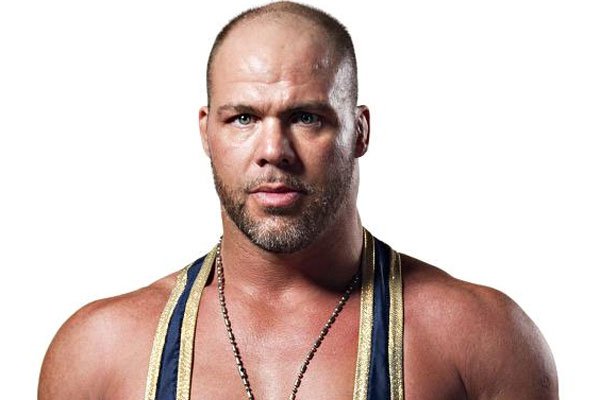
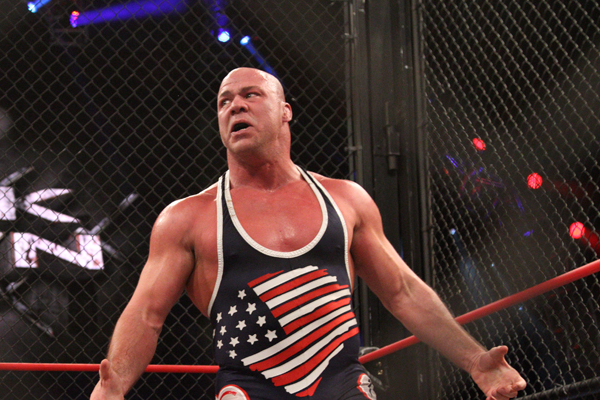
Another man who left WWE for TNA was Kurt Angle. By 2006, Angle's personal life - problems in his marriage, troubles stemming from various injuries and pain - had started to really put a lot of pressure on his professional one, and it was clear that all was not well with the guy. A straight up wrestling machine, Kurt's body was breaking down badly, and WWE made the decision to let him go. Pretty much immediately joining TNA, the multi-time World Champion has weirdly flipped between outright bashing his former employers, including harsh words against the likes of Vince McMahon and Triple H, and praising them ever since. It seems that whenever it comes time for his contract to be renewed in TNA, the Olympic Gold Medal winner is eager to talk about WWE. For their part, the McMahon family have shown little interest in bringing Kurt Angle back from whence he came, and it seems logical that his various run ins with the law and drink driving offences have played a part in this. Angle has been an unpredictable animal over the years since leaving WWE, and even though he's a big name in wrestling, his appearances in TNA haven't exactly affected the ratings.

8. Jeff Jarrett

To this day, there's very little chance that pro wrestling enthusiasts will see Jeff Jarrett appearing on a WWE broadcast. In 1999, Jarrett's contract ran out just before he was due to lose the Intercontinental Title to Chyna at the No Mercy Pay-Per-View in October. Holding Vince McMahon hostage somewhat, Jeff demanded more money to drop the belt, which is something the wrestler has since denied. Whatever the case, McMahon isn't a big fan of the man, who would quickly move from the WWF over to WCW. Rather coincidentally, someone who has always been a huge supporter of Jarrett was the chief writer in Atlanta at the time, Vince Russo, and Jeff Jarrett would rapidly become a featured part of WCW television and storylines. Right up until the company went bust in 2001, Jarrett was a main event player, winning the World Title on more than one occasion. Later, Jarrett would help launch TNA, and has since went on to form Global Force Wrestling. Always regarded as a solid worker inside the ring, who knows what the future may have held for Jeff had he stayed in the WWF, but he hasn't exactly taken the company to task since leaving. TNA has never really threatened WWE, and WCW went down the tubes. Vince McMahon had the last laugh here!

7. Mick Foley

Mick Foley is seemingly back on good terms with WWE, but that wasn't always the case. A strong personality with a good set of core values, the artist formerly known as 'Cactus Jack', 'Mankind' and 'Dude Love' is beloved by fans for his feel good rise to the top story, but even though he has enthralled millions with his matches, promos and books, Foley didn't do much of note in TNA. The reason Mick ended up plying his trade with Dixie Carter's promotion was all down to his frosty relationship with Vince McMahon. Working as a commentator in 2008, Foley was not a huge fan of the way Vince would bark orders down the headset whilst he was trying to relay stories to the watching audience, and he decided to walk away from WWE when his contract expired. Joining TNA, Mick Foley tried to resurrect his in-ring career with little success. As if further proof was needed of the power WWE's marketing machine has, the New York Times bestselling author barely made a blip in the ratings for TNA from 2008-2011, and subsequently became disenfranchised with what he was even doing in the company. Slowly but surely, Foley became just another ex-WWE name who couldn't make a difference outside of the juggernaut.

6. Brock Lesnar

Only an idiot would call Brock Lesnar a traitor to his face, or without at least 100 miles of a head start to run away from the monstrous man! Nowadays, Lesnar is a vital part of the WWE product, his ass-kicking legitimate athlete gimmick standing tall as an excellent reason to tune in any time he's advertised. Just look at the excitement over Lesnar's squash match against Kofi Kingston recently in Japan, is there any other performer in wrestling today who could achieve such anticipation for a jobber match? In 2004, Brock was still regarded by WWE as the future of the promotion. Since he had made his main roster debut in 2002, Lesnar had been protected beyond belief, mainly because Vince McMahon viewed him as the man to build the company around. It was therefore a huge shock when the wrestler tired of the grueling schedule in WWE, and decided to leave and start a career in American Football instead. For a good few years afterwards, Lesnar's name was mud in WWE. Failing to break into the NFL, Brock went on to dominate the UFC Heavyweight division, winning the top title in the MMA league before returning to WWE in 2012. A new kind of beast, things have worked out extremely well for both parties, but would that have been the case had Lesnar stuck with WWE back in '04? Did he become more effective a commodity for WWE later, due to all the things he achieved once leaving the company the first time?

5. Sin Cara

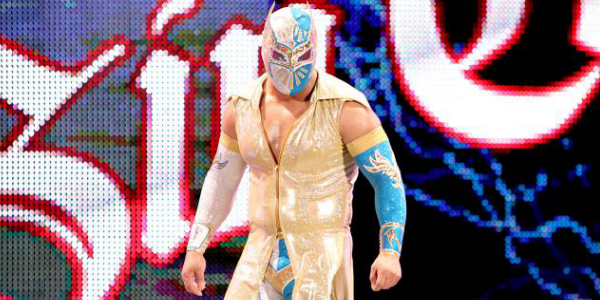
In interviews since leaving the promotion, the original Sin Cara (otherwise known as 'Mistico') has claimed that WWE didn't do enough to accommodate him during his tenure there. It was clear there was a language barrier, and the very way the character was set up didn't really require the man to do much - if any - talking. Instead, those in charge hoped his incendiary in-ring performances would endear him to fans. They didn't. Bumbling and botching things right out of the gate, Mistico bombed badly as Sin Cara. Once hoping the gimmick would replace Rey Mysterio, WWE management quickly realised that it was going to take a whole load more to get Sin Cara to Rey's level, and Mistico was not the man to do it. Nowadays, Sin Cara is still on television, but it's the man once known as Hunico who is behind the mask. Alongside Kalisto, he has successfully managed to pull the Sin Cara name back from the brink, and the pair form the excellent Lucha Dragons tag-team in NXT. Listening to Mistico's comments, it'd be easy to believe that he wasn't given a fair shake, but he has done more for WWE since leaving, because he was an aberration under the hood.

4. Lex Luger

At one point, Vince McMahon would have beamed proudly as he declared Lex Luger the 'next Hulk Hogan'. In many ways, Luger had everything McMahon craved in his champion - tall, muscular, fresh-faced and eye-catching, Lex was to McMahon an easy performer to promote, but it didn't prove to be quite that easy. Embarking on a huge promotional tour, Luger even had his own bus, the 'Lex Express'. Touring around North America, the man was pushed heavily by the company as the top name around, but those pulling the strings hadn't banked on one thing, wrestling had changed. Fans had tired of Hulk Hogan, which is why he hadn't been quite the draw he once was, and people now embraced a new generation of WWF star, much preferring the more wrestling-focused styles of guys like Bret Hart and Shawn Michaels. By 1994, just 6 months into his run as McMahon's pet project, Luger was failing. In 1995, he was still featured on TV as part of a tag-team with Davey Boy Smith, but Lex made the choice to jump back over to WCW, shockingly appearing on Nitro. McMahon must have been outraged, but the fact is that Luger never became anything more than just another bloated contract in Atlanta, so it was actually a good thing for the WWF that they got shot of him.

3. Jeff Hardy

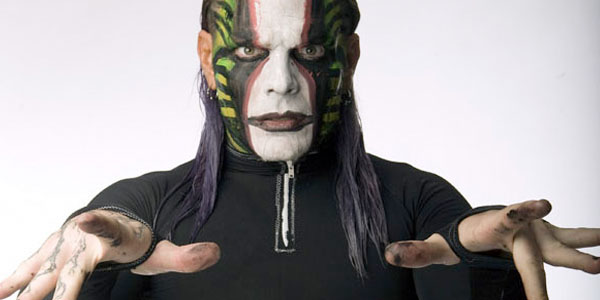
Turning his back on everything WWE had done to try and make him a star, Jeff Hardy showed up in TNA on the January 4th episode of Impact Wrestling in 2010, as part of the huge recruitment drive spear-headed by Eric Bischoff and Hulk Hogan to try and make the company competitive with WWE. As soon as he was shown sitting atop a cage during an X-Division bout, Hardy arguably ruined his reputation with his former employer. By his own admission, Jeff has never been the most simple of characters. Various injury problems dogged his WWE career, and the man decided to leave the organisation in the Summer of 2009. Just a month or so later, Hardy ran into some serious legal troubles, arrested on charges of drug trafficking. WWE must have breathed one colossal sigh of relief, but there was still room for Jeff to return somewhere down the road. Of course, his subsequent run in TNA yielded several World Title wins, but since those highs of 2008-2009 in WWE, Jeff Hardy's career has been known more for the problems he's caused rather than the good times. At the Victory Road show in 2011, he appeared out of it for his main event against Sting, and the match was an embarrassment for TNA. Worse yet, the man hasn't really impacted the ratings in TNA, and given all his problems outside of the ring, WWE must be thankful he didn't choose to stick around in '09.

2. Ric Flair

To this day, there's still a bit of a weird relationship between Ric Flair and WWE. For anybody unclear on just how highly regarded the man was by Vince McMahon, just look at the incredible retirement bash the company put on for him following his loss to Shawn Michaels at WrestleMania XXIV in 2008. Convincing everybody that he was ready to hang up the boots, the 'Nature Boy' had tears in his eyes as he expressly stated that his in-ring career was firmly over. "You will never see me wrestle in that ring again", those were the man's words, but they proved to be little more than just another typical wrestling retirement, whereby the person goes back on their word, seemingly unable to stay away from the spotlight. After WWE declined Flair's suggestion that they let him wrestle again, the legend left the company. Wrestling on a one-off 'Hulkamania' Tour in 2009, Ric then joined TNA, working many times against the likes of Hulk Hogan and Mick Foley. Those performances are regarded as embarrassing by many, sullying the epic retirement schtick from 2008. It seems likely that the McMahon family still have some confusion over why Flair went back on his word so suddenly, but by wobbling around the ring on TNA shows, he proved WWE were right to take him out of the ring on a regular basis.

1. Vince Russo

Often bashed, yet rarely commended, Vince Russo is one of the most talked about names to ever grace the pro wrestling industry, and he wasn't even a wrestler. A key part of the way in which the then-WWF managed to turn their own ship around, crashing the WCW ocean liner out of the way and ruling the wrestling seas once again in 1998, Russo's 'car crash' style of television was exactly what was needed at the time. Upset over the addition of Smackdown to his workload (for no extra pay), Russo approached Vince McMahon and asked for some more time off to spend with his family. Advising that the writer hire a nanny to raise his kids, McMahon turned down the request, something which didn't sit at all well with Russo. Leaving the WWF, the writer joined WCW, determined to turn that particular company - which was nose diving badly - around. As history would dictate, Russo's time in WCW was horrendous - alienating the core fan base, the man wrote some of the worst shows WCW had ever produced. A later short spell back with WWE in 2002 proved that the company had been better off without Vince Russo, because whilst he did have good ideas during his time there, his writing inadvertently destroyed what was left of WCW, allowing McMahon to gobble up the scraps of his competition.

Contributor

Lifelong wrestling, video game, music and sports obsessive who has been writing about his passions since childhood. Jamie started writing for WhatCulture in 2013, and has contributed thousands of articles and YouTube videos since then. He cut his teeth penning published pieces for top UK and European wrestling read Fighting Spirit Magazine (FSM), and also has extensive experience working within the wrestling biz as a manager and commentator for promotions like ICW on WWE Network and WCPW/Defiant since 2010. Further, Jamie also hosted the old Ministry Of Slam podcast, and has interviewed everyone from Steve Austin and Shawn Michaels to Bret Hart and Trish Stratus.