10 Wrestling Trends That Need To Make A Comeback

Razor knows where it's at.

In a sweeping statement which just might take home the 'Captain Obvious' award for 2015, the professional wrestling business has changed. Listen to Vince McMahon speak, and it becomes clear that the single most powerful man in the entire industry feels there are certain nuances from a bygone generation which simply wouldn't work in the modern era. Words such as these from the head honcho of WWE have caused mass debate amongst fans, but most generally agree that this is often little more than a cop-out from McMahon. There's a massive audience for this form of entertainment, one that expects certain parameters to be met. After all, as hard as the company may try, WWE simply cannot escape the fact that they are - for all intents and purposes - professional wrestling. It may be packaged in a more entertainment-heavy form, but it's still digested the same way by millions of people worldwide. Thus, there really is no finite time limit ruling what may/may not work. Sure, certain characters may be more time sensitive than others, along with topical storylines and promos, but there are aspects of wrestling which remain timeless. WWE have disregarded some of these elements, and they're simply begging to make a comeback!

10. Wrestlers Who Can't Talk Have Managers

Admittedly, WWE have started to relax their attitude towards managers a little bit, but there was a time period when the company steered clear of having vocal representatives for their talent. Simply put, this worked against the promotion, as some wrestlers may look the part, and be able to wrestle, but they lack the verbal skills required to sufficiently hype a match or feud. That's where managers come in. For example, Brock Lesnar is one of the most visually-impressive stars around today, and can wrestle licks around almost anybody, but he's relatively soft-spoken, something which doesn't fit in with his killer vibe. This is where Paul Heyman fits perfectly, acting as the smug 'advocate' for his client. Managers used to be a staple of the WWF/WWE product, and they should be again. Even today, there are a number of names who could badly use someone to speak for them. Guys like Roman Reigns are being pushed as top babyfaces, but it's obvious that the big guy is woefully unprepared to put his point across on the mic, which is exactly why WWE either need better promo coaching, or to bring back managers.

9. Less Camera Angle Changes

Kevin Dunn is an almost-infamous name amongst pro wrestling fans. Having worked as the head of WWE's production department across the past few decades, Dunn is highly trusted by Vince McMahon to make WWE programming the absolute best that it can be. That big fireworks show at WrestleMania? That was Dunn's call. Having Sheamus clown around as a 'King'? Another one of the man's big ideas. Sure, the guy may never appear on camera, aside from a few brief cameos on shows such as Tough Enough, but be assured that he has major influence on how WWE comes across to each viewer. One of the big sweeping changes Dunn has introduced over the years has been to change camera angles upon impact. Pretty much every major strike or move is quickly followed up by a change of perspective, something that can be pretty jarring. The idea behind this is that changing angles will hide any falseness in the impact of the moves, and make them seem more painful, but it can be quite over-stimulating. It's uncommon for a WWE match to play out without a camera switch every few seconds, something which is difficult for fans used to the previous method of not switching quite so often. It makes the product seem faster-paced, but that's not always necessarily a good thing.

8. Pre-Debut Hype Videos

When Razor Ramon made his way onto WWF programming in 1992, fans already knew what the character was all about, what his intentions were in the company, and why he was there. That's because Ramon's in-person debut appearance had been precluded by several vignettes which explained to fans exactly what he was all about. WWE do still use this tool to introduce new talent, but it's become somewhat of a rarity. The likes of Bray Wyatt, and his creepy, cult-like Wyatt Family directly benefited from hype segments before they made their debut, it was the perfect set-up for their kooky, out there characters. Unfortunately, WWE seem to much prefer simply debuting their talent in matches nowadays, and having the announcers big up what they have to offer. That's all well and good, but pre-debut hype videos shouldn't ever be something that's taken for granted, they can really provide the ideal set-up to make sure a fresh name lands with a bang.

7. War Games

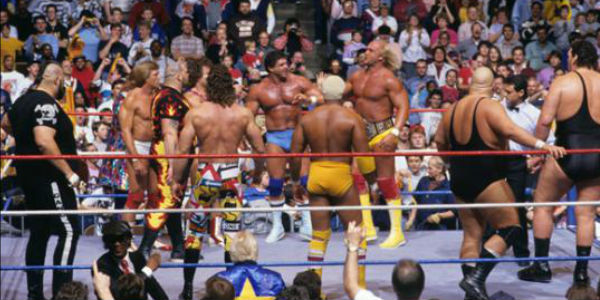
Luger Hall Wargames Wcw Ah, War Games, by far one of the best concepts that World Championship Wrestling ever came up with. The brain child of Dusty Rhodes, the multi-cage affair was the ideal way for the promotion to blow off the hottest feuds that were going on, such as having The Four Horsemen battle an all-star cast, or the nWo fighting WCW stars for supremacy. Reportedly, there were talks surrounding WWE using the War Games idea at the 2002 Survivor Series, but Eric Bischoff infamously came up with the Elimination Chamber instead. To date, WWE have never promoted a War Games match, and the concept is ripe for a return to screens. For example, why not have The Authority tangle with a number of stars, or have a team led by the likes of Brock Lesnar against one led by Roman Reigns? In fairness, the absolute best War Games bouts have always been those surrounded by a major issue, rather than a throwaway mentality, but surely the idea is much better foil for a Pay-Per-View than the already-redundant 'Fast Lane'?

6. Squash Matches

Would fans have ever been allowed to get fully behind Bill Goldberg had the man not been fed countless enhancement talents to destroy in squash matches? Modern fans may argue that there's no place for squash encounters in the modern era, but they do have their place, and can be the perfect way to help build up a new star and ready them for bigger challenges. It wasn't so much the quantity of the men that Goldberg defeated that resonated with fans, it was his undeniable ability to connect with them, and the quality of his squash performances. Big Bill came across as an absolute bad-ass, which was exactly the point, and fans started to salivate over what it might be like should he step inside the ring with the likes of Hollywood Hogan or others. WWE tried the squash idea with Ryback, but it felt like a bit of cheap Goldberg imitation, instead of an outright push, something which quickly came across to fans around arenas, who chanted the WCW star's name. Countless names have been made through squash runs, including the likes of Sid Vicious, Vader and even The Undertaker - it can be a useful tool, one which is scarcely used nowadays.

5. The Idea Of A Commissioner

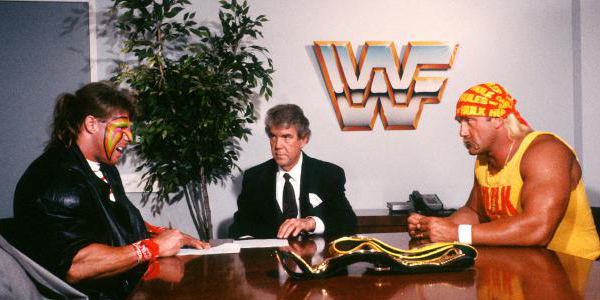
It seems WWE are in the comfort zone of always having a match-maker present at shows, but it didn't always happen this way. How many matches are put together nowadays simply without explanation? It rarely happens, instead the likes of Stephanie McMahon or Triple H will announce the bout, showing the control they have over the product. Nobody can deny that having reasons for matches is a good thing, but a few years ago there were so many authority figures rattling around the WWE brand that it was nigh-on impossible to tell who had what degree of power, or exactly who was in charge of what shows. It should never be that confusing. Throughout the late-80's and into the 90's, Jack Tunney held the role of WWF President, and he was the go-to man when the company needed to strip someone of a title or announce a match for the top rivalry. It was a simple system, one which worked well in subsequent years with the likes of Shawn Michaels and Mick Foley and not the convoluted 'Board Of Directors' sitting back and letting heels run riot, then only stepping in occasionally that fans see today.

4. Original Survivor Series

Underpinned by the simple catchphrase, 'Teams Of Five Strive To Survive', the original Survivor Series concept was exclusively team-based, and it was extremely memorable as a consequence. Fans lapped up the idea of seeing wrestlers team together who rarely interacted on-screen, and when tuning into the event, people were guaranteed to see something different to what was normally available on television. Somewhere along the line, Vince McMahon lost faith that the team-based dynamic was one which could draw fans in. The decision was made to make Survivor Series more of a standard Pay-Per-View, one with title bouts and a more standard format. Right then and there, the event lost a lot of what had made it so unmissable to begin with. The 5-on-5 and 4-on-4 matches were so tremendous because there was the potential for so much to come out of them. Feuds could be started, teams could be formed, breakups could occur, not to mention the excitement of seeing a wrestler attempt to overcome the odds and become the 'Sole Survivor'. This is one idea that deserves a second chance to make a first impression, it'd freshen up what has become one of the most stale traditional events on the calendar.

3. Classic Heel Announcers

JBL may occasionally back the heels on WWE television, and argue with the more straight-laced Michael Cole, but there's something missing from the announcing in the company these days. Before being switched to Smackdown, Jerry 'The King' Lawler was offering very little to the commentary desk, only really chiming in with cringeworthy jokes or dated references. Jerry Lawler in 2015 is perhaps more jaded and tired than Lawler in the mid-90's, when he was on fire alongside the likes of Vince McMahon and Jim Ross. Hamming it up as a heel, the King was entirely believable as a villainous rogue who would always want to see the 'good guys' get splatted by the more nefarious 'bad guys'. Often, it brought out the best in whomever he was working with, and the same can be said for Bobby Heenan's constant goading of Gorilla Monsoon. Hell, even Paul Heyman showed everyone exactly how it was done during his relatively brief run during Lawler's sabbatical in 2001.

2. King Of The Ring As A Standalone Pay-Per-View

The 2015 King Of The Ring has come and gone, and even though Bad News Barrett was the man chosen to wear the crown this time around, the entire thing came across as an afterthought for the company whilst it was still in progress. That's a far cry from the heyday for the tournament concept, there was a time when it was very much looked forward to. After Brock Lesnar was crowned as the winner in 2002, WWE decided the Pay-Per-View was a lame duck, and elected to do away with it entirely, something which saddened many long time fans. The King Of The Ring had been responsible for some unbelievable moments, such as Bret Hart's incredible performance in 1993, Steve Austin coining his 'Austin 3:16' catchphrase in 1996, and Mick Foley's literal Hell In A Cell with The Undertaker in 1998. If WWE want fans to take the idea seriously, they should bring it back properly, making it a full-time Pay-Per-View again. Fans haven't seen the King Of The Ring as a full standalone event since 2002, and enough time has passed that it'd feel fresh once more.

1. Unscripted Promos

One of the biggest complaints about WWE today is that wrestlers are expected to memorise pages upon pages of lines, reading them out and hitting every point the writers want them to. Obviously, pro wrestlers aren't professional actors and actresses, and as such the regurgitated spiels often come across as more forced than they should. Scripting basic bullet points is all well and good, but writing out - word for word - absolutely everything a performer is supposed to say doesn't really fit in well with the wrestling world. One of the most outspoken men on this issue is Steve Austin, who has repeatedly stated that he doesn't feel it works to have writers scripting everything a wrestler has to say. Back when men such as Austin and The Rock were at their best, they were given pretty much free reign to deliver promos as they pleased, so long as they hit certain points. Beyond that, it was their own responsibility to come up with what they'd say during interviews, and things had a much better flow than they do now. What other trends from the history of wrestling do you feel need to make a comeback? Do you agree with the choices on this list? Let us know down in the comments section below!

In this post: 
Scott Hall
 
Posted On: 
Contributor

Lifelong wrestling, video game, music and sports obsessive who has been writing about his passions since childhood. Jamie started writing for WhatCulture in 2013, and has contributed thousands of articles and YouTube videos since then. He cut his teeth penning published pieces for top UK and European wrestling read Fighting Spirit Magazine (FSM), and also has extensive experience working within the wrestling biz as a manager and commentator for promotions like ICW on WWE Network and WCPW/Defiant since 2010. Further, Jamie also hosted the old Ministry Of Slam podcast, and has interviewed everyone from Steve Austin and Shawn Michaels to Bret Hart and Trish Stratus.