10 WWE One-Hit PPVS That Totally Failed To Hit The Mark
The only ones punished at Capitol Punishment were wrestling fans...

Events like the Royal Rumble, SummerSlam, Survivor Series and (obviously) WrestleMania are ingrained in wrestling tradition. It's impossible to imagine a WWE product without these pay-per-views, even if there was talk a few years ago of Vince McMahon growing sour on and possibly ditching Survivor Series.
They are the longest running event titles in company history for a reason, and they're routinely the most highly-anticipated shows of the year. That's remarkable, because they had to start somewhere. There was a time when these classics were new concepts, not yet yearly customs that fans could bank on.
Whenever WWE comes up with a new premise for a pay-per-view, there's bound to be skepticism. Such disdain comes not from the thought of older events being replaced, but more because the promotion hasn't always hit the mark when implementing fresh ideas.
Over the years, numerous pay-per-view concepts have fallen by the wayside. Unable to convince the core fan base or even company management that they were viable, these uninspiring ideas didn't stick around too long.
Let's look at 10 such pay-per-view creations, those that just didn't cut it...
10. Bragging Rights

Admittedly, Bragging Rights was an event that happened more than once. In both 2009 and 2010, WWE decided to lift the concept of their SmackDown vs. Raw video games and present them on live pay-per-view. The end result saw back-to-back shows lacking in excitement, centred on a brand extension concept that was waning.
This is the kind of thing that may have worked right at the start of the brand split in 2002, but it was a little late coming in 2009. Heels and babyfaces worked together on the same side, with fans being told that they had an incredible sense of loyalty to the show they featured on.
It was all a bit tame, and it's surprising to see that Bragging Rights happened twice. On neither occasion did the Team Raw vs. Team SmackDown focal point ring true, as other matches were the main event of each show.
There was talk of bringing the concept back in 2012, but thankfully WWE decided to do something else. Booked in October both previous times, it stepped on the toes of Survivor Series in the process.
9. Invasion

From a financial point of view, Invasion was a success for the then-WWF. Pulling in 770,000 buys on traditional pay-per-view, it is one of the most notable non-WrestleMania successes for the company. Even so, it must be considered a one-off, because the promotion directly ruined their own storyline with shoddy booking.
The crux of the show was that both WCW and ECW had joined forces to tear down the almighty WWF. Going in, announcers were directed to inform fans that the organisation was in real peril, but most were still reeling over the lack of actual, big time WCW talent on the Alliance side.
Team Alliance was made up of Booker T, DDP, The Dudley Boyz and Rhyno on the night. Towards the end of the match, Steve Austin (on Team WWF) switched sides, further diluting the 'Us vs. Them' feel.
Naturally, Austin was a huge WWF star, so the whole idea didn't really make sense. Elsewhere, the card was crammed full of short, TV-style bouts. Invasion was a financial success, but not a creative or critical one.
8. Capital Carnage
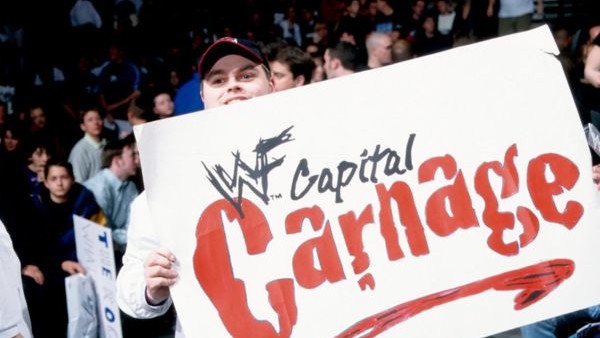
In September of 1997 the WWF staged their first pay-per-view exclusive to the United Kingdom. Previously, SummerSlam 1992 had been hosted in the UK, but it was available in the United States for viewers. One Night Only was an excellent show, and fans in Britain eagerly anticipated what may be in store when the company returned.
The next full pay-per-view from UK shores was Capital Carnage in December 1998. A 4-way main event between Steve Austin, The Undertaker, Mankind and Kane was the most exciting match on offer, but only that and a surprisingly good battle between The Rock and X-Pac were worth shouting about.
Everything else - in similar fashion to Invasion years later - felt lacking. Most of the matches, such as Val Venis vs. Goldust and Gangrel vs. Al Snow, seemed like they had been ripped straight from an episode of Sunday Night Heat. They were not PPV calibre.
Overall, Capital Carnage didn't live up to what One Night Only had achieved. If it had, perhaps the WWF might have promoted a second event of the same title later.
7. The Bash

Back in 2004, WWE decided to bring back a long-standing NWA and WCW tradition. The Great American Bash was back on the air, but would be discarded following the 2008 event. The next year, management decided it was time to cut the title short, re-dubbing the event simply as The Bash.
It's unclear whether or not the name of the show really mattered, but the buyrate did drop from 196,000 (for The Great American Bash 2008) to 178,000. A 'Three Stages Of Hell' encounter between Randy Orton and Triple H was in the main event slot, and it actually turned out to be enjoyable.
Other matches like Rey Mysterio vs. Chris Jericho and Jeff Hardy vs. CM Punk were also fun, but it wasn't really the quality of the card that posed an issue to WWE. There was just something inadequate about the name of the show. The Bash didn't carry the tradition of the NWA/WCW title, and it didn't really signify anything exciting to fans.
By 2010, WWE decided to scrap the idea altogether, replacing The Bash with another one-off dud.
6. Fatal-4-Way
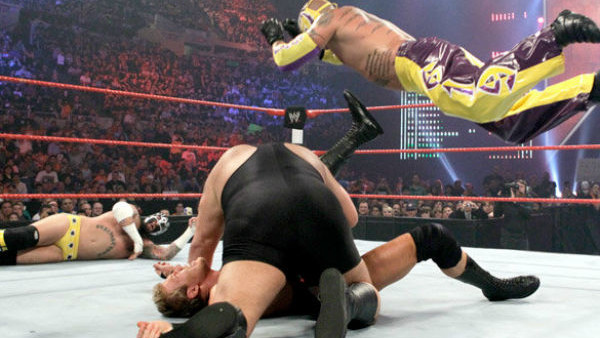
2010 was a challenging year for WWE on several levels. Firstly, the legendary Shawn Michaels retired at WrestleMania XXVI in. Then, following a red-hot start to the angle, the company failed to do the Nexus story proper justice. In the middle of all that, they tried to promote a pay-per-view around a regular match type.
Jokes were thrown around when it was announced WWE had planned an event called Fatal-4-Way that June. People began to jest that perhaps one called 'Singles Match' would be up next, or even 'Tag-Team Battle'. That lack of anticipation would hurt Fatal-4-Way; it just didn't seem satisfying.
Some of the best pay-per-view titles have a grand feel to them. Royal Rumble, King Of The Ring, even No Way Out. Fatal-4-Way didn't carry that weight, it instantly came across as mediocre.
Of the the titular matches on the show, only the one featuring Sheamus, Edge, Randy Orton and John Cena made an impact. That wasn't enough to save the event, and the concept was completely abandoned after just one attempt.
5. This Tuesday In Texas
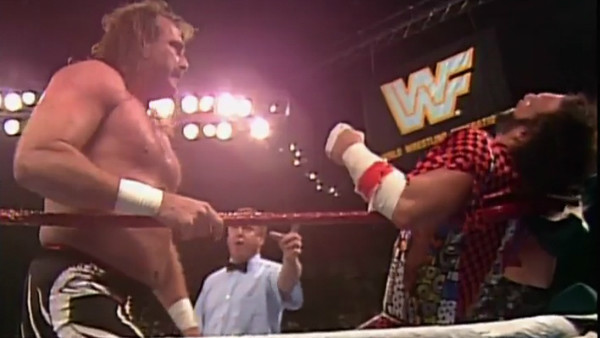
Credit where credit is due, This Tuesday In Texas was a bold experiment. Sadly, as the mighty WWF machine of the early-1990's would find out, it was one that was destined to fail. The weekend tradition for wrestling pay-per-views was something the company were eager to play around with.
That explains why the event was created and scheduled to take place less than a full week after the 1991 Survivor Series. That show took place on November 27, whereas This Tuesday In Texas was presented on December 3. Incredibly, Survivor Series had taken place on a Wednesday, but it carried more of a big-event feel for fans.
This Tuesday In Texas didn't, and any attempts to regularly use Tuesday nights as a secondary pay-per-view slot were cancelled. The event drew a disappointing 1.0 buyrate, even though it boasted a match between Randy Savage and Jake Roberts, as well as a rematch for the WWF Heavyweight Title between The Undertaker and Hulk Hogan.
Clearly, the WWF were expecting more success, but they'd be resigned to acknowledging that This Tuesday In Texas wasn't what their fan base wanted.
4. Breaking Point

Quite clearly running out of ideas for fresh concepts, WWE encouraged fans to vote on the name of a new show in 2009. Placed in the September slot previously reserved for Unforgiven, this pay-per-view would either be called Total Submission, Submit & Quit, Submission Sunday or Breaking Point.
The latter name was chosen, probably because it was the only one that came close to the foreboding title of Unforgiven that fans were used to. WWE then revealed that the event would be centred around matches governed by submission rules, including an 'I Quit' bout between John Cena and Randy Orton.
Unfortunately, Breaking Point was a flawed concept from the very beginning. WWE failed to recognise that shows couldn't just be based around certain match stipulations without the organic feuds to back them up.
As a result, the 'I Quit' stipulation felt tagged on to Cena vs. Orton, rather than being a natural extension of their rivalry. One month later, WWE would make the same mistake with Hell In A Cell, but that show has managed to stick around.
3. The Wrestling Classic

WrestleMania I may not have been a rip-roaring card from top to bottom, but it's remembered as a launch point for the WWF/WWE success in years to come. By contrast, The Wrestling Classic doesn't receive the same attention, and there's a good reason for that: It was an immediately forgettable show.
Never has the word 'classic' been used in such an errant manner, this pay-per-view was anything but from an in-ring perspective. The main draws were promises of a 16-man tournament and a massive match for the WWF Heavyweight Title between bitter rivals Hulk Hogan and 'Rowdy' Roddy Piper.
Oddly, neither would end up coming close to the 'classic' tag. Hogan vs. Piper only lasted 7 minutes, and a main event final between The Junkyard Dog and Randy Savage only went 2 minutes longer than that. That's right, not one of the 15 matches, an incredible amount of scraps for any show, went 10 minutes or more!
Too many bouts, a lame disqualification finish to Piper vs. Hogan and a general lack of drama really hurt The Wrestling Classic. The tournament idea would be abandoned until returning in 1988 for WrestleMania IV.
2. Capitol Punishment

As strange as it may seem now, it felt genuinely refreshing when WWE got behind R-Truth's wacky character in 2011 and poised him for a main event push. Truth's out-there persona whined about conspiracy and targeted John Cena's WWE Title to put things right. Both were in the main event of Capitol Punishment in June of 2011.
Eagle-eyed readers may notice a trend, there have been no less than 3 pay-per-views (including Capitol Punishment) from the month of June on this list. From 2009-2011, WWE changed from The Bash, to Fatal-4-Way and then Capitol Punishment. This would continue again the next year, as No Way Out held the June slot.
CM Punk vs. Rey Mysterio and Randy Orton vs. Christian were both good matches, but that was about it in terms of real excitement for the show. An awful recurring theme saw a Barack Obama impersonator eating up air time, and the main event between Cena and R-Truth was at times played for laughs.
After Capitol Punishment, it was back to the drawing board for WWE. The Washington show had been dire, and would never be seen again.
1. December To Dismember
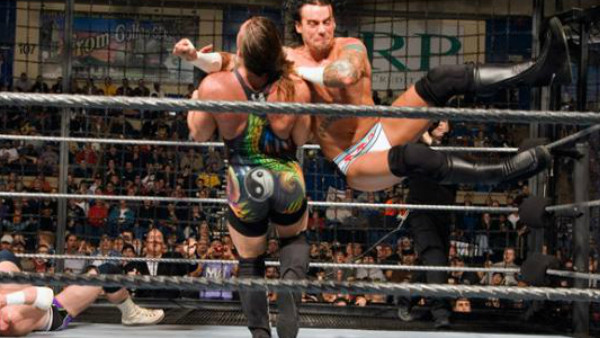
Speaking of dire, few who ordered the abysmal (WWE-produced) ECW December To Dismember show will ever live it down. Both One Night Stand 2005 and 2006 had been gripping events, doing the ECW name more justice than many perhaps felt WWE would.
By late-2006, that notion had passed, and ECW came across as an unnecessary third brand to join Raw and SmackDown.
December To Dismember had been a title used by the original ECW several times, but the quality between events put on by both companies was night and day. For the WWE show, the likes of Bobby Lashley, Test, Hardcore Holly and The Big Show were thrust into an awkward Elimination Chamber bout for the ECW Title. Joining them were CM Punk and Rob Van Dam, who was the only ECW original in the entire match.
At ringside, Paul Heyman put his head in his hands, and he'd leave WWE immediately after this debacle. The show was an insult to Extreme Championship Wrestling's heritage, with not one match on the card being essential or worthy of the name.
With that, any plans to produce more 'ECW' pay-per-views were put on the scrap heap. The pitiful 90,000 pay-per-view buys were the final nail in this coffin.
What other WWE pay-per-view concepts can you think of that failed to hit the mark? Let us know your thoughts down in the comments section below!