12 Misconceptions About ECW You Probably Believe
Think you know ECW? These extreme myths are about to get powerbombed.

ECW was more than just a wrestling promotion — it was a movement. Born in a bingo hall and raised on blood, barbed wire, and bad attitudes, Extreme Championship Wrestling rewrote the rules of what wrestling could look like in the '90s. But here’s the thing: history hasn’t been kind to it. Or rather, it’s been rewritten by the winners.
With WWE holding the rights to the footage (and the final word), the ECW you think you know is probably more myth than memory. For years, the story’s been sanitised into a greatest hits package of broken furniture, loud fans, and Paul Heyman speeches, stripped of all the nuance that made the revolution matter in the first place.
ECW was chaos, sure — but it was calculated chaos. There were masterclasses in storytelling, technical showcases lost in the shuffle, and genuine creative innovation that changed the game. It was as much about Eddie Guerrero as it was about New Jack. As much about business ambition as it was about broken rules.
So, before you chant “E-C-Dub” one more time, let’s break down the biggest misconceptions — and uncover the real story behind the most misunderstood promotion in wrestling history.
12. Paul Heyman Started The Company

Paul Heyman and ECW go together like steel chairs and concussions, but despite what countless documentaries and promos would have you believe, Heyman didn’t create the company from scratch.
The original ECW — Eastern Championship Wrestling — was launched in 1992 by Philadelphia pawn shop owner Tod Gordon. At the time, it was just another regional indie trying to ride the post-territory wave, running traditional shows and working with the National Wrestling Alliance to give it a bit of legitimacy. Paul E? Nowhere in sight.
Heyman didn’t enter the picture until later, first offering creative input before taking over as head booker. From 1993 onward, that’s when things started getting extreme. Out went the old-school NWA trappings, in came barbed wire, edgy promos, and the kind of chaotic energy that would make a Turner executive sweat.
It all culminated in 1994, when Shane Douglas famously won the NWA Title… then threw it down and cut a scorched-earth promo, unofficially birthing Extreme Championship Wrestling. That’s when Heyman took the reins completely.
So yes, Paul Heyman shaped ECW into the anarchic cult phenomenon we remember — but he didn’t build the house. He just burned it down and built something far crazier on top.
11. It Was Always A Cult Underground Promotion

When most fans picture ECW, they see dingy bingo halls, bootleg VHS tapes, and a crowd that looked like they’d throw fists just for the fun of it. And honestly? That image isn’t wrong — but it’s not the whole story either.
By the late ‘90s, ECW wasn’t just a cult curiosity anymore. It had a national TV deal. It had action figures in Toys “R” Us. It had a damn video game on the way. For a brief, glorious window, ECW was teetering on the edge of full-blown mainstream success.
The turning point came in 1999 with a weekly slot on TNN, exposing the product to a national audience for the first time. Ratings were solid, sometimes even outpacing WWE’s Sunday Night Heat. Meanwhile, ECW was popping up in Rolling Stone, getting nods from musicians, and drawing celebs to its famously feral front rows.
But like a chair shot to the face, it didn’t last. TNN never truly backed the product, WWE and WCW started raiding the roster, and the financial wheels fell off the wagon.
Still, there was a moment — just a moment — where ECW wasn’t underground. It was right there, ready to break through.
10. It Was A Financial Disaster From Day One
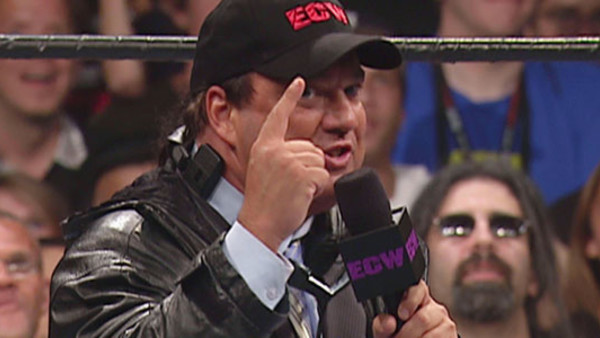
It’s tempting to remember ECW’s end — the bounced cheques, the unpaid roster, and Paul Heyman suddenly popping up next to Jim Ross on Raw — and assume the company was a financial disaster from day one. But that’s just not the full picture.
For most of its run, ECW was surprisingly stable. No, it didn’t have WWE’s money or WCW’s bottomless Turner budget, but it made the most of what it had. The company built a fiercely loyal fanbase, packed out venues like the ECW Arena and Hammerstein Ballroom, and sold a mountain of VHS tapes and merch. At one point, they even turned a profit — something WCW, hilariously, failed to do for years despite its millions.
The real problems kicked in once ECW landed a national TV deal with TNN in 1999. What should have been the rocket fuel turned out to be an anchor. The network barely promoted the show, shoved it into a death slot, and tried to water it down to fit cable standards. Add in rising production costs, key talent jumping ship, and the loss of their video distribution deal, and suddenly the empire started crumbling.
ECW didn’t explode — it bled out slowly.
9. The Mass Transit Incident Was Just A Simple Mistake

Even in the anything-goes world of ECW, the Mass Transit incident stands out as something truly grim — and it's often brushed off as a rookie mistake that spiralled out of control. But that’s a massive understatement.
In 1996, a 17-year-old named Eric Kulas — performing under the name “Mass Transit” — lied about his age and training to get booked in a tag match against, of all people, New Jack. If you know New Jack, you know that’s already a recipe for disaster.
What followed was pure carnage. New Jack brutalized Kulas with chair shots and an unsanctioned blade job that went horrifically wrong, leaving the teenager bleeding all over the mat. But this wasn’t just one man’s violence — it was a systemic failure. No one backstage properly checked Kulas’ credentials. No one told New Jack what he was dealing with. And no one stopped the madness once it started.
The fallout was swift: lawsuits, media outrage, and a stain on ECW’s legacy that would never fully fade. This wasn’t just another wild moment on a grainy VHS — it was the moment ECW’s reckless edge tipped into outright irresponsibility.
8. ECW Talent Didn’t Mind The Lack of Pay And Benefits

There’s a feel-good myth that ECW was a brotherhood — a wild band of misfits grinding it out for the love of the game, happily sacrificing pay cheques just to keep the dream alive. Yes, there was passion and loyalty, but there was also a lot of aggravated talent wondering when the hell they were getting paid.
For years, ECW ran on shoestrings and IOUs. Wrestlers regularly dealt with bounced checks, delayed payments, and no safety nets — no health insurance, no retirement plan, nothing. Top names like Taz, Shane Douglas, and Tommy Dreamer have all admitted they stuck around out of belief in the product, but that belief was often tested by empty bank accounts.
The result? A locker room constantly teetering between camaraderie and collapse. Wrestlers would threaten walkouts, no-show bookings, or take outside work just to keep the lights on. Some stuck around out of loyalty to Paul Heyman. Others stayed because they had nowhere else to go.
So, while the ECW family narrative makes for a great documentary line, the real story is messier. Passion was real — but so was the frustration, and not everyone was happy bleeding for a company that couldn’t always cash the cheque.
7. ECW Was Only Big In Philadelphia

Yes, the ECW Arena is hallowed ground. Yes, Philadelphia gave ECW its bloodthirsty soul. And yes, if you didn’t bleed in South Philly, did you really wrestle there? But the idea that ECW was just a scrappy little local promotion with a cult following in one zip code? That’s pure fiction.
By the late ‘90s, ECW was packing out venues far beyond the cheesesteak capital. Queens, Buffalo, Chicago, Detroit, Florida — all became regular stomping grounds. The Elks Lodge was a madhouse. The Hammerstein Ballroom? Basically, ECW’s second home. They even made it out to California, with fans screaming themselves hoarse despite ECW barely having national TV at the time.
Long before the TNN deal, Hardcore TV was airing on sketchy late-night slots across the country, building an underground following through tape trading and the early internet wrestling scene. Fans proudly wore ECW merch like it was a battle vest. They weren’t just watching — they were part of the movement. Fans traded tapes, wore the shirts, and treated ECW like a movement — not just Philly’s secret.
6. ECW Hated WWE

The us against them vibe between ECW and WWE felt real on TV — wrestlers swearing at Vince, Paul Heyman calling WWE out at every turn. It made ECW feel like the rebellious underdog fighting the corporate giant. Yet, behind the scenes the story wasn’t so simple.
Vince McMahon quietly helped keep ECW alive, sending Heyman secret cash injections when times got tough. WWE let some of their own guys moonlight in ECW, and Heyman’s promotion became an unofficial farm system, giving WWE fresh talent and ideas before NXT even existed.
Sure, ECW raged against the machine — but that machine was often the reason ECW’s lights stayed on. If you thought they were total enemies, you’ve been worked — just like Paul Heyman wanted.
5. It Was All Just Blood And Violence

If your mental picture of ECW is a flaming table, New Jack flying off balconies, and Sandman bleeding buckets before the first bell — you’re not wrong. But that’s only part of the story.
Sure, ECW was hardcore as hell. But it was also a breeding ground for some of the most technically skilled wrestlers of the ‘90s. Before they hit WCW or WWE, guys like Eddie Guerrero, Dean Malenko, Chris Benoit, Rey Mysterio Jr., and Tajiri were tearing it up in front of those rabid Philly crowds.
Paul Heyman’s real genius? Mixing brutal brawls with high-level wrestling and storytelling, often all in the same show. ECW wasn’t just chaos — it was a buffet of styles that hardcore fans learned to savour.
If you think ECW was only about blood and barbed wire, you probably weren’t paying attention.
4. WWE “Saved” ECW With One Night Stand

WWE’s 2005 ECW One Night Stand is remembered as a love letter to the original ECW — a wild, beer-soaked celebration of what made Paul Heyman’s creation so special. It was emotional, cathartic, and historic… but don’t buy the idea that WWE “saved” ECW that night.
One Night Stand wasn’t a rescue mission — it was a carefully polished tribute. WWE picked the safe parts: nostalgia, weapons, Heyman’s rants — and scrubbed away the unpredictability and danger that gave ECW its edge. It was ECW, but through WWE’s corporate filter.
Even worse, it paved the way for WWE’s 2006 ECW reboot — a watered-down, awkward shadow of the original, complete with baffling booking decisions (Kevin Thorn? The Zombie?) and a world title that somehow ended up on Vince McMahon himself.
The ECW vets got a pay cheque, but if you seriously think WWE saved ECW, ask yourself: would Paul Heyman have ever greenlit December to Dismember? Exactly.
3. The Spirit Of ECW Died In 2001

It’s easy to think of ECW as just a ‘90s relic — a blood-soaked throwback with no real impact on wrestling today. But that couldn’t be further from the truth.
Without ECW, there’d be no Ring of Honor. ROH popped up just a year after ECW folded, with many of the same wrestlers and a focus on work rate and realism — basically ECW’s rebellious blueprint. TNA’s X-Division? Totally ECW-inspired. And AEW? They’re practically carrying the torch, mixing hardcore spirit, athleticism, and passionate storytelling for a fanbase that lives and breathes wrestling.
Don’t forget the indies like GCW, CZW, and PWG — all keep that “DIY but dangerous” vibe alive, packing venues with hardcore fans just like ECW did.
ECW wasn’t just a flash in the pan. It rewrote the rulebook and shaped the wrestling world we know today.
2. It Never Got The Goodbye It Deserved

When WWE dropped ECW One Night Stand in 2005, everyone thought ECW was finally getting the send-off it deserved. Big names were back, the crowd was loud as hell at the Hammerstein Ballroom, and Paul Heyman delivered one hell of a promo. But if you’re honest, it wasn’t really the ECW — not the gritty, blood-soaked place that ran through smoky bingo halls and half-lit gyms.
Just a few weeks before that WWE show, Hardcore Homecoming quietly went down in Philadelphia — in the actual ECW Arena. Shane Douglas and other ECW vets put it together, and this wasn’t some polished WWE production. It was raw, loud, and way closer to what ECW actually felt like. Fans packed in tight, weapons flew everywhere, and legends like Terry Funk, Sabu, and Douglas tore each other apart in a brutal barbed wire main event.
Although One Night Stand got the spotlight, Hardcore Homecoming had the soul. No fancy pyro or scripted match order, just pure ECW chaos and, for many, the closure the real ECW never got.
1. Everyone In ECW Wanted To Work There Forever

Watch any Paul Heyman shoot interview or listen to the crowd at an ECW reunion, and you’d think the original ECW locker room was one big family — ride or die, no matter what. And sure, there was a real loyalty there, built from chaos, missed pay cheques, and the rush of what they were creating. But the idea that everyone wanted to stay in ECW forever? That’s more nostalgia than reality.
The truth is that a lot of the top guys saw ECW as a stepping stone. Chris Jericho, Eddie Guerrero, Dean Malenko, Raven, The Dudley Boyz — they all jumped to WCW or WWE as soon as bigger money and bigger crowds came knocking. And honestly, who can blame them? ECW was a creative playground, but it wasn’t exactly a place for long-term financial security.
Even Heyman knew this. He sold ECW as a place to make a name for yourself — get over, build your brand, and then move on to the big leagues. That was always part of the deal.
ECW was like a family — but like any family, some folks eventually packed up and left.