The Secret History Of ECW | Wrestling Timelines
This is the story of how ECW SHOULD be remembered…
Look around the modern pro wrestling landscape.
In All Elite Wrestling, you’ll watch on as the action inevitably and frequently spills to the outside. The wrestlers will use weaponry - tables, mostly - in matches that are not held under No Disqualification rules. The commentators are quick to point out things like “leniency”, and the referee’s unwillingness to throw the match out and deprive the fans of it. While AEW doesn’t take it quite as far, this approach - which is a somewhat cheap but massively effective way of getting a rabid audience into it - was a signature of Extreme Championship Wrestling.
In an early AEW success story, one so gripping week-to-week that AEW soon annihilated NXT in the Wednesday Night Wars, MJF feuded with Cody Rhodes. As part of the storyline, Cody could not put his hands on the man who betrayed, taunted, and whipped him until the pay-per-view. The sense of anticipation was rampant. Again: this was heavily inspired by an ECW storyline.
While ECW was not without influences of its own, most notably the crazily inventive Frontier Martial-Arts promotion founded by Atsushi Onita, it was the most influential wrestling outfit ever. The WWE of 2025 is very much removed from ECW’s influence, but the WWF of the late 1990s?
The promotions were philosophically intertwined like a figure-four leglock.
In the 1980s, the rapidly expanding World Wrestling Federation would not have dismantled the territory system and taken over without first taking many key personnel from the American Wrestling Association - which, with an emerging Hulk Hogan developing into a megastar, was almost the pilot of a monopoly.
ECW was the AWA of the ‘90s, in a lot of ways, in that, without it, no boom period happens.
This is the story of ECW: the revolutionary blood and guts operation that did in fact change everything. Its founder and glorified cult leader Paul Heyman often has much to say, a lot of it preposterously hyperbolic.
For once, no lies are detected…
August 23, 1985 - The First Paul Heyman Guy
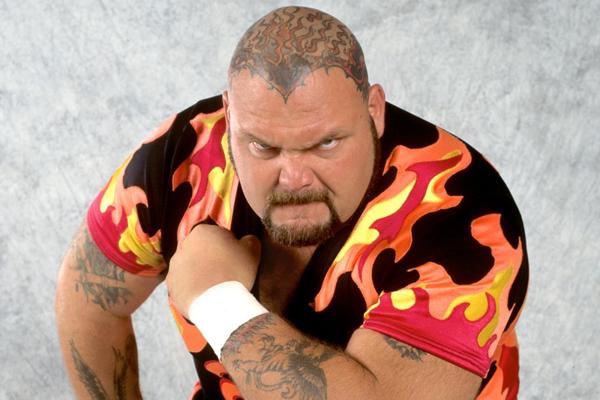
Paul Heyman, a charismatic, cutthroat workaholic who launched his first business before he hit puberty, promotes his first wrestling show: Wrestle Party ‘85, at the famous Studio 54 nightclub Heyman was working in as a producer.
Heyman had operated on the outskirts of the business as a DIY photographer and newsletter publisher. He did so at a shockingly young age, driven by his shamelessness, balls, and relentless drive.
At Studio 54, the precocious Heyman masterminds the introduction to wrestling of big man Bam Bam Bigelow, around whom the show is promoted. This is the origin point of Heyman’s career and identity as a promoter. With outrageous hyperbole, Bam Bam is presented as an impossibly formidable force who will destroy everybody and change everything. It’s a simple and difficult tactic, all at once: the easiest thing to say, but the hardest thing to sell. It works - Bigelow becomes a legend of his time and one da headlines WrestleMania - through a combination of Heyman’s searing conviction and ability to back up his words.
The show is attended, amongst others, by Ric Flair - who is hardly going to turn down an invitation to a party, as Heyman knows all too well. The carny world seems to admire Heyman’s fearless gumption.
Thereafter, Heyman is “in” the secretive, protected wrestling game, playing manager, interviewer and manager in his early journey.
August 4, 1990 - Current Blast
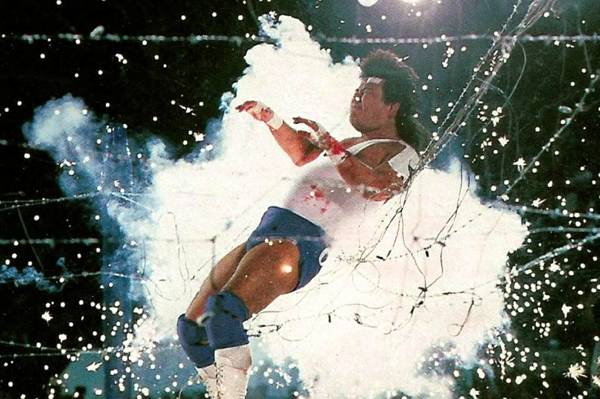
In the first ever match of its kind, the legendarily unhinged Atsushi Onita defeats Tarzan Goto in a ‘No Rope Barbed Wire Current Blast Death match - or, a No Ropes Exploding Barbed Wire Death Match.
This isn’t the most iconic explosion match - Onita and Terry Funk’s 1993 cinematic masterpiece in suspense and respect is the genre benchmark - but it’s a game-changer of a rough demo. The idea, and it’s so violently spectacular that it will very quickly propel the fledgling Frontier Martial-Arts Pro Wrestling into stadiums, is for the wrestlers to avoid stumbling into the barbed wire. If that happens - and it obviously does, after the requisite tension is built - the wrestler’s flesh will be ripped, their skin burned by a shower of sparks. A bomb in a wrestling match: it’s an unfathomable, fiendishly amazing idea.
(Heyman was desperate to pull off an explosion match in his own promotion, but his attempts failed dismally.)
Heyman, like the rest of the hardcore students of the game, is captivated by this total tape-trading sensation and its array of thrilling, bizarre matches. FMW becomes the most awesome proposition on the international stage; the concept of the death match, inspired by Onita’s fandom of the Sheik, is beyond alluring.
Heyman himself is inspired to take U.S. wrestling in a new, terrifying direction.
September 24, 1991 - Nevermind
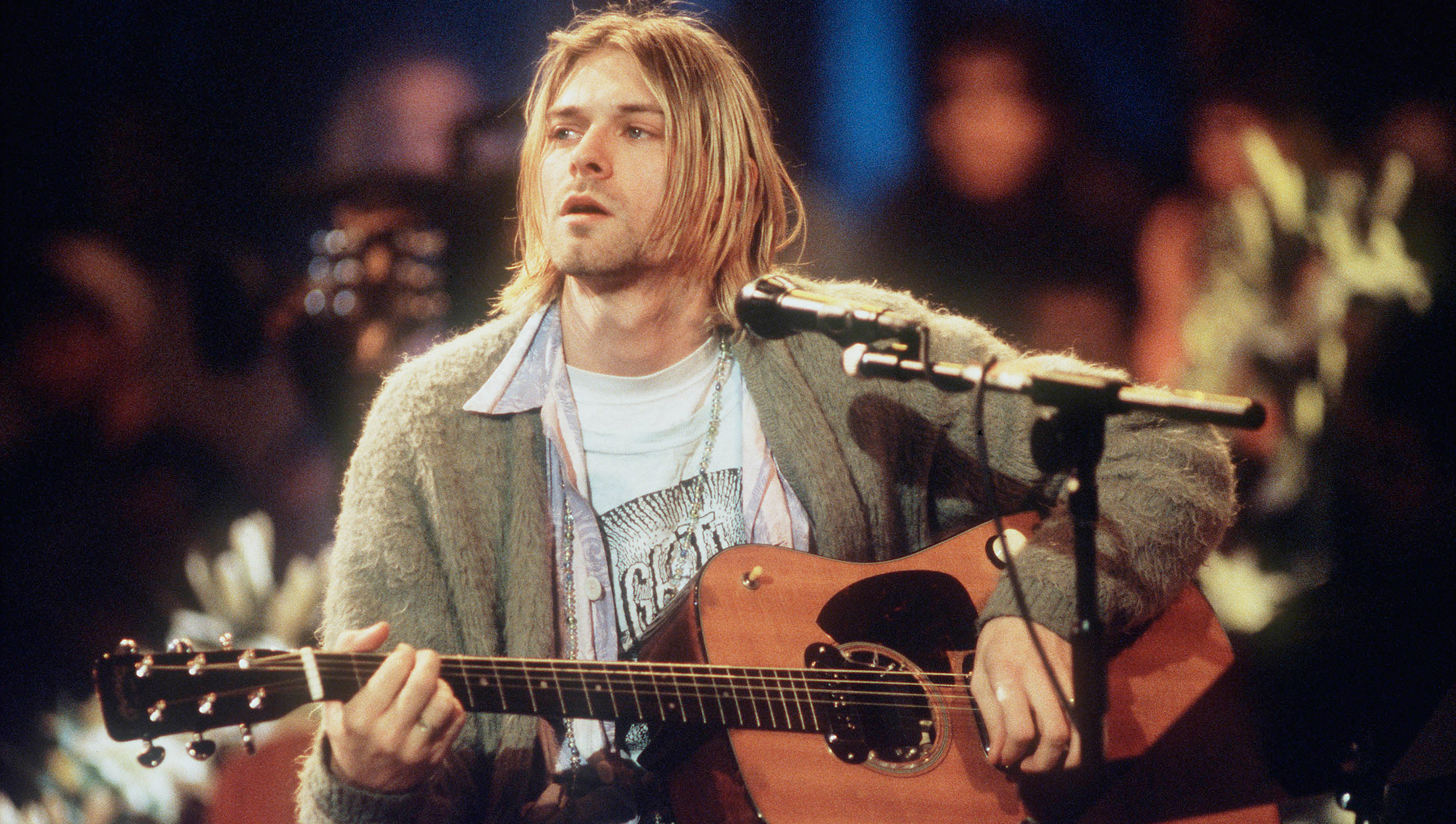
The Seattle grunge outfit Nirvana releases its second album ‘Nevermind’. It’s an enormous hit that dismantles everything: sound, fashion, the psyche of an entire generation. Instantly, the very colour palette of Americana changes. Everything is grey, brown, washed out - a jaded reflection of the disaffected youth movement that is taking over the country.
Pro wrestling is now a fading cultural outlier. The 1980s boom is over. The WWF, soon to be plunged into various scandals of its own, grim making, is dark and rotten on the inside. Outwardly, though, the recognised global leader in sports entertainment is still parading around Hulk Hogan as the top guy. Every babyface wrestler is adorned in bright, garish colours. A moral code emblematic of American values continues to be sold as a character trait.
The WWF and WCW are so wildly out of touch with this shift in mood, in fact, that the mainstream promotions will only begin to capture it in 1996, when grunge is cycling out of fashion. The timing works out well for pro wrestling in the end, though: grunge is displaced by nu-metal in the booming alternative rock market, and its more aggressive, toxic take on disillusionment is a much better zeitgeist synergy than the sensitivity of Kurt Cobain.
There’s one person in wrestling who senses it there and then, but he’s a talent with no creative influence: Paul E. Dangerously, a heel manager working for WCW. He won’t stay there long; an ugly dispute with booker Bill Watts hastens his exit in early ‘93, freeing him up to implement his vision.
Paul Heyman thinks the WWF and WCW is unhip hair metal. He wants his new promotion to be “the Nirvana of pro wrestling”.
February 5, 1994 - The Night The Line Was Crossed
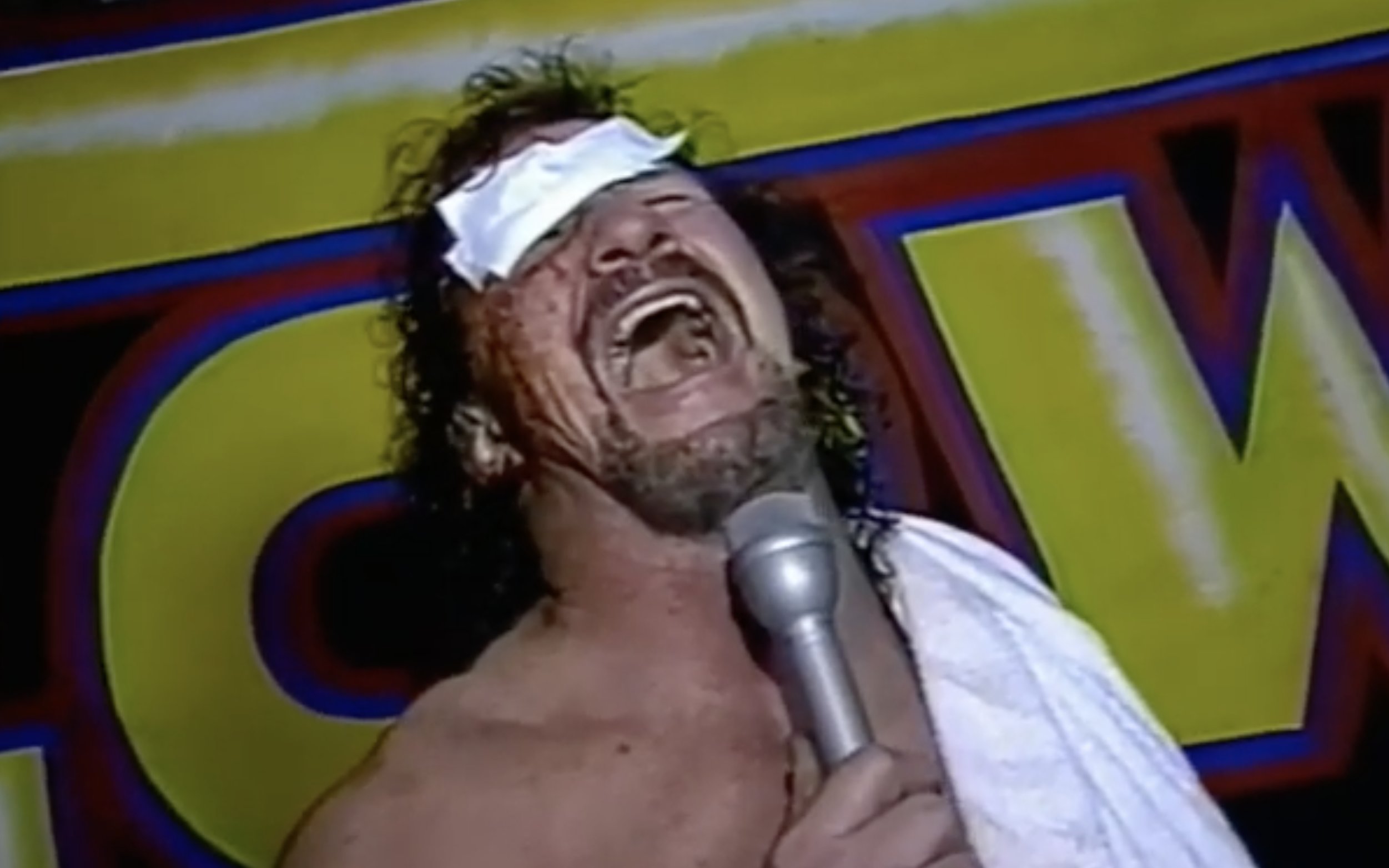
Eastern Championship Wrestling, booked now by Paul Heyman, draws itself some buzz on the magazine and newsletter circuit, which is impressive: as a regional overseen by a governing body with no cachet, it should be an antique. ECW is the opposite. For the first time in its young history, ECW is the cover story of the Wrestling Observer Newsletter in the February 14 edition.
The Night The Line Was Crossed is something of a sensation; as Dave Meltzer writes, many readers describe it as “the best house show from any promotion in years in Philadelphia”.
(It’s not entirely unfair to doubt the veracity of this, since Heyman later developed a reputation for supposedly writing letters of emphatic praise towards and demand for ECW under burner email addresses. Still, even if that is true, it underscores his prowess and creativity as a promoter.)
The show receives praise top-to-bottom; ECW is not formally known as ‘Extreme’ yet, but the nascent hardcore style is a hit. The very unique and, yes, influential main event is what draws the most attention. Years before ‘Triple Threat’ enters the lexicon and headlines WWE WrestleMania on multiple occasions, Heyman books and popularises it. The ‘Three Way Dance’ between Sabu, Terry Funk and Shane Douglas goes to an hour-long draw. The length and scarcity of the match is novel; a few readers even award it *****. It receives a standing ovation in the ECW Arena.
ECW in name and identity has not yet arrived; the roster is still littered with relics, like Jimmy Snuka and Pat Tanaka. The Night The Line Was Crossed will not age particularly well, and the very long-feeling Three Way Dance will rapidly drop out of Best Match Ever lists, but it doesn’t matter: ECW is making noise.
August 13, 1994 - Raining Chairs
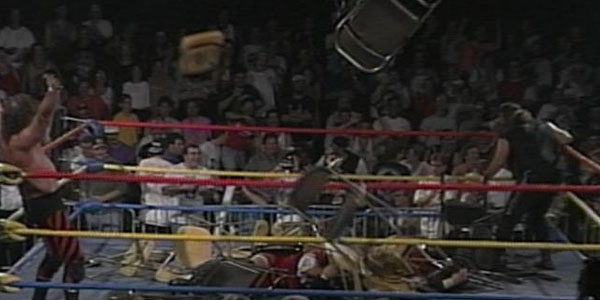
Good friends, better enemies Cactus Jack and mentor Terry Funk headline Hardcore Heaven in a singles match. This goes to a no-contest when the Public Enemy hit the ring and attack Jack. An alliance forms between Jack and Funk in that moment; it won’t last, but that was the beauty of their dynamic. One cross word would mutate instantly into bloodthirsty hatred.
Funk asks the crowd to throw a chair into the ring. One fan obliges. While just the one chair will do, it looks fun, and the people want to help Funk because he legitimately is a hero and a legend. More chairs fly into the ring. Very quickly, a terrifying scene unfolds. A hailstorm of chairs buries the Public Enemy as Cactus and Funk bail. Commentator Joey Styles - whose screaming one man band and frequent “Oh my God!” squeal divides opinion, but is crucial to the promotion’s identity - leaves his post and urges the fans to stop.
The ECW Arena is a sweltering din - a sh*thole bingo hall populated by discerning bloodthirsty adult males. It’s not sweaty so much as foggy; a grimy building that demands and often receives ultra-violence. It’s where transgressions happen. It’s a place you’d like to go, but you’d feel apprehensive when you actually step foot in it. There’s a malevolent energy radiating out of the screen. It’s a place where, if you make a mistake and get knocked so loopy your face starts to swell, you’ll get mocked for messing up. It’s unpleasant and inviting, all at once. It’s scary.
This iconic extreme moment happens when the promotion is still named Eastern Championship Wrestling - but that will change imminently.
August 27, 1994 - Kiss My Ass
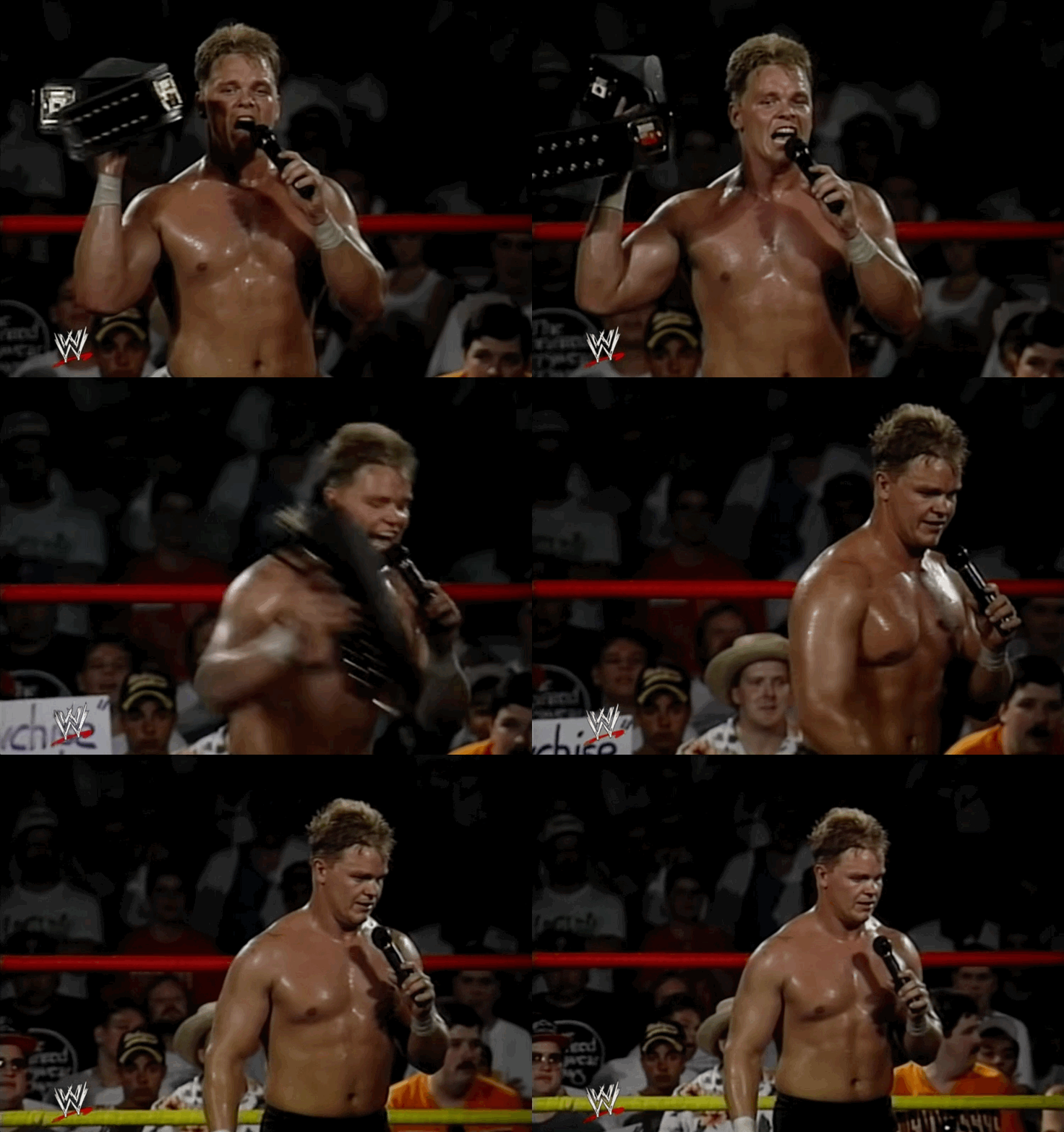
This is not the strict origin date of ECW, but it might as well be. A promotion that dabbles heavily in garbage wrestling makes that its selling point.
Shane Douglas wins a tournament to capture the NWA World Heavyweight title, but, at the urging of Paul Heyman, double-crosses what remains of the irrelevant governing body. Douglas rejects the title and buries the revered champions of yore. He says the “fat man” Dusty Rhodes, Ric Flair, Ricky Steamboat, Lou Thesz: they can all kiss his ass. He does not accept the torch of an organisation that “died, R.I.P., seven years ago”. ‘The Franchise’ is the man who ignites the new flame of the sport of professional wrestling.
This doesn’t kill the NWA, because Douglas is correct. It’s dead. However, the corpse is still warm enough to make the angle feel like a desecration. This is transgressive, disrespectful, intelligent, headline-worthy. The imagination of a wrestling world bored by the 1980s masquerading as the 1990s is set alight. ECW - which, within days, will secede from the NWA and rechristen itself Extreme Championship Wrestling - is on the map.
If Heyman wants ECW to be Nirvana, this is his ‘Smells Like Teen Spirit’: a breakthrough moment that reverberates around the world.
August 28, 1994 - Singapore Cane
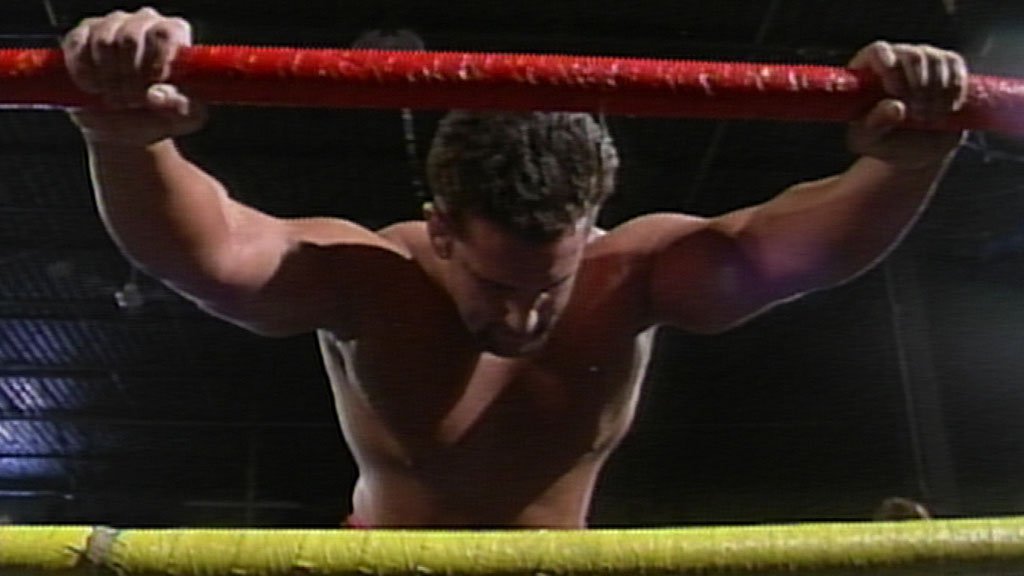
It really is astonishing, how much infamous ECW lore is densely packed into the late summer of 1994. You could make the argument that ECW peaks as a creative force before the WWF first rips it off. That’s the negative slant. The positive slant is that ECW is an incandescent explosion of creative expression - a narrative, stylistic and philosophical big bang that reorders the very universe.
The wildly unremarkable cornball Tommy Dreamer, whose very ring name elicits groans, takes Tommy Cairo’s place in a programme with the Sandman. Deriving inspiration from a shocking international incident, in which an American teenager had received four lashes of a cane to his buttocks as punishment for vandalism upon moving to the United States, a ‘Singapore Cane’ match is set.
The idea is to get Dreamer over as a spirited babyface who refuses to say die. It’s a different finish to the legendary events of WWF WrestleMania 13, in which Steve Austin turns babyface, but the dramatic principle and character-building is similar. Also: what WWE will later designate a kendo stick becomes as commonplace as the steel chair and the table in mainstream wrestling’s arsenal of weapons. Dreamer loses, and takes 10 shots with the cane in a moment that inspires no fewer than three famous wrestling moments; Cody Rhodes taking 10 lashes of a belt highlights the critically adored build to AEW Revolution 2020.
A later programme between Tommy Dreamer and Raven will garner much acclaim - but Dreamer’s real best work is against the Sandman, who is as vile as heels get before he becomes the beer-drinking cult hero backed to the ring by Metallica’s ‘Enter Sandman’.
The beating is a horrific aural nightmare. Even the hardcore Philly fans are unsettled. They want violence, but this is too real, too agonising. Guilt cloaks the arena; Dreamer’s masochism is an awkward overcorrection, and they are to blame.
Besides Sandman, there is one person in that building who wants to see more: his valet, Woman, who is absolutely sensational. She is on the verge of frenzy as Sandman lays in the shots. At nine, Dreamer says “Thank you sir, may I have another?”
Dreamer, frankly, is not as inherently cool as the real faces of ECW’s Mount Rushmore - Taz, Sabu, the Sandman, and Terry Funk - but this works.
October 1, 1994 - Blinding
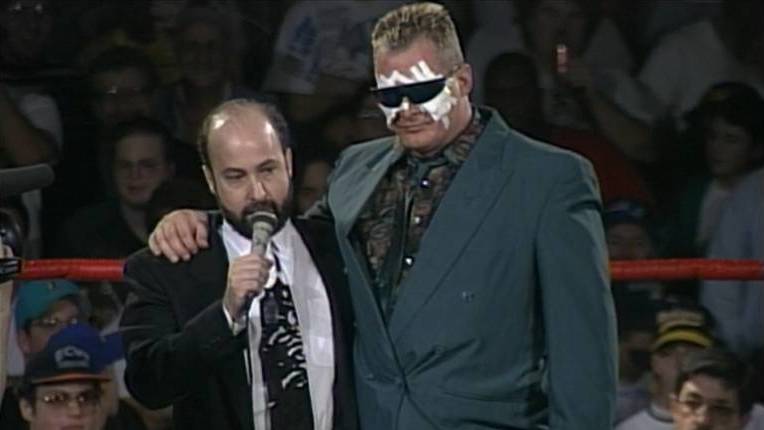
In the return match, held under ‘I Quit’ rules, ECW presents a staged mishap.
As the referee hands Tommy the microphone, asking if he intends to give up, Tommy pushes it out of the way. The lit cigarette dangling from the Sandman’s lips catches him in the eyeball. Threatening the realism somehat, Sandman’s other eye is “blinded” when Dreamer cracks it with a cane.
Woman, it can’t be overstated, approaches genius in her performance. She was gleeful in the original cane angle, berserk, so lost in the act that she was impervious to the vibe in the building. If there was an actual elephant in that room, she’d have told Sandman to cane it, too. Here, she looks shattered. Vacant. The ref looks at both Dreamer and Sandman as if he doesn’t know what to do. There’s no script to follow; it’s just been burned to ash.
The Sandman is rushed backstage where, about a year and a half before Brian Pillman blurs the lines in WCW, outwardly calling wrestling fake by referring to the “booker man”, heels and babyfaces alike break kayfabe to express concern over the Sandman’s condition. Even a look into the backstage area is another innovation. Commissioner Tod Gordon sells it as something that should not be happening, demanding the camera operators get the hell out of there.
Sadman sells the angle by staying at home for a month and refusing to drink in the bars he frequents and would be spotted in. He does not answer his door. On TV, he is treated like Hulk Hogan, almost, as fans are invited to offer well wishes. Some fans are smart to it all, but this schmaltz is so thick and so damaging to his aura that it might actually be “real”.
It isn’t - Sandman swerve-turns on Dreamer during his retirement ceremony at November To Remember on November 5 - but what an all-time great angle. ECW fans aren’t insulted, after a while. They’re impressed. They’re not supposed to get worked anymore; they’re too knowing for all that.
ECW is miles ahead of everybody: the fans and, on a pure creative level, the competition.
April 8, 1995 - “F*ck Sabu!”
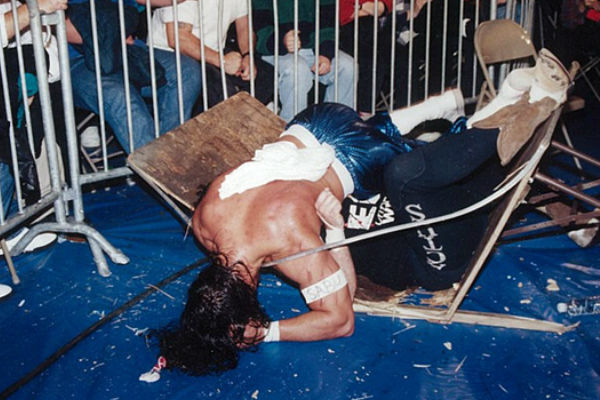
Sabu, so dangerous that he is paraded to the ring like the muzzled Hannibal Lecter, is a revelation.
He did not break the first table in pro wrestling - this is attributed to Randy Savage in Memphis in 1984, and probably happened several years before that - but Sabu popularises what will become the easiest and most ever-present spot in the game.
“We want tables” is a love letter to Sabu, even if those modern fans have never seen him work.
He isn’t tall or ripped, but he’s still the biggest star in the company. His size doesn’t matter; nor will Daniel Bryan’s. Heyman, again, is first - at least in the States.
Sabu is a mute enigma, marketed as the “homicidal, suicidal, genocidal, death-defying maniac”. The first two adjectives would have sufficed; Sabu is incredible at blasting his opponents with cutting-edge chair-assisted dives and careening through tables, having missed his target. “High risk” was a staple of the lighter wrestler well before Sabu announced himself on the scene; in the brutal context of ECW, however, his work feels more like life or death. He is a man who will sellotape his bicep back onto the bone, if it means getting on with a match. He is the purveyor of the coolest spots and moves in all of wrestling. He is a demigod.
He is fired by ECW for a time, when he double books himself and opts to take the New Japan date, since it affords him the opportunity to make more money down the line.
If Sabu is a demigod, Heyman is the Supreme Being.
Heyman opens Three Way Dance by announcing the Sabu no-show, but pleads with the crowd to wait until the intermission before requesting a refund. His defiant, tribalistic promo is so rousing and hypnotic that the fans turn not on the promotion, but Sabu himself. “F*ck Sabu,” they chant.
Heyman develops a reputation as a cult leader. The wrestlers bump for him for little money and delayed payments. The fans see him as a creative genius; if there’s no Sabu, it doesn’t matter. Heyman can take any slob working an armory and get him over. ECW will be fine.
The rate at which the promotion loses talent is as brutal as any spot in the barbaric confines of the ECW Arena - but Heyman’s hot streak is so molten that “let it play out” all but originates in Philadelphia. The idea that the brand is bigger than any star - which Vince McMahon is delighted to get away with in his worst years decades on - is another ECW device.