14 In-Ring Wrestling Secrets Jake Roberts Revealed On Stone Cold's Podcast

'There's no heat when you hit a guy with a damn sledgehammer.'
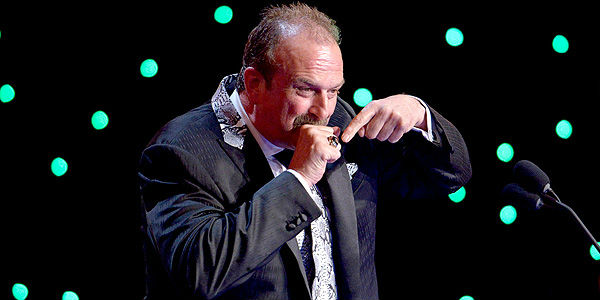
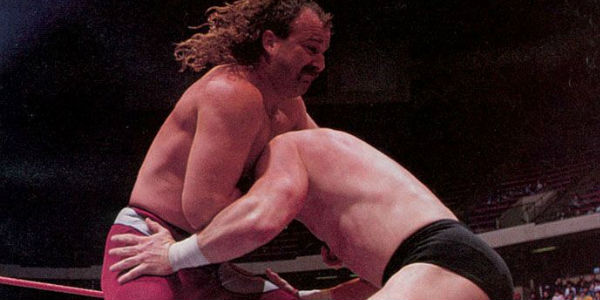
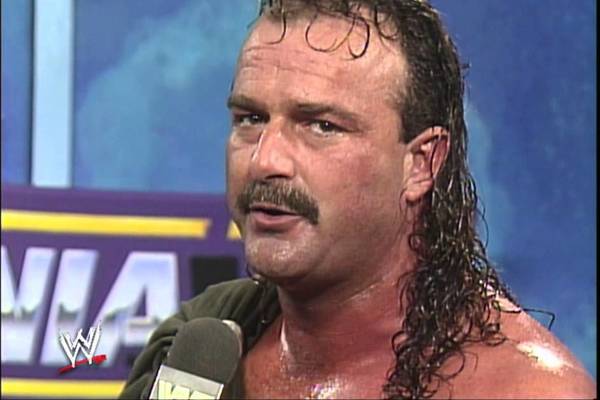
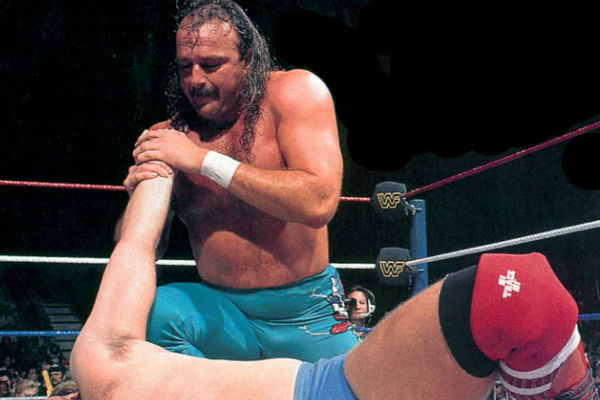
Jake 'The Snake' Roberts knows a thing or two about wrestling. Commonly regarded as one of the greatest grapplers never to win the WWF Championship (or any title in the promotion!), he drew considerable admiration for his intense charisma and heavily psychological ringwork. It's therefore no surprise that his guest slot on Steve Austin's podcast is riddled with nuggets of advice, many relating directly to today's product. Austin's show is usually full of nostalgic tales and humorous anecdotes, but the Texan pair actually dedicate a considerable chunk of airtime to discussing the art of wrestling itself, delving into the topics of classic heel work, the mechanics of putting together a match, and maintaining credibility in the eyes of the fans. A dark, cerebral character among the colourful giants of Hogan, Savage and Andre, Jake was truly ahead of his time...

14. Blading: 'There's A Right Way And A Wrong Way'
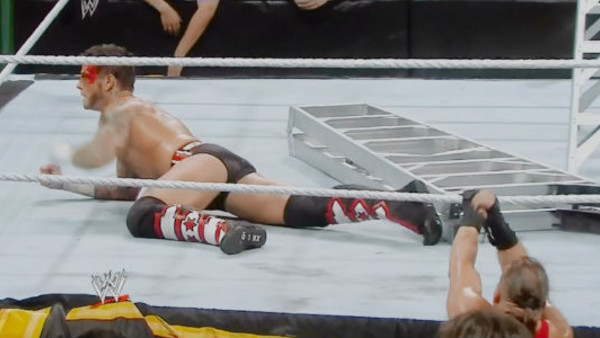
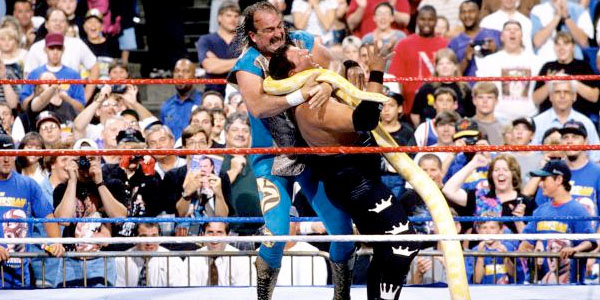
Surprisingly, when disclosing the secret of a good bladejob to Austin, Roberts doesn't endorse the use of snakes (despite encouraging his king cobra to draw blood from 'Macho Man' Randy Savage in 1991). Instead, he pinpoints the technique a lot of wrestlers use as incorrect - instinctively using an unsafe slicing motion as opposed to a far safer "twisting" method. Jake believes the twisting method to heal quicker and (crucially) appear far less obvious to fans. He claims to have been able to blade himself in midair, even while taking a backdrop, with nothing more than a quick flick of the wrist. Austin and Roberts both agree that, no matter how safely a wrestler blades, there's always a certain "sickness" to it.

13. 'Sell Properly, Without Dying'

Roberts reveals an important tip given to him while training in Canada during the early years of his career. Veteran Moose Morowski taught him to sell properly "without dying", meaning that it's important to constantly give out "unnatural movements" when putting over an opponent's offence. Clearly Jake feels that selling a move by lying completely still is an easy way out. It would be useful for many members of the current WWE roster to heed this advice too; watching today's product, so many big moves are sold "like death", but comparatively less thought is given to the little things that can make an opponent seem especially dangerous.

12. 'It's Not About Your Size; It's About Perception'

Another Canada story leads to Roberts talking about the brilliance of Dynamite Kid, the infamous Preston-born maestro, as renowned for his backstage cruelty as his in-ring genius. Jake explains that people bought Dynamite as a threat despite his short stature because he was "a damn terrier" and "wrestled smart". He then explains that a lack of size should always be used to a wrestler's advantage; babyfaces can use it to garner sympathy, while heels can use it as an excuse to be "a rotten son of a b****", relying on trickery and ruthlessness to win matches rather than strength.

11. 'Telegraph!'

Telegraphing is a negative word in sports - from a boxer failing to sufficiently disguise a punch to a quarterback making an overly-obvious pass - and usually has negative consequences attached to it. However, in wrestling, both Austin and Roberts agree that it's a necessary tool used to fuel the excitement of a crowd. Jake talks of how he invented the DDT by accident, when an opponent stood on his foot and caused him to trip in the middle of a front facelock. He then turned it into one of the most over finishers in the business by building anticipation, utilising a short-arm clothesline to set up the move. Austin gives Michael Hayes credit for the idea of setting up the Stunner with a kick to the gut, giving fans an instant reason to pop as they realised the move was incoming (or a frustrated sense of disappointment if his opponent managed to reverse it).

10. The Lost Art Of Cheating

At one stage, Roberts bemoans the decline of cheating in the modern day WWE, claiming that heels these days are instead more concerned with thumping someone. He's got a point; wrestlers such as Lesnar, Rusev and Owens are all billed as power-based monsters, capable of causing major damage without bending the rules. Even Seth Rollins, so often booked as a snivelling coward of a champion, is far more likely to nail a suicide dive or superplex than pull someone's hair or use the ropes for leverage. Austin presses Jake for the secret to good heelwork, and he replies "It's the way you do it; the sneakiness of it or the facials with it", rather than the actual act itself.

9. 'Never Say Anything You Can't Do'

Another tip that the current WWE would do well to heed involves promo work, and the fact that too many wrestlers are spouting outlandish claims on the mic - only to have their words rendered irrelevant by a subsequent loss. In fairness to the current crop of WWE talent, a good portion of this blame can be laid at the feet of the writing team, rather than the wrestlers themselves - but Roberts' point still rings true. As a heel, Jake explains the benefit of never exaggerating in a literal sense. He claims he never intimidated an opponent by saying "I'mma kill him", but rather "I'mma make you wish you were dead", as it's both more imaginative and less concrete. By taking such a precaution, heat can be retained even after losing a big feud.

8. 'Have A Different Gear'

When inducting his father into the WWE Hall of Fame, the Rock explained that he was taught always to have a strong comeback when fulfilling a babyface role. While this is certainly true, relatively little attention has been paid to the need for a heel to switch gears too. Roberts explains a sequence he would commonly follow in matches to gain heel heat. He'd start by becoming increasingly frustrated at the babyface's resilience, eventually stepping up the intensity and bending the rules to viciously beat them down. He'd then back up to allow his opponent to sell for a while (and regain his energy), before resuming the assault in a more devious, methodical manner. With wrestling matches often taking place at breakneck speed these days, Jake reminds everyone of the benefit of slowing things down now and again. It just goes to show that he didn't become a legendary heel by accident; there was definitely a complex thought process at work too.

7. 'Obey The Referee. That's Where Your Heat Is.'
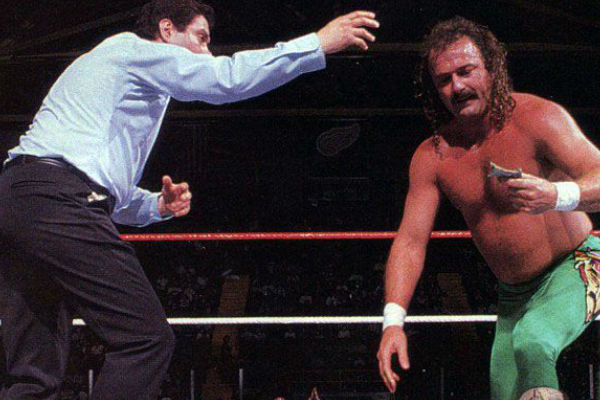
Roberts again bemoans a tendency of the modern heel, criticising everybody's preference to bully or push around referees. A simple psychological trick he often used to gain heat involved actually obeying the referee's instructions, backing off when overstepping the line and pretending to be a virtuous competitor, only to stick the boot in once the official had turned his back. This would naturally infuriate the crowd more than a bullish heel steamrolling the referee out of the way, a tactic Roberts believes was made even more effective by the crucial use of facial expressions.

6. How To "Powder"

Austin explains that 'powdering' refers to the practice of exiting the ring for a quick breather, and the pair agree that it can be used by both a babyface and heel - but is more commonly used as an infuriating sign of cowardice, intended to frustrate the crowd and build up heat against the bad guy. Roberts believes the secret to powdering is all about two things: timing and performance. The former simply involves taking a break to cut off the face's momentum, something many modern day WWE heels do well. However, Jake believes that the reaction of the fleeing wrestler is often wrong. Many heels get irrationally infuriated or intimidated when temporarily escaping the babyface's clutches, mugging in a fearful or intense manner on the outside. Roberts instead believes that it's more effective to deliberately take one's time, perhaps even smiling or laughing at the opponent to infuriate the fans.

5. 'Let The Fans Create'

One of Roberts' most relevant tips is his insistence that bookers and wrestlers should 'let the fans create', rather than spelling out everything for them in a forced, pre-determined manner. He tells a story of the best angle he ever saw, which involved one wrestler being beaten down in a hotel lobby and refusing to name his intruder. In a matter of days, every fan in the territory had an idea of who the culprit was - and many even claimed they'd seen the attack itself! Of course, such angles wouldn't work as well today in a post-kayfabe environment, but the virtue of leaving a storyline partly in the hands of the fans can be seen in the WWE's most successful recent angles. The rise of both CM Punk and Daniel Bryan came about due to fan demand, while Roman Reigns' stalled momentum can be seen as a direct consequence of the promotion's overeagerness to push him down the fans' throats.

4. 'Watching Six Guys Beat Up One Guy Is Not Heat'
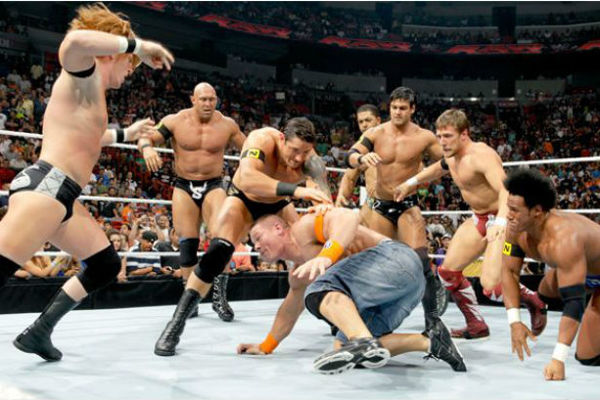
It should come as no surprise that Roberts is a believer in heels using cunning and trickery to gain an edge, rather than superior numbers. He is openly critical of multi-man beatdowns, explaining that they are useless with regard to the credibility of anyone involved. His words certainly ring true in the modern WWE landscape. When was the last time a heel used a truly ingenious trick to scupper a babyface? Rollins spends most of his time running away from opponents, Sheamus uses brute force, and stables such as the New Day and Wyatt Family rely upon their strength in numbers and little else. Although not a direct shot at the WWE, it's still a point with undeniable relevance today. However, Jake couldn't resist saving one particular barb for Vince McMahon's promotion...

3. 'There's No Heat When You Hit A Guy With A Damn Sledgehammer'

Ouch. No prizes for guessing the target of Jake's scorn here. In fairness, it's not a throwaway insult - he backs up his point with solid reasoning. It's clear throughout the entirety of the interview that Roberts places a lot of importance on a wrestler's credibility. He claims that once outlandish elements such as sledgehammers are brought into the equation, credibility is lost - especially if the opponent kicks out of the ensuing pinfall.

2. 'The Referee Can Make Your Match Or Kill It'

When discussing the notion of credibility further, Roberts raises the importance of the referee, claiming that they can make or kill a match. He and Austin both agree that Earl Hebner is an all-time favourite, and that a key quality is enthusiasm. Jake stresses the importance of having a referee that Someone that's going to react. Give it credibility. Help to sell. "I want the referee that'll dive across the ring to make a three count"

1. 'Less Is More'

Perhaps the most important piece of advice, and the decision that allowed Jake to break into the wrestling business in the first place, is the idea that less is more. Roberts confesses to sucking in the ring when he first started out (and Austin points out that he was never the most athletic wrestler at any stage of his career), but quickly learned that mastering a hundred flashy moves wasn't going to get him over. Instead he focussed on doing a few things very well, developing a character as opposed to a moveset, and gaining a keen grasp on psychology and in-ring storytelling. It's certainly an attitude which helped Jake become a bonafide legend, proving that brains often can triumph over brawn - even in the professional wrestling industry.

Content Producer
Content Producer

Highly overrated 23 year old from the North East of England. Hanging off of your gangster car.