15 Wrestlers Who Stole A Living From WCW

Each one of these guys was a waste of WCW’s money…

There was a time when WCW was the ideal yin to WWF€™s yang: while WWF was focusing on cartoonish characters with limited grappling skill and outlandish storylines, WCW was focused on traditional wrestling. For quite some time, WCW was an awesome show, which had all the elements necessary to not only compete with WWF, but actually overtake them in the ratings. They had a deep roster of skilled wrestlers (which the €˜rassling€™ fans enjoyed), a surge in foreign talent (due in part to a working agreement with New Japan Pro Wrestling), and the shows were centered on simple yet deep storytelling. It seemed that nothing could go wrong with WCW. Unfortunately, they could€and they did. There were many people in WCW who simply didn€™t belong on the roster or on WCW programming. These were people who, by comparison to their peers, were less skilled and thus undeserving of the positions they held, or were those people that failed to bring in any viewers to WCW, despite a lot of hype. Out of all the sub par wrestlers in WCW, fifteen stand out more than others as the most underwhelming and disappointing. These individuals either lacked the skills necessary to put on a good match, or dimply didn€™t belong in a wrestling ring in the first place. In either case, they were paid by WCW, and many people felt that WCW was basically burning money by paying these individuals. Just how bad were they? Let€™s find out€

15. Bryan Clark/Wrath

You would think that a guy who won the World Tag Team Championship in All Japan Pro Wrestling would be, at the very least, a decent wrestler. Sadly, you€™d be sorely mistaken, as Bryan Clark barely qualified as decent, including during his tenure in WCW. Despite having the right physique for a pro wrestler, Clark wasn€™t able to really make a name for himself in WCW. The first reason was because he was saddled with a terrible gimmick where he was known as €˜Wrath€™, and he was basically a rip off of a Mortal Kombat character. That was one of the many gimmicks that might work on paper, but was just awful in its execution. After all, why would a fighting character from a game involving €˜fatalities€™ be considered a believable wrestler? As if that wasn€™t enough, when Clark teamed with Brian Adams to form Kronik, they were one of the most disappointing tag teams in WCW. Their matches were often slow and void of any drama, and they basically became WCW€™s version of WWF€™s APA, only without the genuinely funny comedy. Whether as a singles wrestler or as a tag team wrestler, Bryan Clark was just one of those big guys who could never catch on with the audience, whether it was because of his gimmick, or because he never really improved in the ring.

14. The Honky Tonk Man

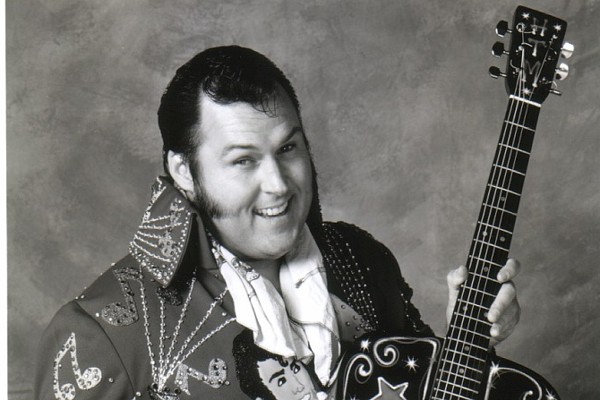
While the Honky Tonk Man may have been a good and enjoyable wrestler in the WWF, the same could not be said about his 5-month-long run in WCW. He wrestled approximately four matches, and none of them were particularly good. For the most part, Honky was phoning it in during his matches, which is why the quality of his matches was much lower than what he was delivering in WWF. HTM was supposed to have several matches with Johnny B. Badd, but he left the company due to a problem with WCW€™s management. However, given how little he contributed to the overall success of WCW, and how he appeared to be just another ex-WWF guy picked up by WCW, he may not have been missed that much. Considering that HTM was, after all, a glorified Elvis impersonator, and had a very limited move-set overall, it shouldn€™t come as a surprise that a company with as skilled and deep a roster as WCW didn€™t have a place for HTM. That said, HTM has been wrestling more or less nonstop since 1977, including some fifteen years on the independent scene. That kind of longevity is very impressive, and is actually more of an accomplishment than anything he did in WCW.

13. Ed Leslie/The Disciple

Brutus €˜the Barber€™ Beefcake was one of the most entertaining acts of the late 1980s early-to-mid 1990s in the WWF. If it weren€™t for a devastating parasailing accident, his career might€™ve been better. Though he seemed to be better off as a tag team wrestler or in a non-wrestling role, at least he had some consistency while working in WWF. The same could not be said about his WCW career. WCW€™s management couldn€™t decide on how to book him, and so he changed gimmicks almost as frequently as The Big Show changes allegiance in today€™s WWE. Beefcake went under the names Brother Bruti, The Butcher, The Man With No Name (an amnesiac gimmick), The Zodiac (who rambled incoherently), The Booty Man (a guy in love with his own buttocks), and The Disciple (Hulk Hogan€™s bodyguard). When someone changes gimmicks with such regularity, you know they€™re not connecting to the audience and aren€™t contributing anything positive to the company. Leslie really didn€™t belong in a WCW ring. Most of his success in pro wrestling occurred when he was either in the tag team division, or when he wasn€™t the focus of a storyline, such as in interview segments. It€™s a shame that his parasailing incident derailed his career so significantly; if that never happened, maybe he would€™ve had more success in WWF, and therefore wouldn€™t have needed to follow Hogan to WCW.

12. Dustin Rhodes/Seven (Second WCW Run)

Goldust was an absolute hit in WWF, with his disturbing gimmick and how easy he could make fans feel uncomfortable. Though it wasn€™t well-received by some commentators both within and outside the wrestling industry, he was still one of those outlandish gimmicks that fit surprisingly well during the Atittude Era. However, Dustin€™s second WCW run, which lasted from 1999 to 2001, was simply terrible. Initially, there were plans to have him debut as €˜Seven€™, which was a child abductor sort of character. This character even had its own vignettes, in which €˜Seven€™ was trying to lure children away. Somehow, these vignettes got approved by someone in WCW management during a period when AOL Time Warner was going in the opposite direction from WWF€™s Attitude Era, and wanted more family-friendly ideas. WCW tried to make something out of the former Goldust, which included him burning his WWF attire and wrestling under his own name. But that failed as well: everyone knew Dustin Rhodes as Goldust, and nothing could make fans invest in him, especially wrestling without a gimmick. Clearly, Goldust was a guy who belonged in WWF. He failed to make a major impact anywhere else, including WCW, which tried to use their old formula of €˜take-this-ex-WWF-guy-and-make-him-something-entirely-different-for-WCW€™ to present him as an important wrestler on their roster. Due to a combination of bad vignettes, poor creative ideas and a lack of fan interest in him, Goldust shouldn€™t have worked for WCW between 1999 and 2001.

11. Big T

Ahmed Johnson was a difficult wrestler to watch in WWF. Despite having an interesting finisher, winning some Slammys, and was set to receive a major push, Johnson never succeeded, and gained a reputation for cutting poor promos and putting on some less-than-stellar matches. Of course, his tenure in WCW was even worse. When he debuted under the name of Big T in 1999, it was one of the most appropriate ring names possible, as he put on a considerable amount of mass between his WWF and WCW tenures. If this wasn€™t bad enough, Big T had nowhere near the backing that he had in WWF. He was a certified mid-carder, feuding primarily with Harlem Heat. One would think that Big T€™s career in WCW wouldn€™t get any more insignificant, but it did. He soon started feuding with Booker T over the rights to the letter €˜T€™. You read that right: Booker T vs. Big T feuding over the last letter of their ring names was actually a thing. Johnson didn€™t contribute much to WCW, of anything at all. His weight issues made him much less mobile and uncoordinated in the ring, which only amplified the questions on why he was even in WCW in the first place. It seemed as though WCW wanted to hire any and every ex-WWF star they could find, but in this case, it proved to be a bad philosophy.

10. Vincent/Mike Jones

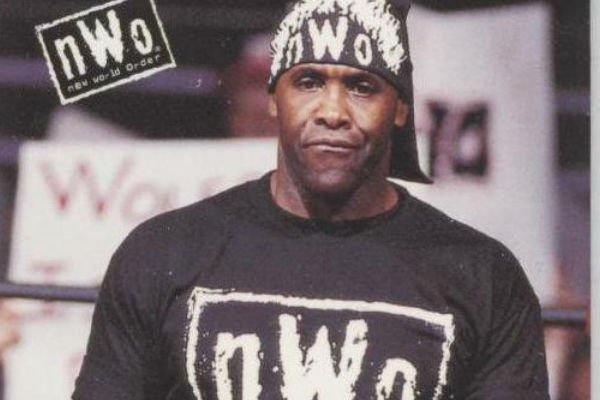
There are a lot of questions about what Vincent€™s purpose in WCW was. Some say that his above-average physique made him an ideal bodyguard for lower-card wrestlers, while others say that his entire WCW career, and his WCW ring name, was meant to poke fun at Vince McMahon just as Virgil made fun of WCW booker Dusty Rhodes. For the most part, Vincent didn€™t contribute anything new to WCW. He was still used as a sponge for punishment, especially while working as a member of the NWO. Most of his time included managing/valeting for other, more popular wrestlers, and whenever there were group-on-group beatdowns, he would be the one man left in the ring as the New World Order escaped. How such a gimmick was ever supposed to have a big payoff or increase fan interest remains a mystery to this day. Vincent was the perfect example of one of those guys in WCW who €˜was just there€™. When the New world Order ballooned in terms of membership, Vincent was the random guy who seemed so out of place. No matter what he did in WCW, he never made a major impact, and just took up a place on an already oversized WCW roster.

9. Tank Abbott

Wrestling promotions attempting to take advantage of the MMA craze is nothing new; New Japan tried it with the infamous €˜Inokism€™ philosophy and is failed hard. WWE tried it several times and had varying degrees of success, with Brock Lesnar being their best success story. But it was in WCW where the idea was put to the ultimate test€and crashed and burned. WCW brought in Tank Abbott because he was one of the first big names in MMA. It€™s possible that he was meant to mirror the success WWF had with Ken Shamrock who, though never reaching the top of the company, was still an interesting act in Vince€™s company. Abbott, on the other hand, was presented as a monster so powerful that he could knock someone out with one punch. Does that sound like it belongs in a wrestling match, a contest which is built on back-and-forth momentum swings, ring psychology and complex storytelling? Absolutely not. Originally intended on being an opponent for Goldberg, Vince Russo proposed that Abbott become WCW Champion. Considering how uninspiring Abbott was as a wrestler, this terrible idea led to Russo being fired from his position as head writer for suggesting such a move. In the end, Abbott competed against other martial artists in a WCW ring, and became 3 Count€™s biggest fan, for whatever reason. Hopefully, future wrestling bookers can learn from the failure of the Tank Abbott experience: just because someone has legitimate fighting experience does not mean that they will be able to be successful in scripted fighting.

8. The Renegade

When James €˜Warrior€™ Hellwig left WWF, the fans on Nitro went wild with speculation that he would show up in WCW, coming in the footsteps of many ex-WWF guys. During the build-up to WCW Uncensored 1995, Hogan began hyping €œthe Ultimate Surprise€, which featured promos involving the silhouette of a man with long hair and tassels, which bore a striking similarity to the Ultimate Warrior. Fans believed this to be the Warrior, in part because he was in a state of semi-retirement at the time, so they thought it could actually be Warrior. When the truth was revealed, it was one of the biggest disappointments in WCW history. The Renegade was as much a €˜poor man€™s Ultimate Warrior€™ as you could get. This was only made worse when Warrior himself dispelled any rumors that Renegade was the real Warrior, which led to the character losing virtually all momentum. Of course, as bad as the character was, and as uninspiring as his wrestling was, the whole point to the Renegade character was made moot when Warrior himself signed with WCW in 1998. WCW wasted a lot of time and money with this guy. He didn€™t have that much skill as a wrestler, and his whole gimmick existed for the sole purpose of pretending to be someone with much more star power than him. And when Warrior actually joined WCW for real, the Renegade was just another guy on the roster who didn€™t contribute anything that beneficial to WCW.

7. Steve 'Mongo' McMichael

What you see in the link below is one of the most timeless pieces of Botchamania history: the warning that Steve €˜Mongo€™ McMichael is about to enter the ring. Pro wrestling has featured many successful athletes who had promising football careers before entering the squared circle: Ron Simmons, The Rock, John Cena, Vader, etc. Mongo was not one of those people. He looked uncoordinated and out of place in a wrestling ring, and despite training with Terry Taylor at the WCW Power Plant, had a limited move-set and lacked the ring psychology needed to put on a good match. Worse yet, he seemed to lack timing and pacing, making many of his moves look like they were being performed by a green rookie instead of the consummate pro he was supposed to be portraying. In fact, the majority of his career wasn€™t that great, as he wasn€™t having that many good matches. Yet somehow, WCW thought it would be a good idea to have Mongo become a member of the legendary Four Horsemen stable, completely devaluing that name and the prestige it held. https://www.youtube.com/watch?v=u0Iycpab42o In the end, Mongo was a very underwhelming wrestler who failed to transition properly from football to wrestling. Maybe he should€™ve stayed on the gridiron instead.

6. Horace Hogan

Nepotism is the word used to describe a situation in which someone in a position of power uses that power to benefit members of their family. Given that definition, Hulk Hogan was clearly guilty of nepotism when he brought his nephew Horace to WCW. It would€™ve been one thing if Hogan used this influence to really push Horace as an important wrestler. Instead, Hulk Hogan attacked Horace several times in 1998, to show to his then-rival the Ultimate Warrior what he could do to his own family, and how the things he€™d do to Warrior would be even worse. In a bizarre twist, Horace still joined NWO Hollywood despite getting destroyed by his uncle. Despite wrestling in a 5-Star match in Frontier Martial-Arts Wrestling (FMW), Horace didn€™t show any of those skills while in WCW. His matches featured very little variety in terms of matches, and he seemed to be out of place in a WCW ring. If anything, he was given the role of an enforcer, which is just another way of saying that he was trying to get over by being next to someone who was a bigger star. Perhaps Horace should€™ve stayed in FMW; at least he had some success over there and had a reputation as a tough man, and didn€™t have to deal with his uncle€™s presence and star power following him everywhere he went.

5. David Flair

Becoming a wrestler isn€™t something you just decide to do when you€™re in your mid-to-late twenties, no matter what WWE Tough Enough might suggest. The most successful of wrestlers are those who dreamt about it since they were children, and never gave up on that goal, toiling away for years until they finally became great wrestlers. David Flair was not one of those people. He didn€™t want to become a wrestler while growing up, yet somehow ended up in a WCW ring, attempting to follow in his famous father€™s footsteps. Sadly, David lacked all the things that made Ric Flair one of, if not the best, wrestler ever. Ring psychology, technical skill, the look, and most importantly charisma; David did not have any of these things, yet WCW still went through with building David€™s wrestling career. No matter how much WCW tried, they couldn€™t re-create Ric Flair with his son David. Not even winning both the WCW United States and World Tag Team Championships could get fans to believe that David was truly his father€™s son. David simply did not belong in a wrestling ring, yet he was given a wrestler€™s spot and salary on regular WCW programming, and this was amplified when he started getting involved with the NWO Wolfpac. It€™s a simple rule: if someone doesn€™t want to become a wrestler, they shouldn€™t be forced into doing something they know they won€™t excel in.

4. Dennis Rodman

The only reason Dennis Rodman ever managed to find his way into a WCW ring was because he was friends with Hulk Hogan. This allowed him to bypass pretty much everyone else on the roster, and find himself in the most important storylines, and as a member of the New World Order. As a big name in the NBA, Rodman could€™ve just used his star power to bring more attention to WCW without having to get into the ring. But for some reason, he thought that he could wrestle between NBA seasons, which led to, among other things, a terrible tag team match with Hogan and Rodman taking on Diamond Dallas Page and Karl Malone. One can only imagine how much money Rodman must€™ve demanded for getting in the ring. That could€™ve been money used to pay other wrestlers€™ salaries, or used for other kinds of promotional work. Instead, it went to a guy who just wanted to get involved in something he called a €˜hobby€™, and one who was considered an active wrestler for only three years. While Rodman might€™ve been a big basketball star, he had no business getting in the ring and sharing screen time as a member of the NWO. There were so many other people in WCW who were getting shafted and losing out on TV time, just because guys like Rodman were taking up limited space on the roster.

3. Ron Reis (The Yeti)

While WWE history is filled with examples of giant men being larger-than-life but less-than-skilled in the wrestling ring (The Great Khali and Giant Gonzalez come to mind), WCW had their own giant wrestler who failed to do anything truly positive: Ron Reis, also known as the Yeti (pronounced Ye-TAAYY ) First appearing on the October 23rd, 1995 edition of Nitro, Reis came down the aisle dressed in what can only be described as €˜soiled bandages€™, which made him look more like a mummy than a Yeti (if you€™re confused at this point, that€™s alright; everyone was when he debuted). The Yeti then proceeded to grab Hulk Hogan, who was already trapped in a bear hug by the Giant, and proceeded to hug him from behind, while making a movement that can only be described as dry-humping€™. If you were looking for something that just screams €˜stupidity in wrestling€™, this is it. https://www.youtube.com/watch?v=AgItbGA0tJg In the few more appearances that Reis had, he changed his outfit a few times, along with his name, but failed to really contribute anything beneficial to WCW (except for that Yeti debut, which is bad in a hilarious sort of way). They did try to dress him up as a giant ninja, but that was almost as spectacular a failure as the Ye-TAAYY. They even tried to repackage him as €˜Big Ron Studd€™, in tribute to Big John Studd, who had trained Reis. But this too, failed to garner any interest in the giant Reis. In the end, Ron Reis was a giant jobber, and thus didn€™t really deserve his spot on the WCW roster.

2. David Arquette

Many older wrestling fans remember the awful day on which actor and pro wrestling fan David Arquette won the WCW World Championship. That same World Title that had been worn by the likes of Ric Flair, Big Van Vader, Sting, and many others. Some have argued that the belt held some lineage to the original Bog Gold Belt, and thus had more value and prestige in the eyes of longtime wrestling fans. They had an actor win the WCW World Championship. This was undoubtedly one of the final nails in WCW€™s coffin. The title lost virtually all value, and the initial shock of the event did not lead to any surge in interest or buyrates, which is what WCW€™s management was probably expecting. On the contrary; when fans heard that Arquette was scheduled to defend the belt at Slamboree, ticket sales stopped almost instantly. To this day, Slamboree is said to have one of the lowest buyrates ever for a wrestling PPV, at 0.14. On the bright side, Arquette fought hard to prevent this decision from happening, and when it did take place, he gave his earnings to the families of Owen Hart, Brian Pillman and Darren Drozdov. His time in the main event, though not his idea, was an awful decision that cost the company a ton of money, and could€™ve instead been an opportunity to build a new star, instead of killing the entire company.

1. KISS & Their Demon

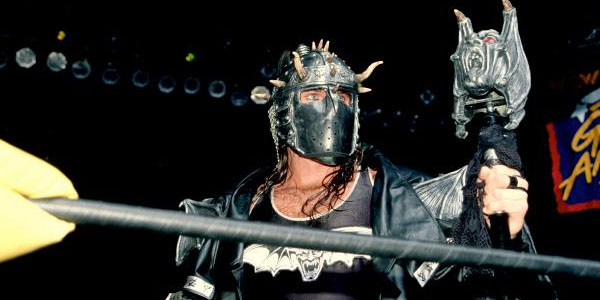
This was a decision so stupid that it found its way into a collection of anecdotes known as the €˜WCW Epic Fail Files€™. Basically, in a desperate attempt to gain more viewers, WCW hired KISS to perform their song, €˜God of Thunder€™ on a live edition of Nitro. Of course, that didn€™t add many viewers to the dying show, but what made this decision even more sinful were the other conditions of the performance. First, WCW had to pay KISS $500,000 for the one-song, one-time performance. That alone is terrible, because that€™s a lot of money, which could€™ve been used for many other things, the least of which includes paying the WCW talent. But the other condition of KISS€™s appearance was a guarantee that a wrestling character called the €˜KISS Demon€™ (portrayed by Dale Torborg) was to be featured in main event matches on WCW programming. You can imagine just how popular that was; the show on which KISS performed is widely believed to have garnered the lowest ratings for Nitro ever. And to think, WCW paid so much money to KISS for a one-time only occurrence. Even though they€™re good musicians, neither KISS nor their Demon belonged on a wrestling show or anywhere near a wrestling ring.

In this post: 
Virgil
 
Posted On: 
Contributor

Alexander Podgorski is a writer for WhatCulture that has been a fan of professional wrestling since he was 8 years old. He loves all kinds of wrestling, from WWE and sports entertainment, to puroresu in Japan. He holds a Bachelor of Arts degree from Queen's University in Political Studies and French, and a Master's Degree in Public Administration. He speaks English, French, Polish, a bit of German, and knows some odd words and phrases in half a dozen other languages.