7 Reasons NJPW Should Be Worried About 2017
The road ahead for Omega, Naito and co could yet prove bumpy.

2016 could have been a disaster for New Japan Pro Wrestling. Before the first week of the year was done the company saw four major talents go, as Shinsuke Nakamura, AJ Styles, Doc Gallows and Karl Anderson handed in their notices and headed (eventually) to WWE. The exodus presented NJPW with its biggest challenge in years, a true test of Gedo's ability to book top level professional wrestling.
Our worries were for nought however, as 2016 turned out to be yet another excellent year of professional wrestling for NJPW. A whole host of talent stepped up to the plate in a big way, as the hole left by the leaving four became filled by a wide variety of performers. Kenny Omega, Tetsuya Naito, Katsuyori Shibata, EVIL, Michael Elgin, YOSHI-HASHI and more have all seen their stock rise in 2016.
What does 2017 have in store for Okada and company? One would hope that a difficult transitional year would be followed by something approaching plain sailing, but professional wrestling isn't an industry that always follows the script.
There are many things that could go wrong for NJPW in 2017, many reasons the company should be somewhat apprehensive about the year ahead. Here are seven such reasons.
7. How Will Kenny Omega Fare On Top?

After becoming the first gaijin to win the prestigious annual G1 Climax, Kenny Omega guaranteed himself a shot at the IWGP Heavyweight Championship at Wrestle Kingdom 11. In putting the rocket behind Omega NJPW is breaking new ground, as Omega will become the first gaijin to main event NJPW's biggest show of the year and only the third to headline the annual January 4 Tokyo Dome show.
Many believe that Omega's push will continue, and Wrestle Kingdom 11 will end with The Cleaner standing tall as IWGP Heavyweight Champion. If you'll pardon the pun Omega is clearly an elite talent, but there must be some trepidation going into the new year. AJ Styles was the most recent gaijin to hold the belt, and his two reigns came with as many negatives as they did positives.
The New Japan audience has largely taken to Omega as a heavyweight main event performer, but at the same time he has spent the last two Wrestle Kingdoms wrestling as a junior heavyweight. His rise to the very top would be astronomical to say the least. It isn’t too much too soon for the man himself, but will the audience respond as hoped?
6. Uninspiring Young Lions
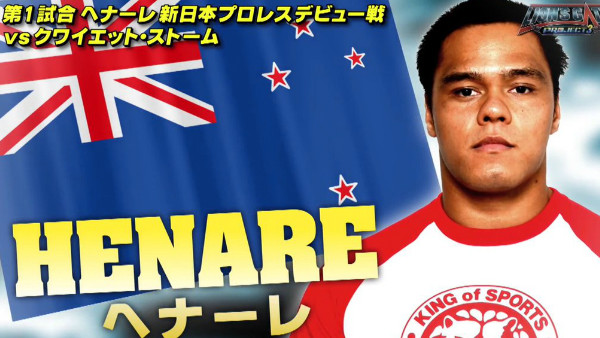
NJPW has been blessed with a couple of incredible collections of young lions over the last few years. Sho Tanaka and Yohei Komatsu started the trend, putting on some of the best young lion matches in history before being shipped off to Mexico for their excursions. Bet on them to return and dominate the junior tag scene in a year or so.
They were followed by Jay White and David Finlay, and if the former isn’t a major pro wrestling star by 2025 then I know nothing about wrestling. Finlay is yet to depart, but his aesthetic development and status as one third of the NEVER Openweight six-man tag champions suggests he may be sticking around a little longer.
The current crop, whilst certainly not useless, don’t inspire the same amount of excitement as Tanaka, Komatsu, White and Finlay did. Henare has proved himself enthusiastic and energetic, but that will only take you so far. Outside of Henare there isn’t a lot to shout about, and 2016 saw a number of NJPW talents (mainly Shibata) speak up about the lack of quality in the new crop of young lions.
Some viewers may tire of the relentless repetition of young lion opening matches, but these anonymous black-trunked rookies are an underrated and vital part of the NJPW set-up. For the first time in a few years, NJPW has a lot of work to do with the young lions.
5. A Stale Tag Division
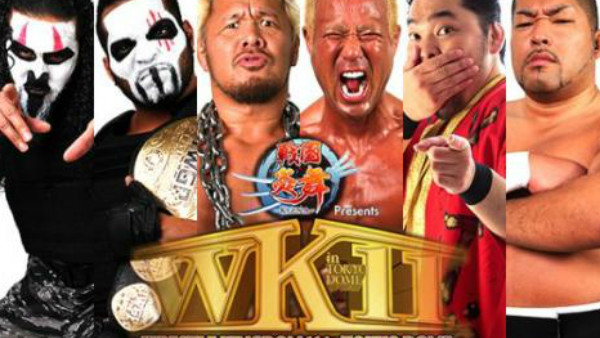
This isn’t a new problem, but it is one that NJPW seems reluctant to address. For years now, both the heavyweight and the junior heavyweight tag divisions has been immensely stale, a conveyor belt of one or two challengers going through the motions in snoozers against uninspired champions. Bullet Club have dominated, and this hasn’t been the good kind of Bullet Club domination.
There is optimism, but a cursory glance at the tag division doesn’t inspire much more. There are thrown-together teams a plenty, and whilst the Guerrillas of Destiny have picked up their game over the last few months they still find themselves in a rather awkward three-way at Wrestle Kingdom.
NJPW sorely needs an injection of fresh talent into the tag ranks. The World Tag League offered hope in the shape of War Machine, and ACH and Ishimori were a welcome addition to the junior ranks in the second half of 2016. Stronger tag divisions would be a huge boon to the company.
4. A Roster Held Together By Tape

There are many reasons for New Japan’s surge in popularity over the last few years, and one of the main ones is the sheer physicality of the wrestling itself. After spending years messing about with trying to blur the lines between MMA and pro wrestling, NJPW has perfected the art of strong style, and this stiff style is as enthralling as it is wince-inducing.
Whilst Shibata, Ishii, Goto, Honma and others give us engrossing matches as a result, the human body simply isn’t supposed to go through such intense rigour. NJPW does a good job of keeping hurt wrestlers in the audience eye through their many multi-man matches, but time is sure to catch up on these guys at some point.
Shibata became a major player for NJPW in 2016, but he ended it as a man that was 60% human, 40% tape. Each year comes with new fears over how much longer Hiroshi Tanahashi can go. Arguably the biggest issue here is the fear, the relatively injury-free status of Okada, Omega and Naito over the last few years. Those three will be NJPW’s biggest cards in 2017, can they avoid the injured list?
3. Post-Transition Complacency

2016 was a year of transition for NJPW. AJ Styles and Shinsuke Nakamura left gaping holes in the main event scene, and the loss of Karl Anderson (and to a lesser extent, Doc Gallows) deprived them of a consistent talent filling many roles in the company. Considering how much of what NJPW had been doing revolved around the Big Three (Nakamura, Tanahashi, Okada) and Bullet Club, this was a worry.
2016 saw a number of talents step up to fill the breach. Tetsuya Naito and Kenny Omega became bonafide main event performers. Shibata finally began to blossom. SANADA, EVIL, Ishii, YOSHI-HASHI and others shone in the fresh spotlight, and as a result NJPW comes out of 2016 looking fresher than ever.
After a successful transition, it is vital not to rest on one’s laurels. NJPW could be forgiven for approaching 2017 with the belief that the hard work is done, that by creating new stars in 2016 the rest will fall into place. This isn’t the case.
NJPW is on the cusp of something special in an international sense, and as a result 2017 could be the most important year in the recent history of the promotion. That is a lot of responsibility for relatively inexperienced top tier talent to shoulder
2. The Fear Of Losing Talent

For years NJPW fans worried about the possibility of losing top stars to WWE, yet slept safely in the knowledge that WWE didn’t seem to have much interest in either Japanese talent or guys that had made their own names. The times have changed, and WWE’s newfound crush on big name non-WWE talent combined with NJPW’s increased profile makes further defections somewhat inevitable.
Despite its problems, WWE still represents something of a holy grail for many professional wrestlers. Nakamura’s move is a good example of this, a man who was king in Japan but couldn’t pass up the opportunity to move to the biggest wrestling company in the world and see what he was made of.
WWE will inevitably come knocking on Kenny Omega’s door, and whilst Omega seems more than happy in Japan for now you can never say never. If Los Ingobernables de Japon continue selling merchandise as they do, at what point will the yen signs turn to dollar signs in the eyes of WWE?
It is unlikely that men like Ishii or Honma will turn up in NXT any time soon, but it doesn’t take a lot of imagination to visualise Naito or SANADA in a WWE ring.
1. WWE's Business Tentacles

Professional wrestling outside of WWE has had a great couple of years, with the independent scene increasing its profile as NJPW made major incursions into international markets. WWE did little in response outside of talent poaching, a damaging enough tactic but one that could also be seen as a positive for talent recycling.
This is about to change. WWE recently announced a tournament to crown a United Kingdom Champion for January 2017, with a number of top UK talents signed up to take part. Sure, WWE makes all the right noises regarding being open to other promotions, but as the old adage goes there aren’t any morals in business.
And that is what WWE is, it is a business. An international business at that, an international business that wants to be number one in every market it penetrates. WWE’s Japanese stance has improved over the last couple of years, and it seems as though Nakamura and Asuka are sticking around in NXT as the faces of the brand.
If WWE focuses in on the Japanese markets, what will this mean for NJPW? New Japan is in a unique position, a Japanese pro wrestling company that has become a true international phenomenon, and whilst they aren’t going to create true competition for WWE they are still providing an alternative. WWE can’t be too thrilled about such things, and having an angered Vince McMahon on your case can never be good.
2017 could be yet another incredible year for NJPW, but if the company isn’t careful it could well be disastrous.