Best Wrestling Storyline Every Year 1989-2024
When it actually was "cinema"...
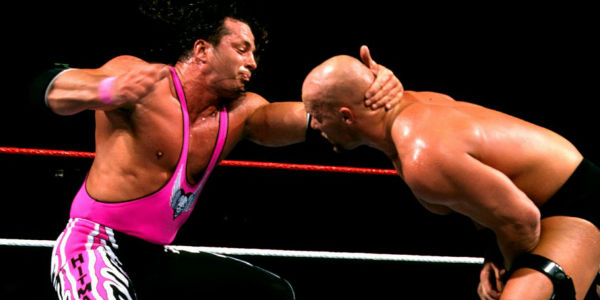
AEW is getting it wrong.
In the first quarter of 2024, in a feud that will not feature on this list, FTR battled the Blackpool Combat Club tandem of Jon Moxley and Claudio Castagnoli.
The teams fought to a time-limit draw on Dynamite after Mox, in refusing to relinquish a dangerous choke applied to Dax Harwood, drew the ire of Cash Wheeler. Neither team was happy with the outcome. The rematch was set for Revolution. It was another extremely good exhibition of hard-nosed action fought under a simple premise: who’s the better team?
The feud wasn’t actively bad - indeed, the spirit of competition that drove it was missing from the promotion in the second half of 2023 - but it was uninspiring, to be negative about it. To be even more negative about it, it wasn’t a great use of anybody’s time. Jon Moxley in particular was wasted here. He’s at his worst when allowed to indulge his persona as the moody tough guy who wins a lot.
Mox is better as the good guy who fights when he’s wronged, where this all-tweener business with FTR was light on his excellent vengeful promos.
(Also: remember how it would make sense when the BCC, not entered into the Tag Team title tournament, would get a title shot after Dynasty?)
As you’ll be reminded, a great wrestling feud is all about contrast…
36. 1989: The Mega Powers Explode
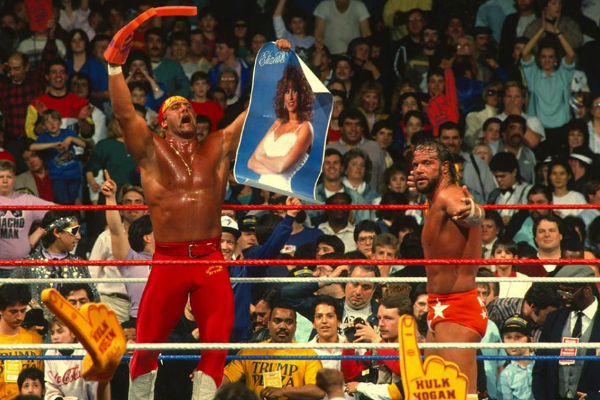
While it mostly unfolded across 1988, the Mega Powers actually exploded in 1989.
Randy Savage was a maniac, the most believable act in a cartoon world, when Hulk Hogan - in Savage’s paranoid, unravelling mind - had lust in his eyes for Miss Elizabeth. This worked precisely because Hogan did, for months on end, get in Savage’s way in his bid to appear as the big hero. The WWF relied on his broad appeal and drawing power to mitigate the risk that he would appear to be a sanctimonious glory hog. They just about nailed it.
Every tease of Savage reaching the “boiling point” was incredibly well-done, and the fans loved the novel idea of the top two babyfaces coming together. This was the magic. More was more and greed was good in the late 1980s. Watching the imminent explosion was agonising.
The match actually wasn’t fantastic, but WrestleMania V was the biggest money-spinner on pay-per-view ever - and while a fantastic, well thought-out saga sold it, if you were on the fence, Savage’s “I hate your stinkin’ guts!” go-home promo convinced you.
The man was crying as if in an unshakeable, fresh grief.
35. 1990: Mitsuharu Misawa Vs. Jumbo Tsuruta
Wrestling is a long, arduous and sometimes obligatory thing. It never ends. You often know the direction and are made to wait a long old time to get there. Sometimes the anticipation is incredible. Sometimes there’s a lot of “Get to the point!”
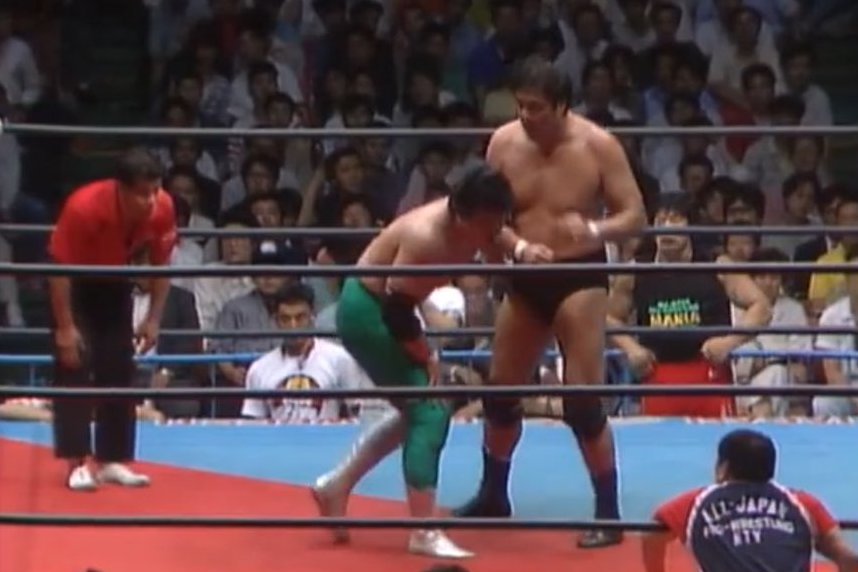
In 1990, famously, a long line of All Japan Pro Wrestling fans chose Mitsuharu Misawa as their next hero ahead of his match against Ace Jumbo Tsuruta. They queued up to Budokan Hall hours before the opening bell and chanted his name. Relentlessly. Booker Giant Baba was moved to disrupt his booking patterns and book Misawa to go over at the eleventh hour. Jumbo tried to petition him with a counter-offer of a count-out job. Baba refused.
The legendary June 8 match was so great because it was worked to extract every morsel of hope. It was the perfect build towards the most desired, almost inconceivable finish. The resulting programme, stretching deep into 1991, was incredible too. The gravity and importance of Misawa’s win wasn’t undermined. He was still the Ace; Jumbo however wouldn’t relinquish the spot so easily, and teamed up with some younger talent in a bid to retain the throne.
Younger AEW fans: imagine if a Chris Jericho feud was really great and phenomenally effective, and you’re close.
34. 1991: Randy Savage Vs. Jake Roberts
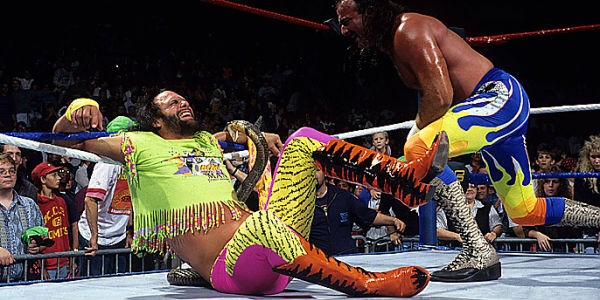
This gets the nod on the strength of one angle, mainly, but what a goddam angle.
The angle might be the most important and challenging aspect of the entire pro wrestling racket. Nowadays, it’s almost impossible for two pro wrestlers to work an actively bad match on the cable TV stage. Promos are challenging - very easy to do poorly, easy enough to do quite well, very hard to do and build genuine anticipation ahead of a match - but the angle requires true creative flair.
Is there a better angle in WWE history than Jake Roberts attacking Randy Savage with his cobra?
Deftly foreshadowed at SummerSlam, it was absolutely terrifying, unconscionable, shocking. The snake legitimately bit Savage’s arm, and its head darted and lunged around so violently that you were afraid it might jump out of the screen.
It was so good too that it made perfect sense of the plot hole that often accompanies the heavy heat angle: there’s absolutely no way anybody was rushing the ring with that thing in there.
It was hardly a classic, Savage’s win at This Tuesday in Texas, but it was good, and it paid off a daring, creative tale of a believably evil man torturing the redeemed man you’d just fallen back in love with.
33. 1992: Ric Flair Vs. Randy Savage
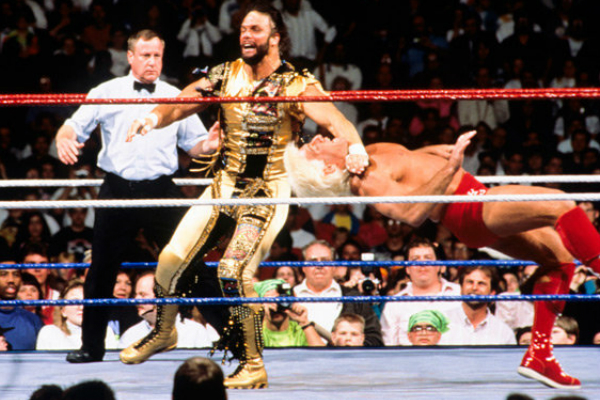
Once again, the WWF drew on Randy Savage’s intensely believable jealousy to drive one of its better programmes.
Knowing what fans know of the real-life Randy Poffo, there’s more than a hint of ickiness to it in retrospect - but at the time, this was shockingly creative.
Ric Flair - again, more ickiness - was cast perfectly as the arrogant braggart who insisted that he had bed Miss Elizabeth before she ever met Savage. Mr. Perfect, Flair’s mate, was equally great. His smug expressions were fantastic; that demeanour, which pecked at Randy’s psyche all the more, oozed naturally out of him.
Flair had evidenced his claim by creating manipulated photographs of him canoodling with Liz. This phenomenon was hardly brand new - hoaxes were common in the early years of the 20th century - but the digital, über-realistic element passed the smell test in 1992.
Truly creative and truly believable, the premise was superb, and it worked as a main event-level programme through the WWF fandom’s profound attachment to the Savage character (and of course the brilliance of the blow-off).
Getting more drama out of the Liz/Savage pairing, after the happy ending of WrestleMania VII, was even more impressive than the WWF’s rare embrace of cutting-edge technology.
32. 1993: Bret Hart Vs. Jerry Lawler
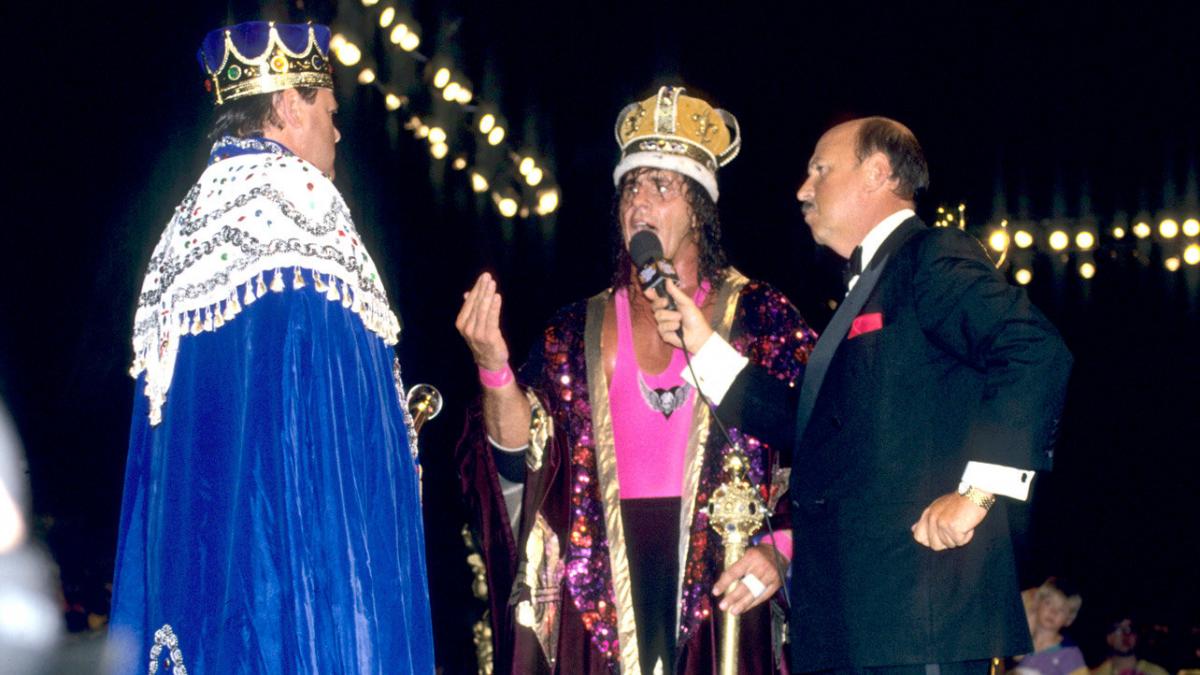
Jerry Lawler proved that comedy is all in the delivery in 1993.
Everything he said about Bret Hart’s parents was ripped out of a decades-old jokebook, but Jesus Christ, the sheer splatter gun giddiness with which he tore them apart was hysterical.
Bret Hart became the King Of The Ring by entering one of the all-time great one-night performances. He sold a debilitating injury throughout three very different matches, one of which, against Mr. Perfect, casually improved upon one of the all-time great vaunted Intercontinental title bouts. It was the best night of his career. It was the moment in which he became, even before the failure of the Lex Luger push, the rightful WWF champion.
It was the perfect time to get heat on him.
The “real” king of wrestling, Jerry Lawler, absolutely battered him. The taste of Memphis punches was frightening to those who watched at a young age.
Lawler was a fantastic stooge throughout the build to their “match” at SummerSlam, which was yet another fantastic piece of business at a time - 1993-1994 - when the WWF was on fire creatively.
The SummerSlam angle was a superb, astute glimpse of the real match at Survivor Series. It didn’t end up happening. Jerry Lawler got himself into bother.
The feud however resumed in 1995, so swings and roundabouts.
31. 1994: Bret Hart Vs. Owen Hart
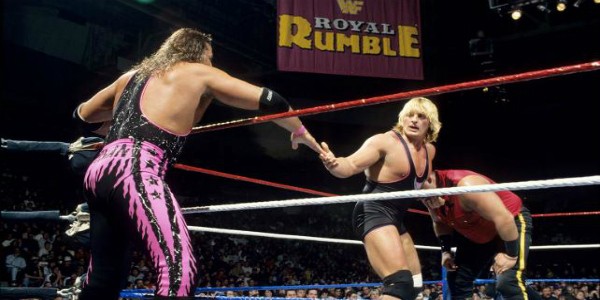
An utterly perfect, no-notes pro wrestling feud.
While the invisible camera drove conflict in a deeply convenient way years later, Owen could have actually watched the footage back over and over again. It wouldn’t have mattered; because his twisted, jealous mind drove the story, and not the convenient plotting, he would have seen what he wanted to see regardless.
Bret’s quest to protect his brother in tags was interpreted by Owen as his bigger brother hogging the spotlight like he always did. That’s why Owen, in retaliation, kicked Bret’s leg out of his leg.
This was very sophisticated by the standards of the era (of course Pat Patterson had to persuade Vince McMahon that brothers do indeed fight and share a complicated relationship). Perhaps there was an arrogant streak to Bret. Perhaps he did think, at the 1994 Royal Rumble, that he could do it by himself. He did, after all, say he was the best there ever will be.
The untenable and deeply relatable disagreement was key. Everybody has had a fight like it with a loved one, where you’re wrong and right at the same time.
The escalation in their technical classic of a WrestleMania X opener was magnificent. Each brother attempted to wrestle two different matches. When Owen simply became too much of a little bastard, Bret had no choice but to snap.
30. 1995: Raven Vs. Tommy Dreamer
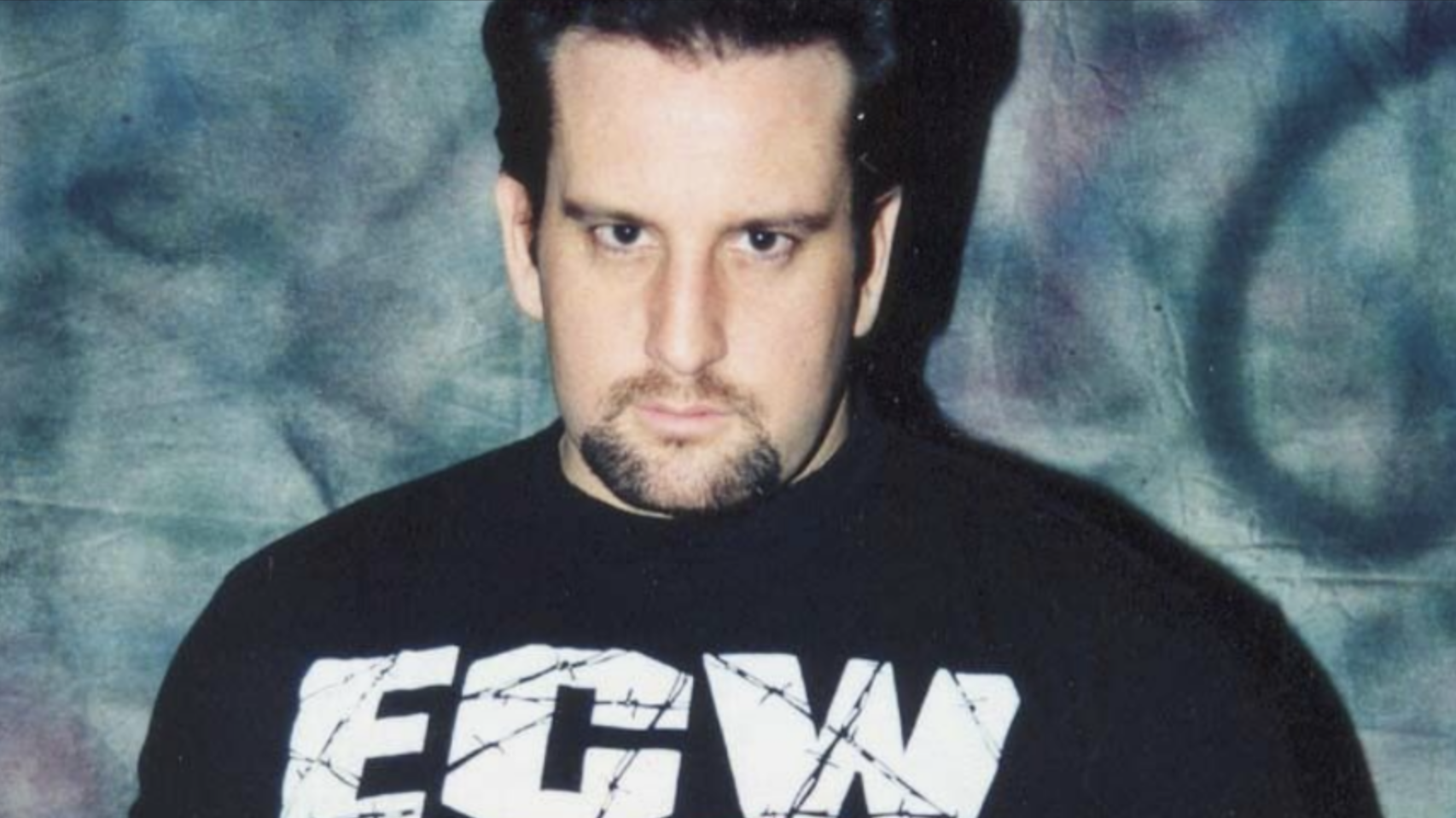
Very much a product of its time, Raven Vs. Dreamer was ambitious, very cheesy, and frankly, Dreamer’s absolutely relentless, teary nostalgia over ECW in the 23 years since it shuttered has made a lot of people never want to hear about it ever again.
Also: shouldn’t the jock have played the heel?
It broke new ground. Few have trodden it since, because it’s such an impossible sell, but the idea that two wrestlers knew one another during a shared adolescence was unprecedented. The premise was a stretch even then, but the ECW hardcores admired a deep level of thought lacking in the mainstream.
At summer camp in the ‘80s, Dreamer was the jock, Raven the tormented introvert who was driven to become a misanthrope. Dreamer embodied everything he hated about mankind, and Raven vowed to end him. Across ‘95 - and much too long afterwards - Dreamer failed to defeat Raven time and time again.
If that all scans as e-fed corniness, through a 2024 lens, that might be because every e-fedder going was so charmed by the tale that they wanted to rip it off.
29. 1996: The New World Order Takes Over
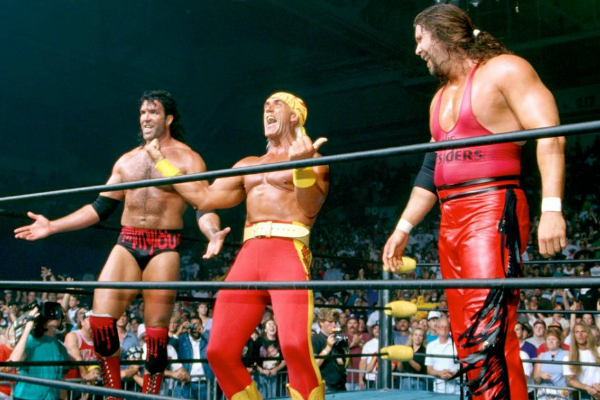
Before it dragged on and on and every other useless tosser on the roster was paraded in a black-and-white t-shirt, the nWo angle was every bit as phenomenal as everybody said it was.
Scott Hall and Kevin Nash were cool and dangerous. Hollywood Hogan wasn’t, but his star power was undeniable.
Tony Schiavone’s commentary run in WCW is defined by his apathy, sadly, but he was exceptional in ‘96 - as good as Jim Ross in conveying his disgust at the stable’s weekly transgressions.
The Order felt like a true threat to the system. Schiavone bemoaning the broadcast falling apart made it seem as if something of value was lost. Hall and Nash smirked as they destroyed what was left, and the weekly chaos, the sense of an imminent explosion, was intoxicating as week-to-week experience.
As good as Eric Bischoff was as the smug narcissist who pulled the strings, in late 1996, the story was better when Ted DiBiase was revealed to have bankrolled the interlopers. In one stunning twist, WCW made sense of the one plot hole and reintroduced one of the all-time great characters.
28. 1997: Steve Austin Vs. The Hart Foundation
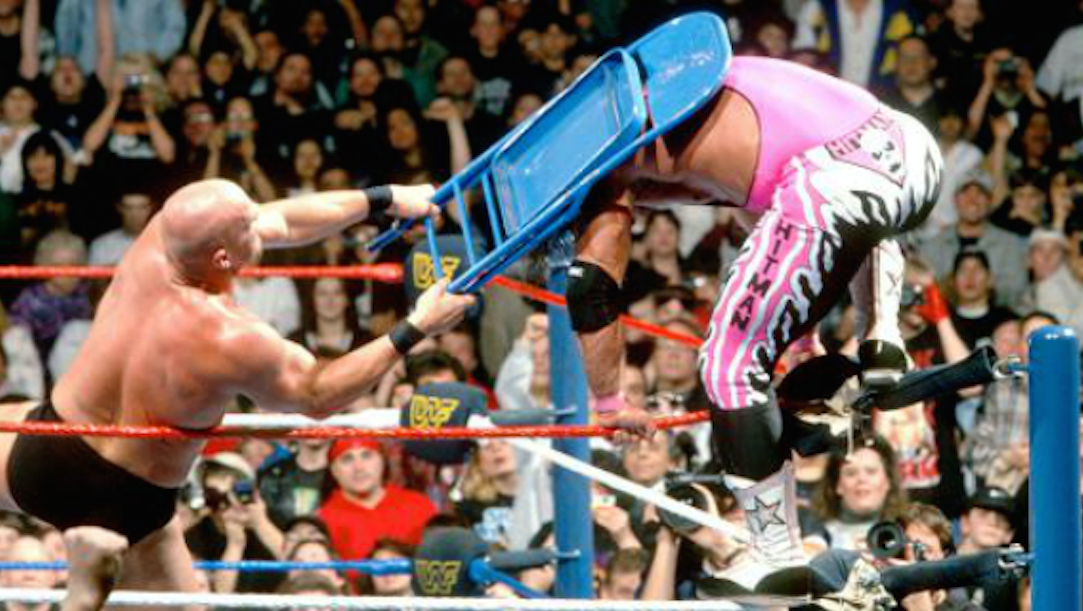
Ahead of WrestleMania 13, Bret’s head was polluted with bitterness; much like his younger brother Owen, with whom he reunited later that year in one of the most well-earned story beats of that nature ever, he believed that everything, and everybody, was conspiring against him.
Bret was on career form in a role which, as the passing of time underscores, he was made to play. He cut the promo of his life - frustrated isn’t the goddamn word for it, seminal wasn’t the goddamn word for it - ahead of what might remain the best WWE match ever held. Steve Austin meanwhile was unbelievable at WrestleMania 13. He sold in a dynamic way without ever once slowing down the pace nor letting the crowd forget that he was in acute agony.
The philosophical shift that reversed the fortunes of the promotion in one incredible match, the finish was unreal. You can watch it several million times, and as Austin cries out in pain with the claret pissing out of his forehead, you’ll never stop believing that the fake sport is real in that moment.
Deeper in the year, Austin battled the Hart Foundation, the peak of which, In Your House: Canadian Stampede, was so thunderous that the hard camera shook as it struggled to capture the melee of the unforgettable USA Vs. Canada main event.
This is what people talk about when they talk about 1997 being better than the Attitude Era proper.
27. 1998: Austin Vs. McMahon
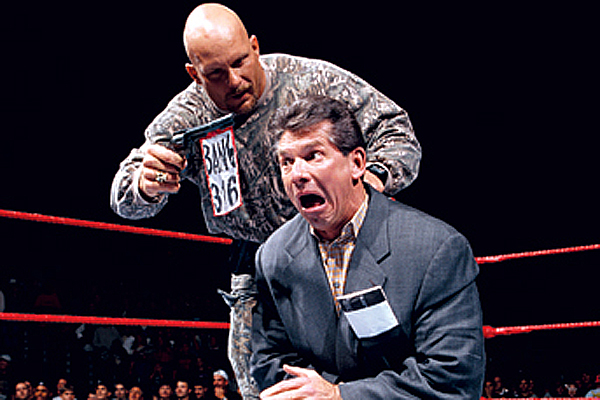
You’d struggle to relive it with quite the same fondness, given Vince McMahon’s appalling exit from the promotion he founded, but the programme was so important and legendary that WWE has asked you to do that countless times already.
Through documentary retrospectives and a million piss-poor retreads - remember when office favourite Roman Reigns was somehow victimised by the Authority? - there was no escaping Austin Vs. McMahon.
It descended into set-piece-heavy schlock within months and made less and less sense the longer it dragged on, but the slapstick was fantastic. WWE absolutely is not “cinema” - but even the most talented foley artist would struggle to capture a sound as funny as Austin braining McMahon over the head with a bedpan.
Before the stupidity, Austin Vs. McMahon - honestly! - was sophisticated comedy. The early attempts to propagandise the WWF as a mom and pop operation that Austin had brought into disrepute - complete with schmaltzy video packages putting over stooge Pat Patterson - were a riot.
On that theme of contrast again: it really doesn’t get any more compelling, cathartic and believable than the beer-swilling everyman outwitting the evil corporate overlord.
26. 1999: Rob Van Dam Vs. Jerry Lynn
The WWF was shockingly bad and even more shockingly popular in the first half of 1999 - helped, in part, by the warp-speed decline of WCW.
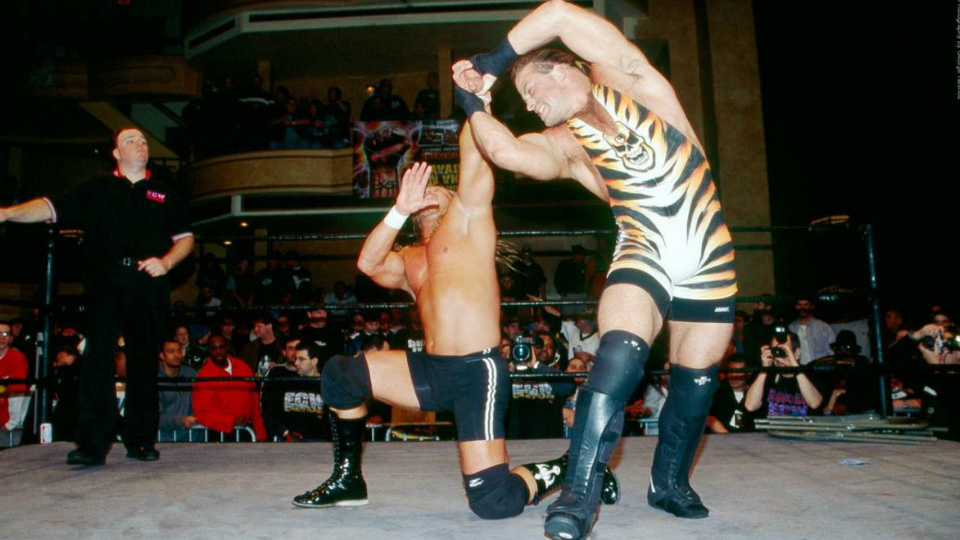
ECW had also peaked as a true, seismic creative force - its identity had been subsumed by the WWF - but the Jerry Lynn Vs. Rob Van Dam programme was sensational. Its influence is hard-coded into the DNA of so much that followed. You haven’t been able to escape the martial arts stand-off ever since.
What is a trope now was mind-blowing and futuristic back then.
The action was incredible. Watching Van Dam use the chair with millisecond precision to blast Lynn with moves that were jaw-dropping enough without it was an indescribable high. Sloppy at points, no doubt, and possibly a bit too long, those matches nonetheless were jaw-dropping.
Van Dam was almost too state-of-the-art in ECW. He had to compromise his best stuff elsewhere. Lynn keeping up with and outsmarting the movez king of the day was akin to watching a great but arrogant sporting dynasty finally get an embarrassing kicking.
25. 2000: Triple H Vs. Mick Foley
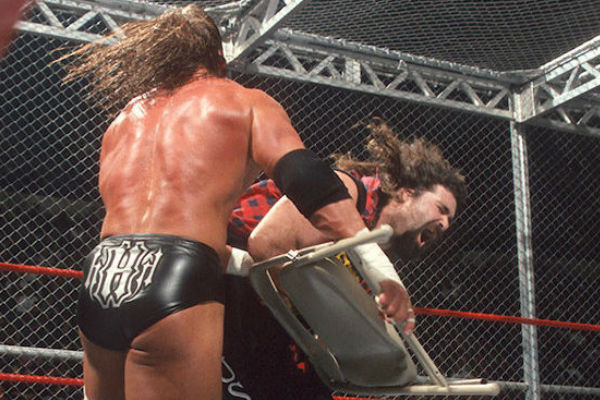
The gravity of the Mick Foley Vs. Triple H programme was undermined within weeks, but then, almost everything in WWE was.
Mick Foley reneged on his retirement vow at WrestleMania, but he could be forgiven: across January and February, his expert match layouts and unhinged physical commitment forever established Triple H was an all-the-way-over main event act.
Actually, given the events of 2003 and beyond, Foley shouldn’t be forgiven.
Triple H was fantastic throughout. His selling the fear of Cactus Jack as an alter-ego was such an iconic facial expression that the very idea of a wrestler simply pretending that they can embody a darker and more violent character with a minor aesthetic tweak might have given Chris Jericho the idea for the ‘Painmaker’.
Godddamnit. This feud was much too powerful.
The Street Fight at Royal Rumble was an in-ring masterpiece. It was the best use of the Attitude Era’s signature ultra-violence. Madison Square Garden resembled a battleground; the ultra-jacked Triple H, at last, felt like a warlord. The No Way Out sequel finished the job.
Foley might have returned - but his work was so effective that Triple H, as a headliner, never went away.
24. 2001: A Violent Odyssey
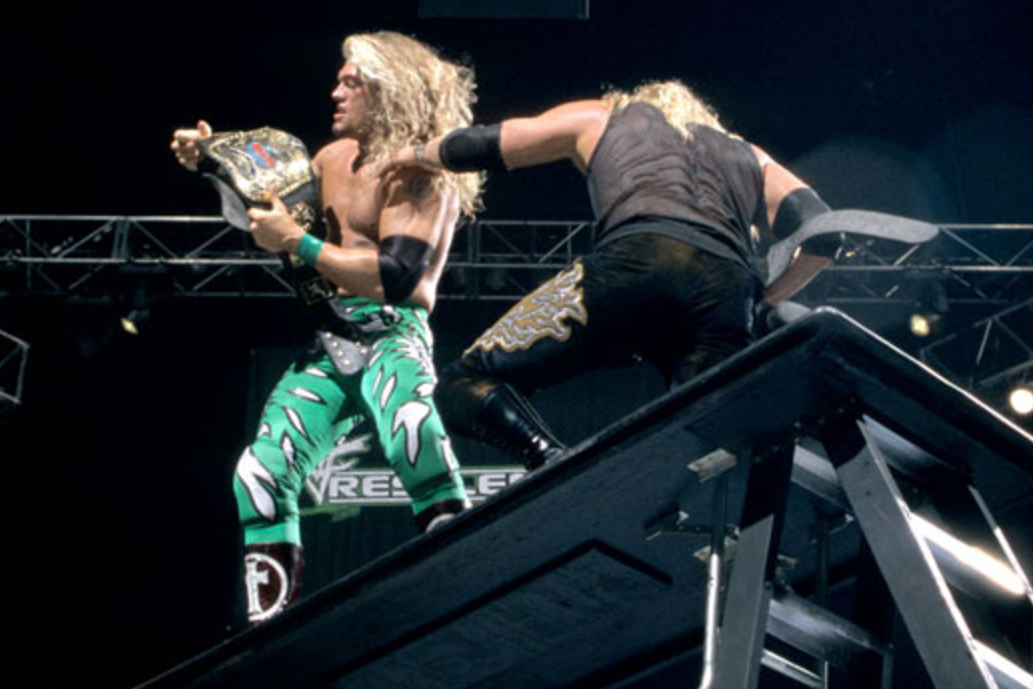
A real dearth of options here: the defining Invasion storyline was legendarily awful, everything went south after WrestleMania X-Seven, and what’s often lost is that the build to ‘Mania wasn’t exactly great either. Debra as the Rock’s manager was an awful idea: the sort of twist for a twist’s sake that underscored just how few ideas WWE creative, in need of a refresh, had left.
The Japanese scene was on its arse as well, and Ring Of Honor was a year away from slowly, indirectly changing the wrestling world.
WCW and ECW were dead by March, and while the former, incredibly, wasn’t as bad as it was in 2000, it was hardly hot.
So many characters were impossible to get behind nor even take seriously, since the desperate turns and retcons were so frequent. Since the WWF pissed away every big, promising idea, the honour might as well go to the story that culminated in the best match: Edge & Christian Vs. The Dudley Boyz Vs. The Hardy Boyz.
The story wasn’t even great, but what a goddamn match that was at WrestleMania X-Seven. As iconic as it was violent, it was also ironic. For a transgressive stunt show, an unhinged spot-fest, it has withstood time’s test more than most matches.
Had it never happened, and three teams did the exact same thing move-for-move in 2024, it would still feel futuristic.
23. 2002: Shawn Michaels Vs. Triple H
2002 was the year of desperation. It all went down the toilet.
Steve Austin bailed, the nWo bombed, the Hulk Hogan nostalgia act waned almost immediately, and Lesnar drew on top, but really, only relative to Raw’s dwindling numbers.
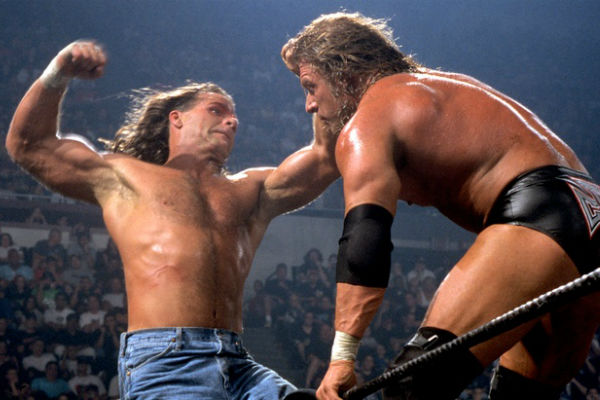
WWE tried literally everything to reverse its fortunes at the box office. Shawn Michaels Vs. Triple H hardly lit it up, but the acclaim and good will generated by the programme revealed an answer, if not the solution, to WWE’s woes: do good things, and the base takes care of itself.
A very simple but equally affecting tale, Triple H attacked Michaels and told him he was “weak”. To be generous, you could have interpreted this as a sign that Triple H, frightened over his spot, knew what everybody else did: Michaels was 1000x the worker.
A redeemed wrestler made an improbable, magical comeback - but sold his back to such utter, scary perfection that you almost didn’t want to see it anymore as the unbearable drama of the Unsanctioned SummerSlam match unfolded. He then defeated the increasingly dull heel that you’d grown to loathe.
In a year defined by cheap, increasingly desperate ratings ploys, Michaels Vs. Triple H was something of true substance (albeit for all of one match).
22. 2003: Chris Jericho Vs. Shawn Michaels
“You like to hear somebody is doing pretty good, but you don’t want to hear they’re doing better than you.”
Ric Flair said that, in his all-time great ‘Golden Spoon’ promo, and it’s one of the most profound and true things ever said in the fictional context of professional wrestling.
You could apply the relatable brilliance of Chris Jericho Vs. Shawn Michaels to countless real-life scenarios. In fact, through the rise of social media, and the glimpse into the cosy lives of people you may not even like very much, jealousy is more acute now than it ever was.
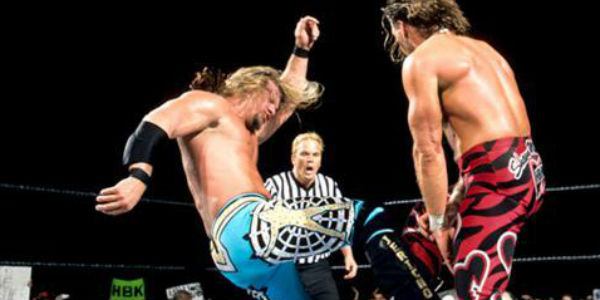
Chris Jericho was jealous of Shawn Michaels. It wasn’t just that Michaels, whom Jericho admired and patterned his act after, cast such an inescapable shadow over him as an influence; Michaels had returned, improbably, and outclassed Jericho as a peer.
The programme sparked into life at the Royal Rumble. In an ingenious spot, Christian cosplayed as Jericho to allow the real Jericho to attack Michaels from behind.
At WrestleMania, they delivered the expected classic, telling a wonderful mirrored story that rewarded your lifetime hobby - one of the first, great intergenerational tales that used your love and experience of the medium to drive it all forward.
21. 2004: Batista Breaks Through
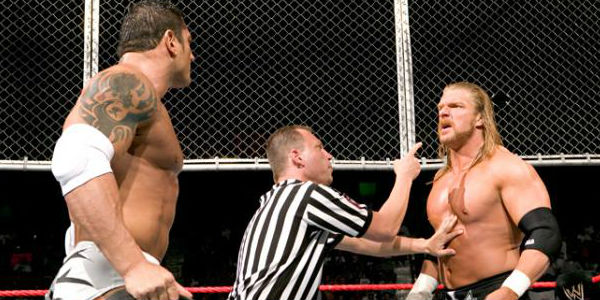
Something of a cheat, this, since the key beats of the story unfolded across and generated record business in 2005 - but Triple H Vs. Batista developed serious intrigue in the final quarter of 2004.
It’s one of the more lame and obvious shortcuts in 2024 - and Paul Levesque walked it much too often as the booker of NXT years later - but it was electrifying when Batista, in backstage segments, subtly eyed Triple H’s World Heavyweight title. This device was popularised when Batista let it be known that he was a future megastar who no longer wanted to be held down. In parallel, Batista was booked as an explosive ass-kicker. His work in these flattering matches and angles was exhilarating, a primal thrill - and it helped, enormously, that it was so much more vital and exciting than Triple H’s drab in-ring fare.
By design and by accident, the slow-burn Batista push was a masterclass in pro wrestling booking.
Tony Khan was once called ‘Mid-South Tony’, affectionately, when he pulled off one of the better Dynamites. Given how often he has attempted to replicate the Batista push via Wardlow, ‘Ruthless Aggression Tone’ was just as apt.
20. 2005: Kurt Angle Vs. Shawn Michaels
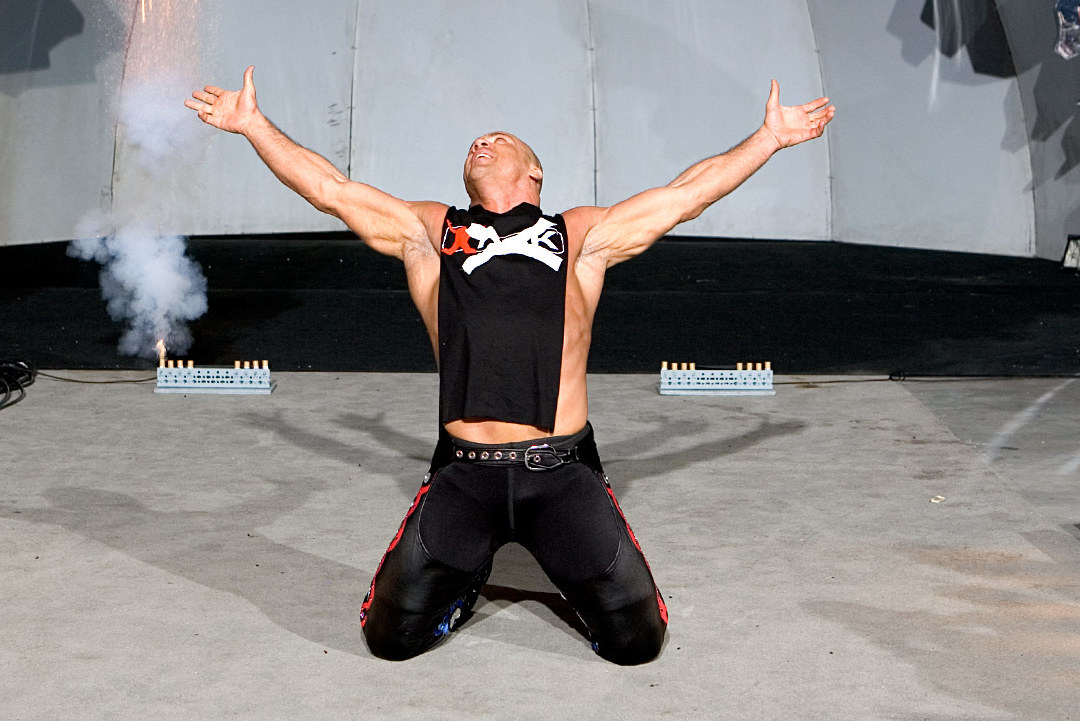
In the monopoly era, Kurt Angle Vs. Shawn Michaels was the closest WWE came to an inter-promotional dream feud.
Angle had debuted when Michaels was thought forever retired, and when WWE adhered to a strict brand split, both men were divided between Raw and SmackDown. Even though it wasn’t, WWE did a remarkable job of making it seem like their crossing paths was inconceivable.
At the 2005 Royal Rumble, Michaels eliminated Angle, who returned the favour, and while this device has never made sense, the resulting feud was incredible.
Based on the idea that Angle thought he could do everything Michaels could - but better - the premise extracted the complete, ingenious range from the antagonist. In cosplaying as Shawn and horrifically battering his old valet, Angle was a goofball and a killer: the man who in fact could do it all. Michaels subverting the premise and outwitting Angle in the early amateur wrestling exchanges was another superb idea. That story beat only further coaxed the lunatic within.
The initial WrestleMania encounter was one of the best ever matches in the history of wrestling’s biggest ever show, so invincibly great that WWE devised a worthy sequel to the greatest finish of all-time - Austin passing out in the Sharpshooter - when Shawn agonised over the decision to tap for a full minute.
19. 2006: Ring Of Honor Vs. Combat Zone Wrestling
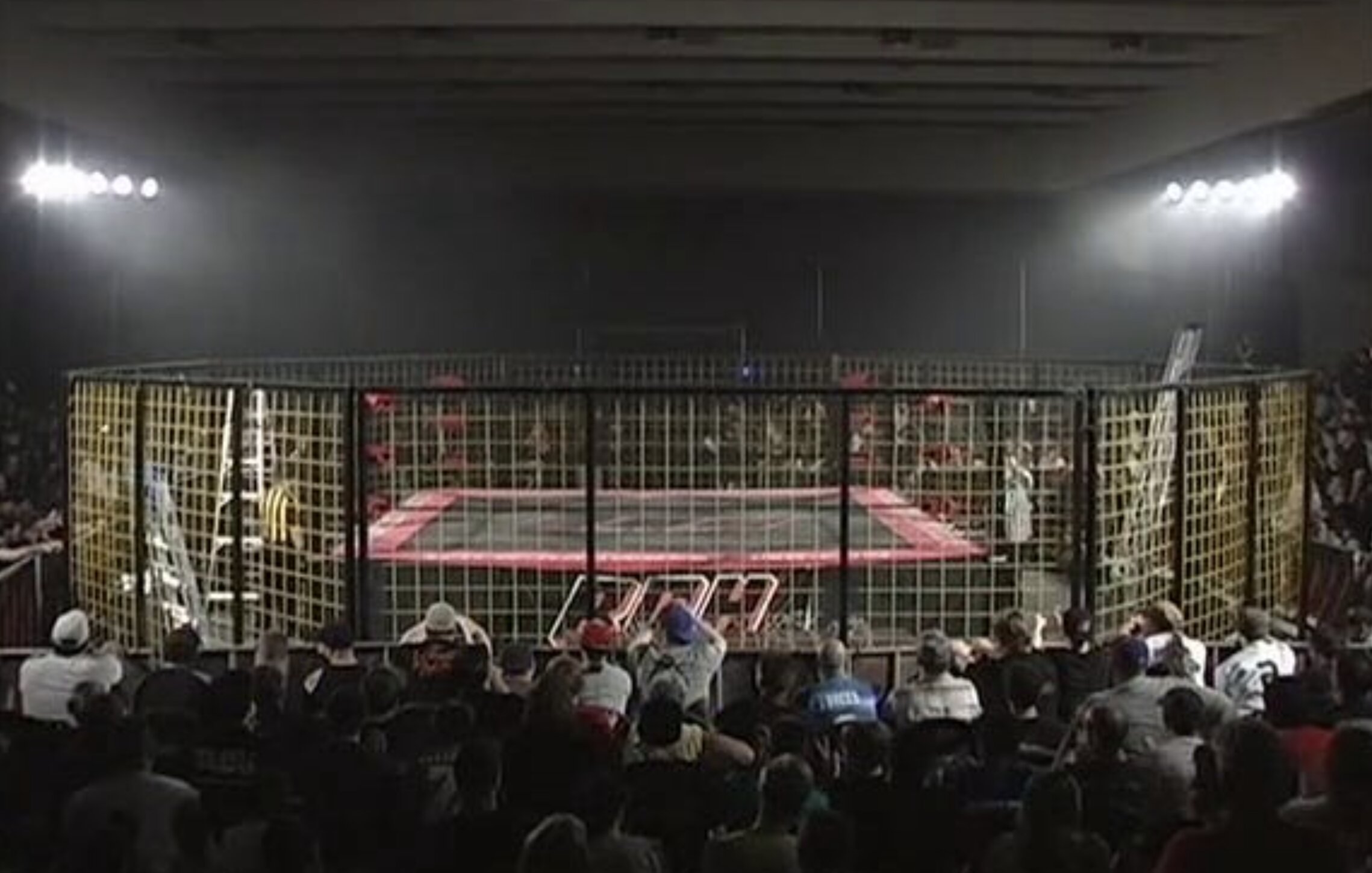
Quite possibly the best example of the all-important contrast, and certainly the best inter-promotional storyline ever.
ROH was the uppity sanctimonious technical league. CZW was the head-drop-happy plunder festival. One aspired to be a vaunted puro league, the other was happy to have the outlaw mud show stigma attached to it. Both shared the same turf in Philadelphia.
The last echo of a territory world, the most believable of conflicts. This was an unrecoverable moment in time.
The programme also explored the inherent flaw in the inter-promotional premise to brilliant effect. Existing conflicts on either side shouldn’t simply be dropped, and they weren’t. Bryan Danielson tried to screw over team ROH in the legendary blow-off by taking out upcoming opponent Samoa Joe at the knees.
ROH Vs. CZW was so perfect that, through the spectacular Cage of Death climax, the programme yielded the only outright classic WarGames update.
In it, Chris Hero f*cked around and found out. Lounging arrogantly on the turnbuckle, deliriously smug that Danielson had handed him the win, he then sold bug-eyed in an ostensible death scene when ROH folk hero turned fork hero Homicide repeatedly punctured his forehead.
Fighting fire with fire against all odds, this Homicide push was one of the best babyface moments of all-time.
18. 2007: The Undertaker Vs. Batista
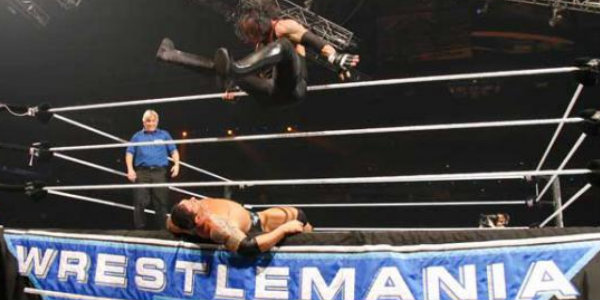
The programme that rehabilitated Batista, who, after his incredible 2005 breakthrough, was plagued by injury and piss-poor creative. He was the main event of WrestleMania 21; on the eve of WrestleMania 23, it was thought that John Cena had lapped him. Several times over.
This was an opinion held by the office (who relegated ‘Taker Vs. Batista I to the midcard) and the fandom (very few of whom expected the match to be good). Batista was the guy who needed Triple H to make him look good; ‘Taker was the guy who had worked too many limited hosses to generate much enthusiasm.
With pure defiance, ‘Taker and Batista stole the show with a heavyweight prize fight bomb-fest, destroying one another and the ringside environment with a lean, no-frills, high-impact war. It was, to borrow a phrase from Tony Schiavone, an ass-kicking match.
The rivalry unfolded in a familiar way - draws were booked to drag it out before the gimmick match show-down - but the match quality always rocked and it was a blast to watch Batista, one of the coolest wrestlers in a lame decade, at his very best.
17. 2008: Chris Jericho Vs. Shawn Michaels
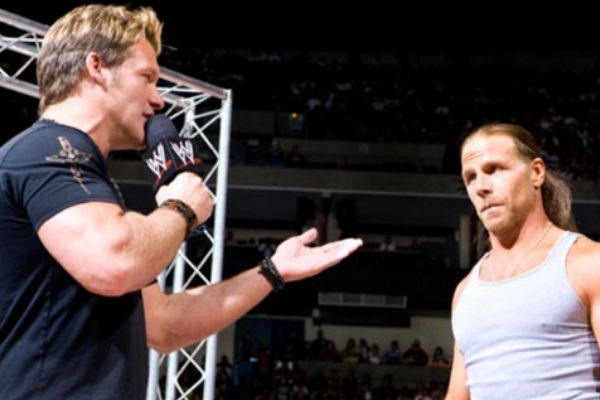
Chris Jericho Vs. Shawn Michaels II was even more well-received than their first programme.
The performances were expert. Jericho accused Michaels of enjoying the fact that he had retired Ric Flair. He then (fairly) accused Michaels of cheating to win a match against Batista. This was inspired; it drove the conflict between Jericho and Michaels, and allowed Jericho to dial up his smug conviction and self-belief. The face versus heel dynamic wasn’t ruined, however; fans loved Shawn so much that he in effect was allowed to get away with it. Hey, that’s just how Shawn is.
Jericho of course resented that, driving Shawn into the “glass” screen of the JeriTron - a lovely, karmic subversion of the infamous Rockers split angle.
Across several matches, each, importantly, distinct from the last, Jericho and Michaels elevated WWE into timelessly great pro wrestling concern for the first time, really, since 1994.
At SummerSlam, infamously, Jericho accidentally punched Shawn’s wife in the face. This only intensified the animosity between the two characters.
It ended in an all-time great ladder match - a feud so brilliant that the World title was stripped of CM Punk to juice it up.
Punk used this as motivation to…
16. 2009: Jeff Hardy Vs. CM Punk
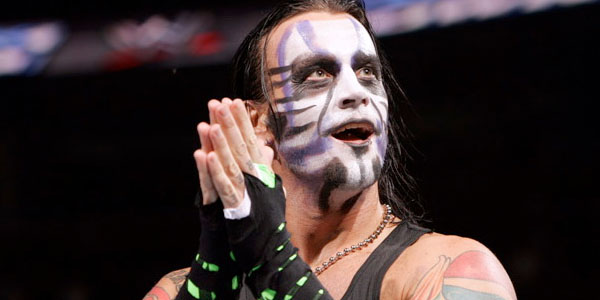
Jeff Hardy, in the mind of CM Punk, was an undeserving career failure who received chance after chance after chance despite messing up every single time. By cashing his Money In The Bank briefcase in on Jeff at Extreme Rules, Punk probably thought he was doing you all a favour. He saved you from the inevitable disappointment.
Plotted with a slow-burn sophistication antithetical to the week-to-week desperation of the Guest Host era over on Raw, Hardy Vs. Punk was perfect - so perfect that the performances elevated cop-out finishes. In fact, the performances were so great - that prick Punk using his “injured” eye to wink at Jeff, revealing that he’d intentionally disqualified himself at The Bash - that the screwy finish actually meant something. Punk Vs. Hardy redefined the disqualification. At long last, the fans resented the heel and not the booker: that’s how awesome Punk was in the role.
Once Punk dropped the facade of sportsmanship and smashed Jeff over the head with a microphone, the ideal dynamic was realised.
Contrast.
A militant straight edge egotist versus a man struggling with addiction: it was in fact all too real, all too believable, since Hardy spiralled, again, weeks after it was done.
For years, people fantasy-booked a certain dream feud, and yet, the demented, hate-fuelled exhilaration of the Punk Vs. Hardy TLC match at SummerSlam was better, surely, than anything Punk and Steve Austin could have mustered.
15. 2010: CM Punk Vs. Rey Mysterio
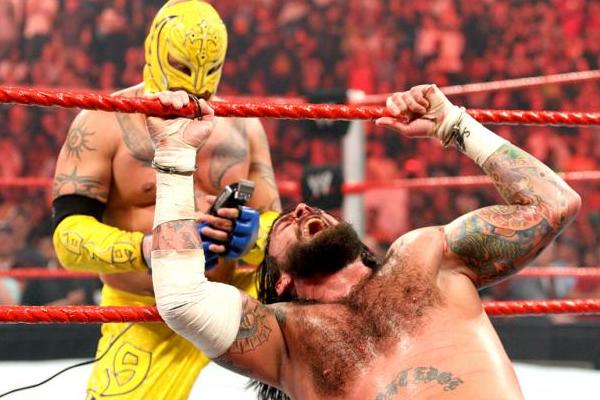
It must have been a dream to wrestle Rey Mysterio, particularly for the emerging heel desperate to break through.
CM Punk was in imperious form as the Straight Edge Saviour. A great sports entertainment-sized update on his holier-than-thou persona, it was a literal but no less effective tweak. Punk’s legendary ego and self-belief had swelled to such an extent that he deemed himself capable of saving your very life.
He got real weird with it, by singing ‘Happy Birthday’ to Rey’s young daughter, conveying that he, as guiding light of the very world itself, would make a better guardian. Many wrestlers, to cringe-worthy effect, attempt to play creepy. Punk, pro wrestling genius, nailed it.
Infuriatingly, WWE threw away an opportunity to promote a technical classic at WrestleMania. The first Rey Vs. Punk PPV match of 2010 went just 06:28.
Motivated by this ostensible demotion, Punk and Rey tore the house down at Extreme Rules.
The programme was so flawless that it soared even when it went wrong. At Over The Limit - where Punk’s Jesusian hair was lopped off, exposing him as a false prophet - the match was stopped, temporarily, when Punk bled the hard way.
Watching Punk get the match back on track by violently blowing Rey away immediately after the restart was an all-time great display of his genius instincts.
14. 2011: CM Punk Vs. John Cena
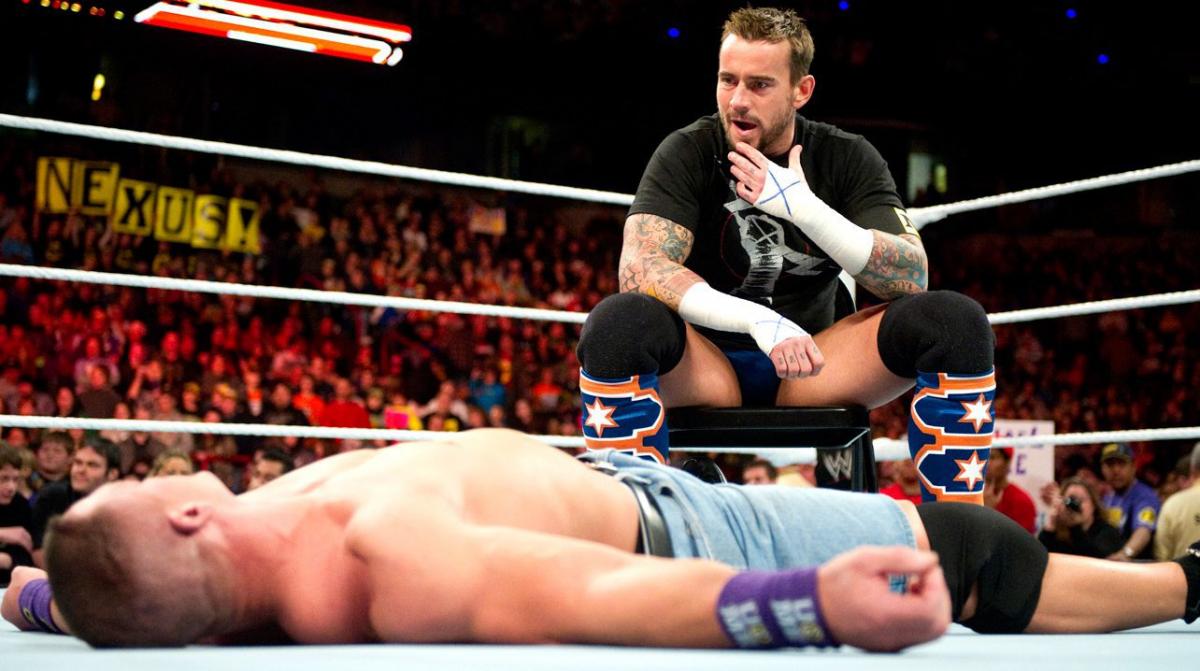
Provided you pretend that it ended at Money In The Bank, this was it in a barren year.
The ‘Summer of Punk’ was truly beyond parody. Punk was the anti-authority ‘Voice of the Voiceless’ in June. Months later, he was a scab happily performing double duty for his boss - the doofus son-in-law he had buried during the Pipebomb promo. This was the precise equivalent of a besuited Steve Austin willingly becoming the Corporate champion of Vince McMahon in 1998.
As a self-contained chapter, though, Punk Vs. Cena was incredible.
A great wrestling story really only needs a great promo to heat it up and a great match to pay it off - and does it get any better than the Pipebomb and Money In The Bank ‘11?
With the Pipebomb, Punk excoriated WWE and lit a fire under its enchanted fanbase. With irresistible, venomous delivery, Punk threatened to walk out on a broken, sh*tty system - and this theme of escape was deftly incorporated into the breathless counter-driven epic at the PPV, in which Cena just couldn’t seem to execute anything on an invincible, slippery Punk.
It took all of a fortnight to go awry, but in the WWE of 2011, you were truly blessed to get something that great for three weeks.
13. 2012: The Rock Vs. John Cena
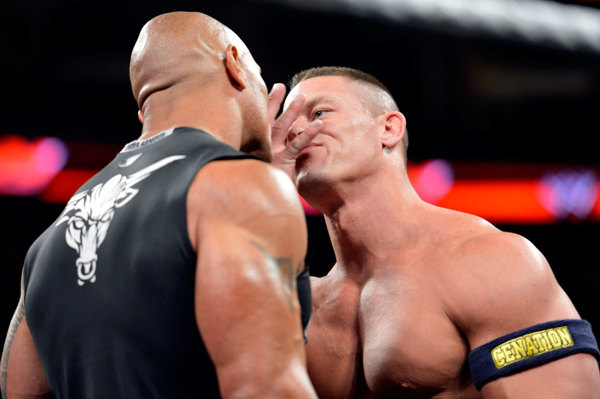
Even when it was actively bad, The Rock Vs. John Cena was fascinating on an insider level. This was a collision of huge egos. This was Cena’s chance to prove, freed of the PG trappings, that he could be as cool and as cutting as his legendary sh*t-talker of an opponent.
The Rock’s “Kung Pow bitch” insult was awful, a parody - but wasn’t it electrifying seeing him look so rattled at how poorly it was received?
Beyond the fiction, Rock Vs. Cena was an almost awkwardly thrilling game of political one upmanship.
And it was great when it was great. The babyface Rock character of the 2010s was very lame a lot of the time, but the segment in which he buried Cena’s Krusty the Clown-esque range of merchandise?
When it wasn’t ugly and problematic, it was a comedic tour de force.
The match at WrestleMania XXVIII went far too long, and was actively tedious at points - but it was stunning at others.
12. 2013: Hiroshi Tanahashi Vs. Kazuchika Okada
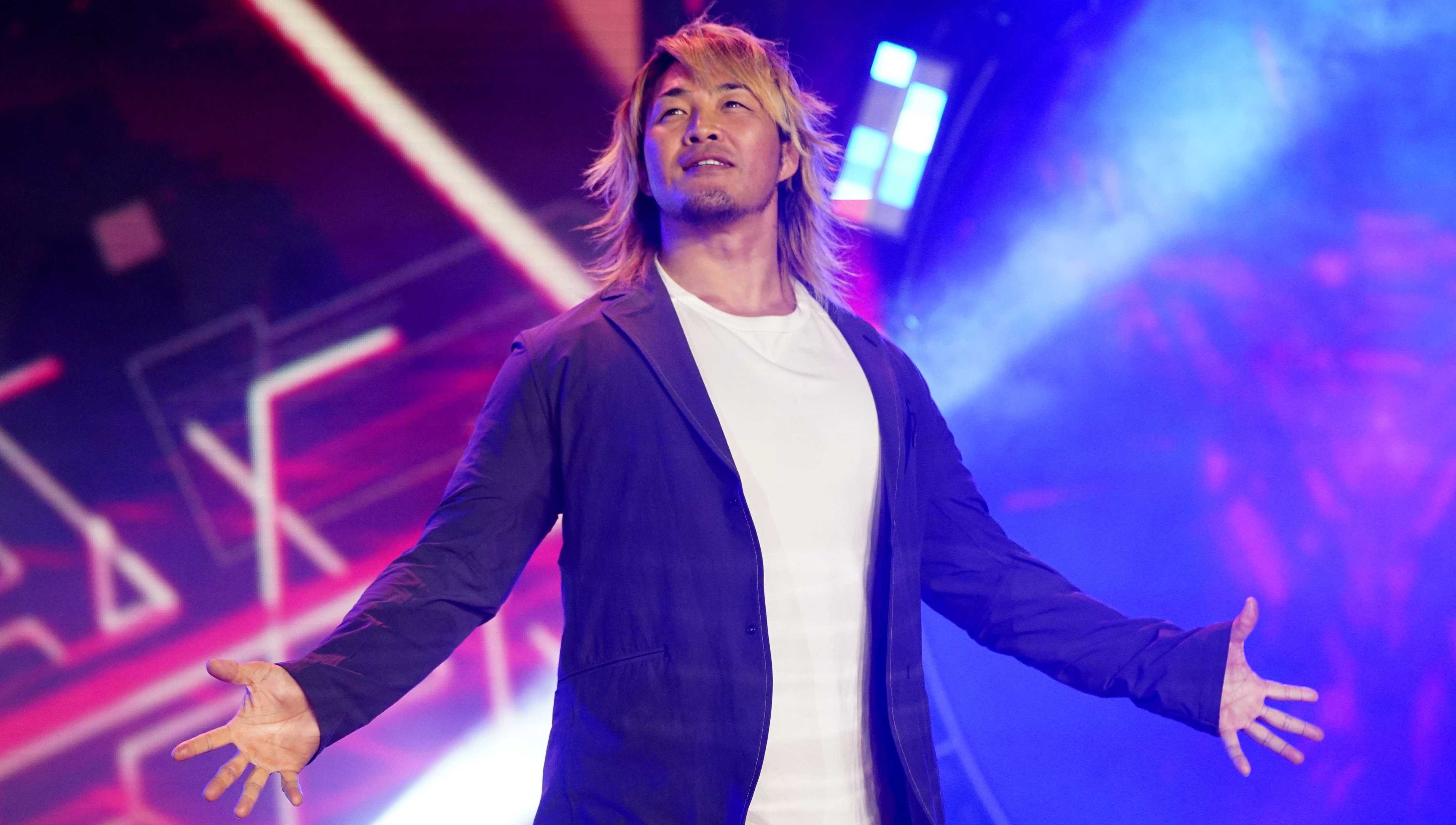
Great pro wrestling is all about the “when”.
Increasingly, and it’s very difficult not to feel spoiled by this, countless wrestlers can flawlessly execute ambitious, exciting moves and last-gasp counters. The true artists know when to do it for the maximum dramatic effect.
In the ring - and with Gedo in his booking prime holding the pencil - is there a better illustration of the all-important “when” than the immortal Hiroshi Tanahashi Vs. Kazuchika Okada rivalry?
The premise was simple - and the work had to be nothing short of outstanding in order to substantiate it. When was Okada going to supplant the great Tanahashi as the undisputed Ace of New Japan Pro Wrestling?
Every time Okada drew closer to his Destiny, closing in on Tanahashi’s throne, Tana - like the great sporting dynasties - would find a way to get it done under the harsh glare of the bright lights.
With Tana’s dragon screw and Okada’s levitation dropkick, each wrestler was equipped with the move - and the know-how of when to deploy it - that pressed the question again and again, subverting your expectations.
When would Okada finally be the man?
This was so fantastic that you almost regret asking it, looking back. You should have just appreciated the gift of the moment.
11. 2014: The Shield Vs. The Wyatt Family
WWE deserves little credit for the success of the Yes! Movement storyline. That was projected onto the promotion by disgruntled fans and was only made possible through the exit of CM Punk.
Daniel Bryan Vs. The Authority was actively bad. Yet another retread of Austin Vs. McMahon, it missed the point entirely: Austin embarrassed Vince every week, where there was no catharsis nor entertainment value in watching Bryan get told he wasn’t a draw week after week after week.
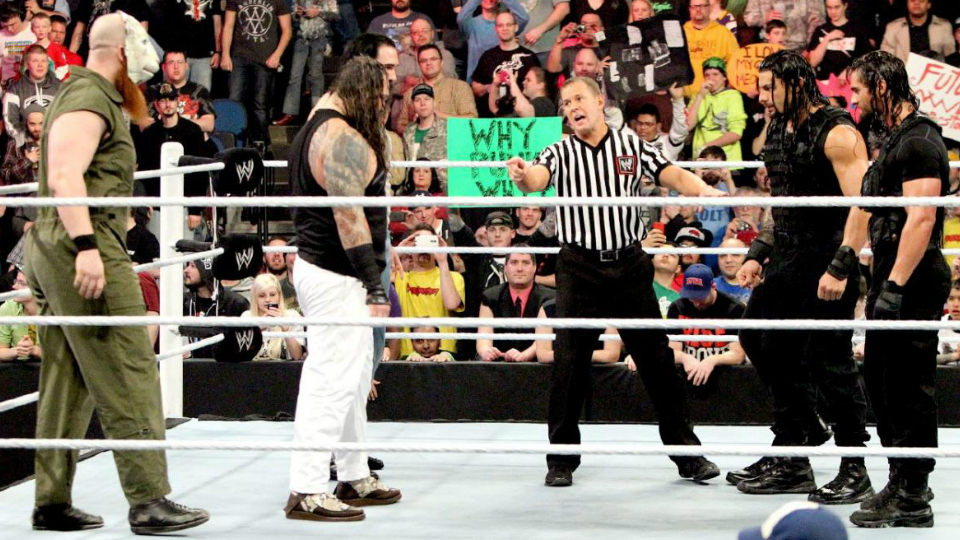
The Shield Vs. The Wyatts feud was short, simple, incredible.
It connected with fans because it was an ultra-rare development: faction warfare premised on one act succeeding another, when the top dogs, unlike the endless Attitude Era relics, had only been established two years prior. It felt, at long last, like that era of WWE had created its own stars - by design and not by accident - and was genuinely intent on a youth movement.
The Elimination Chamber six-man was electrifying. Watching the gigantic Luke Harper in particular dismantle the ultimate team with his awe-inspiring dive set your soul on fire.
It was also a very effective means of building the Shield’s split. While the Shield later went over Evolution, the loss at Elimination Chamber stuck with Seth Rollins, who was the first to grasp that his stable was closer to the end than the beginning - and was callous enough to cash in the chips.
10. 2015: Bayley Vs. Sasha Banks
Contrast.
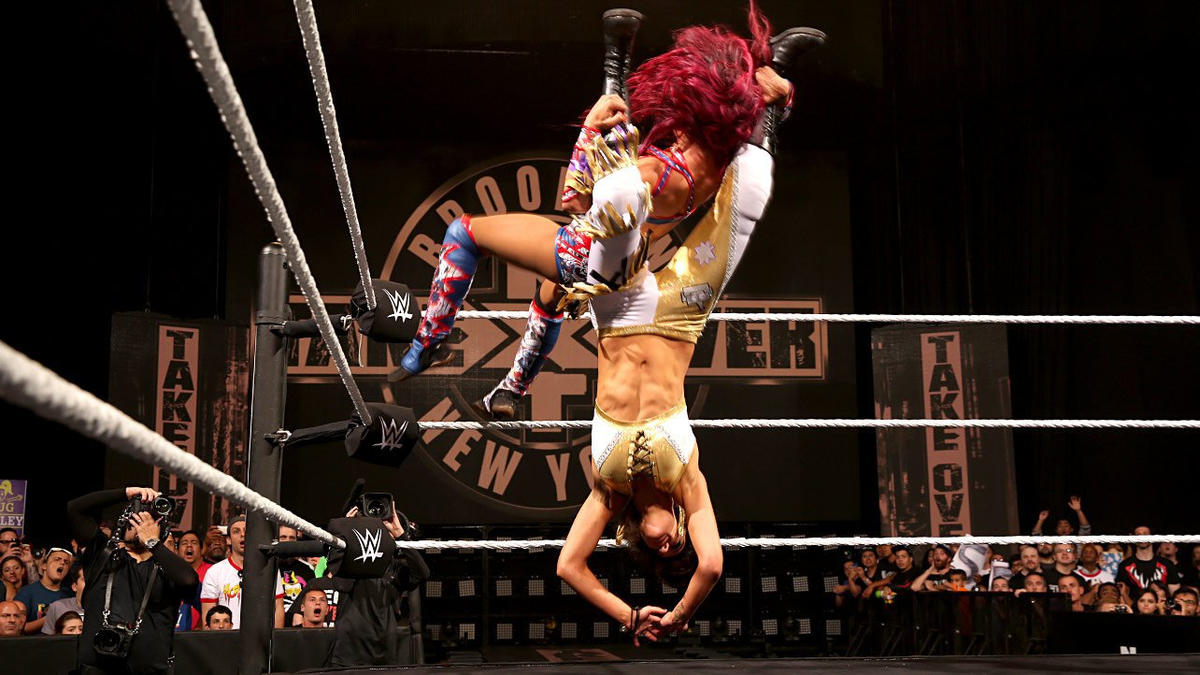
Sasha Banks was the cool heel who carried herself like a megastar. Bayley was the humble super-fan who reached that level without once feeling entitled to it.
At TakeOver: Brooklyn, Bayley and Sasha worked a masterpiece. Sasha was cool, but not so cool that the impeccable dynamic and contrast was ruined. Sasha destroying Bayley’s injured hand and slapping her in the face after a loathsome heel taunt ensured that. A towering achievement, Bayley and Sasha stole the show away from Kevin Owens and Finn Bálor the first time that show hit the big arena.
Back in Full Sail, the half-hour 30 minute Iron Man sequel, while not quite as lean and flawless, peaked even higher at its best.
Sasha stealing the headband from young Bayley super-fan Izzy was unconscionable - Izzy looked inconsolable in that moment. Bayley avenged her biggest fan by, and this was so goddamn awesome, stomping violently on Sasha’s hand at the finish.
The best babyfaces are decent and virtuous people - until they are wronged.
2015 Bayley was one of the best babyfaces of all-time.
9. 2016: The Revival Vs. #DIY
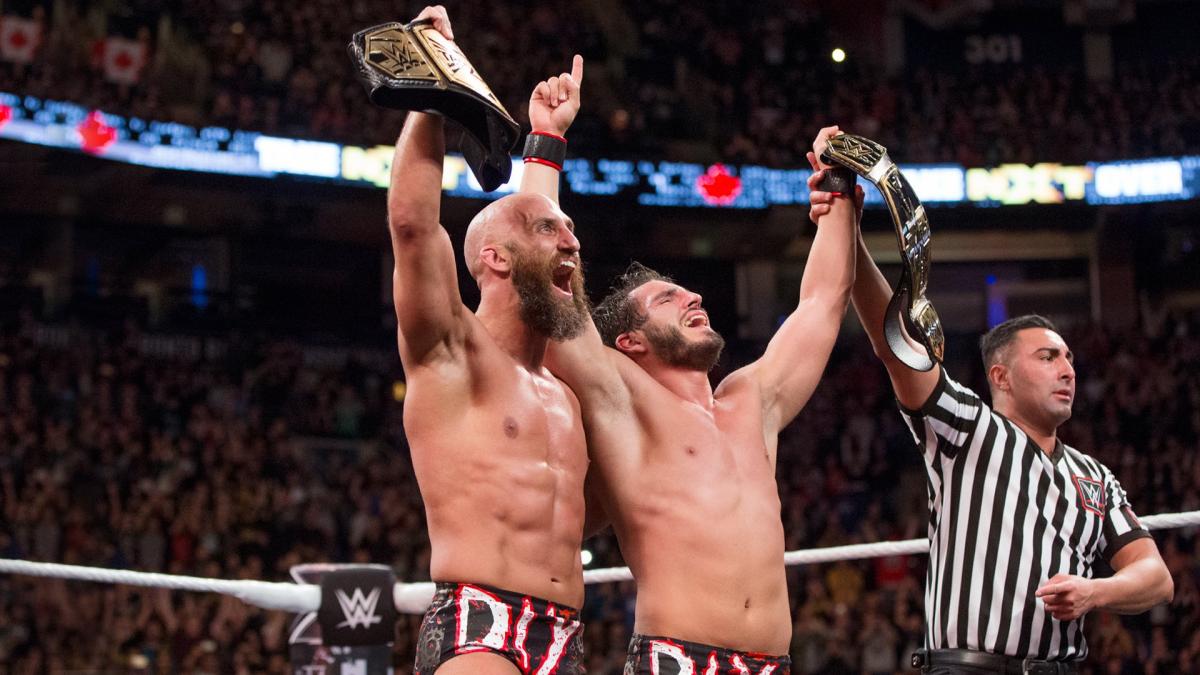
The last great story that Paul Levesque told in NXT, or certainly the last story that has aged well.
(The Johnny Gargano Vs. Tommaso Ciampa singles programme, through sheer excess and cringe-worthy melodrama, outstayed its welcome, occupying a place now between “great feud that peaked early” and laughing stock.)
Much better as partners than rivals, that Ciampa may one day turn on Gargano was an excellent subplot. Ciampa - before the whole “I don’t want to seriously hurt my friend” bit reached diminished returns - had failed to use his killer instinct to put Gargano away in the Cruiserweight Classic.
The NXT fanbase - never higher on the product - had two rooting interests. The fandom wanted #DIY to win the Tag Team titles and stay the course as a team. Ciampa and Gargano weren’t brought in as fashionable indie stars paraded in the front row of a TakeOver. They needed your support to get there. That was very rewarding.
One of the great modern tag team stories culminated at TakeOver: Toronto. #DIY prevailed over the Revival in an agonising, breathless Two Out of Three Falls classic.
Beyond the awesome content, the feeling that you had something to do with it was such a high.
8. 2017: Kazuchika Okada Vs. Kenny Omega
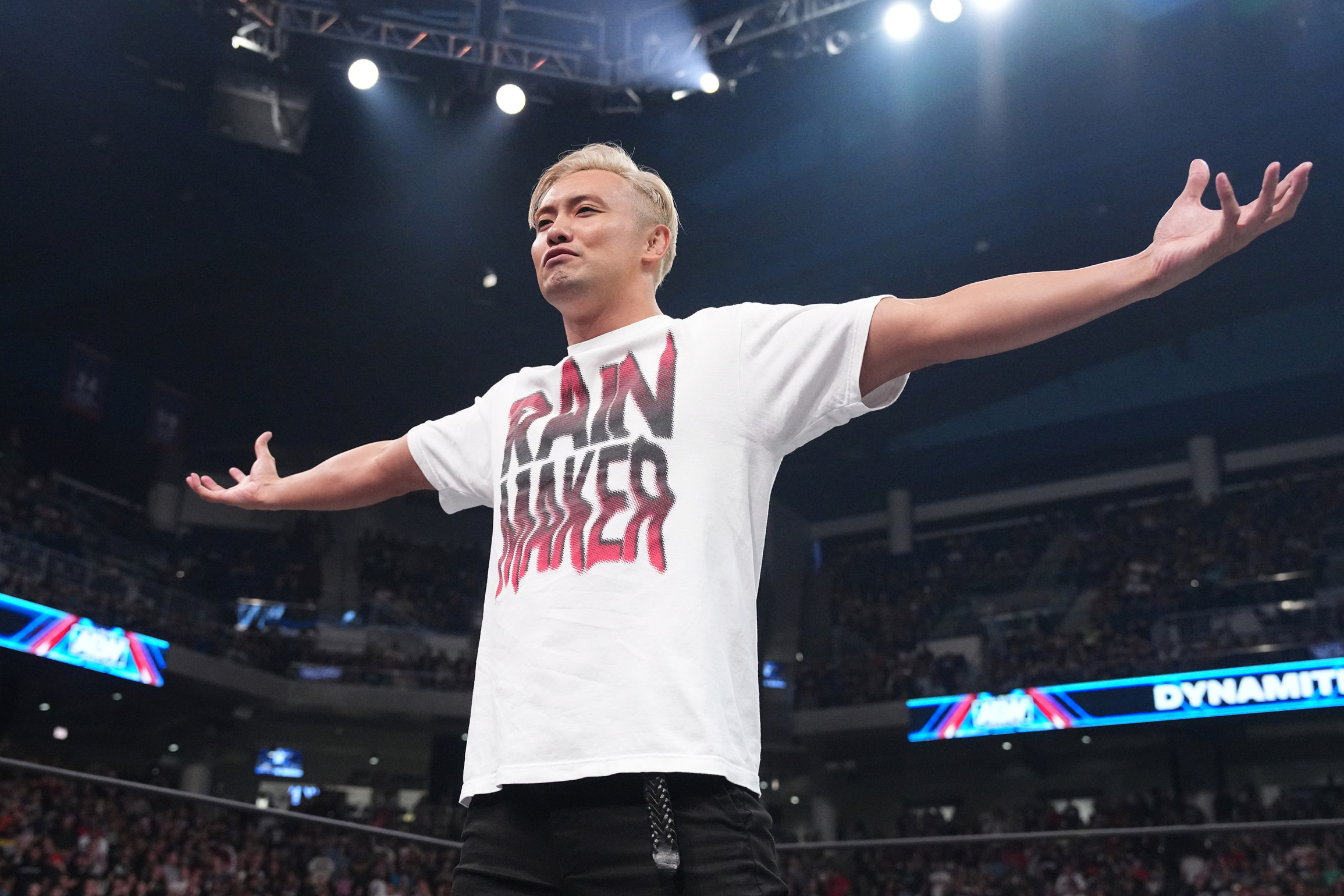
A story that unfolded across 2017 and culminated (for now) in 2018, Omega Vs. Okada was a masterpiece.
The original encounter at Wrestle Kingdom 11 was seminal, an absolute game-changer of a match. Promoted in the cavernous Tokyo Dome, produced with WrestleMania-sized glitz, and worked with a depth of storytelling and advanced athleticism never before witnessed, it proved to lapsed fans that the medium could be as big and better than WWE.
The second match was equally great. Omega’s iconic sell - he collapsed to his knees in exhaustion just before Okada could blast him with the Rainmaker - was an ingenious, unique method of conveying how the modern super-athlete should convey the struggle of an epic. Omega and Okada were then paired together again in the G1. Nobody thought this was a good idea.
It was: in stunning contrast to the previous two matches, the 24:40 run-time felt like an urgent 10 minute sprint. Time has never flown quite so quickly in the squared circle.
Was it all “too much”, as some critics and fans suggested?
Nope: in being unable to hit the One-Winged Angel clean in the middle in matches one and two, and only beating a weakened Okada in match three, Omega was savvy enough to create a hook for every rematch.
7. 2018: Kazuchika Okada Vs. Kenny Omega
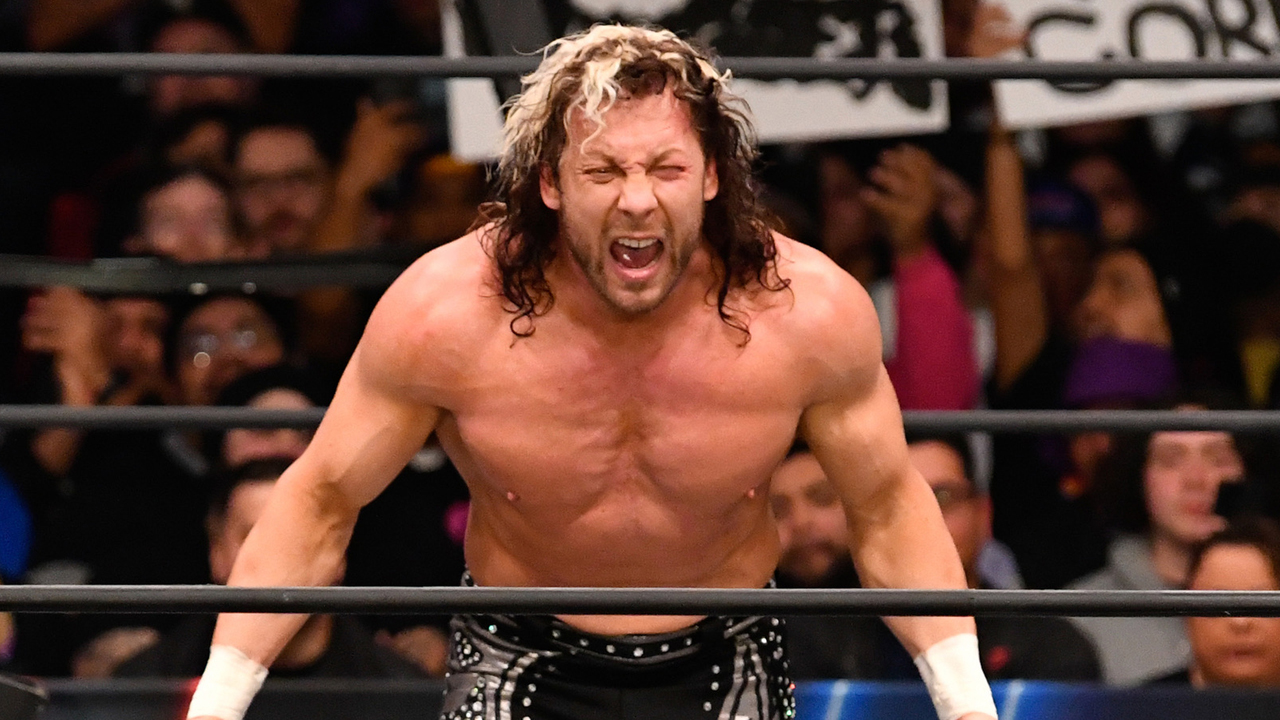
In 2018, the greatest match of all-time happened.
Omega, generating a level of unprecedented, hysterical noise, perfected the art of sports-oriented storytelling at Dominion 2018. With his preposterously cut physique, he used stamina as the key to unlock the unsolvable puzzle that Okada was. This worked to an incredibly dramatic extent, since Okada was - objectively - the most dominant champion in NJPW history.
The opposite of going long for going long’s sake, Omega, driving the unbearable tension, sold his ribs throughout after the latest crazed, impossible feat of bumping. All that intense preparation, just to get seriously winded: what a heartbreaking story beat that cast real doubt over the outcome. What a genius Omega was at his peak.
Deep in the match, Omega instead relied on his heart, thus completing his babyface turn, by drawing on the inspiration of the men he betrayed (AJ Styles and Kota Ibushi) in atonement.
The most impossible athletic excitement and precision fused with heart, soul, noise, drama, epic stakes: this was in many ways, if not every last one of them, the ultimate wrestling story.
6. 2019: Cody Rhodes Vs. Chris Jericho
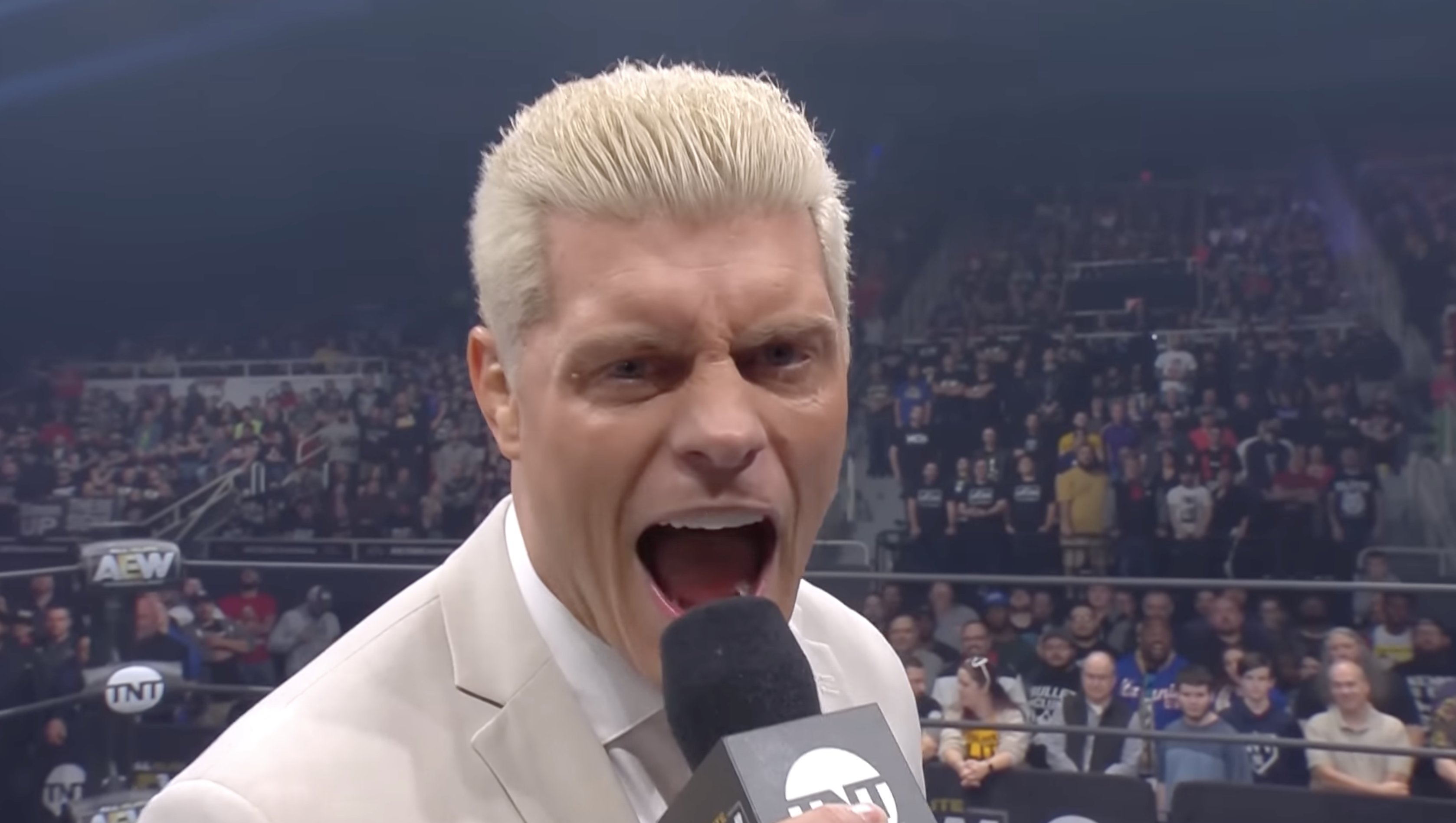
The storyline that defeated NXT in the Wednesday Night War.
Cody Rhodes Vs. Chris Jericho was sensational. The premise was excellent. Cody was the aspiring champion who wanted to move wrestling forward, Jericho the “carny succubus” who wanted to use AEW as a vehicle for himself, caring little about the sanctity of the sporting promise with his gang’s relentless interference.
The plotting was majestic. Folding in parody videos, screaming down the lens babyface promos, arm-breaking angles in the Four Horsemen vein, and wild concessions stand brawls that destroyed WWE’s fake invisible wall, the feud was an extravagantly entertaining means of drawing on the past to underscore that the electricity of pro wrestling should never have been cut off. There was more to the medium than WWE’s endless exchange of scripted promos. Cody Vs. Chris Jericho, you could argue, was actually a disaster - Cody opting out of the World title picture dates terribly with each passing week - but it was a riot at the time.
AEW attempts to do a “war for the soul of AEW” storyline every year. That device needs to be scrapped; they perfected it mere weeks into Dynamite.
5. 2020: Kenny Omega & Hangman Page Vs. The Young Bucks
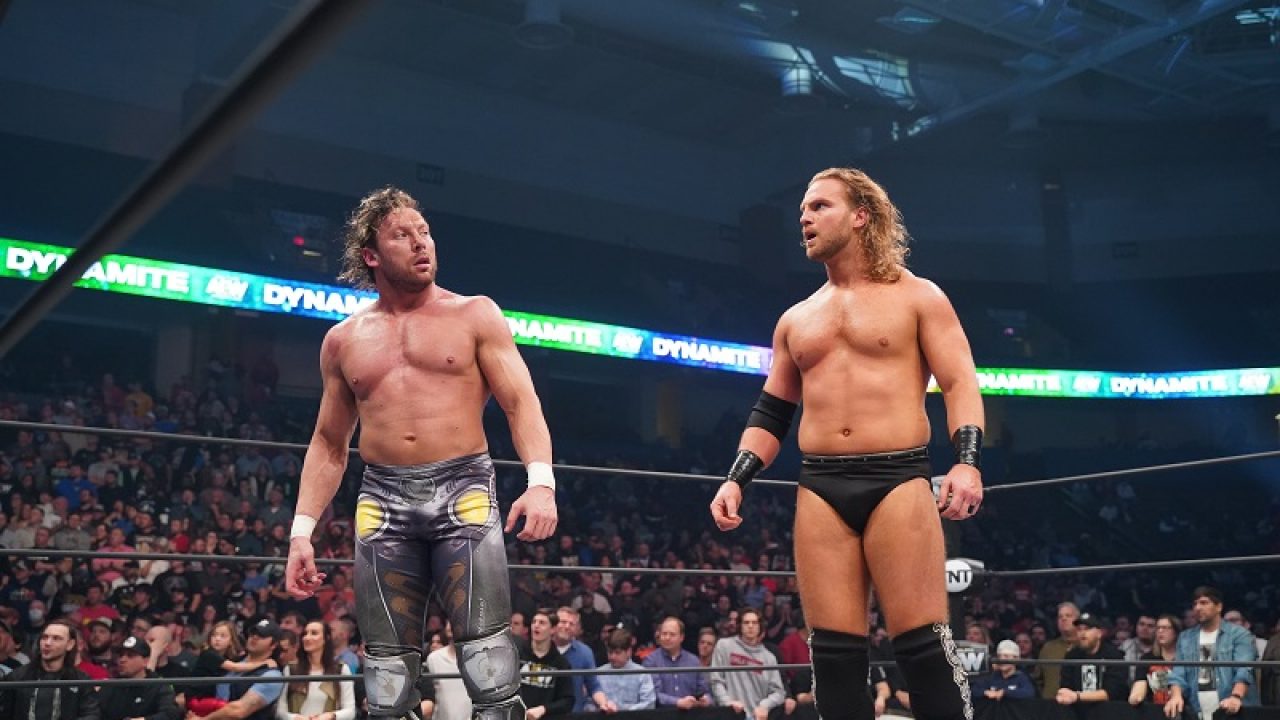
Not unlike Bret Vs. Owen, Kenny Omega & Hangman Page Vs. the Young Bucks was a story in which every character was right in their own mind. It was actually better than Bret Vs. Owen. Page was clearly the babyface - but the Bucks were a touch more reasonable, and the Elite’s fandom was torn apart as a result. Who was right?
The Bucks were frustrated that Page and Omega had won the Tag Team titles; they believed in Page when nobody else did, and Page, drowning the sorrows of his own perceived failings, had removed himself from the stable (and was hardly dependable when the Inner Circle hunted them down).
Page interpreted this as a lack of belief. He felt the Bucks were patronising him. The one time he did something on his own, the Bucks couldn’t just be happy for him.
Omega, peacemaker, said he was surprised that he’d won the titles ahead of the Bucks, whom he considered the best tag team in the world. This upset Page; stemming from All Out 2019, he felt like he wasn’t Elite - and now Kenny all but declared it a fluke?
And the match at Revolution, goddamn. It was a masterpiece as electrifying in action as it was rich in subtext. Page, showing his babyface heart, used Kenny Omega’s One-Winged Angel. Omega, meanwhile, was more incensed by the Bucks using his old tag finish with Kota Ibushi than anything they’d said, cruelly, to his actual partner.
Of course, this feud led, deftly, to…
4. 2021: Kenny Omega Vs. Hangman Page
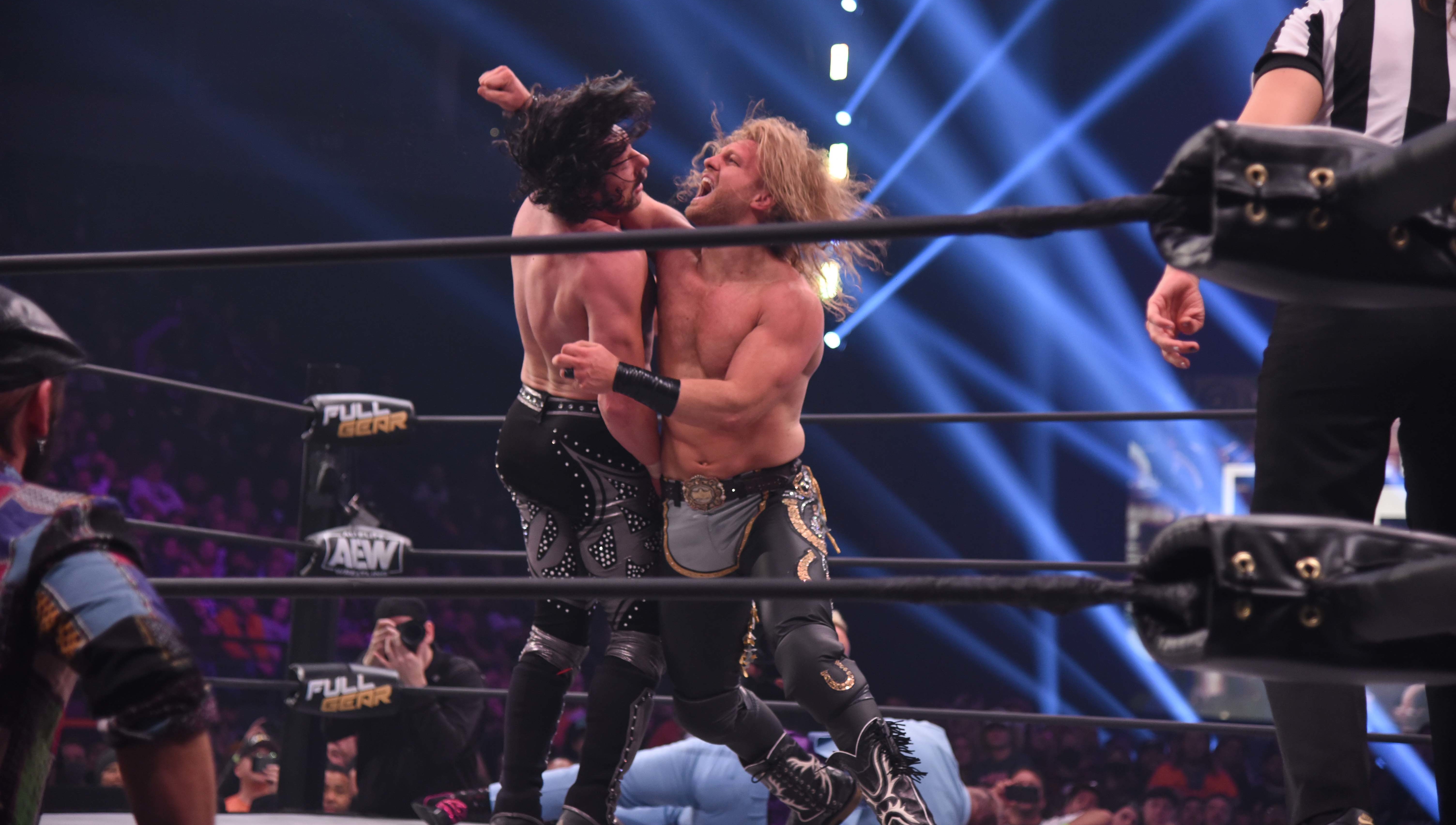
This was the programme that evidenced - nay, proved - that AEW was in fact capable of restoring and redefining the art of long-term storytelling.
An immensely rewarding watch for those who paid attention to every granular detail, Kenny Omega was the villain all along. Watch those early tags. Expertly crafted to position Hangman Page as the clutch player, Omega still insisted that theirs was a symbiotic relationship. Omega blamed Page for the loss of the Tag Team titles at All Out 2020 when, in reality, it was Page who scored every last fall in their successful defences. Omega, a gaslighting prick, soon turned and teamed with Don Callis, becoming the Belt Collector: a knowing parody of a main event World champion. Page meanwhile was left to rot, left to confirm his own suspicions that he was not ‘Elite’.
Over the course of 2021 - despite brilliant and shocking last-gasp defeats and through the wholesome power of the Dark Order - Page overcame. It was never too melodramatic, either. The levity of it all - the cowboy-themed entrance at Fight For The Fallen, the daft hijinks on Halloween - was crucial. There was an entertaining lightness to it that prevented Page from descending into a maudlin sad-sack.
Everybody has been told - often by somebody with zero authority - that they aren’t good enough.
Watching Page blow that somebody away, and prove him wrong, at Full Gear ‘21, was one of the most cathartic and electrifying moments in AEW history.
3. 2022: CM Punk Vs. MJF
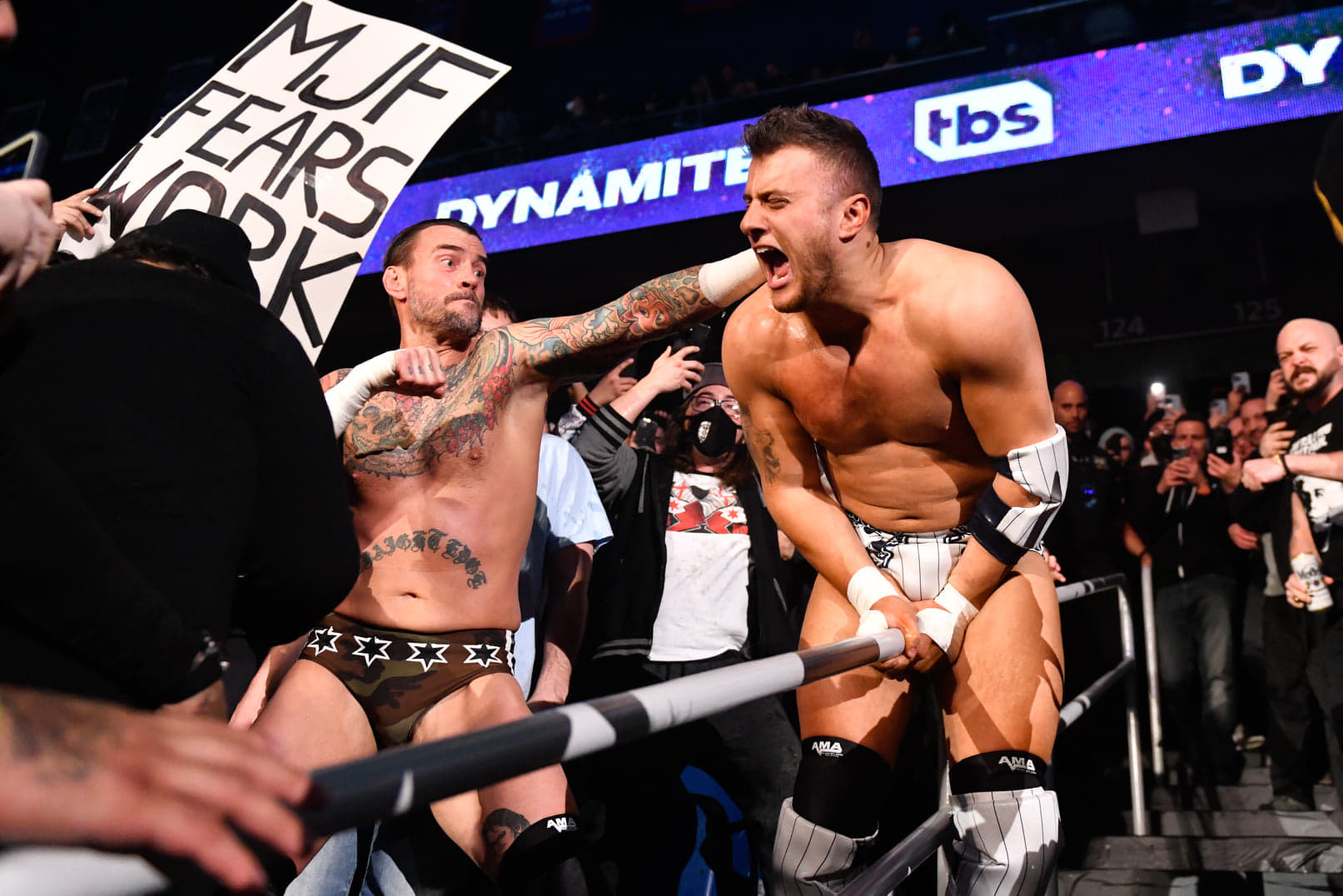
Another sublime inter-generational tale elevated by the fandom’s experience of the form.
Most felt the same way that MJF did about CM Punk once upon a time. If he didn’t quite save your life, as he had a bullied MJF’s, he saved your love of the sport; AEW fans were moved by the 2011 Pipebomb and how it illuminated just what wrestling could become in a better world.
God, this was incredible. It all started with Punk refusing to shake MJF’s hand - a fairly innocuous act that Punk only committed to bruise MJF’s ego, to tell him that he wasn’t quite ready to step down from the throne of the 21st century’s most preeminent bad guy.
MJF was moved to embark on his wrestling career after seeing a photo of Punk shaking the hand of Daniel Bryan at the 2011 Royal Rumble, and declared his intentions on Facebook (he later showed fans the receipt in possibly the best use ever of social media as a narrative tool.)
MJF interpreted Punk’s behaviour as an unconscionable betrayal.
The plotting here was out-of-this-world great - how the bickering about who was more like Roddy Piper foreshadowed the Dog Collar blow-off, Punk subverting the First Dance fantasy booking by coming out to MJF’s theme in Long Island - and the emotional component verged on the devastating.
Despite an all-time great heat angle, in which MJF, calling back to the original Summer of Punk, revealed that he was a snake, MJF’s story of the bullied young boy who needed wrestling as an outlet proved - ahead of his face turn - that he could be redeemed.
Match quality, emotion, plotting, promo work, stunning twists, forward-thinking character development: this was as good as it gets.
2. 2023: The Bloodline Saga
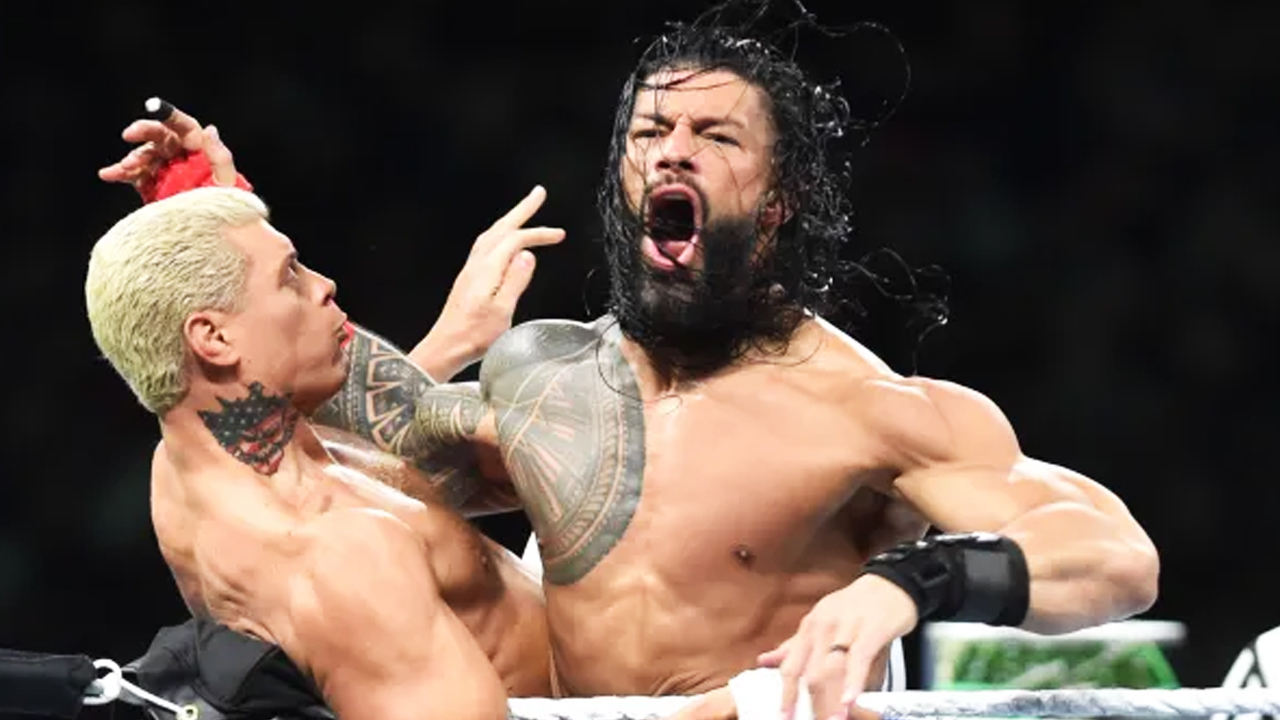
Bold, funny, epic, objectively a monstrous box office success: the Bloodline saga propelled WWE into a new boom period.
It wasn’t perfect. Half of the misunderstandings that drove the plot could have been resolved, had the characters simply watched the TV show they knew they were in. Every other finish was highly convenient, repetitive and unfair: if the promotion was on the level, the Bloodline should have been barred from ringside several times over. Tribal Combat made a Triple H match feel like a peak Dragon Gate six-man.
Still, this was a veritable star generator of a saga. Roman Reigns banished his stigma as a career failure by becoming one of the top stars in company history. The Bloodline vehicle propelled Cody - eventually - into a stratosphere occupied only by Hulk Hogan, Steve Austin, the Rock and John Cena. Sami Zayn - inordinately endearing as the browbeaten figure of sympathy, electrifying as the foul-mouthed bringer of vengeance - finally made it. Jey Uso established himself as a mega-over main event attraction. Tag team wrestling headlined, of all events, WrestleMania.
Even when the matches were methodical and predictable, they were loud and super-dramatic.
For the first time in years and years, WWE was ahead of its audience. Between the Drew McIntyre, Sami Zayn, and first Cody Rhodes matches, WWE risked pissing off the fans, and it was a risk. WWE had little in the way of goodwill when “finishing the story”.
Instead, WWE booked some of the most daring, unpredictable finishes in its history. Eventually, the full trust of the fans was earned. They were in love with the ride.
The “storytelling” company had rediscovered the meaning of drama.
1. 2024: The End Of Sting
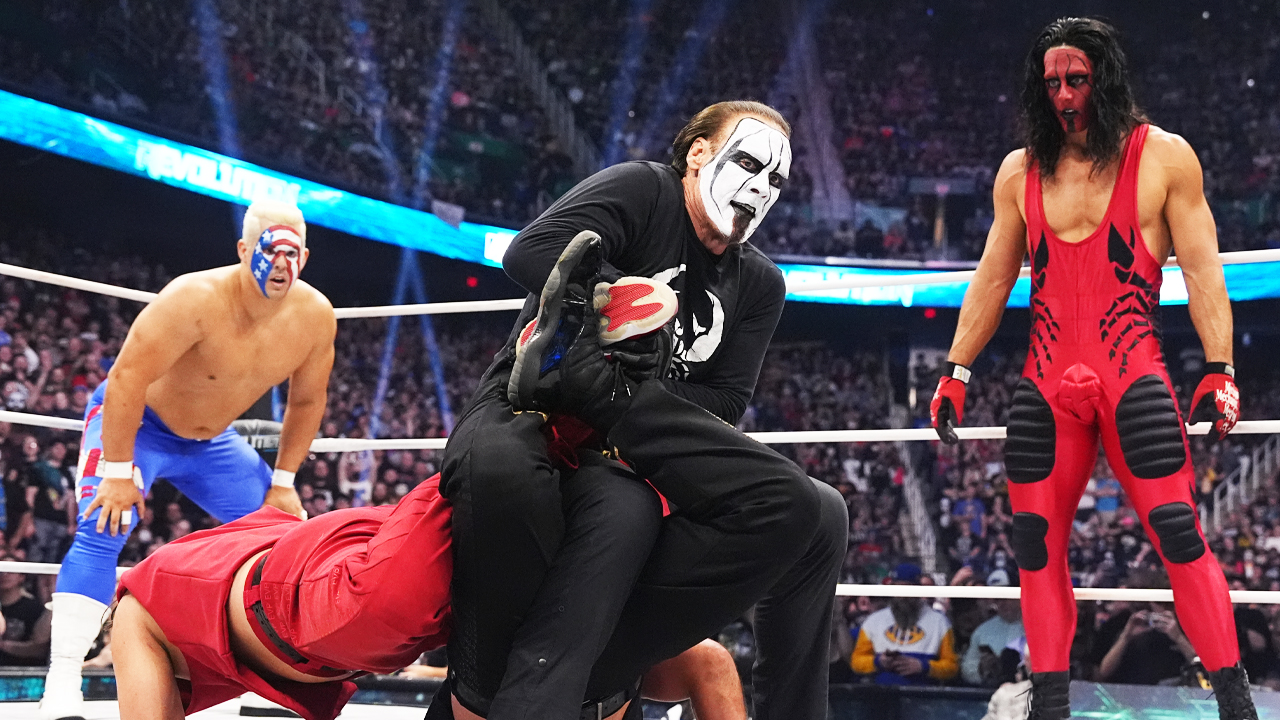
Sting in AEW was already perfect. He could have simply retired against anybody alongside Darby Allin in his signature party match and it would have ended perfectly.
It was far better than that.
Ahead of a killer heat angle, the Young Bucks took to wearing pristine white suits. The idea, obviously, was to make the blood of Sting’s family really stand out, to better visualise the awful transgression, but in wearing the suits weeks beforehand, it felt that bit less contrived - the sort of deft detail at which the Bucks excel.
That blood angle was incredible in and of itself, but it took on an intense gravity when Sting, in a career-best promo, revealed that his father had very recently passed away. Sting’s low, solemn words were heartbreaking and terrifying. The Bucks were in deep, deep sh*t.
After the wonderful, impossible nostalgia of Sting descending from the rafters one last time, the retirement itself was a masterpiece. A wild glass-smashing Death match, with Darby taken out until the finish, the very real sense of peril was overwhelming. The match was built perfectly around the idea that even the superhero couldn’t get it done this time - this time, he really needed you to be his hero and get behind him.
A ******¾ storyline, it might have reached the fabled seven stars, had Ric Flair not been involved.