How WWE Has Changed Since Jeff Jarrett Last Wrestled On Raw
The more things change, the more they change.
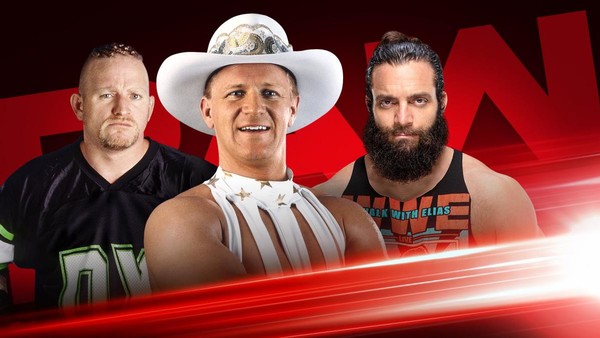
Jeff Jarrett's controversial 1999 WWE exit was the sort of departure that once upon a time would have had him ousted forever. Forever's never never in wrestling, but Vince McMahon's public denigration of 'Double J' during the infamous March 26, 2001 edition of Monday Night Raw was considered a Sports Entertainment fatality.
Paraphrasing the catchphrase he insisted Jeff beat into the ground, McMahon suggested Jarrett spell his name "Capital G, Double O, Double N, Double E", not in an effort to rebadge him as the dyslexic twin brother of his New Generation ice hockey flop, but to let the entire fanbase know that he was to be gone and forgotten with immediate effect.
The segment was particularly cynical in how methodically it was produced. McMahon stood in front of monitors mirroring the supposed simulcast, but the "WCW" that was supposedly airing at the time couldn't have featured Jarrett noodling around backstage because he wasn't even on that broadcast. Presumably by orders of The Chairman, WWE staffers were sent looking for some b-roll to allow for this public firing to even occur. On a night where several panic buttons were pressed, this was calculated and knowingly cruel.
But, McMahon knew who he was dealing with when he cast him as a charlatan country music star years earlier. As he did when he allowed Jarrett to retool himself as something of a Stone Cold-lite in 1998 when it became clear he wasn't getting within spitting distance of 'The Rattlesnake' himself. As he does now, as he books Jarrett in an actual match against Elias on Raw.
A lot has changed between Jarrett's final 1999 appearance and this jaw-dropping return 20 years later. WWE most of all. Monday Night's are still alright for fighting, but there was a time where even an acoustic guitar felt electrically charged.
CONT'D...

"What about the Attitude Era?"
Well, what about the Attitude Era? What is it, exactly, that still gets blood in it for the angriest one-handed typists in the YouTube comments section, or the Vince Russo defence army that troll those that only have facts and data to back up their arguments, or those as offended by the letters P.G as others are their B.O?
The October 11th 1999 edition of Raw finds a way to answer these otherwise-rhetorical questions, mostly because of the eye-watering locale. Long forgotten but at the time one of WWE's biggest flexes, the decision to hold the flagship at Atlanta's Georgia Dome was a far bigger shot across the bow than any imaginary ones Triple H could fire from a tank. Over 33,000 packed into WCW's home base to watch the competition (in the loosest possible terms, by that point) put on a typically frenetic edition of the show. And to WWE's credit, the atmosphere was frenzied. The crowd were clearly not disenfranchised WCW escapees, or not remotely a*sed about the wrestling war, because they were white hot all night, in keeping with the product itself.
And Davey Boy Smith took a back bump into dog sh*t.
This itself could have been a rib at WCW's expense. Was this Vince McMahon telling Ted Turner that he could literally book a match to end like that and still fill his building? Or was the literal designed to mimic the metaphorical? The British Bulldog's career was in tatters thanks to a bump he took for WCW on a gimmicked part of the canvas he wasn't advised about beforehand. Better to land in cack than hard on your back.
It was the main event segment of this particular edition of Raw, itself just another week for the rampaging WWE in a ratings war already won long before the end. The 6.1/2.6 deficit would have been embarrassing enough without the faecal finish. At least that was being carried by The Rock for a month and - much like Jeff Jarrett - wasn't anywhere near the WWE Championship. Triple H and Stone Cold Steve Austin were brawling over that, leaving 'Double J' in charge of the Intercontinental Title. The wrestlers title. The workers title. The credible title.
Intercontinental Champion and rampant, violent misogynist Jeff Jarrett was stirring up another kind of sh*t.
CONT'D...

Jeff Jarrett - at that point flanked by Miss Kitty as a titillating tokenistic replacement to the titillating and tokenistic Debra - crudely picked his spot during the semi-main event that pitted Stone Cold Steve Austin and Jim Ross against Triple H and Chyna. 'JR' was getting abused (there's one similarity at least...) by 'The Ninth Wonder Of The World' after Austin and 'The Game' had peeled off into the crowd, freeing the ring up for Jarrett to clatter in the head not with his signature guitar but an actual honest-to-god toaster.
Vince Russo was awaiting Jeff himself in WCW by this point, and in defence of the pair, the stench of Vince McMahon lingers on this entire angle 20 years later. Darkly amusing if only for the gusto Jeff inserted into the story, Jarrett's loathing disrespect for all women yielded segments that skewed the spectrum from the insignificant to the infamous.
He decked Mae Young, trapped Cindy Margolis in his figure four leglock, and even smashed a guitar over The Fabulous Moolah's head. The last one has actually aged quite well, but the rest speaks to how women and dog sh*t were about on the same level during the WWE's wild wild west at the time. This is thankfully not the case in 2019, though recent experimentation with intergender wrestling has only triggered yet more debate about the safety of Nia Jax's work rather than if Zelina Vega can overcome the height disadvantage against Drew McIntyre.
WWE (re)built an empire from this era, and though it's easy to poke holes at the product then just as it is now, much of the madness could be perceived as a means to and end. Just days after Jarrett's exit, the organisation became a publicly traded company, laying the foundations for the monolith it (eventually) became beyond wrestling. Will that make this week's Raw more exciting than October 11th, 1999's for fans? Probably not, but it has enhanced the mechanisms in which the company were able to talent scout.
1999's summer was one of the hottest in history, but the midcard was at times a total dumpster fire.
CONT'D...

As with anything from the time, WWE Network's rendering of the Raw is loaded with chapter breaks to account for the 400 matches spread out across the 100 minutes (!) of action, each grey dot hiding one quickfire atrocity after another in a way today's younger viewers couldn't possibly fathom.
Though authority figures were becoming increasingly prevalent thanks to the huge success of the Mr McMahon gimmick over the prior two years, they weren't the looming and domineering presence they are today. The wrestlers wrestled because they wanted a fight, even if that fight was a lumbering mess serving only to get to the next segment. Whether that purpose is better than what's often no purpose today remains subjective.
Quality-wise, there is simply no comparison.
There's nothing Billy Gunn and Crash Holly can even attempt in the 48 seconds they've got that could compare to what Seth Rollins could do with the same number of minutes. Tag Team Wrestling on the red brand is as on it's a*se as "#FTR" is Scott Dawson's, but The Revival could craft a mini-masterpiece in 3:48 in contrast to whatever the f*ck The Headbangers were working on with Curtis Hughes and Chris Jericho. 1999 had Sean 'X-Pac' Waltman on the books - a wrestler and Superstar beyond superlatives with skills so missing from today's product that fans that jumped on post-2010 literally can't even see what they're missing. He was lumbered with Faarooq to build up to a tag match alongside Kane versus The Acolytes because they were all massive and he was still considered small.
Such was life for a mere six-footer back then. 1999 wasn't all impotent rage manifested as Crash TV and Sportz Entertainment - there was innovation as always, even if much of it had to be searched for amongst the literal and figurative sh*t. Like "THE DOG POOP! THE DOG POOP!" itself, it's presented on a platter in 2019, but tragically, it's not half as palatable as it once was. Wrestling is 50% of what makes an iconic WWE Superstar, but the system has changed so drastically since these halcyon days that much of today's roster are either unable or unwilling to take enough risks to produce the other half of the package.
CONT'D...

Ahead of a WCW run besieged by belligerent booking, Jarrett enjoyed one of his most fruitful spells with WWE as he had one foot out of the door. October 11th's Raw was his final appearance on the flagship for nearly 20 years, and his final physical interaction until last and this weeks' skirmish with Elias.
Everything that followed - WWE's swallowing and regurgitating of WCW, the birth and near-deaths of TNA/Impact Wrestling during his complex tenure at the top of it, the rise of NJPW in the west - bizarrely, featured Jeff Jarrett in some fashion, and all served as pivot points that drove the thriving wrestling industry to where it is today. Ironically, it was Jarrett that looked as though he'd end the story on the fringes, working independent dates and selling gold through his Global Force Wrestling brand as all the big hitters broke a million records and drew some dimes without him.
Vince McMahon - on one of his proudest nights - had a major axe to grind, and drove it square into the head of Jeff Jarrett. Only in such damning circumstances could a person be forced to make work for himself, so sure that the offer would never come again from his industry's biggest employer. Had the rumoured $300,000's worth of back-pay and merchandise money Jeff had held McMahon accountable for before dropping his Intercontinental Title on his last night with the organisation been worth an entire future without the revenue stream?
In a word, yes. In two and a made-up one, Listen Up Slapnuts. With his sales pitches as well-worked as his punches, Jarrett has found his way back to McMahon's broadly tender embrace. A Hall Of Fame induction in 2018 has morphed into a producer and part-time wrestler's role in 2019, celebrated in grand fashion with a Royal Rumble-to-Raw arc with Elias that should hopefully get the contemporary crooner more over than he was before.
Win-win-win, then, not least because Jarrett's newfound spot in WWE restricts All Elite Wrestling's access to one of the industry's keener minds. The cynical leanings behind his public dismissal are evident in his rehiring, but 'Double J' has grafted his way through the tumult yet again. And he'll - ahem - toast his next chapter by wielding his infamous acoustic equaliser against the latest performer to work the all-singing aesthetic. Country singer Jarrett was due to be exposed as a miming fraud at the height of his 1995 fame, but - like countless other boybands that were more about their preening than their pipes - he's fermented like a fine wine.
Everything changes, but Jeff. Take That, WWE.