Vince Russo's 10 Worst WCW Booking Decisions

An era that literally killed a company dead in its tracks.
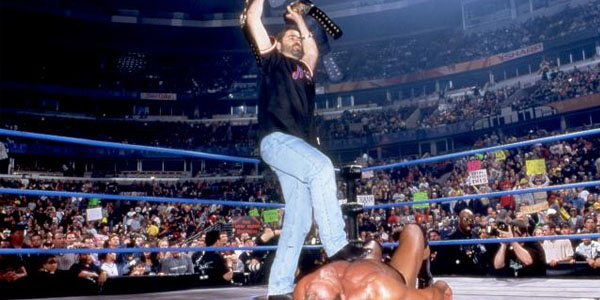
Whenever we as pro wrestling fans get too up in arms over how bad we perceive WWE's booking to be, it's always worthwhile to pause and think about times when promotions had creative slumps that make WWE's current product issues look like a bump in the road. Roughly 15 years ago, there was an era that literally killed a company dead in its tracks. On October 18, 1999 Vince Russo took over as the head of creative for World Championship Wrestling. At that time, WCW was in the midst of the slide that eventually closed the company, but still relatively competitive with the WWF - competitive enough where the idea of "stealing the creative genius that launched the Attitude Era (or however Vince Russo wanted to portray himself)" seemed like a terrific idea. There's more than ten booking decisions made during Russo's run in WCW creative that were "the worst." It's almost as if Russo at times was playing a game of "can you top this" against himself, yet somehow nobody was cheering when he successfully topped his last terrible booking decision. In any event, if you're a disgruntled WWE fan, here's an opportune time to kick back and realize that for as bad as the Wrestlemania main event may turn out to be, these were ten far worse decisions that actually led to a company going down the drain.

10. Buzzkill

https://www.youtube.com/watch?v=M8ppb5-hwmw One of the least exciting things about Vince Russo as a booker in WCW was his desire to blend shoot information in the worked environment of WCW. When he did this in the WWF, it always turned out differently because theres's a greater level of control exerted over the "WWE Universe" by WWE's company as a whole. It's arguable that worse than pretty much any other move he made with any other wrestler, turning Brad Armstrong into "Buzzkill" was the absolute worst thing ever. In a nutshell, Brad Armstrong is related to Brian Armstrong, aka then-WWF competitor and 4:20-friendly gimmicked wrestler (and DX member) "The Road Dogg" Jesse James. So, when in WCW (as an inside nod to coming from the WWF and having a hand in developing the New Age Outlaws), Vince Russo literally gave Brad Armstrong a watered-down version of his brother's WWF gimmick (even down to the music). If you want a concept to get over like a wet fart, book a wrestler and portray him as a less cool version of one of your competition's most over acts. Works every time!

9. David Flair

The only logical way to describe anything involving David Flair in WCW is that Vince Russo obviously is super-infatuated with the character and legacy of Ric Flair. In fact, he's so infatuated with Flair's legacy that he needed to add his own impact to it as well. Russo's attempt at aiding Flair's legacy? Attempting (and failing) to make Flair's son David as big of a star as his father within two years of David Flair becoming a professional wrestler. David Flair was a United States and Tag Team Champion during Russo's run in WCW. As well, similar to his father, David Flair had angles that showcased him as a ladies man too. He was paired in WCW (at various times) with Torrie Wilson, Kimberly Page, Daffney and Stacy Kiebler. Sadly, at no point here do we discuss David Flair's tremendous in-ring performances, because there were none. Similar to Erik Watts before him, he was a famous son in wrestling pushed way too hard way too soon.

8. GI Bro

Of the many terrible things that Vince Russo booked and created in WCW, the rise of Booker T to main event status is arguably the one thing that he got right. Even still, he had to get it horribly wrong beforehand. Early in his pro wrestling career in the Houston, Texas area, Booker T was known as African-American Army-gimmicked performer "GI Bro." It's the type of low-rent name and low-rent gimmick that fits an on-the-bubble independent like the WWA was at that time. Bringing that name back to the table after Booker T was already established as a multiple-time TV and World Tag Team Champion was frankly ridiculous, even if the concept was arguably more based in giving the Misfits in Action stable a credible top performer. A note about the Misfits in Action. It's the most illogical stable ever (save the WWF "Union"). You want a bunch of WCW midcarders repackaged with hokey military names, right? General Hugh G. Rection, G.I. Bro, Major Stash, Major Gunns, Lieutenant Loco, Sergeant. AWOL and Corporal Cajun all sound like Starrcade main eventers, right? Terrible.

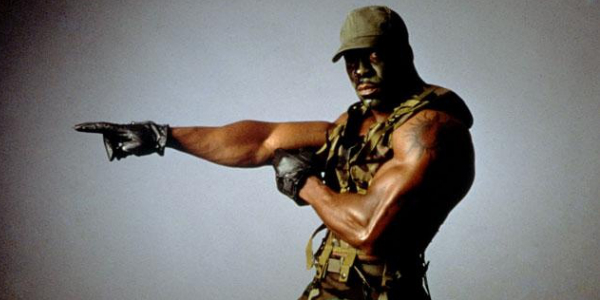
7. "The Fat Chick Thriller, That 70s Guy" Mike Awesome
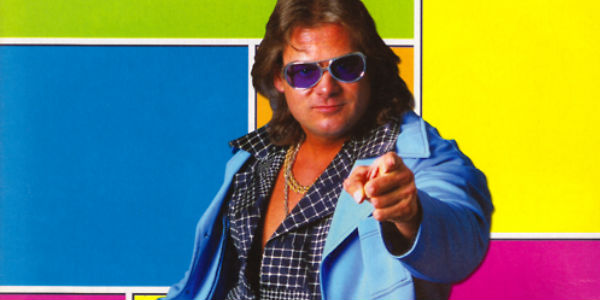
Being a 6'4" and 300 pound guy who is able to fly through the air with the greatest of ease should be enough to make someone marketable in pro wrestling, right? Well, if you're Mike Awesome and it's 2000 in WCW, that's just not happening. Awesome debuted as the still-in-theory ECW World Champion and attacked Kevin Nash. It wasn't long until Awesome was lost in the shuffle though, and was re-packaged as a dude who loved fat chicks (because wrestling fans - who are oftentimes attending shows with plus-sized women, or women in general - want to see a 'wrong kind of heat' gimmick that is so demeaning on a personal level). When that didn't work, he began driving a Partridge Family-type bus into arenas and became "That 70s Guy," because Fox's "That 70's Show" was so popular. Amazing.

6. Tank Abbott

So, yeah. This one is an all-time blunder. Three years after his superstar-making turn in UFC's Ultimate Ultimate 96 tournament, a more out-of-shape than usual Tank Abbott made the leap into pro wrestling, signing with WCW as the apparent foe for similarly MMA-style gimmicked tough guy Bill Goldberg. Pro wrestling politics being what they are, that feud never materialized. Prior to the WCW Championship title tournament held at 2000's WCW Souled Out pay-per-view Russo initially booked Abbott (in a recall to his UFC days) winning the tournament (and likely soon thereafter dropping the title to either Bret Hart or Jeff Jarrett, the top WCW wrestlers injured at the time of the tournament). When that didn't fly for WCW's ownership, Abbott was later booked as yes, the biggest fan of cruiserweight boy-band Three Count. https://www.youtube.com/watch?v=5sz7z-Z0dhw


5. NWO 2000

https://www.youtube.com/watch?v=eKoiXDYG_7Y Let's all remember early 2000 and the time that Jeff Jarrett, The Outsiders, Bret Hart, Scott Steiner and The Harris Twins re-formed the New World Order. Or, let's not. The worsening of Bret Hart's concussed state is directly related to his match with Goldberg as a NWO 2000 member after Starrcade '99. As well, after kicking off the whole nWo in 1996, Scott Hall then left the group he initiated as a part of this angle, too. Ultimately, Vince Russo and Eric Bischoff reuniting and splitting the company via the Millionaire's Club versus New Blood storyline killed the New World Order - all via the terrible "NWO 2000" storyline.

4. Bash At The Beach 2000

Consider the idea that within an eighteen month span, WCW had two championship matches involving Hulk Hogan where someone literally laid down in the middle of the ring and allowed someone else to win the World Heavyweight Championship. The second time that most unfortunate of finishes was booked for Bash At The Beach 2000, Vince Russo cut a promo that should've actually resulted in the company closing up shop at that moment, because Russo literally revealed everything about the backstage interworkings of the promotion. Hogan was booked to lose versus Jeff Jarrett in a World Heavyweight Championship match at Bash at the Beach in 2000, a decision that Hogan over-rode by invoking his the "creative control" clause in his contract regarding all Hogan-related booking decisions (mainly because Hogan had no direction for his character after losing). Jarrett "laid down" for Hogan and lost, then afterwards, he "shot" on Russo saying "That's why this company is in the damn shape it's in; because of bulls**t like this." Russo then publicly fired Hogan as he re-booked the main event to be Jarrett and Booker T, with Booker T claiming his first heavyweight championship win. In retrospect, the whole scene is bizarre, surreal and needs to be seen to be believed.

3. Powers That Be

https://www.youtube.com/watch?v=lfYeNIpia_g Well, the easiest way to expose the wrestling business in a negative manner is to have the two shoot heads of creative engage in a worked storyline in which they bury the talents that they must book as a shoot in the promotion.Insofar as storylines to kick off a new creative direction for a company (and also to make the company that the new creative team is taking over appear inept and unhip), it's likely the worst of all possible ideas. WCW as a company still had considerable strengths when Vince Russo took over. The in-ring product was strong, they had a budget to spend on talent, marketing and promotion, and they still had a plethora of performers instantaneously recognizable by mainstream eyes under contract. Of course, Vince Russo focused on none of that, and instead took the cameras backstage. Vince Russo was smart to realize that one of the key components of the Attitude Era was the reveal that Vince McMahon owned the WWF. Of course, Vince was already a not-so-well known owner as a part of the kayfabed WWF world, and was an on-screen commentator. The reveal of his ownership was not something that initially intrinsically effected the whole WWF product, either. Rather, it was funneled into just one feud in his on-screen wrestling product, a 16-month feud with Steve Austin. From there, McMahon - now a well-defined character that was interwoven into WWF's kayfabe universe - expanded his character throughout the product. In missing that one small (yet ultimately large) piece of the puzzle, Russo set himself up for failure from the beginning.

2. Turning Goldberg Heel

Sometimes, there's points when, as a booker, you have to leave well-enough alone. For example, that one time when WCW turned Bill Goldberg heel because it would be a "shocking swerve" that would "get more eyes on the product" didn't really need to happen. By 2000, WCW was in a place where the company was truly on its last legs. Anyone still avidly watching WCW needed a scorecard to keep track of the champions and storylines, as in the year 2000 alone there were 24 different actions taken surrounding the WCW Heavyweight Championship, 10 different United States Champions, 20 Tag Team Championship holders and the Television Championship was literally in a garbage can. Yeah, it was pretty hectic. But amid everything, WCW fans still believed that Goldberg was the man who was above the fray. He was a tough, take-no-prisoners babyface who was still largely bulletproof as a character, minimal wrestling and promo skills be damned. Of course, when he turned heel at WCW's Great American Bash in 2000, all of Goldberg's strengths (save his intensity, which the crowd could no longer get behind) were stripped from him in one heel turn. On occasion a heel turn plays to a wrestler's other strengths negated by being a babyface. However, when a wrestler has one truly great marketable commodity, taking it away from him to "swerve the fans" is a terrible move.

1. Non-Wrestler WCW Champions

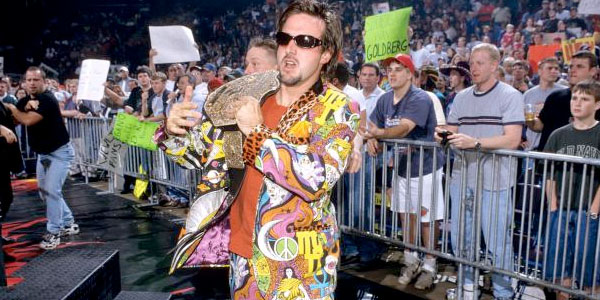
World Wrestling Entertainment does marketing tie-ins to their new films all of the time. Usually, they involve their contracted wrestlers that are in those films, as well, a purely wrestling-based tie-in involving a non-wrestler would be pretty silly, right? Right? Right? Or, if you're WCW in 2000 promoting Ready To Rumble, putting the WCW Heavyweight Championship on David Arquette makes all of the sense in the world. There are pro wrestlers who will happily tell you that "wrestling belts are props." Yes, that's true. But the key is that they're big shiny props meant to highlight to fans who the people are who are the most eye-catching and noteworthy parts of a promotion. In 2000, WCW wanted you to know that it wasn't Goldberg, DDP, Scott Hall, Kevin Nash, Jeff Jarrett or any other wrestler who was noteworthy, but rather the actor who starred in their wrestling-themed movie was more important than all of them combined. Even more ludicrous is that the match in which Arquette won the WCW Championship was a tag match where Arquette and Diamond Dallas Page wrestled Eric Bischoff and Jeff Jarrett, the man getting the pinfall becoming champion. So, yes, it could've been worse if say, Eric Bischoff were champion instead. Arquette remained champion until Slamboree, a pay-per-view based around the idea that the cage used in the Ready to Rumble main event would be used in a real-life WCW main event. Not since Hulk Hogan wrestled Zeus in 1989 had something like this been broached in wrestling. Of course, wrestling in 1989 versus wrestling a decade later are two COMPLETELY different industries. And, yeah, there's also that time that five months after David Arquette was champion that Vince Russo suffered a concussion after being speared through a cage door by Goldberg and (accidentally) winning the WCW Championship. This occurred at a NItro event where the native New Yorker was wrestling Goldberg in a steel cage in Uniondale, New York. The heel non-wrestler wins the world championship in his hometown, where he has no hometown fans. What kind of booking sense does that make?

Contributor
Contributor

Besides having been an independent professional wrestling manager for a decade, Marcus Dowling is a Washington, DC-based writer who has contributed to a plethora of online and print magazines and newspapers writing about music and popular culture over the past 15 years.