WWE: 15 Most Powerful Non-Wrestlers Ever

Wrestling as an industry is ostensibly all about the talent performing in the ring, but in truth, without the influential members of the industry behind the scenes, it would never be where it is today. A great deal of people who aren€™t involved with in-ring action help make the industry what it is, and they deserve a moment in the spotlight as much as any wrestler. With that in mind, and to give them the attention they deserve, this article will explore fifteen powerful non-wrestlers in the industry throughout its history and the effect they had on it. It should be noted that by no means is this a comprehensive list of people who have influenced the industry, but the point here is to indulge the status of some of the names who have shaped the industry in major ways since its inception. Agree with the rankings? Disagree? I invite you to share your thoughts in the comments. Enjoy!

15. Jim Cornette

Jim Cornette Jim Cornette is one of those guys who has done a little bit of everything. He's been a manager, a color commentator, a booker, a creative director, and he even opened his own promotion€”even though it failed years later. If you're looking for someone that's done it all outside of the ring, Jim Cornette would be high up on that list. Just consider his resume, which include stints with NWA, WCW, his own Smoky Mountain Wrestling, WWE, TNA, and finally Ring of Honor. Cornette had an impact no matter where he went, whether it was through creative direction or management of talent. Who's Cornette managed? How about Owen Hart, Yokozuna, Sherri, Christopher Daniels, Jeff Jarrett and the British Bulldog, just to name a handful. Where has Cornette had creative influence? How about TNA, WCW, WWE and Ring of Honor. The guy has a portfolio that's tough to match, and other than his failed venture at his own wrestling promotion, arguments can be made that he was successful no matter where he went. Cornette has won several awards, both inside the industry€”such as being inducted into the NWA Hall of Fame€”and outside, via established wrestling magazine companies, including winning Best Booker, Best Non-Wrestler, and Manager of the Year. Cornette deserves a moment on this list.

14. Tony Schiavone

Jim Ross was to WWE as Tony Schiavone (left, above) was to WCW. Simple as that. During the Monday Night Wars, you either got an earful from good ol' JR, or Tony Schiavone. Both were at the top of their game, and it enhanced an already unforgettable time in wrestling. When you consider the influence he had on WCW as their primary voice, it's impossible to leave him off this list. Schiavone had a brief stint with WWE, but we all know he made his mark in WCW. He was the lead announcer for Monday Nitro, and subsequently for WCW's Thursday program Thunder. His voice is inextricably linked to both, as one couldn't picture an old WCW match without Tony's voice running through their head. That's how good he was. He was WCW's guy, and that was that. An incident famously occurred when Eric Bischoff, then WCW President, forced Schiavone to reveal on-air that Mick Foley was going to win the WWE Title on Raw. This was done to retain viewership since their show was live, and WWE's was taped. Only it backfired. An estimated 600,000 households changed channels to watch Foley win, and the WCW never recovered in the ratings. Schiavone apologized to Mick Foley, and in reality, he did the guy a favor. But that's a small hiccup in an otherwise great career.

13. Shane McMahon

Shane-O-Mac! Vince McMahon€™s only son was thought for years to be the heir-apparent to the wrestling throne. Many forget that Shane (above, right) got his start with the company as a referee, and didn€™t really enter the storyline fold until 1998 when Vince began his historical feud with Stone Cold Steve Austin. After that, he began to interject himself into more prominent roles, such as taking over the Corporation (then the Corporate Ministry, but whatever), getting involved in matches, and making several heel and face turns as the years progressed. But then came Shane€™s crowning on-screen achievement. On the final Monday Nitro, WCW€™s flagship program, the WWE was set to announce their takeover of WCW, and as such did a simulcast of the two shows in the last segment. Vince walked out on Raw to announce the takeover, but an indelible moment ensued as Shane walked out on WCW television. This was a historical, as no one from WWE had ever set foot on WCW television while under contract, much less one of the rival€™s owners. Shane announced that he was, in fact, taking over WCW, and so began a fan-favorite storyline of WCW vs. WWE. Shane made a bunch more sporadic appearances as the years went on, but then in 2010, he did something unexpected. He left the WWE. Not in the storyline fashion, but for real. Shane left to carve out a niche for himself away from the company, and so far, he€™s been successful at it. We may never see him in a storyline role again.

12. Dixie Carter

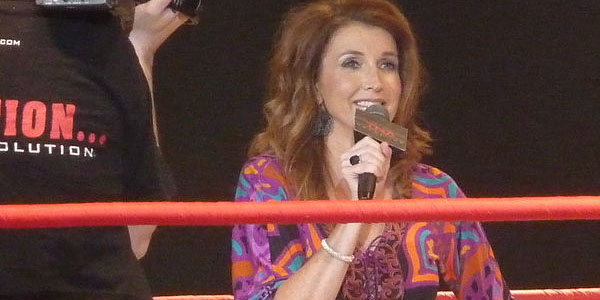
Dixie Carter is President of TNA, and her family owns the majority stake in the company. Currently, even thought it may not seem like it, TNA is the only major competitor to WWE. Granted, they are nowhere near to the scale WWE is, and many reports suggest they aren€™t even profitable. But despite all this, Dixie saw potential back in 2002, and she took a shot on the rightful assumption that there€™s room for more than one horse in the billion-dollar professional wrestling industry. Under Dixie, TNA secured it€™s first ever television deal with Fox Sports Net, followed by their current provider Spike. Under Dixie, TNA became the first wrestling promotion in a decade to directly oppose WWE Raw on television, despite Impact being bumped back to Thursdays due to ratings. Still, this is not an accomplishment that should be discarded. Development of future talent is where TNA seems to flounder, and the production value for TNA seems so low, and storylines so uninspiring, that it€™s hard to get anything off the ground. In the end, Dixie not only took a dying company and resurrected it, but she also tried to put it in a position to compete. And by the way, all this was accomplished in a male-dominated industry. Misogynists be damned, Dixie Carter deserves a spot on this list.

11 & 10. Bobby The Brain Heenan & Gorilla Monsoon
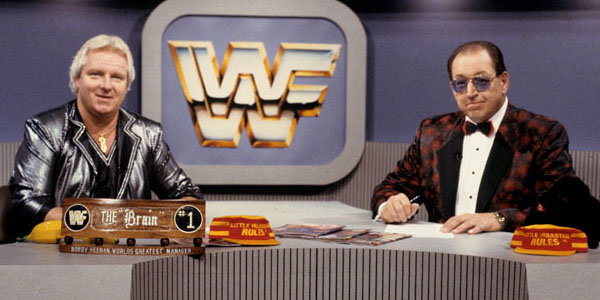
A slight cheat, but when you talk about Gorilla Monsoon (above, right), it's not as a wrestler. The overwhelming majority of his in-ring career for the WWE (then the WWWF€God that€™s awful) was in the 60€™s and 70€™s, well before the modern product was hashed out, and even before the first Wrestlemania. So forgive the excursion, but his main contribution to the industry came at commentary. Gorilla Monsoon took over the prominent play-by-play calling duties in the early 80€™s, and fans immediately received him warmly. Sitting beside Jesse Ventura, perhaps the modern originator of the heel commentary, and later by the brilliant Bobby Heenan, Gorilla acted as the perfect counterbalance to their banter. He knew and understood the action as it was happening in the ring. Gorilla brought an expert eye into the play-by-play booth, calling out moves, educating fans on technique, and showing genuine sentiment when the situation called for it. Gorilla stepped down after ten-plus years, only calling matches sporadically, and mostly at pay-per-views. He died in October of 1999, but his name will never be forgotten in the industry. And no, this isn€™t just some sentimental statement. Do you know the name of the spot where wrestlers stand before they come out to their music? It€™s right behind the curtain, and it has a name. It€™s called the Gorilla Position, a name that€™s stuck to this day in homage to the man who used to watch events all night long from that very spot. His memory isn€™t going anywhere.
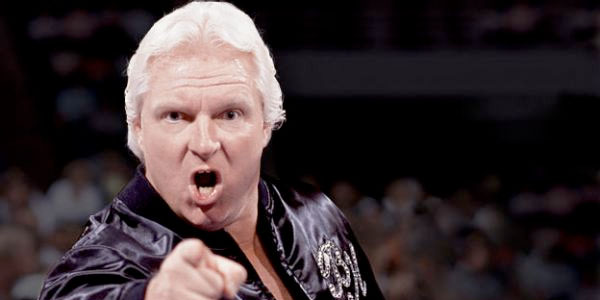
Bobby "The Brain' Heenan is a no-brainer (terrible pun intended). One of the greatest wrestling managers of all time, and the most brilliant heel commentator, Bobby Heenan easily earns a spot on this list. He deserves tremendous appreciation for the work he did, both as a manager and a broadcaster. He was the consummate heel, the blueprint for every heel manager moving forward (and even wrestler, when it came to promos). And he was smart. This wasn't some obvious dolt strolling out toward the ring just waiting to get pummeled. Heenan aligned himself with main-event talent, and as such helped foster the careers of a great number of wrestlers, including Andre the Giant, Mr. Perfect, Ravishing Rick Rude, Paul Orndorff, and Big John Studd, just to name a handful. However, it's his commentary skills beside his longtime friend Gorilla Monsoon that left impressions on fans. He may not have been the very first broadcaster to openly root for the bad guys, but he was the certainly the best. Not just back then, but ever. No one has equaled, let alone surpassed, the razor wit that Heenan exuded during his broadcasts. There's never been a more entertaining duo on commentary than Bobby Hennan and Gorilla Monsoon. The two just clicked, fed off each other, and created a ridiculous cache of one-liners and memorable moments. As far as teams go, Heenan and Gorilla are unequalled.

9. Ted Turner

Consider the landscape without Ted Turner. Would the WWE be where it€™s at today without being pushed to the brink by Turner€™s WCW? Seriously doubtful. Like it or not, Ted Turner buying NWA and turning it into WCW was the catalyst for the greatest era in professional wrestling. Really, it was the perfect merger. WCW's southern style of wrestling was a perfect contrast to the WWE, as they focused more on heavy in-ring performances. Turner owned TNT, and he used it to not only showcase WCW, but also to reach out to a broader audience. It worked. For a period of time, anyway. But let€™s not forget that during this period of time€”the Monday Night Wars€”wrestling was forever changed. Two heavyweights competing for the attention of a growing wrestling audience made the product better than it had ever been before. Even today, many fans pine for another promotion to rise up and challenge the WWE. We all know how the story ends. Turner sold WCW to WWE, and the Monday Night Wars ended with Vince and company on top. But he still had an impact on the industry itself. Something not likely to be forgotten.

8. Linda McMahon

Linda McMahon has done a lot more for the industry than you think. Linda negotiated the lion€™s share of business deals with outside vendors, including their action figure line. She was also instrumental in landing WWE€™s television deal with Viacom, and in the classification of their wrestlers as independent contractors rather than employees. In fact, it wasn€™t just Vince that founded Titan Sports, which went on to become the current WWE product we all know and love. It was also Linda. Linda has spearheaded projects ranging from college grants, to funding public facilities, to a WWE voter registration campaign, to a WWE education program, to assistance in the Special Olympics. She€™s made the WWE into a company involved in many things outside the ring, and her legacy continues to resonate today. It€™s been long speculated that the company€™s abrupt turn toward a PG product was a direct result of her preparing to launch a senate campaign two years later. In fact, not long after the PG turn, Linda left the company to focus on her political career. The fact that she lost twice hasn€™t shifted the company away from their mainly PG stance thus far. Still, it€™s impossible to reject the work she€™s done for the company, and her many contributions outside the ring. Linda McMahon helped make the WWE into something more than just a wrestling show.

7. €œMean€ Gene Okerlund

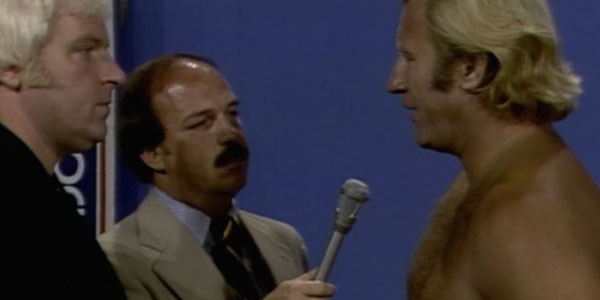
Every time you saw Gene Okerlund (above, centre) in the back talking about upcoming matches or pay-per-views or whatever, he was basically coming up with material on his own. The WWE would tell him to talk for x amount of minutes to fill time, and he€™d do it as though the entire thing was scripted. The timing was always fluidic, and the subject matter was ever-evolving, but Mean Gene was the consummate professional, and someone who could take the ball and run with it perhaps better than anyone in the history of the industry. A lot of announcers today are tasked with similar things, but Gene was the originator of the role. And remember, he had no one to help him. No one to converse with. It was just him, a microphone, and a camera. Gene made it all look so easy. So seamless. He took the backstage interview to new heights. His promotional work became the golden standard for the industry. Oh, and remember his hotline? Only he could pull that off. Gene is a Hall of Famer, inducted in 2006, and deservedly so. The guy set the industry standard for event promotion, and remains to this day one of the most respected people ever to be involved with professional wrestling.

6. Vince Russo

Vince Russo is perhaps the most polarizing person on this list. Some love him for his role in saving the WWE and creating the Attitude Era, some despise him for his controversial booking and disjointed storylines that may have led to the collapse of WCW. Either way, Russo stirs up strong emotions in fans. Many people don't realize Russo (as head writer) helped usher in the Attitude Era. Mick Foley's trifecta of characters (some darker than others), Austin vs. McMahon, Degeneration X, Val Venis, and even the Godfather were all under Russo's watch. The WWE shed it's polite, family friendly skin, and became a promotion geared toward rowdy teenagers and adults who understood the industry. But what worked for Russo in WWE didn't in WCW. He left WWE in late 1999, and went to work for WCW to try and recreate the magic. But perhaps the biggest mistake he made was in the pacing of the product. Russo was known for erratic booking, controversial storylines, and surprising heel/face turns. This worked in WWE because they were both desperate for change, and that change was parceled out in correct amounts to rising stars. It didn't work in WCW. He had a run in TNA from 2002 to 2012, and now rumors suggest he may even be back in a consulting role. Whether this leads to anything permanent is anyone's guess, but given the current status, he may only be putting himself in position to take over another sinking ship. What's clear is whether you love Russo or hate him, there are plenty of reasons for both.

5. Jim Ross

When talking about the best announcers of all-time, the conversation begins and ends with Jim Ross. Only JR could fill the spot vacated by Gorilla Monsoon. His energetic style, informative play-by-play, over-the-top reactions, and trademark black cowboy hat all factored in to make JR not just an announcer, but a WWE character himself. Throughout his tenure with WWE, he was involved in more than just announcing. He mentored and coached upcoming announcers, such as Michael Cole, and for a while he even took on the task of finding and developing in-ring talent. JR actually started his career as a referee in NWA before it was WCW. Later in the company he would team up with Tony Schiavone as a color commentator. Just let that sink in for a moment. The guy made his WWE debut at Wrestlemania 9, and worked alongside Bobby Heenan. Again, that was his debut. Yeah, there were some bumps in the road, namely when Vince fired him in €™94 after his first attack of Bell€™s palsy (a disease many of us didn€™t know existed before JR), but he was back in the company later that year. JR worked through other attacks of Bell€™s palsy, sometimes as the lead commentator, sometimes behind the scenes coaching a young Michael Cole. JR's visceral reactions to matches are priceless. He was never one to hold back. He knew the right time to let emotion out, and he did so in perfect synchronicity to our own reactions, making it something of a perfect balance. In September of 2013, JR announced his retirement, but many suspect the WWE simply would not offer him a contract extension following the aftermath of the WWE 2K14 panel prior to SummerSlam. But it doesn€™t matter. The WWE forgives, and I believe we€™ll see JR back as a guest commentator one of these days.

4. Eric Bischoff

It's easy to hate on Eric Bischoff, but what he accomplished deserves respect. In the modern era, he€™s the only guy to take a wrestling promotion head-to-head against the WWE and win. In fact, he won for 84 consecutive weeks, and even in the times before and slightly after, the WCW was a healthy company. He forced WWE to take risks, and elevated competition between the two powerhouse wrestling promotions. We as fans came out winners. Bischoff, then WCW President, convinced Turner executives to pump more money into the product, giving them a production value matching WWE. He also convinced Hulk Hogan to come over, and later Scott Hall and Kevin Nash. These three would form the base of the most popular stable in wrestling history, the New World Order. In what became a WCW versus NWO storyline, just about every on-screen persona chose a side, and as a result this overlying concept dominated the company for years. But his biggest downfall was rallying the company around aging stars, when the competition was developing younger superstars left and right. It became hard for Bischoff to develop intriguing storylines around guys who€™d done it all. Bill Goldberg was the only new star, and it just wasn€™t enough to compete with the WWE. Bischoff was a guy who had some incredible ideas, capitalized on them, and perhaps rested on them for too long. None of that takes away from what he accomplished, however. We can list his failed projects, but that€™s pointless. The guy did what he did, and he left an unforgettable mark on the industry. That€™s all that needs to be said about Eric Bischoff, and that€™s why he€™s on this list.

3. Stephanie McMahon

It was something of an afterthought that Shane would become the king once Vince stepped down. Only that didn€™t happen. When Shane left the company, it wasn€™t a king at all who took the reigns behind the scenes. Stephanie McMahon became the heir with an eye for the business, and the company was only happy to give her one heckuva of nepotistic ride to the top. You can plant any title you want on her, but she has more influence on what happens than almost everyone in the company. Whether she€™s earned this right is very much up for debate. Two problems surround any challenger to Stephanie. One, nepotism. Two, without any direct challenge from an outside company, Stephanie will always be in control. They have a virtual monopoly. Oh, and let€™s not forget, Triple H (Paul Levesque) is now high up the food chain as Chief Operating Officer, making them the premier power couple in the industry. If you don€™t care for how they do business, or the creative direction of the company, you€™re pretty much screwed for the time being. Stephanie should be commended for all that she€™s done as a woman in a male-dominated industry. Preferential treatment or not, she€™s made her mark, and that€™s something worthy of note. But recently, the company seems to be floundering in its storylines and decision-making. The handling of Daniel Bryan, Batista, CM Punk and others has been downright perplexing. Even Stephanie and Triple H€™s on-screen characters vacillate from heel to face on a seemingly week-to-week basis. Not all the blame is on Stephanie, but if it€™s to be believed that her and Triple H are eventually taking control of all aspects, this is not a good sign. Like it or not, she's here to stay.

2. Paul Heyman

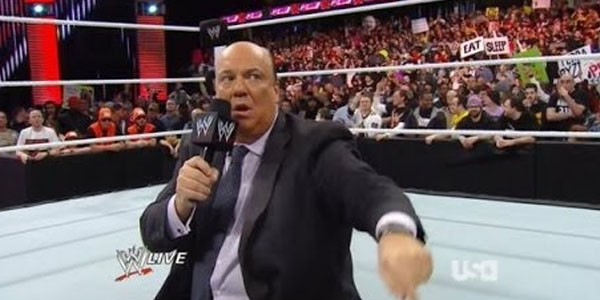
Paul Heyman has done it all, and he€™s done it with a degree of mastery that makes each endeavor look as though he was born to do it. He got his start as a manager, and to this day it€™s still what he€™s best known for (probably since he currently manages Brock Lesnar). When it€™s all said and done, Paul will go down as the greatest manager of all time, eclipsing Bobby Heenan. His ability to propel characters through his mic work has been proven time and time again, and it€™s such an established tenet, that now when Heyman talks, everyone listens. Why? Because he€™s awesome at it. He€™s been known to shoot, too, which make for some of the best Heyman moments. But Paul Heyman made himself into a force to be reckoned with when he took over NWA Eastern Championship Wrestling and eventually broke free and created Extreme Championship Wrestling. He wanted different, and ECW was different in every way. The moves were riskier, the attitude was edgier, the characters and matches were€well, hardcore. This wasn€™t a PG-type of show. It was geared toward adults for the most part, but also teenagers who were tired of WWE and WCW. Make no mistake whatsoever, Heyman should be credited for the Attitude Era as much as Eric Bischoff should. The success of ECW showed people that this type of wrestling worked, and the WWE shamelessly copied a formula that Heyman created. Even though ECW didn€™t survive the end of the wrestling wars, it continued on as a brand with WWE when they purchased it. Heyman continued as well, only this time as a broadcaster, commentator, manager and booker for the WWE. He€™s still there (despite a several year hiatus following an ECW storyline dispute), only this time he€™s the top-level manager in the company. Remember, if it wasn€™t for CM Punk€™s infamous promo during which he said, €œI€™m a Paul Heyman guy,€ there€™s a chance Paul isn€™t back with the company right now. His list of accomplishments and contributions to the industry are far too lengthy to mention here. He€™s worked for, and been successful in three of the biggest promotions ever in WCW, ECW, and WWE. His legacy will outlive him.

1. Vincent Kennedy McMahon

Who else? The patriarch, the architect, the boss. Vince McMahon is synonymous with professional wrestling, not just the WWE. His father, Vincent J. McMahon, created, owned and ran the World Wide Wrestling Federation, which, of course, went on later to become the WWE under his son. Vincent J. had major health concerns in the 80€™s, and as such eventually allowed his son to take over and acquire the company. Enter the modern era of professional wrestling. Everything from entrance music, to Wrestlemania, to TitanTron videos, to fireworks, to big pay-per-views, to just about anything you can think of is all attributed indirectly or directly to Vince McMahon. Wrestling was very regionalized before McMahon took the reins. He expanded the company beyond its northeast territory, and even signed talent away from other regional promotions. Soon, the company was the biggest in the world, and the model had changed before anyone realized it. Wrestlemania was an unmitigated success, and it produced big name stars like Hulk Hogan and Andre the Giant, who helped usher in this new era in professional wrestling. Television contracts, the expansion of pay-per-views, merchandising, production value, and more were all under the watchful eye of McMahon. He made wrestling into more than just in-ring action for a few hundred fans in an old, dusty arena. He made it into a worldwide brand. And, oh by the way, the reign isn€™t over yet. Despite the elevation of Triple H and his daughter Stephanie, it€™s a well-known fact that he€™s still the boss. Simply put, Vince McMahon is professional wrestling. And vice versa.

Contributor
Contributor

I like to write about stuff. If you like the stuff I write, follow me on twitter @danemamula. Or, for my wrestling thoughts, @smartwrestling.