WWE Trades Ruthless Aggression For PG | Wrestling Timelines
The WWE PG Era was trash. The WWE PG Era was treasure.
The 2000s was a turbulent time for WWE. It started wonderfully, if you only watched the TV product.
Stone Cold Steve Austin was written out of storylines in November 1999, but no matter; as early as January 2000, Triple H had evolved into a main event-level heel. The Rock replaced Austin as the top babyface, more than adequately, by setting a record of consecutive attendances in excess of 10,000 fans. Underneath, powered by Chris Kreski’s overlapping, brilliant creative direction, Kurt Angle, Edge and Cstohristian, the Hardy Boyz, and countless more acts connected with the people. 2000 was arguably the best year in WWE history; while it was not as fascinating nor as futuristic as 1997, the top-to-bottom match quality had never been better.
A greying cloud hovered overhead the entire time. In December 1999, the media went after the WWF. Wrestling was over, and outrage is timeless. Various hit-pieces were penned by various outlets, generating so much attention that Coca-Cola pulled its sponsorship. WWE’s TV carriers got spooked by the pressure applied by the Parents Television and Media Council; Vince McMahon, in turn, made halfhearted, on-off attempts to tone down the product. With the Rock and a returning Steve Austin drawing so much money, a lack of sponsors was not an issue. And then, in 2003, with the Attitude Era fad dead, the Rock and Austin left.
2001-2004 was a dismal four-year period defined by stale headliners and an inability, even unwillingness, to replace them. Despite a ‘Ruthless Aggression’ rebrand - that didn’t actually happen for very long, and was a fan-designated “era” that WWE itself only marketed retrospectively - the tone and format of WWE television remained largely unchanged. Triple H performing mock-necrophilia; Kane assaulting Lita; Kurt Angle assaulting Sharmell; just because they didn’t take place across 1997-2001, doesn’t mean they were not Attitude Era storylines.
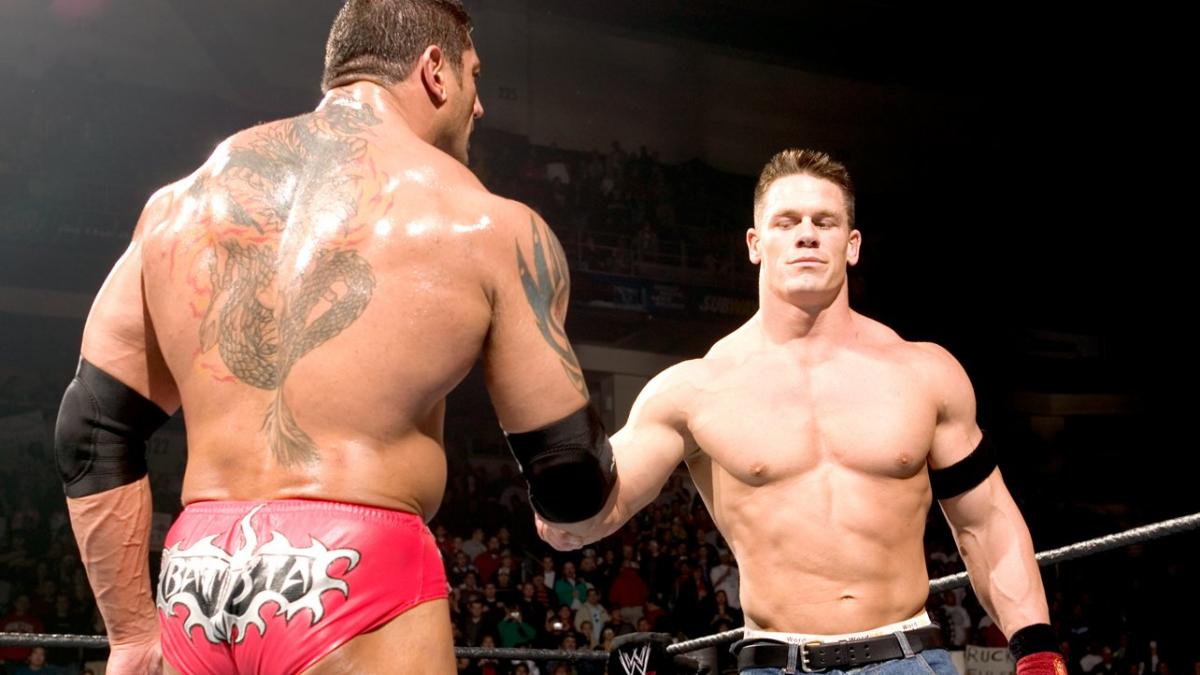
Stars were made eventually, John Cena and Batista most notably, but business wasn’t great. In order to ensure maximum profits, WWE had to behave.
Or pretend to behave…