15 EXACT Moments Failed WWE Attitude Era Gimmicks Actually Got Over
The stars of the WWE Attitude Era will endure forever - but when did it all begin?
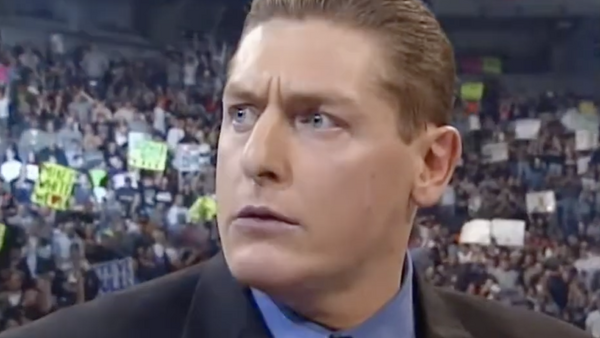
Contrary to an established narrative - a narrative established by Vince Russo because it makes him look like a super genius decades later - not everybody was over in the WWE Attitude Era.
WWE itself likes to parrot this take because they love to celebrate their own history and their mighty victory over those yahoos down in WCW. If you actually watch the Raw archive on Netflix - or at least, the few episodes from 1998 that Netflix feels they can get away with airing - the amount of library-silent undercard matches is astonishing. And it’s not as if the vast majority of these matches dragged on. With Russo in full effect, they barely reached five minutes. The fans did not have time to get bored; they just weren’t that bothered about the vast majority of the roster or the art of pro wrestling itself. Vince Russo did pen storylines for most of the guys, but while unforgettably stupid, they weren’t effective.
The Road Warrior pop was a real thing; the LOD 2000 pop decidedly was not. You could hear an ant piss on cotton when anything under the NWA banner happened. Even in 1999, when the WWF was smashing WCW’s face in with a fire extinguisher every single week, Mr. Ass was floundering, the Acolytes couldn’t buy a reaction, and Attitude Era fans generally were just waiting for the next sighting of cleavage.
Hell, even Mick Foley wrote in his first book that he was disappointed by the crowd reaction to his unhinged performance at King Of The Ring 1998. Foley was a great character across 1996 and 1997, and was the promotion’s most valuable asset not named Stone Cold Steve Austin in the first half of 1998, but he only got all the way over in the second half of the year when he adopted a more goofily vulnerable side to his Mankind character.
The wrestlers who did get over got over in a big way - and this is when precisely they did it.
15. The Dudley Boyz (January 24, 2000)

The Dudley Boyz felt a little bit Public Enemy when they first turned up on WWF screens.
This was less than ideal, since the Public Enemy were an infamous bust, but suboptimal parallels were there to be drawn. Both teams carried tables around. Both teams were rotund. Neither updated their ECW look when entering the big time, which had the obvious effect of them looking small-time. As mad as this might read, if you’ve ever heard Bully Ray open his mouth and say literally anything over the past several years, he was actually smarter than that.
The Dudleyz quickly disassociated themselves from the bingo hall with a camouflage attire update and started to use tables more liberally. In the sort of blistering sprint that is sadly lost to time, they lost to the Hardyz at Royal Rumble 2000 in the first-ever Tables match. It was incredible, a rapid-fire crowd-pleaser in which every table wreckage followed the next with a glorious blast beat rhythm. As great and as influential as the match was, Bubba Ray and D-Von truly got over and developed an identity the next night on Raw when they blasted Terri Runnels through a table.
As bleak as this was, following Jeff Jarrett’s move to WCW, a vacancy had opened up for misogyny - and the Dudleyz were very interested in the role. If anything, their one flaw was working too hard.
Fuelled by the confidence of getting over in the Fed - something that had eluded many ECW acts - the Dudleyz very quickly started whipping out the catchphrases and never looked back.
14. William Regal (September 18, 2000)
‘Steve’ Regal didn’t get over at all under the baffling Real Man’s Man gimmick, in which he squeezed his own orange juice and made his own lumber. Even if the man behind the persona wasn’t struggling badly with an addiction to painkillers, the gimmick was simply too bad even for a healthy and motivated Regal to pull off. It was a bizarre New Generation-coded thing at least two years out of date - which in 1998 might as well have been 20.
When he returned, clean and with a reputation rehabilitated by a cult gem against Chris Benoit on the 3rd annual Brian Pillman Memorial Show, the WWF simplified his presentation. Regal was always sensational playing a smug posh idiot, and the character worked to even better effect against the backdrop of the sleazy Attitude Era. Regal was able to do a Right To Censor-style bit, only it was actually entertaining watching him attempt to play Pygmalion with the horny, uncouth, male-dominated WWF audience. They loved watching the snooty Brit getting his butt kicked and drinking piss. While not quite to the same extent, much like Kurt Angle, Regal got the bit over on night one. He returned as William Regal in late 2000 and, on Raw, performed a reading of William Shakespeare’s Hamlet. In a phenomenal idea, classical music played over the top - which proved an awesome contrast to the interrupting Steve Austin’s reworked Disturbed entrance theme needle drop.
Regal was immediately brilliant, wearing a wonderfully besmirched facial expression as Austin walked down the aisle. This grumpy version of Austin was a bit of a vibe-crusher, but he was so great here, blasting Regal with the Stunner like it was the easiest thing in the world and immediately walking back up the aisle.
13. The Hardy Boyz (October 17, 1999)

In 2026 - and this has been the case for years - there is too much good wrestling for any of it to make a significant impression. Or perhaps “immediate” is the more accurate word to use.
It’s still possible for a wrestler to get over, in this era of banger fatigue, by building an excellent body of work. AEW’s Kyle Fletcher has exploded over the last two years doing precisely that. But there’s so much well-worked if familiar back-and-forth pro wrestling available to watch multiple times every single week that the idea of a breakthrough match is as dead a concept as kayfabe.
The Hardy Boyz were not over when introduced to screens in 1998, nor were they over when they first captured the WWF Tag Team titles from the Acolytes on July 5, 1999. In the Attitude Era, title wins were so frequent and thus meaningless that they no longer functioned as a marker of success or popularity. The matches weren’t silent, exactly, but arena roofs remained intact - until the Hardyz, alongside Edge and Christian, reinvented the Ladder match at No Mercy 1999.
It was an incredibly dangerous and surreal spectacle, so brand new and out of control that it was almost difficult to register. It felt like something ECW would get around to in a few years before the WWF would rip it off a few years later still - and yet it was happening right in front of you, rendering you a gibbering wreck with every demented, terrifying spill from a death-defying height.
The No Mercy 1999 ladder match was a colour out of space, a feat so influential that wrestling has literally chased the high for 27 years since.
12. Edge And Christian (April 24, 2000)

The Brood was not over. It doesn't matter how much Adam Copeland likes to revive and rewrite his own history; the stable was a cool entrance away from being included on Worst Ever lists.
Edge and Christian, alongside the Hardy Boyz, got over instantly at No Mercy 1999. The Ladder match was so mind-blowing that all four men received a standing ovation in its immediate aftermath. The Hardyz were a bit more over, though.
They were the more exciting high-flyers, and even in late 1999 and early 2000, Jeff’s daredevil charisma and heartthrob looks cast him as the breakout prospect. He was also given and prepared to execute the most dangerous, memorable stunts. Edge and Christian really took off not from the top rung of a ladder, but when they turned heel and presented themselves as arrogant pricks that had invented this new tactic called “cheating”.
They first played with being condescending a*seholes the night after WrestleMania 2000, when they talked down to the “second best” Hardyz for not quite being as great as them at the pay-per-view. On the April 24, 2000 Raw, they had already started to refine this new act. Performing commentary duties for the Chris Benoit Vs. Road Dogg match, they unlocked a new level of arrogance by teaching Jim Ross, of all people, some insider wrestling lingo. They were set to wrestle the New Age Outlaws at Backlash, so they wanted to rough Road Dogg up first.
“JR, in wrestling circles we’re here to do what’s known as a “run-in” - because we’re going to wait until Road Dogg is winning, and then “run in” to the match and cause him to lose”.
With a brilliant use of deadpan, they taught Jim Ross how to suck eggs when they were still a bit green. That’s good, deluded stuff.
11. The Godfather (July 27, 1998)

Charles Wright was not over. Ever. In three distinct eras.
In the dying embers of the Golden Era, as Papa Shango, he was so lost in the ring that he could not even locate it to interfere at WrestleMania 8, leading to an all-timer of a botched finish in the Sid Justice Vs. Hulk Hogan main event. He was Kama the Supreme Fighting Machine in the New Generation era, but he sure as sh*t wasn't a wrestling machine. In the Attitude Era, before the WWF realised what to do - or rather not to do with him - he was a crap member of the Nation of Domination.
The "Godfather of the Nation" was a nickname to begin with before Charles Wright underwent a full-on repackage in the summer of 1998. It was on July 27, 1998 that the Godfather was first accompanied to the ring by sex workers on Raw, during which he received his first pop by proxy (he soon earned them by himself with genuinely good crowd work). The Godfather would barely wrestle; instead, he'd offer the services of his staff to his opponents. This was, on many levels, a winner of a gimmick.
Firstly, the Godfather won several matches by forfeit. This was clearly a successful tactic; by 1999, the Godfather, a lumbering and frankly talentless oaf, had procured the Intercontinental title once fought over by master technicians.
Secondly, his opponents got to blow their beans, so they didn't mind missing a trip to the pay window.
Thirdly, the fans did not have to endure a terrible Godfather match.
That's harsh - and the Godfather was an awesome talker whose booming voice was perfect for his catchphrase call-and-response - but not untrue.
10. D'Lo Brown (June 2, 1998)
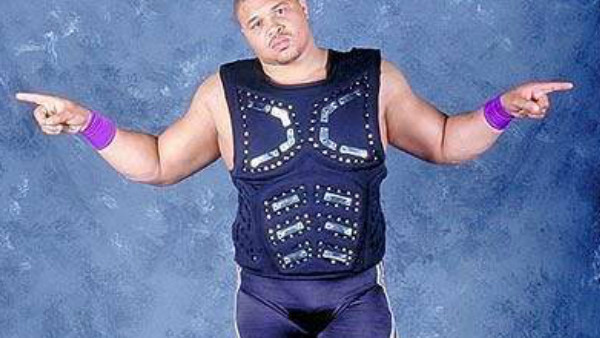
D'Lo Brown was not a failed gimmick per se; he was just a guy the WWF saw something in and used to stock up the Nation of Domination.
He had personality, but was mostly confined to the background - until, in a different era in which the WWE wasn't over-produced to a brutal death, he started to really go over-the-top with his strut and wobbly head crowd appeal. D'Lo was one of the better workers in the wretched 1998 midcard, and he was a charismatic dude who knew how to dominate the screen and grab your attention, but he needed something else. The more comedy-leaning '98 Nation of Domination was led by the Rock; consequently, through little fault of their own, they were thought of as the guys who stood next to the star. However, in the Attitude Era, wrestlers were encouraged to go out and get themselves over. D'Lo had put himself in the mix with his head wobble and his willingness to bump big for Steve Austin in early test runs of vehicular stunts, and was paid more creative attention deeper into 1998.
On June 9, 1998, D'Lo Brown lost to Dan Severn via an abdominal stretch/leg trap submission combination. Said to have suffered a torn pectoral muscle, this was storyline pretext to give him a gimmick: the chest protector. This was a golden bit. It allowed D'Lo to play a disingenuous heel who was not actually that injured, which further brought out his dormant personality. Moreover, it enabled the babyfaces to display their intelligence by targeting D'Lo's back when performing aerial moves.
A really fun bit that actually became funnier as a running gag the longer he wore it but blatantly no longer needed it.
9. Rikishi (December 27, 1999)

Rikishi enjoyed and endured a strange WWF career in the 1990s.
As a Headshrinker, he was a former World Tag Team champion when the belts were worth a damn. That might as well not have happened when he was briefly promoted as a man who wanted to “make a difference” and improve the prosperity of urban communities. He wasn’t exactly a credible role model, considering he couldn’t even help himself. The gimmick bombed. So too did the ‘Sultan’, an antiquated foreign menace with his tongue supposedly cut out. If that were true, he couldn’t have fantasy booked his son Jey to break Bruno Sammartino’s days-held World title record on his podcast years later.
He bounced around the indies before another late 1999 repackage as Rikishi Fatu and then quickly ‘Rikishi’. This wasn’t exactly promising initially; it was a Yokozuna rip-off and, you could argue, a literal diminished return. ‘Yokozuna’ at least means a grand champion sumo wrestler; ‘Rikishi’ is simply the translation of any old sumo ham-and-egger. His ring attire caught the eye, in that Rikishi displayed his bare, ample, and ultra-dimpled ass - and while he wasn’t over during his first appearances, fans did soon respond to his deadly-looking piledriver finish and cool array of throws.
He was first thrust together with Too Cool, accompanying them to the ring for their challenge of Tag Team champions the New Age Outlaws on the December 27, 1999 Raw. The Outlaws retained as a result of X-Pac’s interference, but Rikishi saved his new mates by sending DX fleeing. He was invited to dance by Too Cool, and this daft but endearingly wholesome bit of juxtaposition worked instantly. The crowd exploded and didn’t stop popping until Rikishi did it for da Rock.
8. Shane McMahon (January 18, 1999)
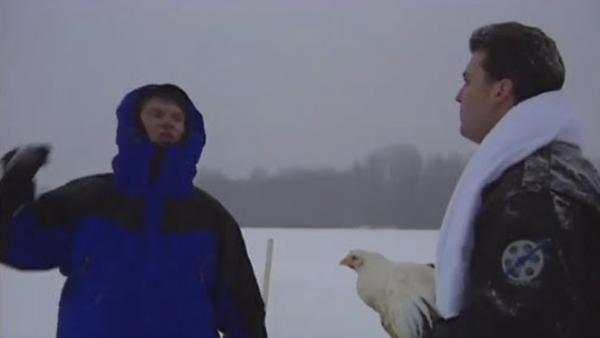
Shane McMahon was originally introduced as a WWF regular in August 1998 by his dad Vince on the premiere of Sunday Night Heat. He was there to do commentary like Vince before him. It was a weird period. Shane was cocky and was flanked by two babes, but he wasn’t an overt heel. It was hard to tell whether you were meant to like him as a hip young guy, or what. He was insufferable, so it didn’t work, but this was just an experiment designed to loosen him up and make fans aware of him ahead of his run.
Shane evolved into a proper character when he turned babyface, by aligning with Steve Austin - but only to set up a swerve-turn at Survivor Series 1998. Shane refused to count Austin’s pin over Mankind, stopping at two and flipping Austin the bird. This drew a monstrous reaction, but anybody could have screwed Steve Austin and drawn boos, even Tiger Ali Singh. Shane’s dramatic timing was strong, his cowardly sprint away from the scene even better, but for a few weeks, he was just a smirking background player with one default setting: smug. The first time fans “got” Shane and his distinct brand of charisma was when he trained his dad for the 1999 Royal Rumble match. Shane became a hyperactive brat so arrogant that he thought his powers of motivation and hype-man act alone could build Mr. McMahon into a WrestleMania headliner.
Shane was absolutely full of sh*t, of course, but his extravagant level of confidence was a winning act. “Catch the chicken! Get that chicken! Get the chicken!”
So in love with the sound of his own voice that he never shut the hell up, even once, this incredible skit is where it all clicked.
7. New Age Outlaws (December 15, 1997)

It’s almost a shame that the babyface D-Generation X act was such an overnight sensation. By April 1998, the Road Dogg and Bad Ass Billy Gunn had an unforgettable bit of crowd interaction down pat, and it was echoed across every arena at deafening volume every night. After trying halfheartedly to run with them as heels in a crap feud against LOD 2000 and the Disciples of Apocalypse, the WWF quickly embraced the fact that DX were babyfaces, and had them do racism to make that clear. 1998 was a very different time.
It was the only correct decision - but Road Dogg and Billy Gunn were genuinely excellent as heels. They were obnoxious, yes, but they were also actual failures, as the Roadie and Rockabilly, who had to do transgressive things to get ahead. For a few months, they were nasty pieces of work who generated elusive heat because they weren’t perversely entertaining. They were rotten cheating bastards who didn’t deserve to win, and they got over big in 1997 by putting a shocking, ultra-violent twist on the scoundrel trope before ultra-violence was normalised.
The famed dumpster angle is considered the point at which they got over. The scene was scary, and Jim Ross sold it to his apoplectic best. He was probably genuinely frightened. The impact was diabolical; there was no way that Cactus Jack and Terry Funk were able to adequately protect themselves.
But on December 15, they helped Shawn Michaels and Triple H kick the sh*t out of the Legion of Doom in a hair-shaving angle before joining the stable officially months later. Shawn was great here - he didn’t respect anything or anybody, but gave Dogg and Gunn a “not bad” nod, in a great show of restraint that actually meant something - and Hawk’s hair was an iconic and sacred thing to destroy.
6. Triple H (April 20, 1998)
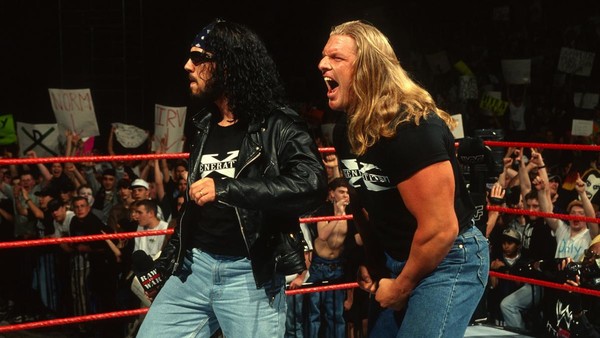
While he had displayed flashes of personality in 1997, and was dragged to a brilliant effort by Cactus Jack on the September 22 Raw, Triple H was not exactly over: he was stood next to the guy who was over, after spending a year stood next to the girl who was over, and this was laid bare every time he went 20 minutes and bored everybody stiff. He was, post-Rick Rude, the third most over member of the three-person D-Generation X stable. Considering how much faith had been placed in him, he was a failure. A tedious failure.
It’s ironic that Triple H would later market himself as the ‘Cerebral Assassin’ - a ruthless mastermind so clever that he was able to take over the very company under the McMahon-Helmsley Regime. It’s also ironic that this became a shoot; after a decades-long campaign, Paul Levesque now presides over WWE as head booker.
That is because Triple H first got over by playing to drunken college kids in the transformative spring of 1998. Triple H was clever enough to sense that being dumb was in vogue, and they didn’t see him as a teetotal impostor because he shared their puerile sense of humour. Almost as soon as Shawn Michaels went on hiatus as a result of his career-threatening back injury, Triple H and the new DX turned face, and let the fans in on the joke. The new DX was over straight away - the lads in the stands loved telling everybody to suck them off - and this penile obsession informed a stunt designed to retain the audience in the desperate Monday Night Wars era.
Basically, Triple H vowed to piss on the audience with his massive wang before revealing that it was in fact a giant water gun. The fans loved it because they were young, dumb, and full o’ c*m.
5. Ken Shamrock (August 3, 1997)

He was a weird one, Ken Shamrock. He was selectively over. Sometimes he came off like a total badass with an unparalleled intensity that sent the crowd f*cking nuts. His act was sometimes a bit cringeworthy when it looked like he felt what he was doing was too fake. Even when it was all too real - as with his WWF debut proper against Vader at In Your House: A Cold Day In Hell - it was too stiff for the given audience. In the ring, he could be a bit boring, as if he was trying to talk himself through the mechanics of it all and not just simply “being”.
He was over, then not over, then over again. The material and his handling of it dictated his popularity. He could not headline with Shawn Michaels, but he could, appropriately enough, wreck dudes to awesome effect in the Lion’s Den cage. While it didn’t always last, he first got over and honed his red mist-drenched psycho character at SummerSlam 1997. Prior to that, he was mostly a credible killer who let his grappling do the talking. This wasn’t big nor broad enough for the world of the WWF.
At SummerSlam, were he to defeat the British Bulldog for the European title, the Bulldog would have to eat dog food. This didn’t happen; Bulldog threw the dog food over Shamrock, who went bat-sh*t mental and got himself disqualified. Various referees and officials tried to calm him down, but they became targets for his frenzy. This ruled so goddamn hard; Shamrock went so mental that he almost dropped various refs on their heads, throwing them down on the mat so hard that he seemed to temporarily forget that this WWF lark was actually a work. The hard-way busted mouth added to the idea that he was livid.
He screamed “Stay out of my way!” - which was later tweaked to “I’m in my zone”, which wasn’t quite as good. Strange to get a catchphrase out when you take leave of your senses, but whatever. It worked a lot of the time.
4. The Rock (March 29, 1998)

It’s hard to determine at which specific point the Rock got over because he seemed to do something very cool and or funny every single week from December 1997 onwards. This was in stark contrast to a failed babyface run so poorly received that fans actually demanded his death.
Was it the time when Steve Austin sent a ‘316’ message to his beeper? As much as the Rock’s bug-eyed expression is used as a meme reaction to this day, possibly not. The Rock didn’t make a building explode after that. When he and Austin were the final two men standing in the 1998 Royal Rumble match, the crowd didn’t light up at the prospect of two stars throwing hands; they were waiting for Austin to win. In an even more heavily used meme, the Rock was sensational when he rolled his eyes at Faarooq in a backstage segment at No Way Out 1998 - but still, people mostly thought of the Rock as a funny background guy who could pop you by chewing the scenery a few minutes at a time.
It might have all clicked when Rock was interviewed by Gennifer Flowers in a pre-taped interview at WrestleMania 14. Rock was incredible. His line “He’d probably be a hung jury, if you smell what the Rock is cooking” was irresistibly arrogant and hilarious word play, and the realisation instantly hit. You didn’t just want to laugh at this dude making a fool of Faarooq when he wasn’t looking; you could listen to him and piss yourself laughing for minutes on end.
There’s never been a more doomed feud than heel Rock versus babyface Faarooq. Absolutely nobody was cheering for that poor bastard.
3. Essa Rios (February 13, 2000)

Essa Rios?
If you don't think Essa Rios was over, you probably weren't a Fed fan from the United Kingdom. He was a Sunday Night Heat stalwart, and that was the only programme that British fans were able to watch for free on Channel 4; Raw and SmackDown were only accessible if you paid eye-watering money for a Sky Sports package. Aguila (later Papi Chulo) was just a guy doing toned-down quasi-cruiser stuff until he was repackaged as Essa Rios. And, frankly, until he was paired with Lita.
Lita was an overnight sensation in the WWF.
Not to get too Jerry Lawler about things, but teenage boys were particularly enthused by Lita because, well, her thong was visible above her waistline and a buxom lady had more chance of getting over in 2000 than Perry Saturn. This helped, obviously, but the WWF hired scores of model types that were the Tom Magee to Sable’s mega-breasted Hulk Hogan. B.B. didn’t get over, for example, even though the WWF marketed her as the Kane of giant cleavage, in that you weren’t allowed to see until the moment was just right. Lita got over, and did so pretty much immediately.
On February 13, 2000, Essa Rios “debuted” on Sunday Night Heat in a win over Gillberg. He was flanked by Lita, whom Kevin Kelly perved over literally four seconds into her debut. Rios won within a matter of seconds, and then Lita also got over in what might actually be record time: she scaled the top turnbuckle and mimicked Essa’s moonsault. The fans lost their minds. Lita was very charismatic, but this also worked because it was so unexpected. The men in the light heavyweight division were barely permitted to do spectacular stuff; watching a woman do something so awesome was genuinely unheard of.
It was great, but also grim, in that Rios won a title and the commentators could only say “Yeah that’s OK, but have you seen how fit his valet is? Jesus!”
2. Stone Cold Steve Austin (March 23, 1997)

When did it happen? When did the failed Ringmaster truly start to become bigger than even Hulk Hogan?
It didn’t happen at King Of The Ring 1996. Stone Cold Steve Austin’s speech was incendiary, and there was a murmur of excitement in the crowd when Austin swore, which simply didn’t happen, but he worked a dark match against Yokozuna at SummerSlam after a diminished return match against Marc Mero at In Your House: International Incident. Austin drew a significant reaction, when he started calling out Bret Hart with an obsessive menace, but fans didn’t jeer him as much as they chanted “We want Bret!”
Austin was sensational throughout the build, but in a different time, the fans hadn’t yet realised that they were allowed to cheer him. Also, they still adored Bret, who they’d missed in the summer.
Their intoxicating brawl at Survivor Series 1996 generated intense crowd heat, but the broader WWF audience often lagged behind the Madison Square Garden hardcores. More fans started to back him as a love-to-hate winner when he kicked a horde of ass but still cheated at the 1997 Royal Rumble, but he still hadn’t reached the glass shatters/audience erupts phase. This happened after WrestleMania 13. He didn’t become a megastar that night, but he did become a new, irresistible breed of hero.
His teeth stained red with blood, his constant, defiant movement with which he both sold and let his public know that he’d never stop fighting, his absolute refusal to quit in the face of searing agony that only he could ever bear: this moment is etched in WWE folklore because it - like Austin himself - felt as real as it gets.
1. Chris Jericho (April 17, 2000)

This one will probably prove contentious, because many people reckon that Chris Jericho got over huge, immediately, upon his debut.
And he did. Fans were hyped big-time by the Countdown To The Millennium nu-vignette campaign, and the more in-the-know ones knew who was coming - and of his glittering reputation as a charismatic workrate God. Jericho's famous verbal joust with the Rock on the August 9, 1999 Raw Is War is considered an all-time great moment in the history of the flagship - but it was a better pop and entrance than promo. Not all of Jericho's stuff landed. Knowing where he was and what worked there, he went overboard and tried to get one too many catchphrases in.
Ironically, the move up north went south almost immediately, too; Jericho struggled to adjust to the WWF style, and the boiling hot locker room he had pissed off let him know it, either directly or through clandestine backstage politics. Jericho was sloppy and - near-fatal for his particular character - bereft of confidence. He might have won the Intercontinental title for about a month, and worked Chris Benoit and Kurt Angle at WrestleMania, but that match was closer to good than great. The superb matches that were apparently part of the Jericho all-rounder package proved elusive - until he thought he'd captured the WWF Championship from Triple H in an all-timer of a babyface performance and Dusty finish on the April 17, 2000 Raw.
That's what ultimately did it for Jericho; he had finally entered a composed, emotional performance of real quality and substance.