10 DC Graphic Novels You Must Read Before You Die
You've googled all the big titles and seen all the movies. Now you must move on to these...
 DC ComicsIf youre a long time comic book reader, the chances are that quite a few of your friends, as newcomers to the genre (no doubt attracted by the big budget escapades of this summers Hollywood heroes), will be seeking you out and requesting a company-specific reading list or two. Thats fine, great even. The more the merrier, we say. ...And you wont mind at all, will you? Youll give them the usual Marvel or DC lists, the pinnacles, the paragons and the prize-winners, the ones that we all knew about and cherished for decades before the beautiful people finally took an interest. Youll go out of your way to recommend the books that made you proud to read comics in the first place. In so doing, youll be hopeful that, if your friends manage to read or obtain even one masterpiece from your careful selection, their personal library will be all the better for it and they might, just might, become a regular comics reader. If they ask about DC (and were including the Vertigo imprint as well here), youll tell them to go in search of the undisputed classics like Sandman, Watchmen, V For Vendetta, The Death of Superman, All Star Superman and Batman books like The Killing Joke, The Long Halloween, Arkham Asylum, Year One and, of course, the untouchable Dark Knight Returns. ...As well you should. In fact, those are the very books that no less an expert than DC comics itself likes to recommend at regular intervals. ...And with good reason, every single volume of every single book listed above is a stone cold classic; absolutely 100% perfect. ...But what of the (many) other great works in DCs archive? The books that are just as classic as those suggested above, but, for one reason or another, are slightly less celebrated? Also, what if you arent a long time fan? What if you happen to be a newcomer to this wonderful art form that we call comics? Dont worry, because here, well be suggesting 10 DC graphic novels for new fans to try out (once theyve checked out the more obvious ones, of course). If you yourself are a long time fan, it is doubtful that youll find anything here that you havent already read, but if you are new to the comics fold, then we guarantee that any one of the following selections will delight and entertain you in equal measure. Either way, we hope you enjoy the list! PS - most of these stories are available in multiple re-printings and volumes, so bear that in mind when reading. In the world of comics, one collection rarely constitutes an epic.
10. Kingdom Come
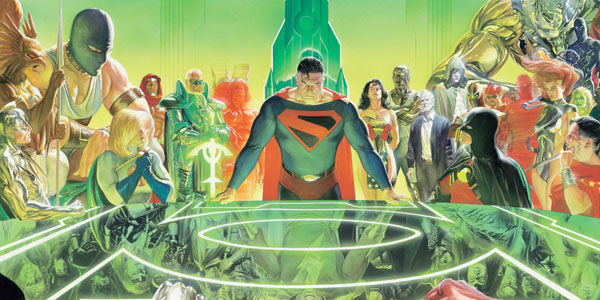 Sometimes, the only thing more epic, operatic and controversial than a major DC event is the Bible itself. This book uses the language and tone of the latter to embellish the power and grandeur of the former. It is a bit like Crisis on Infinite Earths meeting Days of Future Past...and causing an implosion of the universe in the process. ...To a soundtrack of Wagner. Written by Mark Waid, (a man who remains one of superhero comics true geniuses) and beautifully painted by artist extraordinaire Alex Ross, (who, in addition to comics work has done game covers for the Assassins Creed series, as well as artwork for Rolling Stone magazine) this book is nothing short of a sight to behold. Even a quick flick through its majestically rendered battle scenes should be enough to leave you thoroughly awestruck. Critics often pan the stiffness of painted figures in comics (and with some justification), but not so in this volume. Here, Alex Ross allows his characters a chance to breathe and move with an almost filmic grace. In the books quieter, more sombre moments, the characters act wonderfully, looking real enough that certain scenes could almost be the work of a photo journalist capturing an intimate portrait of this twilight of the superheroes. Ross did this by casting the characters in the book with models, people that he sketched, then painted, in lifelike poses. This also means that when Superman flies or The Flash breaks the sound barrier, it seems plausible, possible and even real. You cannot ask for a greater gift than that. Of course, Kingdom Come has its critics; many find its themes too broad, its attacks on 1990s comic trends too blatant and its depiction of superheroes too bleak. However, as a last word of sorts on superhero fiction, it is right up there with Watchmen in terms of scale and subject. There are parts that will wow you with their sheer moxie, parts that will make you cry (Captain Marvels noble sacrifice, for one) and parts that set the pace for the 2000s, and beyond, in comics. Witness an adult Damien Wayne (under a different name, of course) finally make peace with his estranged father, as well as Batman, Incs army of Bat-Bots, the first appearance of Red Robin, Superman and Wonder Woman getting it on and, (it has to be said) the original inspiration for Marvels Civil War storyline, amongst a great deal of other firsts. In short, this book is beautiful, elegiac and a work of art. By positioning DCs pantheon of superheroes as flawed, modern day Gods (and using Biblical prose to do it), Kingdom Come became arguably the most mature and considered superhero comic of the 1990s and it remains a blisteringly good read to this day.
9. Flex Mentallo: Man Of Muscle Mystery
 Now available (at last!) as a glorious, exquisitely rendered, hardback book, Grant Morrisons incandescent Flex Mentallo miniseries is, quite simply, a work of monumental, fevered genius. His first collaboration with artist Frank Quitely (as well as Quitelys big break into mainstream comics work), Flex Mentallo is part psychedelic memoir (described by the author as the life of an Earth 2 Grant Morrison), part drug-addled apocalypse (in the Revelations sense of the word) and part philosophical objection to the rugged realism practiced by Frank Miller and Alan Moore, amongst others. This absurd bildungsroman tells the life story of a would-be rock star, who is dying in an alleyway and telling us about comic books to pass the time. The story is so multi-faceted, however, that several layers of reality are referenced and explored, including one where the superheroes, facing their ultimate destruction in a Crisis on Infinite Earths style extinction event, band together and intentionally become fictional, giving rise to their paper counterparts in the process. The central story, however, concerns Hero of the Beach Flex Mentallo as he searches for his missing crime-fighting partner, The Fact. By turns scary (who is that holding your hand?), uplifting (the final scene is so breathlessly rendered that we confess to opening our curtains and scanning the sky when first we read it) and fiendishly clever (youll need to read it at least twice in order to fully appreciate it), this is Grant Morrison at his most flippant, as well as his most playful and sentimental. The art, on the other hand, is nothing but sublime. In the hands of another artist, the weird-factor of this story may have overshadowed the themes and intricacies within (and obfuscated the appeal of the simple, likeable protagonist that is Flex Mentallo in the process). Not so with Quitely, who renders every scenario and character, no matter how ridiculous or bizarre, with perfect anatomy and an attentive, sketch-like quality that never lets anything feel too serious (or, dare we say, arty) to be enjoyable. Quitelys unfamiliarity with superhero comics complimented Morrisons obsession with them in a way that makes Flex Mentallo one of the most original, unique and flat-out amazing pieces of graphic storytelling yet produced by anyone.
8. Batman: Strange Apparitions
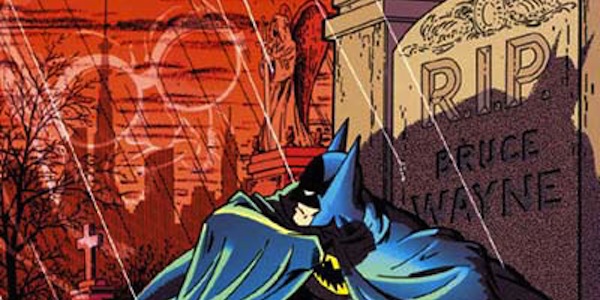 DC ComicsFirst published in the late 1970s, this collection remains the high water mark for many a Bat-fan to this day. Strange Apparitions gives us Batman at his absolute finest, stripped back to his core essentials. A nocturnal vigilante detective who is also an absurdly wealthy (not to mention sexually promiscuous) playboy by day; this is Batman as wish-fulfilment. Dont expect months long story arcs, multiple crossovers and futile, ego-driven attempts to reinvent the wheel here. In this book, Batman does what he damn well does best; he kicks seven shades of sh*t out of the bad guys, then he retires to his penthouse (no wayne Manor here, kiddies), to brood, perchance to hook up with his gorgeous platinum blonde squeeze, Silver St. Cloud. If it sounds simplistic, dont be fooled, the 1970s offered readers a darker, more complex Batman of a kind not seen since the Golden Age of comics. Writer Steve Englehart ensures that his depictions of Batman and his supporting cast (in particular the villains) are psychologically nuanced and satisfying. In this volume, Englehart introduces us to corrupt Gotham City Council Head Rupert Thorne, a wonderful foil for Batman who is part Carmine Falcone and part Modern Age Lex Luthor - although he predates both. He also makes great use of The Joker, with the forever-classic Laughing Fish story that, frankly, every true Bat-fan needs to read at least once. Elsewhere, Batman is pitted against Professor Hugo Strange, whom Englehart resuscitated after a 30-odd-year absence in comics, as well as the malevolent Dr. Phosphorus, another of his own, nightmarish creations. There are also some nice Penguin and Deadshot moments, too, as well as the debut of an all-new Clayface (before that became annoying), created by Len Wein (yes, the guy that came up with Wolverine). In fact, this collection of stories proved to be so popular that it became the foundation for the entire decade of Batman comics to come (and, as any fan will tell you, the 1980s was a great time for Batman comics). This volume also features the pencil talents of the wonderful Walt Simonsen, as well as the star-making turn of soon-to-be superstar artist Marshall Rogers, whos ruggedly rendered, yet also fluid and exuberant, style compliments the gritty tone of these stories perfectly. If dialogue heavy, overly complex and extraordinarily long Batman sagas arent really your thing, then this is probably the book for you. As daft and funky as the 60s TV show, but with a dark, deco undercurrent that permeates everything around it, Strange Apparitions remains not only the blueprint for the modern eras Batman, but also a damn fine set of timeless stories in its own right.
7. Scalped
 Probably the best crime comic of its generation, Scalped is a slow burning, meticulously researched account of life on an Indian Reservation in the dustiest, most parched corner of the USA. As a narrative, it is as rough as a glass bottle in your face and as cold and uncompromising as the resultant broken nose, but youll never read a book with more innate atmosphere or a better sense of pacing. Written by Jason Aaron and drawn by R.M Guerra, Scalped tells the story of Dashiell Dash Bad Horse, who fled The Rez as a young man and returns as an undercover FBI agent in order to infiltrate the organization of Lincoln Red Crow, a former Native Rights activist turned ruthless crime boss. However, the events of Dashs life simply provide the framework for a challenging and immersive storyline that is consistently surprising and uncompromising, whilst at the same time holding up a fractured mirror against the suppositions of the American Dream and loudly asking some important questions of it. Not only is Aarons gutsy, trashcan dialogue a joy to read (and speak aloud if no one is listening), it is also superbly accompanied by Guerras scratchy, off-kilter art style. This is a drama series, plain and simple and Guerra rings every drop of emotion from the scripts with his depictions of ragged, contorted faces and realistically proportioned figurework. Its all here, Native mysticism, sordid sex, Western style gun slinging and the best organized crime narrative this side of Scarface, all safely ensconced within the unique confines of a comic book series. During its initial run (it only wrapped in 2012), Scalped was every bit as essential as any must-see TV show, only better written and with a greater sense of purpose.
6. Batman: Mad Love
 This book, which comprises the original one-shot as well as several Animated series tie-ins, is about as fun as fun can be. Perfectly situated on the cusp between comedy and tragedy, Mad Love entangles madcap comic book zaniness with a bittersweet tale of painful emotional abuse. If you grew up in the 1990s and watched the masterful Batman: The Animated Series, then this is a book that captures the mood and feel of that show perfectly. It ought to, because the main story (and most of the bonus material) on offer here was written and conceived by Paul Dini and Bruce Timm, the guys responsible for that particular TV show. The main attraction here is the original Mad Love 1-shot, re-printed in its entirety. This tale provides Harley Quinns (proper) origin story, as well as several classic Joker moments (such as trying to kill Commissioner Gordon during a dentist appointment). Dinis Batman goes to some dark places, even in this story, ostensibly written for kids, but Timms bright and illustrative style stops us from thinking too much about all the sexual innuendo, naked spousal abuse and psychological torment on offer here. Bruce Timms artwork is vibrant and boisterous and, via the use of well-placed panels and deceptive simplicity of style, he conjures for us the definitive Batman, brazenly hewn (as he always ought to be) from a heady concoction of Nietzschean perfection and pure cartoon tomfoolery. His action scenes are superbly crafted, of course, but it is his dramatic scenes that really sell the character of Harley Quinn and make her relationship with The Joker believable and, at times, even touching. Elsewhere, we get a collection of other stories, mostly from the (very good) TAS tie-in comic, which includes brief outings for popular rogues Ventriloquist/Scarface, Roxy Rocket, Harley Quinn (again), Scarecrow (brilliantly drawn by Klaus Jansen), Clayface and Catwoman, as well as Timms Batman: Black & White chapter, which is, for our money, one of the best Two-Face stories ever told. Theres also the sassy John Byrne Joker story Laughter After Midnight and a totally ridiculous, but also supremely entertaining tale that pits Batman and The Demon Etrigan against Ras Al Ghul and a Jack Kirby-esque monster from Hell. Put simply, this is one of the best books DC has ever put out and will ignite a sense of childish glee into even the most ardently cynical Nolanite.
5. Green Lantern/Green Arrow
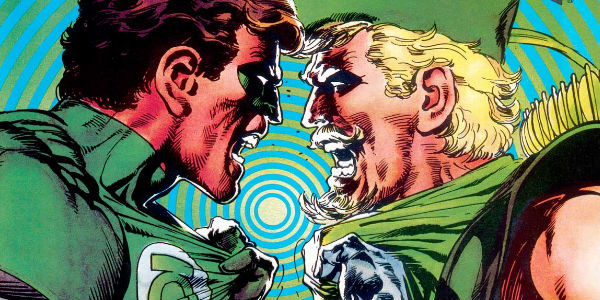 DC ComicsA headlong collision of right on 70s politics and finely tuned superhero storytelling, Green Lantern/Green Arrow marks a major turning point in comics history, as well as an terrific tale in its own right. In the early 1970s, Dennis ONeill was a young man with a major axe to grind. He chose to do this, like so many other angry young writers of his generation, via the medium of superhero comics. In this refreshing take on the cosmic superhero Green Lantern, Hal Jordan discovers that, as an agent of good, his true enemies are corrupt landlords, racist politicians, unscrupulous drug dealers and nefarious polluters that are robbing the earth and her people of so much, yet giving us nothing in return. By the time Sinestro and Black Hand show up in these stories, their super-powered threat level seems almost minimal compared to the greed and graft inherent to the American political system. His stars, Green Lantern, Green Arrow and Black Canary, respectively, travel across the United States in a series of stories that discuss Native American land rights, religion and the environment, amongst an awful lot else. This is what a regular superhero story might be like, if superheroes had been created by Jack Kerouac whilst he was On The Road, or perhaps scribbled on the back of a beer mat whilst Che Guevara was compiling his Motorcycle Diaries... The artwork, deftly handled by the great Neal Adams, is the perfect marriage of theme and form within a graphic story. Adams realistic, measured and anatomically accurate style highlights the seriousness and rugged reality facing the characters. This collection also introduces readers to a new Lantern, the cocky, stubborn and politically aware John Stewart, a character that went on not only to break new ground for black superheroes, but who also became an integral part of the DCU in his own right. DC also allowed the creators to deal with the issue of drugs in this series and they do so in a brutal way that seems fairly risqué even by todays standards, but must have been absolutely shocking for the time. In the hands of Adams, super-collisions feel as if they really hurt and dramatic moments are intense and often cathartic. In the hands of ONeill, our characters are taxed to their very limits, not by mad scientists, cosmic threats and galactic warlords, but purely by the dense entanglement of self-serving, entrenched evil that surrounds us all, every single day. Put simply, this series (nicknamed Hard Travellin Heroes by some fans) represents 70s comics (or any eras comics) at their very best.
4. Hitman
 DC ComicsOh, what a wonderful series Hitman was. Bombastic, brazen and thoroughly enjoyable, Hitman was possibly DCs most consistent title throughout the 1990s. The series follows the (mis)adventures of Tommy Monaghan, a small-time assassin that gains limited superpowers following DCs Bloodlines event. Instantly using his new found abilities for financial gain, Tommy becomes a hitman who takes care of super-people (or Meta Humans as DC tends to call them), as well as anybody else he can kill for money. With many 90s comics tending towards tragedy, violence, depression and super-serious event storylines, the Hitman series original run was like a cool, refreshing drink of water at the end of a long summers day. Gleefully tongue-in-cheek, outrageously rude (for a mainstream DC book, anyway) and chock full of pithy dialogue that felt more like a night out with your mates than a superhero story, Hitman was a real triumph. ...Not only that, but it got away with A LOT. Quite how Tommys antics consistently slipped under DCs radar is beyond us, but were very glad that they did. DC editorial just didnt seem to be aware the book existed, even as it tied in to any number of main continuity events. How else would they let the book get away with Tommy using his X-Ray vision on Catwoman, or getting an autograph from Superman right before he murdered someone? Garth Ennis furnished his hard-edged, everyman anti-heroes with a humour and camaraderie that instantly grounded and made believable any scenario they found themselves in (such as fighting zombified marine life in the Gotham City Aquarium, or battling a gang of vampires in the ruins of an old church). They each had well-rounded personalities, with personal knock-backs and sad spots that were just like those of real people. Even though they were, for the most part, drunkards and hired killers who lived in a world of flying super people and drank in a bar tended by a deranged demon, they truly felt as if they were genuine Human beings. Come to think of it, in this way, a lot of Hitman stories were like really f*cked up episodes of Cheers... Artist John McCrea drew this series in a chunky, Tonka Toy style that was cartoonish enough to aid the humour, but realistic enough to underscore the drama. Action scenes were (and are) his forte, but it was his subtle touches (stains and loose floorboards on the floor of the bar, for example), that made the locations in Hitman feel like real places and helped the characters to feel like actual people. To this day, Hitman, with its perfectly judged blend of action, humour and extreme violence, remains his best work. It is impossible to overstate just how much this series deepened DCs universe in the 1990s, or how sorely missed it is to this day.
3. Cosmic Odyssey
 Of all the big, blockbuster style, out of space adventure events that DC has published over the years, Jim Starlin and Mike Mignolas Cosmic Odyssey remains among the very best. In fact, I can only think of a few DC events where the stakes were as high, or higher, than they were in this one...The first Crisis, Zero Hour, Kingdom Come, Blackest Night...Thats about it. Put simply, the entire galaxy, perhaps even reality itself, is put into jeopardy by the Anti-Life Equation. Given a quasi-sentient, Godlike form by Starlin, Jack Kirbys unique concept is taken to its logical conclusion here, becoming so powerful that even The New Gods cannot hope to defeat it. Instead, they join forces with Darkseid (their greatest and most powerful enemy) before enlisting the aid of a team of heroes from Earth. The story here is mythic in both scope and execution and rarely does anything happen that isnt, quite literally, of earth shattering importance. These are DCs Gods, monsters and heroes occupying the same imaginary territory as Homers heroes in this storys seminal namesake. The series really explores the DCU as if it were a real place as well, with events on Rann, Thanagar, Xanshi and Earth all intertwining and impacting one another. And then, of course, theres the planet scene... In an act of brazen arrogance, Green Lantern John Stewart fails to save the planet Xanshi from destruction, forming the basis for the sober, mature character that he is today. The story is taut, dynamic and engaging throughout, with huge, meaningful events (many of which are still echoing in the DCU even today), occurring on almost every page. Science fiction and magic coexist in a logical way (which they always should in comics) and one walks away with the breathless feeling that nothing is impossible in DC comics, which is exactly as it should be. The artwork, provided by a pre-Hellboy Mike Mignola is energetic, hard-edged and strongly Kirby-fied. Vivid echoes of Mignolas future style can be seen occasionally (witness the Apokaliptian monster stalking Batman in the sewers), but, if he hadnt yet reached his gothic prime, his exuberance and enthusiasm combined to create an intriguing display of highly-pitched cosmic battles, exotic, imaginary locations and moments of gut-wrenching despair (such as the emotionally raw scene where John Stewart is contemplating suicide and Jonn Jonzz convinces him otherwise via no less a super-feat than reverse psychology). Oh, and Batman punches a God at the end.
2. The Invisibles
DC ComicsThe wildest, coolest, most psychedelic, punk rock, post-modern, anti-everything comic EVER produced, The Invisibles remains (for our money, at least) the best thing that Grant Morrison has yet written in his long and storied career. Put simply, The Invisibles is just beyond awesome. Beginning on the grimy streets of Liverpool, the story twists and turns into a manic fusion of pop art, classic literature, contemporary culture and the occult, with meditations on politics, sex, philosophy, terrorism, drugs, time travel, conspiracy theories and the nature of reality casually thrown in for good measure. Plus, it has a motherfungler of a plot twist at the end. Despite a somewhat slow start, the story goes on to successfully encompass just about everything youve ever thought of (and a good deal more that youve probably never thought of). There will be some reading this that wont understand (as bemoaned by the living creatures within language itself that are seen in one of the series most fascinating panels) and there will be others still who will find this series to be the equivalent of vigorously rubbing their exposed brains with a ghost chilli. To those people, we apologise in advance. For the rest of you, welcome to the fold. This story is also part of a real world occult experiment, as Grant Morrison created the character of King Mob to be a fiction suit for himself and a lot of the events that occur in the story were incited as part of Morrisons ritual chaos magic experiments. It also reached out and influenced the real world in other ways, too, becoming a primary influence on The Matrix movies and the music of The Mars Volta as well as more action movies and comic book series than there is space to name here. If William Burroughs had written a comic book on the side during his Naked Lunch, this is likely what he would have come up with.1. Jack Kirbys New Gods
 DC ComicsJack Kirby is the greatest genius to ever work in comics, as well as one of the finest and most influential artists (working in any medium) of the 20th century. That he still isnt being furnished with the proper amount of credit for his creations, even as more and more of them reach the big screen each summer, is nothing short of an abject travesty. In addition to being a pioneer of the medium, as well as one of the grand architects of superhero fiction, Jack Kirby disregarded more great ideas in a lunchtime than most creators will have in a lifetime. Kirbys long, illustrious career would take too much space to go into here (but, for those whos curiosity I just piqued, check out Mark Evaniers wonderful biography Kirby: King of Comics for the full account). Suffice it to say that, prior to New Gods, his career highlights had included creating (or co-creating) Captain America, The X-Men, The Avengers, The Incredible Hulk, Thor, Iron Man, The Fantastic Four, Silver Surfer and The Black Panther, together with most of their associated supporting casts and villains as well as literally thousands of other creations. However, Kirby felt that he was held down at Marvel. He had failed to get the credit he deserved (or very much money) for the characters that have since made billions of dollars worldwide. And so, in the 1970s, he was lured to DC with the promise of creative freedom and the opportunity to finally do things his way. Thus, for one brief, shining period, readers got to see the greatest imagination in the history of comics completely unleashed. The result was an amazing, forward thinking series of stories, collectively referred to as Kirbys Fourth World cycle. For a few months, the King of Comics was simply unstoppable. Titles like The Forever People and Mister Miracle, spinoffs like Young Gods of Supertown and a show stopping run on the Jimmy Olsen book (yes, you read that correctly) all connected and dovetailed together, forging a brave new continuum within the DCU. The backbone of all these stories, however, was New Gods. In this series, Jack Kirby attempted nothing less than a complete revamping of mythology, an overhaul of superhero fiction and the creation of a freshly rhizomatic sci-fi Bible that gleamed and shone in the wake of the brave new world that King Kirby was creating. It was a work of sustained genius that stood poised to re-wire the very fabric of comics themselves, with dreamlike future tech (Boom Tubes, The Anti-Life Equation and the tablet PC-like Mother Boxes), a hyper verbose writing style and the greatest splash pages that have ever been produced in the comics medium. ...Then, it was abruptly cancelled. Well always love Carmine Infantino as a great comics artist and editor and a monumental mind in his own right, but well never, ever forgive him for pulling the plug on Kirbys magnum opus and thus eviscerating the greatest masters greatest masterpiece in the process. As it turned out, DC treated Kirby just as badly as Marvel had and, although he came back and stitched an (editorially hampered) ending onto the saga years later, the story largely remains unfinished to this day. Still, looking on the bright side, we did get 11 issues of unfettered Kirby imagination. The late, great man might not be around anymore, but the most beautiful part of him, his mind, can still be visited and explored by pouring over his exquisite, dynamic artwork again and again. Because comics were not (and still arent) respected in mainstream literature or art, jack Kirby is still not seen for what he was; a genius with an imagination to equal Tolkien and an ability to describe dream states on paper that could rival even Salvadore Dalis. If youre new to comics, do yourself a favour and pick this one up. That way, you can bear witness to the medium at its very, very best. ...And thats it. 10 DC comics that dont usually make the lists, but that are all superlative, scintillating, stupefying...One might even say...Super. - CQ