What Happened After THE UNTOUCHABLES
Al Capone was nothing compared to what Eliot Ness faced next...

The story of Eliot Ness, the Untouchables and Al Capone is the stuff of legend. Although Ness himself died long before his exploits were mythologised in Hollywood, the lawman turned one time politician boasted one of the most extraordinary careers in US history - even going beyond his time in Chicago.
The subject of a successful TV series in the late fifties and early sixties, Ness' legend was further cemented thanks to 1987's The Untouchables, a big screen crime drama helmed by Brian De Palma, featuring Kevin Costner as Ness, and Sean Connery as a Chicago policeman determined to end Capone's grip on the city.
Both works were adapted from Ness' autobiography of the same name, but his story goes beyond tales of night time liquor raids, police corruption and the eventual trial that landed Capone behind bars. Way beyond.
The ending of De Palma's film ends on a relatively upbeat note for Ness, with the Prohibition agent greeting the news that the Volstead Act will be repealed by saying that he'll "have a drink". But what happened next casts doubt on the film's optimistic climax. For Eliot Ness, things were about to get much, much worse.
This is the story of what happened AFTER The Untouchables.
4. After Al Capone: How Eliot Ness Wound Up Investigating The Cleveland Torso Murderer

Following Capone's indictment for tax evasion in 1931, Ness continued to operate in Chicago as the chief of the city's Prohibition Bureau. He later relocated to the south, disrupting moonshiners in Kentucky and Tennessee, before finally being transferred to Cleveland, Ohio, where he would finally be appointed the city's Safety Director in 1935.
Ness' primary aim in Cleveland was to root out police corruption in the department by taking on the mob, which at that time consisted of figures like Moe Dalitz, to name but one. As Safety Director, Ness embarked on a campaign of reform in Cleveland - one that would come crashing to a halt as the city fell victim to one of the most infamous series of murders in American history.
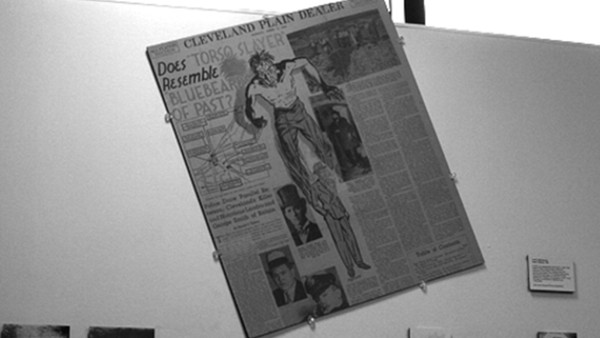
From 1935 to around 1938 (potentially even longer, some have theorised), Cleveland was held in the grip of the Cleveland Torso Murderer. In a three-year-gap, this serial killer - initially dubbed the 'Mad Butcher of Kingsbury Run' - is thought to have murdered some twelve-twenty different people, all of whom were killed via decapitation or dismemberment. The killer severed heads, genitals and doused his victims' bodies in a chemical solution to ensure identification was near-enough impossible, and that there'd be little evidence linking himself to the bodies.
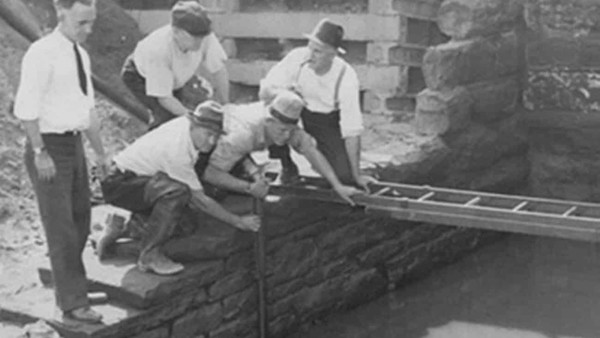
One by one, the police discovered more and more torsos in and around the Cleveland area. Only two were ever identified, a consequence of the Great Depression drawing thousands of impoverished workers to the area. Many took residence in some of the newly erected shanty towns in the city, and with few being city natives or having a fixed address, it became clear just how exactly the killer was targeting his victims.
For Ness, the Torso killings would prove to be his biggest challenge yet. While certain accounts and fictional adaptations may have overestimated his involvement with the case, Ness did at one time lead the investigation and was personally targeted by the Torso Murderer while they were active, with the remains of two victims having been placed by the killer in the view of his City Hall office.
Compounding the horror of this case further is the fact that the Torso Murderer was never caught. Just like Jack the Ripper, the Black Dahlia and Zodiac, he was never apprehended. But it wasn't a simple case of one day he was there and the next he was gone; the investigation into the killings was plagued with controversy, and Ness was right at the centre.
[Content Warning: the next page contains images of 'death masks' made from some of the Torso victims.]
3. From The Untouchables To 'The Unknowns': The Investigation Into The Torso Killings
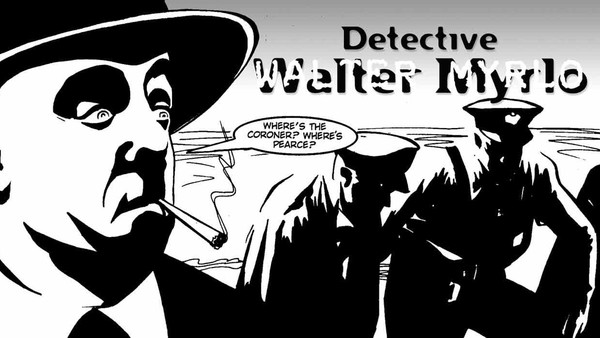
In Brian Micheal Bendis and Marc Andreyko's Torso, a comic that portrays a fictionalised account of the Cleveland Torso Murders, Eliot Ness becomes involved in the case once it becomes clear it's overshadowing his responsibilities as the city's Safety Director. Bendis, a Cleveland native, marshals the story expertly, and while liberties are taken (in the same vein as Alan Moore and Eddie Campbell's From Hell, a fictionalised account of the Whitechapel Murders), it serves as a superb approximation of the investigation, as well as Depression-era Cleveland.
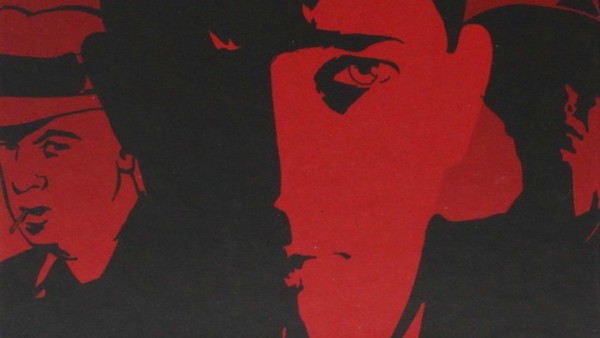
Ness is one of three protagonists in the comic, flanked either side on the original cover by detectives Peter Myrlo and Sam Simon, who become his 'Unknowns' rather than his Untouchables. Myrlo appears to be an analogue for real-life detective Peter Merylo, who worked the Torso case and was instrumental throughout the investigation.
One of the biggest roadblocks into making a breakthrough in the case was the difficulty in identifying the victims, as well as limitations in the then burgeoning field of forensic science. The fact the killer was so meticulous and ruthless exacerbated matters further, but it soon became clear who he was targeting - victims of the Depression who were pushed to the fringes in shanty towns and by insecure work.
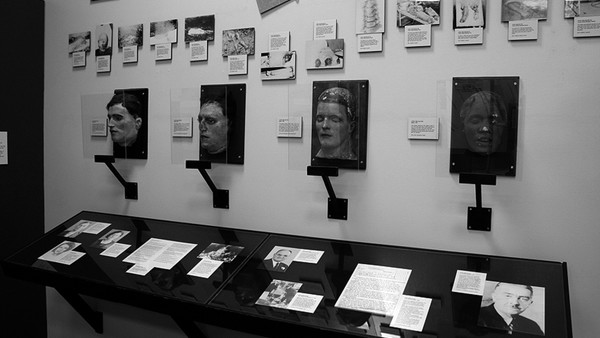
A grim pattern emerged. Investigators would discover a body missing its head, arms and legs - maybe even genitals - and attempt to pinpoint the time of death. Some remains were discovered days after the killer had struck, while others were found months later.
Investigators tried desperately to positively identify the victims, but the lack of physical evidence was the biggest stumbling block. So many victims had their heads missing, but for those heads that were retrieved, death masks were made and placed in public areas. Only two of the initial twelve victims were ever identified - Edward Andrassey, and Florence Genevieve Polillo.
Around this time, Merylo became convinced that the Torso killings were linked to a series of murders in New Castle, Pennsylvania. He rode the train between Cleveland and New Castle determined to find the killer, and even went undercover as one of the city's homeless in a bid to get further leads.
No suspects emerged, and as more bodies began to pile up, Ness and his fellow detectives grew impatient - leading to disastrous results.
2. How The 'Mad Butcher' Ruined Ness' Career
With more victims emerging and it becoming clear that the killer was targeting the shanties in Cleveland, Ness resorted to drastic - and callous - measures.
In order to deprive the murderer of his hunting grounds, on August 18, 1938, Ness raided and burned Kingsbury Run, an act that drew widespread condemnation from the public and the press. The killings stopped shortly after, but Ness' decision to burn the shantytown was justly criticised. The public turned against the once hero lawman, and when Ness finally decided to run for Mayor of the city in 1947, he lost by a landslide.
The decision to fire Kingsbury Run wasn't the end of the story though. That same year, Ness and detectives from the Cleveland PD homed in on one suspect - a surgeon and World War I veteran called Dr. Francis Sweeney. Sweeney, substituted for Gaylord Sundheim in the Torso comic (the pseudonym Ness himself ostensibly used to refer to the suspect), was interrogated personally by Ness and reportedly failed a polygraph twice, but they were unable to secure a conviction.
Ostensibly, Ness wasn't optimistic that he'd be able to convict Sweeney as he was related to Congressman Martin L. Sweeney. It didn't matter though. The doctor committed himself to a hospital shortly after Ness' interrogation, and he even sent the Safety Director threatening postcards up until his death in 1964 (something also echoed in Bendis and Andreyko's comic).
No other suspects as compelling as Sweeney emerged following his confinement, but connections to the Torso killings didn't stop there. Another suspect, Frank Dolezal, was arrested in 1939, and died under suspicious circumstances in police custody. The LAPD investigated another potential Torso killing in Los Angeles in 1939, but they found only animal remains. Eleven years later, the headless corpse of Robert Robertson was discovered in Cleveland, and while Robertson's profile matched up with other Torso victims, investigators concluded it was unrelated to the twelve deaths from 1935-1938.
The case went cold, and Ness never really recovered. Following his failed mayoral campaign, the former Safety Director suffered repeat financial setbacks and passed away before his autobiography would resurrect his hero status, with The Untouchables being published in 1957, three years after his death. The Torso Killings effectively ended his career, and it remains the case to this day that his (admittedly marginal) role in the investigation has gone neglected, with many preferring instead to focus on his exploits in Prohibition-era Chicago.
1. From Print To Screen - Will TORSO Ever See The Light Of Day?

Of course, there's a reason why I'm talking about the Torso Murders and Eliot Ness today, and it's because of Brian Bendis and Marc Andreyko's seminal 1998 comic.
Despite the prominence of the Torso Murders in the true crime genre, they've rarely ever been depicted in popular culture. In fact, not a single film has been made about the spate of killings despite their historical significance, although one filmmaker did come close in 2006.
Following production on Zodiac, it was reported that David Fincher would direct an adaptation of Torso for Miramax. The project fell through though, and the rights reverted back to Bendis. Movement on a Torso film had seemingly stalled from that point on, only for Deadline to report back in 2017 that Bourne alum Paul Greengrass would produce and direct a new adaptation of the comic, this time under the title 'Ness', with a script written by L.A. Confidential's Brian Helgeland.

Unfortunately, 'Ness' is now also dead in the water. Paramount Pictures dropped the rights for Torso back in 2018, leaving the door open for another studio to take a stab at the project almost a decade-and-a-half after the first attempt.
The difficulty in adapting Torso seems a little bizarre. In Bendis' own words (via THR): "It’s a cool true story that very little people know of... You think you know the story of Elliot Ness? You don’t. You know the story of serial killers? You don’t." The comic works so well because it taps into a well known figure in a story few are even aware exists. It could be the perfect companion to The Untouchables, given the necessary motivation, and yet every attempt at adapting the comic has been met with failure.
Torso is a superb tale, and the story behind the murders themselves deserves attention - as does Ness' twilight. Prohibition and Capone was only half the story. Those later years - dark and controversial as they were - need to be shared. The myth of Eliot Ness can't sustain itself forever.
Did you know what happened to Eliot Ness after The Untouchables? Would you watch a film based on Torso? Let us know in the comments below!