10 AMAZING Horror Sequels That Shouldn’t Have Worked
These sequels made no sense, and yet, couldn't have turned out better.
To avoid horror franchises growing stagnant, it's important for directors and writers to experiment. However, sequels can go too far, concocting wacky ideas that are impossible to be taken seriously.
Some follow-ups throw in 3-D gimmicks, which can came across as a cheap novelty. Others retcon earlier instalments out of existence, making the overarching narrative difficult to follow. Also, taking a slasher series into space is rarely a good idea, as Hellraiser, Friday the 13th, and Leprechaun prove.
Some of these pitches sound so silly, it's hard to understand how they weren't immediately rejected. Having said that, there've been a couple of horror sequels that knocked it out of the park, even though they seemed like they were destined to fail. Not only did they find critical and commercial success, a few of them surpassed the original and are directly responsible for rejuvenating interest in dwindling brands.
Although it's extremely ballsy for a sequel to change genres, retcon major components of the established lore, or continue a story that had a definitive ending, these ten entries pulled it off with flying colours.
10. Friday The 13th Part VI - Jason Lives

Even though the original Friday the 13th was hugely successful, the early sequels rarely deviated from the formula, causing the property to quickly run out of steam. When Jason Voorhees was offed in the fourth outing, it seemed like the slasher saga was wrapping up.
Although a fifth entry was released, it was reviled by the horror community since it didn't feature Jason, further compounding the argument that Friday the 13th should be laid to rest.
Instead, Tom McLoughlin co-wrote and directed Friday the 13th Part VI: Jason Lives, where the hockey masked maniac was brought back to life as an unstoppable zombie. On paper, throwing in supernatural elements six movies in could've come across as jarring and desperate.
Instead, this daring move resurrected the waning franchise. Rather than being another run-of-the-mill slasher villain, depicted Jason as an undead juggernaut gave him a more defining identity. The machete-wielding psycho was far more imposing, since there was no clear way of defeating him. Also, Jason's superhuman strength allowed him to maim, mutilate, and dismember in ways that were more brutal, memorable, and even funny.
Though Jason was intimidating prior to Friday the 13th Part VI, transforming him into an immortal ghoul made him iconic.
9. Unfriended: Dark Web

Unfriended centres around a group of high-school friends who are terrorised by a vengeful spirit during a Skype chat.
Being one of the earliest horrors to take place entirely online, the screenlife indie should've been a stand-out. Unfortunately, Unfriended was let down by horror tropes, thin character development, and poor writing. Nevertheless, it fared well at the box-office, which inspired a follow-up.
Of course, not much was expected from Unfriended: Dark Web, since the original was poorly received. It was also bewildering how the sequel dropped the paranormal elements entirely, considering it played a key factor in the first movie.
Nevertheless, Dark Web succeeded in every aspect where Unfriended failed. The sequel mainly focuses on two characters speaking at a time, making it significantly easier to follow. Rather than dealing with another ghost, Dark Web revolves around a dangerous section of the Internet that's rarely been touched upon in the genre, despite being terrifyingly real.
The underrated sequel also benefits from a tighter script, more believable performances, and a focus on escalating dread instead of cheap shocks and gore.
It was odd for Dark Web to ditch the supernatural that defined the original but it worked out in the end.
8. Bride Of Chucky

The original Child's Play was a lot of fun, but it wasn't long before the killer-doll franchise descended into derivative dreck.
Rather than churning out the same-old same-old, Ronny Yu and Don Mancini decided to lean more into the gags with the fourth instalment, Bride of Chucky. The movie opens with the masks of Michael Myers and Jason Voorhees on display, demonstrating straight away that this entry is trading full-horror for self-parody. (The fact that Chucky says "it would take three or four sequels" to explain his convoluted backstory further highlights the self-referential humour.)
Though the creative bloodshed and ludicrous gore is still on display, Bride of Chucky is ultimately a comedy. Although this change of direction could diminish Chucky's menace, he's more entertaining than ever, thanks to Brad Dourif's effortless chemistry with Jennifer Tilly, who plays his partner and doll-in-crime, Tiffany. Not only that, Chucky's dysfunctional romance and murderous partnership with his girlfriend has since become a major component in the series.
Even though the IP has maintained the same campy style that Bride of Chucky embraced, it's never been bettered.
7. The Exorcist III

There's no doubt The Exorcist is one of the most quintessential horrors. Exorcist II: The Heretic, on the other hand, is among the most ridiculed horrors of all time, due to its non-sensical plot, lack of scares, and unintentional humour.
Because of this, The Exorcist III had an uphill battle straight off the bat. Despite having The Exorcist author, William Peter Blatty, in the director's chair, cynicism was deservingly high. The threequel felt barely connected to the original, since it functioned like a detective drama and had no returning characters, save for Karras. That goes double for the director's cut, which doesn't even contain an exorcism.
It received mixed reviews back in its day, but The Exorcist III is looked upon more generously with a modern lens. The film makes strong use of silence, pacing, and unsettling dialogue, so the minimal jump-scares are far more effective. Brad Dourif's performance as the Gemini Killer is magnificently unhinged, while George C. Scott's Lt. Kinderman grounds the supernatural story in reality with his subdued intensity.
It doesn't match the one that started it all, but there's no doubt The Exorcist III is a profoundly unnerving and thought-provoking thriller in its own right.
6. Bride Of Frankenstein

James Whale's Frankenstein was a monstrous success when it hit theatres back in 1931. For this reason, a continuation of the story was pitched almost immediately, especially since this Mary Shelley adaptation only delved into half the source material.
However, horror sequels often came across as cheap cash-grabs in the early days of cinema. (The fact Frankenstein spawned seven direct follow-ups justified this notion all the more.)
Even after Whale agreed to oversee the sequel, Bride of Frankenstein, there were worries about the ballooning budget and drastically different tone. Boris Karloff believed the decision to turn his mute Creature into a speaking character would ruin the story. (The decision to insert a tiny mermaid, archbishop, and ballerina in one scene was also highly questionable.)
Despite the siege of concerns, Bride of Frankenstein was a triumph. It explored the novel's themes better than the original, especially involving nature versus nurture and unchecked ambition. The Creature's newfound ability to talk allowed his relationship with his creator to be expanded, amplifying the tragedy. Although Whale was ambitious to juggle various complex concepts, it didn't stop him from crafting a cohesive and resonant narrative.
It was a tall order, but Bride of Frankenstein arguably eclipsed its predecessor.
5. Scream (2022)

Though Wes Craven's Scream reinvigorated the slasher genre, the next three entries didn't hit the same way. When Craven died several years after the release of Scream 4, it felt like the end of an era.
So, when Matt Bettinelli-Olpin and Tyler Gillet announced they were taking over, fans were dubious, especially since this legacy sequel focused on a new protagonist for the first time. Even though Betinelli-Olpin and Gillet had success with Ready or Not, the odds were stacked against them. If the brains behind Scream couldn't keep Scream's quality consistent, what chance did this pair have?
Fortunately, 2022's Scream was a blast. The film strategically embraced the requel concept, so it was part sequel, part reboot, making it accessible to old and new horror fans. It wove a meta commentary into its narrative, critiquing toxic fandom, unnecessary reboots, and genre trends in a way that felt fresh.
2022's Scream did so well, a follow-up was rushed out within a year, which was a big hit. With Scream 7 on the way, the once flagging IP is showing no signs of stopping.
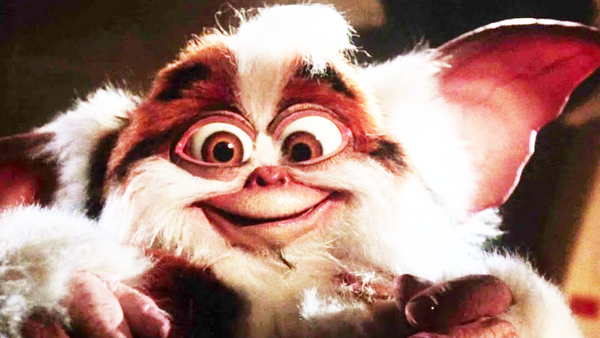
4. Gremlins 2: The New Batch

After Gremlins took the world by storm, tossing out a sequel was a no-brainer. But instead of getting more of the same, Gremlins 2: The New Batch threw in musical numbers, electric monsters, and Hulk frickin' Hogan talking directly to the audience.
As a result, it wasn't a surprise that The New Batch didn't have the same reaction as before. But at the same time, it's commendable how Joe Dante threw every kooky idea imaginable into the project. It was also ambitious to have the Gremlins serve as a commentary for consumer culture and corporate excess rather than once again depicting them as pure monsters.
The film never stops poking fun at itself, contradicting the set rules of the Gremlins, mocking dialogue from the original, and even killing off a critic who hated the first film. The New Batch's self-awareness and joyful absurdity allows it to stand apart from the rest of the genre, long before Scream popularised meta-horrors.
Instead of repeating the first one, Gremlins 2: The New Batch expands the concept in imaginative and unpredictable ways. That boldness is exactly why a movie that should never have worked became a cult-classic.
3. Halloween (2018)

It's ironic how Halloween popularised the slasher genre, considering the franchise has been wildly inconsistent. The property has repeatedly tried to refresh itself through reboots, anthology spin-offs, and retconning Michael Myers as a cult member. (Yeah, that idea was really stupid.)
As such, it wasn't that big of a deal when yet another reboot/sequel was announced. 2018's Halloween would serve as a direct continuation of the original, discarding everything that came afterward. This was a risky move, since it de-canonised Michael Myers and Laurie Strode relationship as siblings, meaning the two iconic characters would lose their personal connection. Also, having a director with no horror experience like David Gordon Green at the helm didn't inspire much optimism.
However, Green's back-to-basics approach was exactly what the brand needed. Laurie was portrayed as a hardened, trauma-surviving hero, adding emotional depth to the plot. Rather than having stylised gore, there was more focus on slow-burn dread and kills that are simple but vicious.
Green undeniably dropped the ball with Halloween Kills and Halloween Ends, but there's no doubt 2018's Halloween is among the strongest entries in the series.
2. Evil Dead II
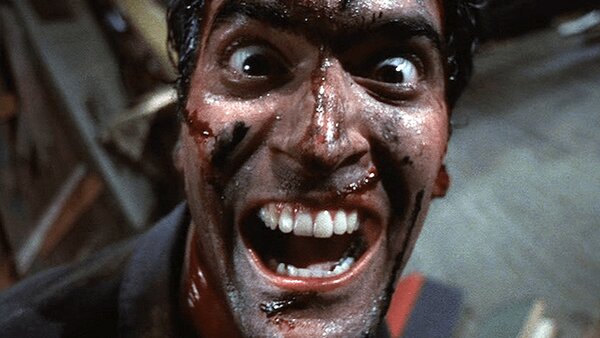
One of the most common mistakes that horror sequels make is imitating what came before, without implementing any new ideas.
Evil Dead II seemingly fell into this trap, since it follows the original almost beat-for-beat, to the point where it can be classified as a remake rather than a continuation. Another potential issue was the decision to ramp up the comedy, which could've watered down the scares.
But in hindsight, The Evil Dead feels like a testing ground for horror-comedy, while the follow-up perfected the formula. Director, Sam Raimi leaned into his strengths, throwing in kinetic camerawork, exaggerated gore, and a willingness to blend slapstick with terror, making Evil Dead II more chaotically entertaining.
Changing the generic hero, Ash Williams, into a boomstick-blasting badass was a stroke of genius, as it allowed Bruce Campbell to showcase his physical acting and impeccable comic timing.
Instead of chasing commercial trends of the time, Evil Dead II doubled down on practical effects, inventive jokes, and its uniquely twisted humour. The result was a groovy film that surpassed expectations for a sequel and influenced horror-comedy for decades to come.
1. Aliens

There's no doubt Ridley Scott's Alien single-handedly revolutionised sci-fi horror. As a result, it didn't sound feasible to craft a sequel on the same level. But if anyone could do it, it'd be James Cameron. For this reason, the studio should've been relieved when he agreed to write and direct Aliens.
But that wasn't the case. Even though Aliens' release was post-Terminator, Cameron's only directing credit was the mediocre Piranha II: The Spawning when he got the job, which didn't generate much confidence.
The male lead, James Remar, was fired almost immediately and Cameron was let go and rehired in mid-production, further indicating Aliens was doomed. The fact Aliens focuses more on bombastic action than subtle tension further suggested Cameron was out of his depth.
And yet, it's challenging to find a single flaw in this glorious sequel. The battles, special effects, and production design easily top the biggest blockbusters of today.
Sigourney Weaver's riveting performance garnered her an Oscar nomination, which is incredibly rare in horror. Michael Biehn, Bill Paxton, and Lance Henriksen provide memorable supporting roles that enhance the team dynamic. Despite the fact the ensemble are fighting off terrifying extra-terrestrials, the story focuses on Ripley's relationship with an orphaned child, making the fantastical story heartfelt and surprisingly relatable.
Against all odds, Aliens proved to be, not just one of the best horror films, but among the best sequels period.