10 Behind-The-Scenes Stories That Spoil Classic Movies

On a Muppet Show far, far away...

€œPay no attention to the man behind the curtain€ is not only good advice to Dorothy, Toto and their gang of freaks, but for film audiences too. Picking apart what goes into make a major motion picture can dispel all that hard-earned movie magic: space-age sets are revealed to be green screens in warehouses, stunts are done by people who look nothing like the actors. At least some behind-the-scenes stories have been normalised thanks to the addition of making of documentations and paparazzi set photos. We as a film-going audience have just about managed to deal with the fact that Robert Downey Jr doesn't have a working flying robot suit, or that Matt Damon doesn't actually have CIA spy training. There's a certain level of disbelief that can be suspended. It's the silent contract made when we watch movies. At this point, what would actually ruin a film was discovering that the people who made it were total jerks, or the set of a comedy was actually the most intense and stressful place in the world, or that a Muppet cameoed on the very serious Star Wars set. Which are all things that totally happened. Not only that, but famous monsters whose special effect didn't actually work, classic performances done by total imbeciles, and iconic props found in dumpsters all make up the ten behind-the-scenes stories that spoil classic movies.


10. Miss Piggy Had A Cameo On The Empire Strikes Back Set

There are all sorts of stories from the Star Wars set that serve to spoil the galaxy far, far away. Pictures of Peter Mayhew only half dressed in his Chewbacca costume, revealing the furry alien is nothing more than a furry Londoner; David Prowse's unbecoming West Country accent when he played Vader on set; Harrison Ford improvising the best lines. Those have been accepted by the world at large, though, folded into the rich mythology of Star Wars, and haven't ruined the franchise for people. What does totally undercut one of the most emotional moments of The Empire Strikes Back is that puppeteer Frank Oz subbed in Miss Piggy for Yoda during one take, without warning Mark Hamill. When Luke's having a bit of a moan about feelings, Oz whipped the Muppets character (who he also voices) out and started yelling €œWhat is this hole? I've been booked into dumps before, but never like this. Get me my agent on the phone!€ Nothing mucks up the Skywalker orphan talking about his feelings like an unscheduled appearance by a porcine diva.

9. The Set Of The Shining Was A Total Mess

Stanley Kubrick was a very organised man. The director knew how to get what he wanted on his sets. Which on The Shining meant demanding hundreds of takes of small scenes and planning out every last detail of every last frame and every last piece of set design before even getting behind the camera. Which is especially impressive on a film as crazy as that. The Overlook Hotel was utter chaos. Jack Nicholson started refusing to learn his lines because Kubrick and co-screenwriter Diane Johnson were constantly redrafting them on set, and Shelley Duvall almost had a nervous breakdown because of the constant stress the director kept her under during the entire thirteen month shoot. Yes, thirteen months. In the case of Duvall, Kubrick wanted to get a €œmethod€ performance out of her which consisted of literally terrifying her the way Jack Torrance did Wendy. Nicholson's anger definitely played into his character, too. But knowing that the real-life Overlook Hotel was even more monstrous than the one on screen dampens the film's terror somewhat.

8. The Last House On The Left Villains Were A Bit Too Method

Before he got progressively more post-modern with his horror in Nightmare On Elm Street and then the Scream series, director Wes Craven burst onto the scene with the nastiest of the video nasties. The Last House On The Left was a low-budget production that, in the era of Vietnam, brought the horror home. And made it human. In fact it was all too real. Craven's later films were creature features, starring the likes of Freddy Kreuger and the inbred cannibals of The Hills Have Eyes. His first feature, meanwhile, was all about the evils of man, centring on a group of escaped prisoners gang raping and torturing a young girl to death. They were terrifyingly believable psychopaths €“ possibly because they actually were psychos. In most horror films, there's some comfort in knowing the set was probably an easy going time, in sharp contrast to the terror on screen. In this film, actor David Hess suggested actually raping Sandra Cassell to get a more believable performance, and used to threaten her physically throughout shooting. Truly, man is the real monster. Hess, specifically.

7. The Shark In Jaws Was Nicknamed The Great White Turd

Steven Spielberg's prototypical summer blockbuster celebrated its fortieth anniversary in 2015, and Jaws still holds up today. Chucking out most of the source material, the director honed Peter Benchley's novel into a sleek beast, with the titular shark barely appearing on screen. Spielberg is still praised for his restraint in that regard, ratcheting up the tension. Except the reason the shark is hidden for the majority of Jaws was more down to necessity than filmmaking prowess. Spielberg had intended the animatronic shark to be the star attraction of Jaws, featuring it as much as possible, rather than relying on first-person views as he stalked his prey to the strains of that classic John Williams score. That all happened because the shark didn't work. Affectionately nicknamed €œBruce€, the special effect later took on the title of €œThe Great White Turd€, because it didn't do anything it was supposed to. It sank in the sea, its jaws didn't move when they wanted it to. It turns out the reason people were afraid to go into the water for decades since couldn't harm a fly.

6. Marlon Brando's Godfather Co-Stars Held Up Cue Cards

It's no secret that Marlon Brando stopped caring fairly early on into his acting career. After making his name for naturalistic, €œmethod€ performances in the likes of On The Waterfront and A Streetcar Named Desire, he then decided to coast on that good will for the rest of his life. You might be forgiven for thinking otherwise, considering some of his roles. The actor had already given up long before he turned up for iconic roles in the likes of Apocalypse Now (where he gained loads of weight beforehand and improvised all his lines) and Last Tango In Paris (where he flatly refused to learn his lines). Then there's The Godfather, arguably the most iconic Brando performance, where he used cue cards. Not only did Brando not bother reading the script, but his entire time as Don Corleone was spent reading his lines off of huge pieces of cardboard being held by the other actors in his scenes. Which means, not only was one of the best performances in movie history one of the laziest, but it was at the expense of all the other genuine, committed talent on screen.

5. Peter Jackson's Wife Voiced The Nazgul In Lord Of The Rings
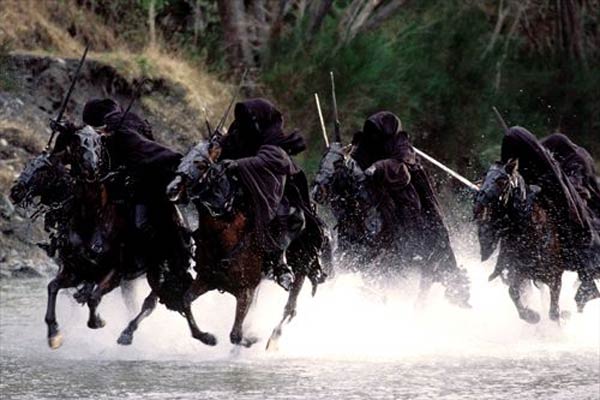
JRR Tolkien's epic, sweeping fantasy trilogy couldn't have been made without the benefits of modern special effects bringing the huge battles and strange creatures to like. Peter Jackson's adaptation of Lord Of The Rings utilised ground-breaking CGI to bring Gollum and the Battle Of Helm's Deep to life, but it relied on some old-school techniques too. A lot of the time the hobbits looked smaller because they were standing in a ditch in front of the taller characters, or other practical effects. They filmed mainly in New Zealand to use the countryside and mountains for the fantasy setting. And the creepy voices of the villainous Nazgul, who menace the heroes throughout, came from Peter Jackson's wife. Some of those behind-the-scenes tricks do dampen the escapist fantasy wonderland a little. Learning that Fran Walsh with a sore throat provided the noise that heralded the arrival of the most terrifying characters in the whole trilogy is like discovering the monster under your bed was simply a tiny kitten who wanted a cuddle.

4. David Lynch Reanimated Dead Animals For Eraserhead
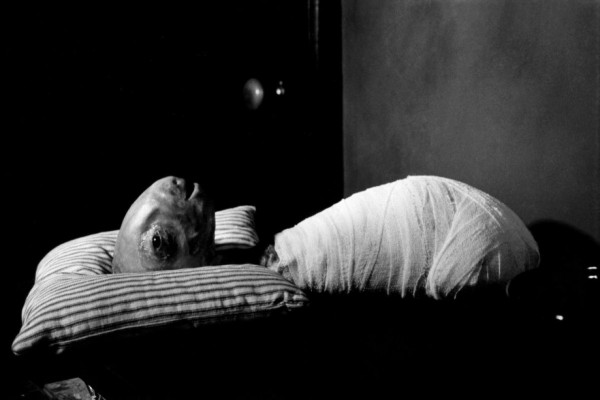
Director David Lynch is loathe to reveal any information about his films in interviews, preferring that audiences and critics alike take their own interpretations from his nightmare-like movies. His caginess might also be because he's hiding the fact that he's doing really, really gross stuff to dead bodies. He's likely not PETA-approved. Dead animal bodies, mainly. Lynch's feature debut Eraserhead is an art-house movie classic, an eerie fever dream of a movie where Jack Nance's Henry struggles to deal with a bad relationship and a newborn kid in an industrial hellscape. The baby is especially disturbing, a deformed beast with an otherworldly cry to send shivers down your spine. Lynch has never revealed how the baby was made, but according to some sources it wasn't a special effect: the director rigged up a preserved calf foetus to move and twitch as he zapped it with electricity. There was also a deleted scene where he planned to do the same thing with a dead cat, which he put in a tar pit to preserve. That's the bad kind of weird, David!

3. Pacino And De Niro Hate Each Other, Filmed Heat Scenes Separately

2008's Righteous Kill was a pile of dung, but it managed to make back its meagre budget off the back of fans wanting to see Al Pacino and Robert De Niro together again. The titans of acting talent previously shared a screen in Michael Mann's Heat, the epic crime movie which is best remembered for Pacino and De Niro's one scene together. The restaurant meeting between Pacino's cop and De Niro's robber is often held up as a masterclass in tension and acting. And it is seriously good. Except the two didn't get on, with an antagonism born on The Godfather set that was still raging when Heat was being filmed a decade later. Which meant that they shot their sides of the scene separately. That entire confrontation was filmed first with Pacino, then De Niro, and they were digitally composited together in post. What looked like two of the greatest actors of their generation finally facing off against each other, and playing off one another, was actually two whiny little babies chatting to themselves because they were feuding. Slightly less iconic.

2. Gene Hackman Terrorised The Royal Tenenbaums
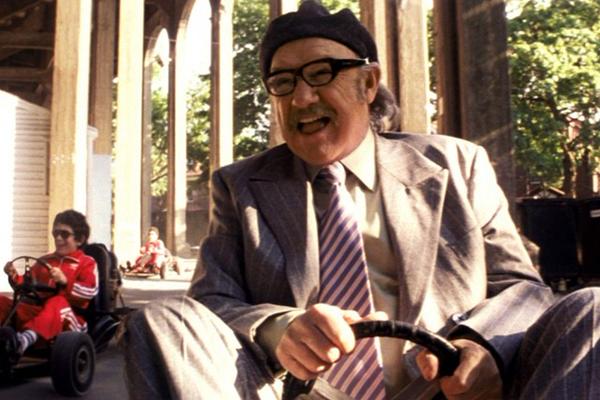
Gene Hackman being a bit of a difficult actor to work with is well-documented. The French Connection star was a prickly presence on most movie sets, meaning there were few people in the film industry disappointed when he quietly retired after 2003's Welcome To Mooseport (he went out on a high, playing second fiddle to Ray Romano). A couple of years before that came one of Hackman's best-remembered performances. There's no shortage of star power in the ensemble cast of The Royal Tenenbaums, but it was Hackman as the estranged family patriarch that stood out. And apparently he took his last big role as an opportunity to show just how much of a jackass he could be. He regularly called screenwriter Noah Baumbach a €œcunt€, told director Wes Anderson to €œpull up your pants and act like a man,€ and Gwyneth Paltrow was afraid of being near him. Sure does make the final scene, of his death after everybody's finally come around to the frosty character on-screen, look like a total joke. The real Royal was even worse.

1. Citizen Kane's Rosebud Was Found In A Skip
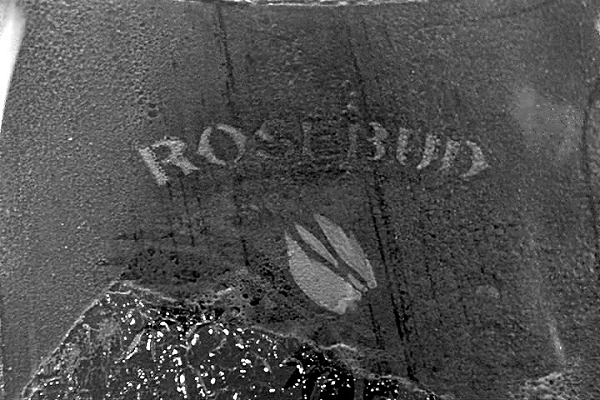
The most famous film in the history of motion pictures almost didn't happen. Orson Welles was a hot property after that infamous War Of The Worlds radio stunt, and despite every project going being thrown at him, he opted to make his own film. Citizen Kane proved to be one of the finest-crafted movies ever, full of iconic imagery. By accident. Welles struggled to put the film together, with soaring production budgets and meddling executives. Worst of all was the crew Welles was working with €“ who, among other things, accidentally broke the snowglobe they originally intended to use as the representation of Kane's lost innocence; in the finished film, his sled Rosebud takes that role. Refusing to have the snowglobe replaced (it was a present from his mother), Welles demanded a different symbol be found. One of the production assistants happened upon the sled in a dumpster down a New York alley, name engraved and all. Citizen Kane seems like a literary masterpiece that had everything thought out beforehand. In fact, its most famous and enduring image and mystery is one that was literally found in the trash. How's that for high art?

Contributor
Contributor

Tom Baker is the Comics Editor at WhatCulture! He's heard all the Doctor Who jokes, but not many about Randall and Hopkirk. He also blogs at http://communibearsilostate.wordpress.com/