10 Directors Who Need To Make A Horror Movie
There are far too many bizarre and humorous anecdotes attached to my horror film viewing experience. As a rather anxious and neurotic child I did not take to watching Scream at a friend's house in fourth grade very well, nor did I appreciate seeing Silent Hill as a first date when I was in high school. Until I began film studies in college, I'd sworn off the genre not out of elitist judgment but as a result of a panicky, overactive imagination that made surprise appearances at 3am. Then I realized how much I effing loved the genre for that exact reason: horror film is so entertaining and valuable because of its inherent ability to shake you out of complacency, and if you're anything like me, it'll drive you to install a nightlight in your off-campus apartment - when you're 21 years old - because you took a really awesome film seminar that quarter. There is something rather masochistically pleasing about watching a character face down ultimate, primal fears, whether or not they live to tell the tale. Now, I've seen my fair share of poorly made horror films. The genre wouldn't be what it is without them, and that's part of the fun. When it comes to filmmakers who wander into the cinematic dark side, there are plenty who I think should do some exploring. David Fincher, not typically known for crafting horror in the vein of Wes Craven and John Carpenter, did an excellent job in approaching terror with his 2007 film Zodiac. That scene with the couple at the lake? In broad daylight? With a wide, open landscape for the characters to escape but they can't, and on top of that there's, like, zero sound outside of their hyperventilated breaths? Christ. Fincher is an excellent, dramatic filmmaker - which is why Zodiac feels so utterly bleak and scary. (The fact that it's based on a true story helps, too...) I'm intrigued by directors who tap into their primal psyche to scare the pants off their viewers. Here's a list of those who have made dramas, mysteries and thrillers, and who, in my personal opinion, should just go balls to the wall and use their fine technical skills to blow us all away.
10. Sean Durkin
 Before I went in to watch Durkin's 2011 film Martha Marcy May Marlene, I was most looking forward to Elizabeth Olsen, the Olsen twins' younger sister, and her acting performance. I'm very happy to say that she did an excellent job separating herself from the twins in her own right - she's incredible. After I watched the film, however, I was most intrigued by Durkin's handling of the subject matter. As a bold and fresh director, Durkin doesn't really hold back in dismantling his protagonist's psyche. Olsen plays a young girl, formally named Martha, whose fleeing of the isolated cult that she voluntarily joined proves to have severe, psychological ramifications once reunited with her sister. Durkin shows us how easy it was for Martha's persona to be broken down bit by bit and how scary it is to find any kind of sense of it in the fragmented pieces. Martha's paranoia outside of the cult is quiet at first, just bubbling under the surface, with odd but understandable quirks of a damaged person. Then you find out more and more about this group of seemingly normal individuals that Martha ran away from, and in the process Durkin gives these crazy scenes that destabilize the notion of normalcy altogether. You don't see any of the most shocking moments coming because of how well Durkin's been slyly revealing the characters' nature, little by little. Martha Marcy May Marlene is a downright suspenseful drama, but it's set Durkin up well to go in a more extreme direction.
9. Debra Granik

If you haven't seen Granik's second film Winter's Bone, I implore you to pause on reading this post, go watch it, and then return. Not only did it give us the A-list arrival of Jennifer Lawrence but it was nominated for four Oscars and won the Grand Jury Prize for drama at Sundance. Granik's ridiculously talented and I wait with baited breath for her next project.
What she brings is this no-bullshit approach to the plight of her characters. In Winter's Bone, Lawrence plays Ree Dolly, a teenager who tracks down her meth-cooking father (who posts the house as bail and skipped out on delivering) in order to keep her home and property, as well as her mentally damaged mother and two, younger siblings. Sound like a recipe for a bad Lifetime movie? Yeah, I thought so, too, until I saw the movie. Granik's stripped-down approach to the plot is brave and seamless. She isn't afraid to rough her characters up and throw them right into harm's way - even if it's a no-frills act of quick violence.
More importantly, she never shields her characters from at-times horrific realities. The ultimate scene in Winter's Bone comes when, after Ree finds that she has to bring her father's dead body to the police station as proof that his bond no longer stands, Ree is taken to the distant, isolated, unknown location of where her father's body had been dumped. The proof she walks away with to give to police? His hands. It's the most bare-bones scene I've watched in a long, long time: after quietly leading up to this darkly triumphant moment, Granik's rendered you speechless.
I felt like I'd walked directly into Ree's shoes once the story was wrapped. The climax is unsettling in its development that I can only imagine what Granik would do if she were at the helm of a more horrific, suspenseful story.
8. Steve McQueen

It's been a while since I've been as thoroughly blown away by a writer/director as I was by McQueen. His two feature films, Hunger (2008) and Shame (2011) are so devastating, so beautifully crafted, and so bloody good. The most notable element is that they're not safe. McQueen shows you things that you will not want to see and he'll show you things that you didn't even know you didn't want to see. But the stories need those scenes to be powerful, and this is something that McQueen not only recognizes but seems to master with natural finesse.
It's hard to recall a time when I felt scared watching a non-horror film. When I watched Shame, I was so entranced by the gritty, complex depravity of Michael Fassbender's sex addicted character Brandon that I found myself watching it as one would watch something truly, intentionally scary. McQueen has Brandon teetering on the edge the whole time that it keeps you guessing until the conclusion; and even then, it's not wrapped up in a nice and neat bow and your anxieties for this person aren't entirely settled.
Given that the heart and soul of his two films face, at their very core despite their more detailed circumstances, primal needs already, it would seem easy for McQueen to take a quick left turn towards the horror genre and give us something, well, horrifically beautiful. When I was making this list, the first horror film that jumped out at me when I wrote down McQueen was the unbelievable 2008 film Let the Right One In. I imagine a McQueen horror film would share similar cinematic traits: a careful unraveling of the plot, a unique twisting of melodramatic conventions, and cinematography so bold that you probably didn't think something that scary could be so visually stunning.
7. Lynne Ramsay

I was on the fence about keeping Ramsay on this list, but that's only because I can't quite decide if her 2011 film We Need to Talk About Kevin is a horror film or if it's a dramatic thriller. The plot revolves around the cold-as-ice relationship between Tilda Swinton's Eva and her deeply, deeply troubled son Kevin, whose supposedly natural evil is a major point of contention in the story. As a woman, I'm tempted to view it as a horror film because the biggest question that the story poses is whether or not Kevin's evil originated in the womb.
I do recall how disturbed I felt throughout almost the entire film. That's something that Ramsay handled spectacularly, and I think it's particularly disturbing to watch as a woman. Female horror filmmakers bring a certain element to the genre: they tend to make it a more visceral viewing experience. There's a more powerful, deep-seeded emotion attached to the terror that the stories produce.
Sometimes it works and sometimes it doesn't. In Ramsay's case, it does. About twenty minutes into We Need to Talk About Kevin, I texted my then-pregnant sister who recently gave birth to a son and told her that under no circumstances, whatsoever, on the planet, was she to watch this film.
So perhaps Ramsay has already directed a horror film, given the manner in which I experienced the material. In that case, consider this entry as a plea for her to make another one. Or two, or three...
6. Guy Ritchie

Yes. I know what you're thinking. Ritchie would likely create a horror film that would go over disturbingly well among frat houses. His rap sheet boasts hyperactive, trigger-happy, masculine, box office action delights, like Sherlock Holmes, Rocknrolla, and Snatch. I'm not his number one fan, but you know what? I think he'd pull of a highly entertaining scary movie.
I can't help but picture a Sam Raimi type of horror movie at his hand. Humorous, colorful, more entertaining than truly scary. That's what Raimi's brought to the genre, and I think Ritchie would do the same. His films are very quick-paced and layered with quick and visually fun editing, cheeky narration, a dark sense of humor, and the ability to fill a theater with pleased viewers. He's also generally quite cocky with his male leads; that could certainly shake up genre conventions a little bit.
I don't know that I would actually watch a Ritchie horror movie in all seriousness, but perhaps I'm being a snob. I think he'd make something fun to watch - perhaps I need to relax.
5. Ang Lee

This is my wild card entry.
Lee is a powerful director with a slew of well-deserved awards and nominations for his beautiful cinematography and bringing his characters to light in a deeply moving way. He's far more of a humanist than I think the majority of horror filmmakers. It's not a trait associated with a genre full of slasher films, blood-thirty vampires and supernatural beings, to name a few.
But I truly think that if Lee were to access the darker, more pessimistic area of his mind he'd produce material scarier than most. Lee may be a humanist, but his stories address the same emotions that horror movies do; he just takes the sunnier route. And let's not forget the emotionally lost and confused characters that made up The Ice Storm - not exactly the happiest movie to watch. Brokeback Mountain wasn't all that cheerful, either.
What resonates about these films is their emotional depth. Lee pulls out those characters' feelings in a fierce way. Can you imagine following the emotions of a protagonist in a movie which addresses, say, psychological un-reality? Or a classic ghost story? I'd trust Lee to create a story of horror conventions that would cut right to the core.
4. Julie Taymor

So, Taymor seems to be the Danielle Staub of the film world: you either love her or hate her, there is no in-between. Her theatrical background lends a very distinct flavor to Hollywood, and it's an acquired taste. Kind of like Baz Luhrmann, the physical brashness of her films can be overwhelming if you're not prepared for it.
Look no further than her work in 1999's Titus, an adaptation of Shakespeare's unbelievably violent (to the point of humorous) play, Titus Andronicus. Can you imagine any other director adapting it the way Taymor did? The bloody violence and grisly hilarity is a creepy feast for the eyes, and that final scene - you know, the one in which everyone dies a ridiculous death - could only be captured by a chosen few.
If there's anything I'd love to see Taymor contribute to the horror film world it's this: a vampire film. The sub-genre is so overwrought now that if anyone's going to come out with a new, mainstream take, it'll likely have to be a parody, and the filmmaker will have to employ a constant, self-effacing cheekiness. Enter: Taymor. I'd be so intrigued by what she brought to the table.
(If you've read Titus Andronicus, then you'll appreciate the pun of that last sentence.)
3. Joe Wright
 Hands down, one of my favorite directors. I recall watching Atonement when I was in high school and realizing why that movie was so widely revered. I was in the middle of my first film class then, so I have a quirky endearment to Wright. During that entire first act, my film student brain was working overdrive, taking in all the deliberate shots and sounds.
Atonement (as well as Pride & Prejudice and Anna Karenina) proves Wright's surefire directing skills. The suspense rests its in his calculated cinematography and editing, and quite frankly I've yet to see a director combine lighting and score in such a pitch perfect fashion. While content-wise, his body of work spans romance and drama, there is absolutely enough material in Atonement to believe that Wright could pull off one hell of a horror flick.
Visually, I feel confident in saying Wright could create some seriously lasting impressions. As in, some pretty horrifying supernatural beings, some highly fine-tuned body horror, a creepy-as-hell haunted house. Combine that with a matching score, forget it. Wright would totally keep me up at night.
2. Paul Thomas Anderson
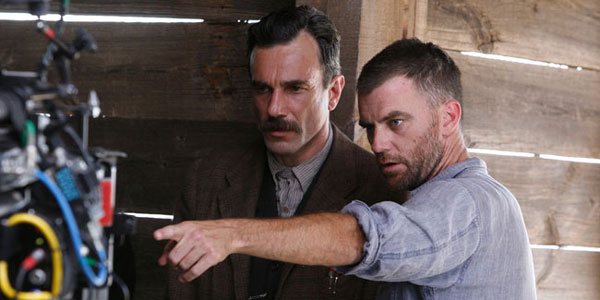
Slow, precise, controlled, complex, chilling. I don't think I'm alone in assigning these traits to Anderson's phenomenal body of work. He is a truly original and painfully talented auteur, and one of the bests of his generation.
PTA is probably the most studious and intelligent modern filmmaker. He knows his way around convention and takes his own spin on it. All those long, drawn-out, steady, tracking shots and takes? Every frame is put in place for a reason. There's not a hair out of place. He's mastered the basics and tailored them in his vision. As a result, his stories are perhaps the most authentic contemporary stories in recent memory. They're ambitious, and there's so much meat that you can chew for days.
So after tooting this guy's horn to no end, why would he make a good horror movie? His innovation allows for a redefining of the genre. Can you imagine how core-shaking a PTA "descent into madness" story would be? If he stripped down his stories to the bare bones of primal fears, he'd create a masterpiece of horror. Anything is possible in a PTA film: the endless directions his stories go in would provide a brilliant foundation for some truly insightful, powerful, terrifying premises and themes.
1. Christopher Nolan

When Danny Boyle, whose credentials were edgy dramas, made 28 Days Later, he introduced a new level of terror in a zombie flick: they ran. These blood-thirsty creatures were suddenly ten times more threatening and terrifying than any slow-moving monster of the undead. Boyle breathed new life into the zombie world and changed the conversation being had about them.
That's how I envision Nolan taking on a horror flick. He revived and brought respect back to the Batman series that had, quite frankly, become a parody of itself. Now, I'm not a comic book reader, I'm not an expert on Marvel, and I don't claim to be either of those things. But I do know that what Nolan brought to the superhero genre was character depth, an honest portrayal of the superhero psyche in mass culture, and nearly perfect cinematic direction. His earlier work (The Prestige, Memento) built the foundation for his trilogy: it's highly intelligent, suspenseful and dark. His stories are tricky, too, because they challenge how you view and absorb the material.
His work provides the perfect recipe for a horror movie. Nolan manages to stay five steps ahead of the story and refuses to let you feel like you know exactly what will happen next. It's a thrill ride every time you view his films. They're calculated, discreet, subtle and moving. A major trademark of his is also the amount of ambiguity he leaves at the end: rarely will you watch the conclusion of his films and have the same interpretation as the person sitting next to you. You'll keep guessing and keep toiling away at the layered story you just experienced, and that's something that very few directors can achieve.
Nolan would master this genre, and he's got the suspenseful, shocking, believable, skilled storytelling chops to prove it.