10 Essential Movies Guillermo Del Toro Demands You See

Must-see movies from the master of modern Gothic.
Barry Lyndon
Warner Bros. Pictures
The words "From the visionary director of" are some of the most overused and well-worn featured on movie trailers, but few filmmakers working today have earned it as much as Guillermo del Toro. His latest release, Crimson Peak, sees him return to the Gothic horror and dark fantasy stylings of earlier movies The Devil's Backbone and Pan's Labyrinth - visually opulent ghost tales with an eye on the folklore of the past. Influenced by romantic paintings, Gothic Revival architecture and Joseph Sheridan Le Fanu's literary ghost writing, it represents something of a synthesis of ideas which have fascinated del Toro throughout his career. Unsurprisingly, Guillermo del Toro's cinematic influences reach far and wide throughout movie history, and a look at some of his favourite films of all time offers a fresh perspective on how his own work has been shaped over the years. It also reveals his admiration for some of the great masters of the medium, including the work of Ingmar Bergman, Stanley Kubrick and Akira Kurosawa. Here are ten essential movies Guillermo del Toro considers among the very best.

10. Throne Of Blood

Throne Of Blood
Toho
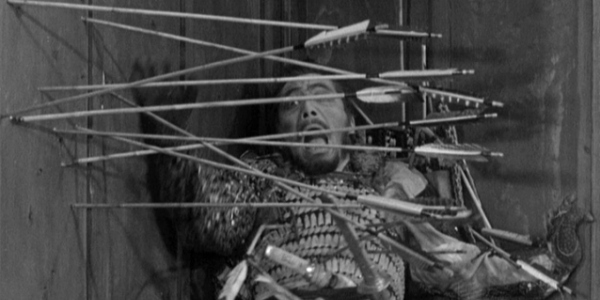
Justin Kerzel recently proved that cinematic Shakespeare was alive and well (if not necessarily the characters within it) with the release of Macbeth. Several decades ago, the legendary Akira Kurosawa took the bard's epic tragedy and relocated the action to feudal Japan. Throne Of Blood is one of the most visually striking movies to have come out of Japan in the 1950s, Kurosawa seeming to marshal the elements and bend the trees of entire forests with his will. Shakespeare's themes of unchecked ambition and the corruption of power prove themselves to be thoroughly universal, while Toshiro Mifune and Isuzu Yamada inhabit the Macbeths as convincingly as any other actor. Guillermo del Toro considers Throne Of Blood, High And Low and Ran (taken from Shakespeare's King Lear) as Kurosawa's "most operatic, pessimistic, and visually spectacular films"; the way they capture exuberance and elegance at the same time being "one of life's great mysteries." Also recommended: High And Low, Ran

9. The Seventh Seal

Max Von Sydow Seventh Seal
AB Svensk Filmindustri
The films of Guillermo del Toro might not immediately strike the viewer as a product of the influence of Ingmar Bergman, but look a little closer and their fascination with the workings of religious faith and the mythical landscapes of folklore becomes evident. The Seventh Seal - widely cited as Bergman's best and often misunderstood as a far more difficult and pretentious movie than it actually is - famously tells of a knight challenging Death to a game of chess against a backdrop of the Black Death. It's a contest which symbolises so much more, with the images Bergman presents depicting a world in which God's silence is deafening. Death and faith prevail throughout the work of Guillermo del Toro, too, particularly in the body of Spanish-language work he considers his "adult" movies. He describes The Seventh Seal and Fanny And Alexander as "the primal pulse of a children€™s fable told by an impossibly old and wise narrator," words which could be equally applicable to movies such as Pan's Labyrinth. Also recommended: Fanny And Alexander

8. Beauty And The Beast

La Belle Et La Bete
Lopert Pictures
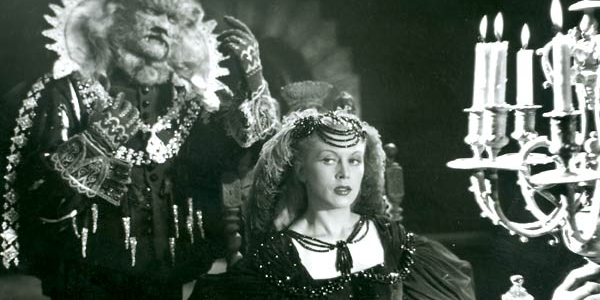
While Disney cleaned up at the box office with their lushly colour-coded and smoothly animated adaptation of Beauty And The Beast, Jean Cocteau's 1946 black and white version offered a far more sublime telling of the classic fairy tale using camera trickery which impresses to this day. Pan's Labyrinth is once again a close point of comparison to Cocteau's Beauty And The Beast, which del Toro has described as a parable which depends on "sublime, almost ethereal, imagery to convey a sense of doom and loss: mad, fragile love clinging for dear life in a maelstrom of darkness." Del Toro certainly knows a thing or two both about devising intricate and convincing in-camera effects (his use of CGI is usually complimentary rather than dominant), so it's little surprise that he considers Cocteau's film a haunting and enchanting masterpiece. Also recommended: Eyes Without A Face

7. Great Expectations

Great Expectations
As Guillermo del Toro acknowledges in his selection of favourite movies for the Criterion Collection, "most people remember David Lean for his big-scale epics, like Doctor Zhivago, Lawrence of Arabia, or The Bridge on the River Kwai." But his biggest recommendation is for an early masterwork. Lean's 1946 adaptation of Charles Dickens's Great Expectations shares a great deal in common with Cocteau's Beauty And The Beast (they were coincidentally made in the same year), taking place largely in the confined space of a vast mansion where archetypal characters emerge from the shadows and into the candlelight. Along with Alfred Hitchcock's Rebecca, Great Expectations played a key role as a point of reference for the vast, crumbling Allerdale Hall of Crimson Peak - another in a long line of movie mansions occupied by the living and the dead like a latterday House of Usher. Also recommended: Oliver Twist

6. Time Bandits

Rappaport1
The Guardian
"Terry Gilliam is a living treasure, and we are squandering him foolishly with every film of his that remains unmade." Anyone who has treasured the movies of the former Monty Python animator - or seen the revealing documentary Lost In La Mancha - will concur with Guillermo del Toro's assessment. Time Bandits, one of Gilliam's earliest forays into feature film making, sees a young boy embarking on a surreal adventure through time and space, accompanied by a troupe of dwarves. The first part of his "Trilogy of Imagination" and seen through the eyes of a child, it's a film about as spiritually close to del Toro's most personal movies as you can get. Guillermo del Toro describes Terry Gilliam as "a fabulist pregnant with images - exploding with them, actually - and fierce, untamed imagination ... He jumps with no safety net and drags us with him into a world made coherent only by his undying faith in the tale he is telling." He could just as easily be speaking about himself. Also recommended: Brazil

5. Onibaba

Onibaba 1964
Toho
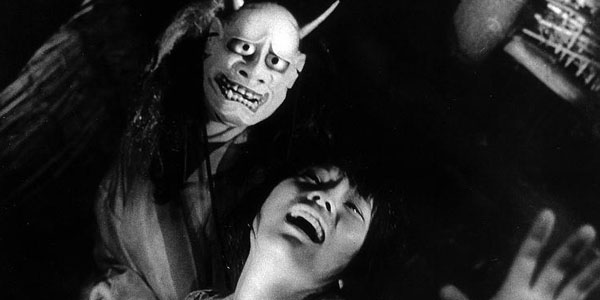
Guillermo del Toro's fascination for myth and folklore isn't limited to the Western tradition, as his appreciation of Keneto Shindo's Onibaba shows. It's a horror movie which revels in poetic imagery, often beautiful and chilling at the same time. Two women live amidst the reeds of a wasteland torn apart by civil war, preying on wandering soldiers and trading their possessions for food and other supplies. After tricking a samurai into falling to his death in a pit of their making, one woman dons his mask and unleashes a demon. Paired with Kuroneko to form a "perverse, sweaty double bill", del Toro reflects on the "serious damage to my psyche" these sexually charged horror movies inflicted. Onibaba has certainly stood the test of time, not least on account of its precise, otherworldly imagery which, in the words of del Toro, "show mankind trapped in a cosmically evil world." Also recommended: Kuroneko

4. Barry Lyndon

Warner Bros. Barry Lyndon Kubrick
Warner Bros.
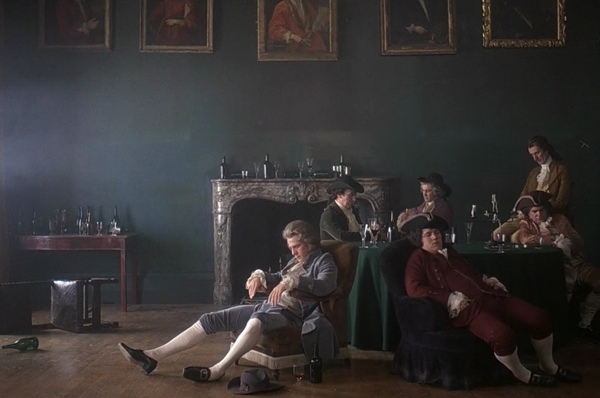
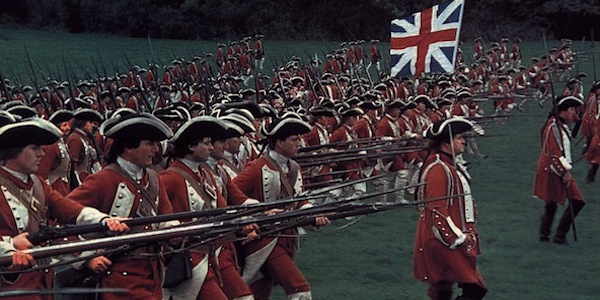
When considering the look of Crimson Peak Guillermo del Toro carefully analysed the works of the great Romantic painters - it's only natural that this examination would extend to Stanley Kubrick's visually opulent Barry Lyndon. Kubrick achieved the fantastic look for Barry Lyndon with a very specific approach to lighting. Guillermo del Toro explains: €œThe source of lighting in Barry Lyndon is natural light, using what we call €˜one source light€™. That means, if you have a room with a large window, then most of that light comes from the window. Then you do little bounces with that light to create an almost painterly effect." Guillermo del Toro's love for Barry Lyndon - and more broadly his appreciation for Kubrick (although there probably isn't a filmmaker out there who isn't in some way indebted to him) - shows just how great directors learn from the masters. For del Toro, Kubrick stands as a filmmaker whose "storytelling remains as mysterious at it is compelling." Also recommended: Paths Of Glory, Spartacus

3. Sullivan's Travels

Sullivans Travels
Paramount Pictures
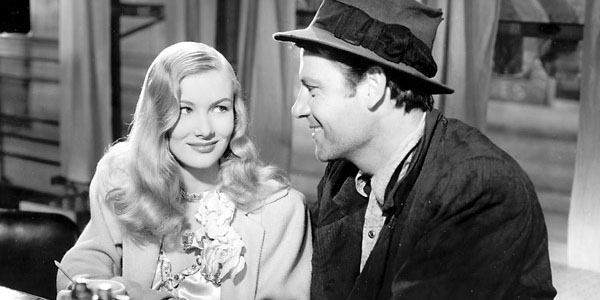
By far the most unusual film on Guillermo del Toro's list of favourites, insofar as nothing from his own body of work resembles it, Sullivan's Travels represents the apex of Preston Sturges's short-lived but impressive career. As a filmmaker himself del Toro certainly takes a great deal of pleasure watching Joe McRea taking on the role of a film director struggling to make a socially responsible movie, striking a balance between cinema as "art" and "entertainment". It's a rare thing to pull off, as del Toro acknowledges: "Many have attempted to mine the same field as Sturges, and all have failed." The rapid fire dialogue and occasional scenes of broad comedy put Sullivan's Travels at least partly into the screwball comedy category, and leaving aside the social commentary del Toro hits the nail on the head when he describes it as "full of mad energy and fireworks." Also recommended: Unfaithfully Yours

2. Vampyr

Vampyr
Carl Theodor Dreyer-Filmproduktion
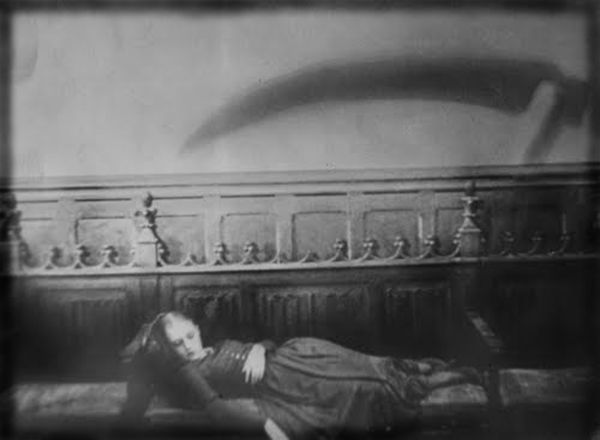
When most horror fans think of examples of classic silent horror movies, Nosferatu and The Cabinet Of Doctor Caligari often spring to mind first. Carl Theodor Dreyer's Vampyr is often overlooked, something Guillermo del Toro would probably find unforgivable. Vampyr is as austere as anything else made by Dreyer, who earned a reputation for his pared down and stark visual style which forced an economy of light and shadow. Describing Vampyr as a "memento mori", del Toro outlined how "the film enthrones the right morbid imagery (skull, scythe, white limbo) in order to maximize the impact of the beautiful, almost intangible images that conclude it." So passionate is Guillermo del Toro about Vampyr that he even contributed a commentary track to the UK DVD release - it fits into his own body of work in which cinema exhibits the power to act as "a stern reminder of death as the threshold of spiritual liberation." Also recommended: Haxan

1. The Spirit Of The Beehive

Spirit Of The Beehive
Bocaccio Distribución
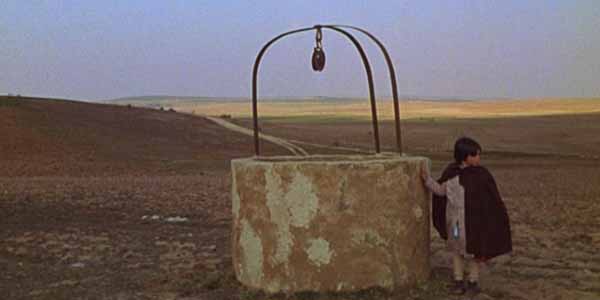
With its fascination of childhood dreams and nightmares and the innocence of youth slowly peeling away in the face of the world's horrors, The Spirit Of The Beehive can be watched as a direct predecessor to The Devil's Backbone and Pan's Labyrinth. Like Pan's Labyrinth, Victor Erice's The Spirit Of The Beehive takes place during Franco's fascist rule over Spain and focuses on a young girl called Ana. After watching a screening of Frankenstein in the village she becomes fascinated by this misunderstood creature and sets out to track him down. Roger Ebert once described The Spirit Of The Beehive as "one of the most beautiful films I've seen," while del Toro recognises the essential counterpoint to this beauty. "Sublime fairy tales of despair that depict the adult world as a toxic environment for kids to exist in" is an apt summation of the deeply symbolic approach to adolescence and the loss of innocence which del Toro has defined throughout his career. Also recommended: The Night Of The Hunter How many of these films have you seen? Which other movies have influenced del Toro? Share any we missed down in the comments.

Contributor
Contributor

Andrew Dilks hasn't written a bio just yet, but if they had... it would appear here.