10 Films Everyone Should See Before They Die
 Film is an incredibly vast medium, full of amazing feats of human ingenuity and some not so amazing, that has infiltrated pop culture like no other artform in the 21st century. Going to the movies is so commonplace and the world is open to so many new ways to watch film that have never been possible until now. If you haven't seen a specific movie then you have a myriad of opportunities available to you to correct this. This brings me to my main topic. There are some movies that film buffs and cinephiles consider some of the greatest art ever made but barely anyone who is a casual movie goer can't claim to have seen. For the sake of convenience I have made this list to showcase 10 films that I think everyone should see at some point in their lifetime just to be a more well rounded pop culture consumer.
10. Nosferatu
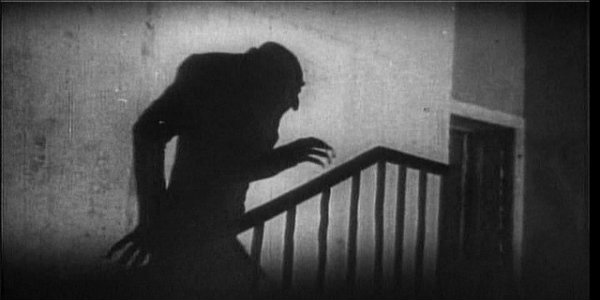 Nosferatu is the most important horror movie ever made and also one of the greatest German films of all time. The director, F.W. Murnau, brought the story of Dracula to life for the first time outside of literature with Nosferatu and created the definitive vampire movie in the process. He used the developing style of German Expressionism to create many horror movie tropes that are commonplace now and to bring to life cinema's most enduring villain in his greatest incarnation yet. Even if you're not a fan of horror you should still see Nosferatu if only to have a better appreciation for a genre that most people take for granted.
9. Seven Samurai
Akira Kurosawa is truly a giant of cinema. The man made so many masterpieces that this list could consist of only his films. I could have placed Ran or Kagemusha in this place but Seven Samurai is, arguably, his best and most enduring work. Movies don't get much more epic than when Kurosawa is directing them and all of his greatest talents are on display to brilliant effect here. The story is completely engrossing for 3 and a half hours while the characters are fully realized in a way that few films can ever hope to match. There have been many movies made that try to show the horrors of warfare and Seven Samurai deserves its place at the top of the list. The battle scenes have such a realness to them that has never been captured again or mimicked that make the film more than just a story of some warriors and instead it becomes a meditation on honor and duty amidst warriors.8. The Seventh Seal
 Ingmar Bergmann is the most cerebral director who has ever lived and The Seventh Seal offers the viewer a chance to see his style completely un-diluted and un-filtered. Bergmann's film has such a sense of remorse over it that it's almost palatable but the greatest feat that he achieves here is that there is a morbid sense of hope at the ending during the famous "dance of death" scene. The story concerns a knight playing chess with death for his life and what could have been a simple story is instead a genius examination of life and death. All of the traits that make Bergmann so popular amongst fans of dark and complicated movies are on display here but in a much more accessible manner. I would argue that Persona, Hour of the Wolf and The Silence are better but The Seventh is easily the most well known of his work and a great starting point when trying to get more into Bergmann's filmography.
7. The Big Sleep
 Choosing one film by Howard Hawks was a very difficult feat but The Big Sleep is one film that everyone should see if only to watch the interplay between Humphrey Bogart and Lauren Bacall. While I picked The Seventh Seal for the last entry because it's the easiest to watch of Bergmann's movies I picked The Big Sleep for the exact opposite reason here. The film is probably the most convoluted narrative ever filmed which makes it very hard to follow. The reason I put it on the list is that it epitomizes everything that is great and unique about the film noir genre. Film noir is America's greatest contribution to the world of cinema and there is no better example of what makes it so revolutionary than The Big Sleep. All of the tropes and cliche's are on display that one comes to expect but they're subverted in way that makes every scene seem fresh and exciting. Plus, trying to put the pieces of the story together is a great deal of fun.
6. Psycho
 While Psycho is more of a thriller than a horror movie it is able to walk the line between the two so well that it's hard to argue against it being Alfred Hitchcock's best film. The man made an entire career out of developing and improving the thriller and suspense genres with Psycho being his crowning achievement. It represents everything that makes Hitchcock so amazing and packs it all into a tense and unforgettable 109 minutes. The film changed the rules for good by killing off it's leading lady in the first act of the film and deceiving the audience about who the real villain actually is. The greatest contribution Psycho has made to the world of film will always be the way it revolutionized the typical villain in movies by taking the idea that a monster has to be in-human and making the monster in Psycho seem nice and charming. Many movies have tried to replicate Psycho but all have failed.
5. The Godfather
 Before The Godfather the gangster sub-genre was seen as trash and demoralizing but everything changed when Francis Ford Coppola made his seminal movie. Never again were gangster movies seen as lower forms of film. They were now highly revered Oscar winners. The greatest thing The Godfather did was it took every cliche' surrounding crime films and changed it into something real and captivating. The narrative structure is more akin to the patron/client system in the ancient Roman culture to Scarface or Public Enemies which adds a layer of humanity to the characters that very few movies can replicate. The relationships of each family member to one another give the movie a sense of familiarity but there is always the looming threat of violence that keeps you enthralled every minute throughout the running time.
4. 8 1/2
The way that Federico Fellini uses dream sequences in 8 1/2 is some of the purest cinema anyone can ever witness. The film tells a relatively simple story of a filmmaker facing complications in making an large scale production that he has undertaken but it walks the line between reality and fantasy in such a way that you never know what is going to happen next. There is no other film that better represents the exploration of creativity the way that 8 1/2 does. The narrative is basically an autobiography for Fellini himself but he tells his story in such a chaotic manner, with flashbacks turning into dream sequences and the present basically becoming secondary, that the term "Felliniesque" is most easily viewed here than in any of his previous films.3. Citizen Kane
 "The greatest film ever made" as many critics and filmmakers alike have said. Watching Citizen Kane for the first time almost felt like a cultural obligation but it's impossible not to get caught up in the genius of Orson Welles that it doesn't matter if Citizen Kane is the best movie ever made or not. The character of Kane is difficult to love but there is some odd, charm that he exudes that makes him an extremely powerful screen presence and a brilliant showcase for the acting talents of Welles. There is film before and after the arrival of Citizen Kane. You can see its influence in every movie that followed it and by watching what came before it you can see just how revolutionary it was. Welles was never a better director than he is here because he had youthful ignorance and full studio backing. I didn't want to agree with the popular consensus here but after writing this entry I think I have to.
2. 2001: A Space Odyssey
 Science-fiction is an incredibly expansive genre and Stanley Kubrick uses it to tell the grandest story ever committed to film with his sublime masterpiece 2001: A Space Odyssey. The way he is able to bring together so many different elements of cinema to tell his story of human progress is a feat in itself. Kubrick uses every element available to him and with such aplomb that it's hard to believe he was able to bring everything together and even harder to believe that he succeeded. He uses light, sound, dialogue, symbolism and actions to create a very surreal and disorienting experience for the viewer that is still the most realistic depiction of space in film history.
1. Taxi Driver
 Martin Scorsese and Robert De Niro have made many brilliant films together over their incredible and influential careers but Taxi Driver just may be their best. The way that De Niro is able to bring Travis Bickle to life is one of the greatest acting displays of all time but not enough attention is ever given to Michael Chapman's cinematography. He lights the scenes with a dark touch that gives Scorsese a very open world to direct. The direction of Taxi Driver is perfect from start to finish but the greatest achievement is the way that the character study of Travis is presented. You really feel like you know the character since De Niro presents him in a morally grey area instead of making him an outright villain or hero. Thanks so much for reading! I'd love to hear any films you think should have made it.