10 Movies With Creepy On-Set Stories

The truth is stranger than fiction.

https://www.youtube.com/watch?v=MUjJMM2vsq4 Making a creepy movie is one thing, but what about when there's a more sinister explanation for why a movie scares us to our wits' end so successfully? Perhaps there's something taking place on-set that helps convey the actors' genuine terror, or as some love to suggest, perhaps it's possible for a movie production to be "cursed". Whatever you believe, we've got genuine accounts of some of the more...unconventional...tactics employed by directors to make their movie as authentically scary as possible, along with peculiar "coincidences" that have caused fans to believe in curses and doomed movies. Indeed, all but one of these examples come from bonafide horror flicks, but even the exception has one thing in common with the rest: each creepy, disturbing on-set story helped build up the legacy of the movie and cement it in the minds of viewers the world over. Sure, we're going to confront the coincidental reality of many of these happenings, though it doesn't make them much less unsettling to most viewers. And of course, with the existence of the PR machine, the productions themselves will often exaggerate and emphasise these occurrences as much as humanly possible, because it does nothing but help the movie, right? What's your take on these spooky creative decisions and unnerving coincidences on movie sets? Let us know in the comments!


10. Live Rats Set On Fire & A Real Child's Corpse Is Used - Men Behind The Sun

Yeah, this is pretty much the only screenshot of the film we could find that didn't make us want to hurl, so if you haven't seen T. F. Mou's nauseating World War II horror film, count yourselves lucky. The movie depicts the horrors of the Japanese Unit 731, where vile biological experiments were performed on prisoners of war, such as, perhaps most memorably, throwing a guy into a decompression chamber and watching his intestines fly out of his a**. However, that was just a special effect, so there's no story, right? Wrong. Other infamous scenes include live rats being set on fire, and a young boy being drugged and autopsied, and you know what? They're both real. Rats were actually set on fire, and the autopsy footage is reportedly of a boy who had recently died at a local hospital. Though both the legality and moral fiber of what Mou did are totally questionable, it's hard to argue with the effectiveness of his method: both scenes are startlingly authentic, and do in a sense add to the abject horror of the piece. Plus, on another level, it's a fantastic monument to pre-political correctness filmmaking. You just wouldn't see something like this done nowadays.

9. The Omen Curse

Believe it or not, both the original 1976 The Omen and the (pointless) 2006 remake have had some creepy occurrences on the set and off it. The 1976 "Omen curse" includes a multitude of bizarre events, such as the suicide of Gregory Peck's son two months before Peck started shooting the film, Peck, producer Mace Neufeld and writer David Seltzer all surviving harrowing plane journeys (in Peck's case by missing the doomed flight altogether) and an animal handler who worked on the film being eaten alive by a lion two weeks later. The one that takes the cake, though, is the eerie coincidence that special effects supervisor John Richardson encountered. He designed the movie's infamous decapitation sequence featuring David Warner, yet while in Holland with his assistant Liz Moore, a car crash left Moore suffering a similar fate to Warner's character, horrifically decapitated. What's more, Richardson exited the vehicle and apparently saw a road sign for "Ommen, 66.6 km", though this fact has been questioned considering that in Holland road signs do not show fractions of kilometers: that is saved only for bicycle paths. Still, guess what day this all happened on. That's right, Friday the 13th of August, 1976. As for the 2006 remake? Two days of filming were completely ruined by an unknown camera error, which according to director John Moore read "Error 666", even though camera operators insisted that such an error code did not exist. True story, or was Moore just trying to drum up publicity for his mostly pointless movie?

8. Real Animal (And Human) Cruelty - Cannibal Holocaust
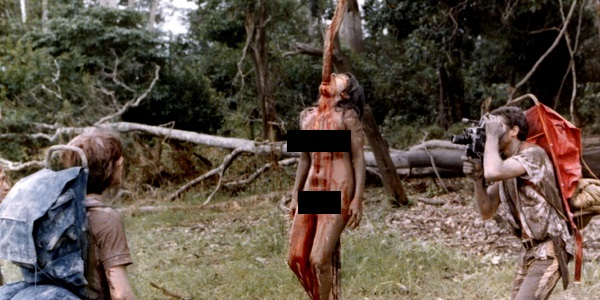
Ruggero Deodato's classic 1980 horror flick is infamous less for its scenes of human torture but more for the very real scenes of animal cruelty, causing the film to be both censored and banned in a number of countries, and even director Deodato has stated that " was stupid to introduce animals". Seven animals were killed during the production: a coatimundi, a turtle, a spider, a snake, two monkeys (the scene was shot twice), and a pig, and due to the movie's enduring status as an exploitation film, these deaths are seen as unnecessary, even if the local tribespeople did in fact eat both of the monkeys. As for the humans, Deodato was referred to as a "sadist" by a member of the cast, treating the actors (particularly the natives, who were unpaid for their work) abusively. Several actors were extremely distressed by being asked to kill animals, and Deodato also bullied actress Francesca Ciardi into appearing nude. In addition to all this, Deodato was dragged in front of the Italian courts post-release for the belief of many that Cannibal Holocaust was in fact a snuff film, and only when he produced the four principal actors alive and well were the obscenity and murder charges dropped. Were the animal torture scenes necessary? Not really. Did Deodato's abuse of his cast help intensify the terror? Probably.

7. The Exorcist Curse

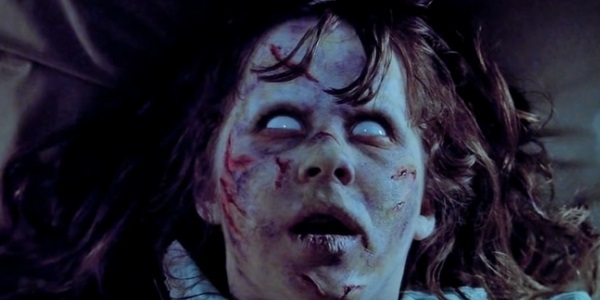
The Exorcist is regarded as one of the scariest films ever made, and with damn fine reason, but there's also a strongly-held belief among many fans of the film that the production was cursed. For starters, numerous people involved with the movie's production died during and shortly following shooting, with actress Ellen Burstyn being quoted as saying €œthere was an enormous amount of deaths connected with the film€. Here's the lot: actor Jack MacGowran died of flu complications before the movie was released, Vasiliki Maliaros (who played Father Karras' mother), died albeit of natural causes at the age of 90 shortly after shooting her part and actor Lee J. Cobb died of a heart attack a little over two years after the movie came out. Ellen Burstyn also insists that Max von Sydow had a brother who died during production, a cameraman's wife gave birth to a stillborn child, the set refrigerator also passed away, Linda Blair's grandfather died during filming, and one of the set's night watchmen also apparently died. In addition to all this, a fire on one of the movie's sets delayed production for 6 weeks, Ellen Burstyn suffered a permanent spinal cord injury while performing a stunt, and director William Friedkin ended up asking a Reverend to perform an exorcism on the set. He refused, but agreed to bless the set anyway. All this for a horror movie. Was it worth it? $441 million in box office receipts will make many a studio executive shout a resounding "yes!"

6. Heath Ledger's Joker Diary - The Dark Knight

When Heath Ledger tragically died several months ahead of the release of The Dark Knight, tabloid news outlets clung to the notion that Ledger had delved too deeply into his part as The Joker, and had essentially "become" the Clown Prince of Crime, confining himself to his room for weeks at a time to get into character. Though that's a creepy enough (if almost certainly untrue) suggestion, what's undeniably unsettling is the "Joker diary" that Ledger kept during production on the film, which his father Kim Ledger showed off for the first time in a documentary last year. The diary includes images of characters Ledger used for reference, such as Malcolm McDowell's Alex DeLarge from A Clockwork Orange, as well as scribblings of The Joker's dialogue, and most chillingly, the final page has the words "BYE BYE" written. Above all else, it's a monument to the ridiculous amount of effort Ledger put into portraying the character (which posthumously rewarded him with a Best Supporting Actor Oscar), though it's difficult not to separate the eerie relic from Ledger's tragic demise, and as an artifact of what he was working on in his final months, it's absolutely chilling.

5. Shelley Duvall Has A Nervous Breakdown - The Shining

Stanley Kubrick had a reputation as not only a fierce perfectionist, but a director who expected a lot from his actors, sometimes shooting takes over 100 times. His most infamous movie relationship, however, is with actress Shelley Duvall, who played Wendy Torrance in The Shining. The two frequently came to blows over both the script and her performance, and the stress of Kubrick's method ultimately caused her to fall ill, to the point that she collapsed on set and her hair began to fall out. Considering that The Shining is all about a man who has a psychotic break with reality, it's all too apt that Duvall essentially had a nervous breakdown during the movie's insanely lengthy year-long shoot. Did Kubrick's bullying make a better movie? Almost certainly, and though many express a dislike towards Duvall's performance, the sheer terror feels never less than totally authentic, especially during the climactic escape from an axe-wielding Jack.

4. Vic Morrow & Two Child Actors Are Decapitated By A Helicopter - Twilight Zone: The Movie

Production on Twilight Zone: The Movie suffered one of the most tragic and disturbing accidents in the history of Hollywood, when a mis-timed special effect caused a helicopter on set to crash to the ground, decapitating actor Vic Morrow and one child he was carrying, while the other child was also killed, and the six passengers of the chopper were injured. In the lawsuits that followed, it was revealed that director John Landis had flouted child labour laws, and accounts from the set suggested that he downplayed safety concerns during filming of the scene. Landis along with other members of the production were charged with manslaughter, though ultimately found not guilty, with the families instead receiving substantial settlements in civil proceedings. Considering the already spooky nature of a Twilight Zone movie, this just cast an even darker, creepier pall over the flick.

3. Guerrilla Filmmaking - The Blair Witch Project

Why bother cobbling together a high budget and awesome special effects when you can just throw three kids in the woods and scare the living crap out of them? That's pretty much exactly what happened during production on The Blair Witch Project: the three aspiring actors were given a camera, and had to follow clues left in milk crates in the woods as to where to travel and what to do next. In addition to this, the crew deprived the actors of food, made them walk excruciatingly long distances during the day, and at night would intentionally try to creep them out with unexpected "plot developments", such as leaving rocks outside their tent, shaking their tent and making creepy noises in the distance. In addition to all this, real human teeth were used for the scene in which Heather discovers Josh's apparent remains, albeit obtained from a dentist rather than, say, a corpse. Co-director Eduardo Sanchez claimed that "The whole point was to mess with them psychologically and have them film their reactions as time wore on". The final product certainly conveys the success of this approach, scaring up a storm at the box office, which is all the more impressive because of the film's minimalist nature: it is the actors and a creepy location, with little else.

2. Brandon Lee Is Killed By A Malfunctioning Prop Gun - The Crow
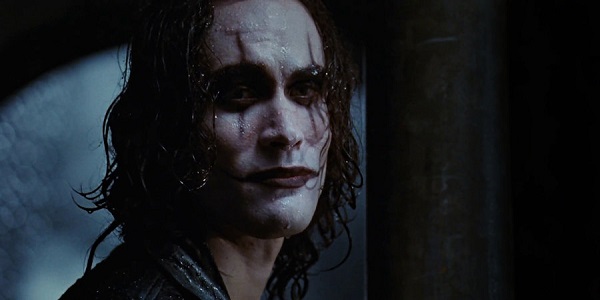
Another extremely tragic on-set accident occurred during filming of Alex Proyas' The Crow, in which star Brandon Lee was shot dead with a faulty prop gun by actor Michael Massee. Time constraints forced the prop department to improvise their own dummy gun cartridges, though they incorrectly assembled them and the firearms specialist had been sent home early, so when Massee fired the gun, the bullet was discharged and fatally wounded Lee in the abdomen. Given the movie's premise, revolving around a man who is shot to death (as well as being stabbed and hurled out a window) and comes back to life, Lee's death in such a similar manner proved not just tragic but extremely eerie, and sparked up significantly greater public interest in the movie, eventually leading to an impressive and unexpected $144 million box office haul. The spectral quality of Lee's character allows him to inhabit the movie in a uniquely haunting way, and it certainly makes the film a more curious, and obviously more tragic, viewing experience.

1. The Poltergeist Curse

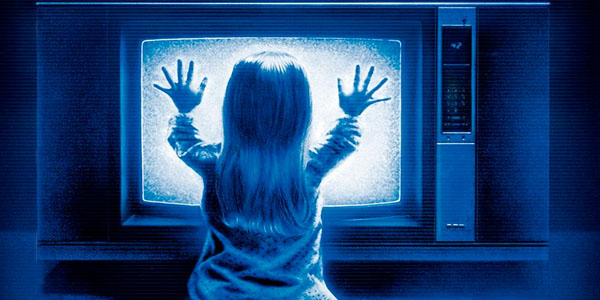
Before we even get into the numerous deaths that occurred in the wake of Poltergeist's release, let's get to the creepiest thing: for the scene in which JoBeth Williams ends up in the swimming pool with a bunch of skeletons, and for an unspecified scene in Poltergeist 2, real skeletons were used simply because it was cheaper than purchasing plastic ones. This helped kick-start the theory that those involved with the movie were cursed, as four cast members died during the six years between the release of the first and last movies. The first death came less than 6 months after the release of the first movie, when 22-year-old Dominique Dunne, who played the eldest daughter in the movie, was strangled to death by her ex-boyfriend. Julian Beck, who played Reverend Henry Kane in the second film, died of stomach cancer 8 months before the movie was even released, though had been diagnosed long before being offered the part, and Will Sampson, who played Taylor in the same film, died of post-surgery complications roughly a year after the movie's release. Perhaps most heartbreaking, however, was the sudden death of 12-year-old Heather O'Rourke, who had starred in all three Poltergeist movies, dying during surgery to repair a bowel obstruction four months before the release of the third movie. These four deaths occurring in such a brief time period, two of them totally unexpected no less, caused many to suspect that the use of real skeletons may have caused the movies to become cursed, as a punishment for desecrating the dead. Is the "Poltergeist curse" a tacky joke kicked around a bar one night that managed to catch on, or something more sinister? Whatever you believe, it's creepy as hell. Did we miss any super-creepy on-set stories? Let us know in the comments!

Contributor
Contributor

Stay at home dad who spends as much time teaching his kids the merits of Martin Scorsese as possible (against the missus' wishes). General video game, TV and film nut. Occasional sports fan. Full time loon.