10 Movies That Would Have Been Ruined By Happy Endings
It's a good thing there were no smiles when these credits rolled.
 In the real world, everyone doesnt always end up living happily ever after, but in the fictional tales told by Hollywood thats usually exactly what happens. There is an understanding to the thinking behind it: After investing anywhere from 90 minutes to 3 hours becoming emotionally invested in the story on the TV or theater screen, there needs to be a satisfying conclusion to the journey that is happening. Its important to leave a theater with a feeling of satisfaction and resolution. But every now and then a film comes along that takes a chance at doing something a little different, and gives a jolt that no one expects. Reality isnt always concluded in a safe, neat manner. Sometimes its ugly, and occasionally it's good for our entertainment to reflect that. Now, of course there are some movies that absolutely have to have that happy ending. For instance, the original Star Wars trilogy could never have ended with the Empire prevailing, Harry Potter had to defeat Voldemort and the vanquishing of Sauron was a necessity. With that being said, there are certain movies that never would have had the impact they did had they chosen to go with a more feel-good ending. In those circumstances, the safe option was definitely not the better one, and the entire tone of the film would be altered irrevocably afterward. This article is going to be delving into those movies, right here. Heres 10 Movies That Would Have Been Ruined By Happy Endings.
10. American History X
9. Open Water
 In 2003, the film Open Water, loosely based on the true story of a couple, Daniel and Susan, lost at sea after a scuba-diving trip, had viewers terrified of leaving dry land. The couple were left in the ocean by their diving boat after there was an error with the headcount and it headed back to shore. They werent discovered missing until the following day, at which point a search began. It was a psychological horror, with the majority of the film just the two principal cast members Daniel Travis and Blanchard Ryan, adrift in the ocean, cycling through an intense mixture of emotions while trying to survive until help arrives. Sharks begin to stalk them, in what essentially amounted to taunting, taking small bites out of them until eventually mauling Daniel during a storm. At this point, Susan had lost all hope and completely gave up. She removed her gear and sank below the surface to drown before the circling sharks had a chance to feast upon her flesh. Had the two of them been rescued, it would have completely negated the first 70 or so minutes of the movie, lessening the tremendous isolation of desperate hopelessness that the viewer felt along with the cast. One small complaint: A nice touch would have been to have a rescue plane go flying overhead mere seconds after Susan took her final plunge, illustrating just how frustratingly close they had come to salvation.
8. Philadelphia
 When Philadelphia hit screens in 1993, it was a landmark film for being one of the first to truly tackle issues of HIV/AIDS and homosexuality. Tom Hanks landed an Oscar for his gripping portrayal of closeted lawyer Andrew Beckett, in a groundbreaking performance that helped bring these hot-button issues to the forefront of the public consciousness. The film consists of Beckett suing his former firm in the wake of his dismissal for wrongful termination on the basis of AIDS discrimination. Hanks character won his case, being awarded back pay, pain and suffering and punitive damages to a total of nearly $5,000,000. The audience witnessed Becketts declining health and the toll AIDS takes on someone, and the film ends with his death. Philadelphia was vocal regarding issues such as safe sex and promiscuity, discrimination, same sex relationships and employer responsibility. It was a strong piece of cinema that still resonates today, in an admittedly much different social climate. But had Andrew Beckett not died at the end, much of that message would have been lost. Today, AIDS is no longer a death sentence, with pharmaceutical treatments being extremely effective at prolonging ones life and even allowing them to live a relatively normal existence. But viewers needed to see Beckett suffer and die in order for the message to truly be delivered in the strongest way.
7. The Blair Witch Project

6. Requiem For A Dream
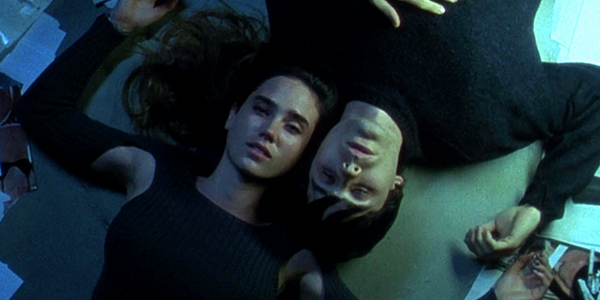 Few moves are as downbeat and soul-suckingly bleak as Darren Aronofsky's psychological drama about the horrors of addiction. The film stars Jennifer Connelly, Jared Leto, Marlon Wayans and Ellen Burstyn (nominated for a Best Actress Oscar) and focuses on different forms of addiction and the toll it takes on the lives of the characters. Burstyn's Sara becomes hooked on amphetamine pills to lose weight, increasing her dosages to alarming amounts, eventually leading to delusional psychosis. Harry (Leto), Marion (Connelly) and Tyrone (Wayans) are all heroin junkies who enter the drug trade, which leads to some expectedly dark places, including Harry convincing Marion to have sex with her psychiatrist for money. There are increasingly gloomy events that plague their lives, culminating in all four characters being utterly destroyed to the point of having nothing left, sinking as far as a human being can. The movie is a valuable narrative against the effects addiction can have on life, and in no way can ever be accused of glamorizing the lifestyle in any form or fashion. On screen is each character's descent into the abyss of broken nothingness, which is exactly how it should be given the dangerous subject matter of the film.
5. American Beauty
 Sam Mendes' "American Beauty" was one of the most celebrated and acclaimed dramas of 1999, winning Academy Awards for Best Picture, Actor, Director, Screenplay, and Cinematography, as well as being nominated for several others. The story is that of middle-aged writer and ad-exec Lester Burnham who develops an infatuation over his teenage daughter's best friend Angela, played by Mena Suvari. Kevin Spacey was brilliant in the lead role despite the studio being against his casting. There's a pretty heavy amount of WTF in this movie, with different themes being explored and multiple interpretations, but ultimately it's about a guy with a pretty severe midlife crisis. The ending of the movie sees Lester being murdered by his neighbor, just moments after it looked like his desires for Angela were finally going to be fulfilled. The film doesn't really have a sympathetic character and nothing good happens to anybody involved, which is exactly why it was so well-received. Can you imagine if Lester and his wife had resolved their issues and lived happily ever after? No, thanks.
4. Would You Rather?
3. Million Dollar Baby
 As a director, Clint Eastwood isn't exactly known for churning out movies that have audiences leaving the theater with a smile on their face. After all, Gran Torino and Mystic River could have easily made this list as well. But Million Dollar Baby's third act delivers a gutpunch that Hillary Swank's Maggie would be proud of. It is the story of a young waitress who shows up at the gym run by boxing trainer Frankie (Eastwood) looking to be trained. At first he refuses, but she eventually wins him over through her hard work and determination. The two develop a close bond, with Frankie taking on a paternal role in her life despite being estranged from his own daughter, and Maggie having little relationship with her own blood. She fights her way up through the rankings, earning a title shot against the world champion. But the champ fights dirty, and Maggie is paralyzed thanks to a sucker punch after the bell which causes her to land on the wooden stool in the corner. Unable to ever regain anything resembling a normal life, Maggie begs Frankie to euthanize her, and he finally relents, but not after revealing the translation of the nickname he had bestowed upon her. The entire movie is spent taking this difficult journey with Maggie, admiring her resolve and perseverance, and just when it seems she has reached the apex of her dreams, it's all taken away from her. And rather than embracing her situation as one more fight she has to overcome, she just gives up. It's a brutally bleak end to an inspiring story.
2. Se7en
1. The Mist