10 Promising Films Ruined By Changing The Director

What's a ship without its intended captain? Sunk, that's what.
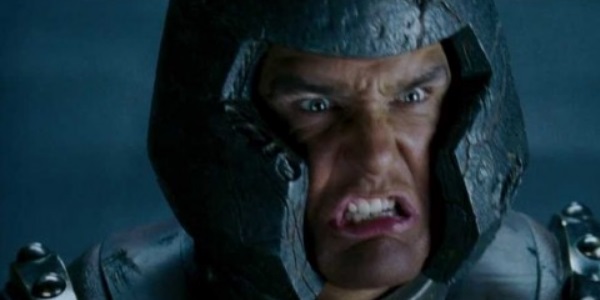
A screenplay is written, a director is found, a cast is selected, then the film begins shooting. Afterwards, the film goes through editing and digital effects before being released to the public. That€™s the general expectation for how the filmmaking process works, but it doesn€™t always happen that way. Films are constantly going through changes, even up to the release. Last-minute cast changes, script rewrites, test audiences hating the ending and leading to reshoots, and sometimes, the studio heads may decide they don€™t like what the director is doing and so they€™ll bring in someone new. The director usually provides the vision of the film. Every director puts his own stamp on it. So changing one at the beginning or even during production can lead to a really confusing mash-up of ideas. This usually happens when studios want a director more willing to sacrifice their vision in order to step to the studio€™s marching orders. And sometimes, a popular franchise can lose its director between films, which then leads to someone new coming in who doesn€™t have the same connection to the material. We€™ve looked through some of the blunders in film history to find examples of times when this has happened. Movies that once had promise when their original director was attached to them, but quickly ended up turning into a steaming pile of cr*p after the replacement director turned in the finished product.

10. Pirates of the Caribbean: On Stranger Tides
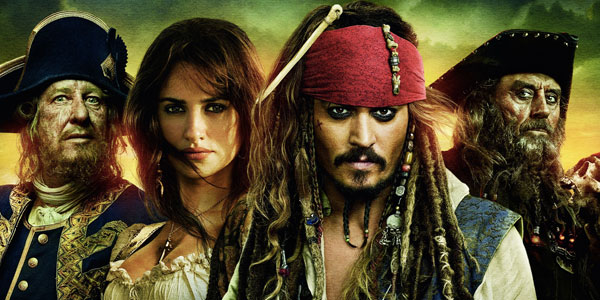
Pirates of the Caribbean: The Curse of the Black Pearl was a movie that nobody expected to do well. Pirate movies are notoriously difficult to sell to audiences, Johnny Depp was far from anyone€™s idea of a leading man at this point in his career, and the film was based on a ride. So far, we€™re looking at three big reasons why the movie was doomed to sink to the bottom of Davy Jones€™ Locker. That€™s why it was such a welcome surprise when it turned out to be a fun adventure. And though the sequels that made up the first trilogy never quite lived up to the original, they still managed to be entertaining enough. When the announcement was made that the series would continue on, but focusing on Depp€™s Jack Sparrow and Geoffrey Rush€™s Barbossa, it was an interesting approach, especially sending them after the Fountain of Youth and adapting the novel On Stranger Tides for the story. But Gore Verbinski, who directed the first three films, wasn€™t available for On Stranger Tides. And though Penelope Cruz was a welcome addition to the cast, director Rob Marshall wasn€™t a good fit for the film. The entire movie felt too safe, and the shoe-horned love story between the missionary and mermaid like something that was thrown together to make up for the lack of Bloom and Knightley.

9. Green Hornet

The Green Hornet was probably famously known as a TV crime-fighter played by Van Williams, whose sidekick, Kato, was portrayed by the legendary Bruce Lee. It was the martial artist€™s big break in the west that led to his star taking off. The character of the Green Hornet has a history that goes back further, originating as a radio serial in the 1930s. This film had been in development hell since the early 90s, until Miramax managed to get the rights and hired writer/director (and superhero fanboy) Kevin Smith to helm the project. Smith had approached Jake Gyllenhaal to play the role and would have introduced a female Kato (no doubt inspired by Ron Fortier€™s run on the Green Hornet comics in 1989). Unfortunately, it didn€™t pan out. Sony then managed to get the rights, looked at the success of adaptations that remained true to the source material, and apparently decided, €œnah, let€™s just hire Seth Rogen and turn it into a slacker comedy.€ Michel Gondry was chosen as the director, because when you want to make a movie about masked vigilantes, you apparently hire a director known for movies like Eternal Sunshine of the Spotless Mind and The Science of Sleep. The film was terrible and deserved the walloping it received at the box office. It€™s also notable for being a role that Nicolas Cage, who has never met a bad role he didn€™t like, turned down. But if you are interested in seeing what Smith would have done, he published it as a Green Hornet comic for Dynamite Entertainment.

8. Mortal Kombat: Annihilation

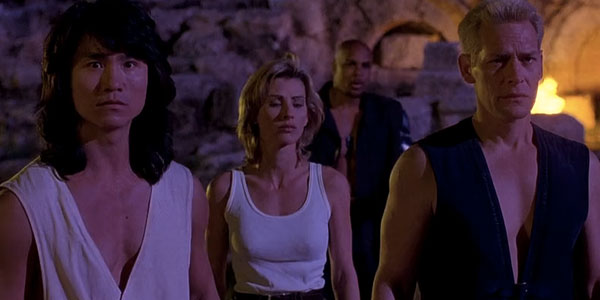
The first Mortal Kombat movie is hardly a cinematic masterpiece, but it was one of the few (possibly only) entertaining video game adaptations at that time. With a PG-13 rating, it lacked the blood-soaked violence of the games, and some of the graphics definitely don€™t hold up by today€™s standards. But despite all that, director Paul W.S. Anderson still managed to deliver a fun film to watch. The movie also ended on a cliffhanger, with the successful Kombatants celebrating their victory over Shang Tsung, only to have Shao Khan appear and declare he€™s come for their souls. The cliffhanger provided the perfect set-up for a sequel, but what we got instead was Mortal Kombat: Annihilation. With only Robin Shou and Talisa Soto returning for the second film, the entire cast was revamped. Johnny Cage was immediately killed off, Sandra Hess replaced Bridgette Wilson as Sonya Blade, and the great Christopher Lambert was replaced by James Remar. Anderson opted out of Annihilation, instead choosing to direct Event Horizon (a far superior movie). John R. Leonetti replaced him and tried to replicate Anderson€™s style in the first film. But it was a complete mess overloaded with terribly-written characters portrayed by even worse actors.

7. Quantum Of Solace

Changing directors in the Bond franchise is nothing new. With twenty-three films to date in the series, it€™s inevitable that there will be some shifting of directors. But when the studio decided to reboot the franchise with Casino Royale in 2006, they did go back to the well of past Bond directors. Martin Campbell, who had already performed a successful soft reboot of Bond in 1995 with GoldenEye, was hired to helm Casino Royale, and the result was one of the greatest Bond films in the franchise. For the sequel, though, the studio decided to go in a different direction and they hired Marc Forster. Rather than deliver what people would come to expect in a Bond film, what we got was a melodramatic mess of a film completely lacking anything even remotely resembling humour. As good as Craig is as Bond, not even he could have saved it. Instead of taking his cues from Campbell or the long history of Bond movies, Forster instead apparently took inspiration from Paul Greengrass€™s Bourne films. The result of which were shaky-cam scenes that were barely distinguishable. Add in the most pathetic villain in the series and completely squandering the SPECTRE-esque Quantum, and you€™ve got one of the low points in the franchise.

6. Iron Man 3

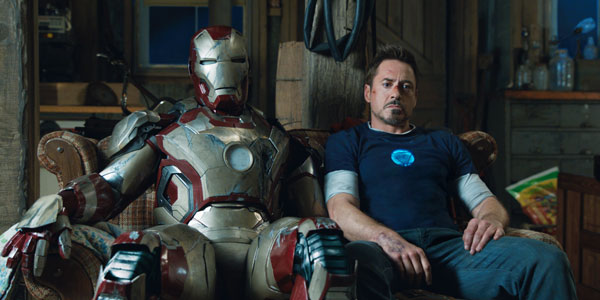
If not for Jon Favreau, we wouldn€™t have the Marvel Cinematic Universe. It was Iron Man, Robert Downey Jr.€™s performance, and Favreau€™s near-flawless direction that elevated the Armored Avenger from simply a comics stalwart into a massive superhero franchise on par with Batman and Spider-Man. And though Iron Man 2 has its problems (and no shortage of detractors), there was still the sense throughout the whole movie that Favreau really cared about the characters and the source material. Favreau bowed out of the third movie, however (at least as director, he still appeared playing Tony€™s bodyguard, Happy Hogan). Coming in to replace Favreau was Shane Black. Now Black is a Hollywood legend, at one time being the highest-paid screenwriter in the business. And with Kiss Kiss Bang Bang, he proved his director chops. So Iron Man 3 was highly anticipated. That made it all the more disappointing when we finally saw Black€™s take on ol€™ Shellhead. The trailers indicated that we might get a bit of a darker Iron Man film and see Tony Stark thrown against the ropes. But what we got instead was a lot of forced comedy, with Tony€™s state-of-the-art suit of armor constantly falling apart. It was like a parody of a superhero movie, culminating in the reveal that the Mandarin was nothing more than a drug-addled actor, a concept that was played for laughs. With Favreau, you got the sense that he loved these characters and their world. But with Black, it felt like he actively loathed them and found them ridiculous.

5. Exorcist: The Beginning

The Exorcist franchise had seen some ups and downs. The first movie is a horror masterpiece, and still holds up to this day. The less said about Exorcist II: The Heretic, the better. And though Exorcist III had some rough spots, it€™s still a decent follow-up to the first film (and was directed by William Peter Blatty, the author of The Exorcist). One thing we knew was that The Exorcist was not the first time Lankester Merrin encountered the demon Pazuzu. Exorcist: The Beginning was to be a prequel that told the story of a young Merrin and the studio hired Paul Schrader to direct. Schrader€™s version was a psychological horror film more in line with the original movie. The studio balked at this, instead wanting something violent and gory. They fired Schrader and replaced him with Renny Harlin. Blatty said of Harlin€™s version that it was his most humiliating professional experience. The film did so bad that eventually, the studio allowed Schrader to release his own version of the film direct to video, which was titled Dominion: Prequel to The Exorcist. Despite both movies having virtually the same plot and setting, the tone is markedly different in Schrader€™s version. This, at least, was one time when the director managed to win out in the end.

4. Blade: Trinity

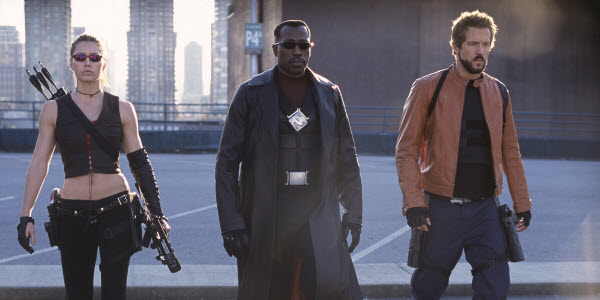
The first Blade movie was what rescued the comic book film after Batman & Robin almost buried it. And the sequel helped set the trend for comic book sequels to raise the bar higher. Blade II was directed by Guillermo Del Toro, who kept some of the same tone as Stephen Norrington€™s first film, but then upped the ante. With stunning visuals, action, and Ron Perlman playing a villain, Blade II easily became the best film in the franchise. Del Toro was supposed to direct a third Blade film. However, he had finally been given the opportunity to direct his dream movie€”Hellboy€”and so he passed. Other directors were considered, but then David Goyer, who wrote the scripts for all three films, was able to step into the directing chair for the first time. And man, does it ever show. The film is called Blade: Trinity, but you€™d be forgiven for being surprised at how small Blade€™s role actually is in this film. Goyer was so focused on throwing in new characters because he wanted to create a Nightstalkers spin-off that he forgot this movie was still supposed to be about Blade. This caused a lot of drama on the set, with Snipes and Goyer fighting a lot. Ryan Reynolds is really the only good thing about this movie, providing some much-needed humour to help ease the pain of the script and direction.

3. Batman Forever

We€™ve spoken in the past about both Tim Burton€™s initial plans for his third Batman movie as well as Joel Schumacher€™s intention for Batman Forever to be longer and darker than the version we saw. But regardless of the strangeness of Burton€™s ideas or the purity of Schumacher€™s intentions, it still doesn€™t change the fact that Batman Forever is a pretty awful movie. And for that, we can thank the studio€™s change in directors. Batman Returns was far darker than Batman, and it led to parent complaints that it was too frightening and sexual for children. McDonald€™s pulled its advertising for the movie, and this scared the suits at Warner Bros., because for them, the Batman films were supposed to be two-hour long commercials. The studio asked Burton to restrict himself to the role of producer and then they hired Schumacher. Taking some more inspiration from the lighter comics and the TV series, Schumacher had villains that were more garish than grotesque, and brought back a bit of camp to the films. It paid off for the studio, earning more money than Batman Returns and bringing in a lot of money. Unfortunately though, fans suffered.

2. Superman II

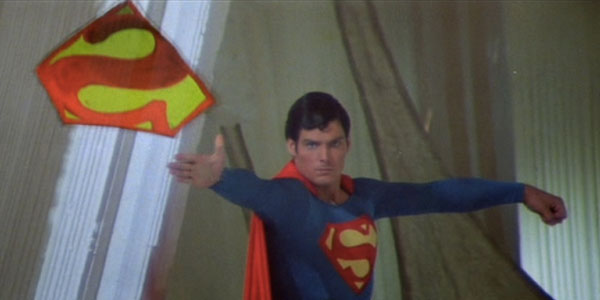
Richard Donner€™s Superman: The Movie is easily the grandfather to the modern comic book film. It€™s a little unbelievable that it took over twenty years for all the studios to catch on that what worked for Superman: The Movie was to treat the source material with respect, and Donner had to fight those who would turn it into a camp-fest. During the production of Superman II, Donner clashed a lot with the producers. While Donner wanted to treat this as a serious film, the producers pushed for more camp elements, and the conflict eventually got to the point where Richard Lester was brought in to act as an intermediary, and eventually replaced Donner entirely. Although Donner had completed most of the film, for Lester to get sole directing credit, he had to direct the majority of it. So the screenplay was revised and many scenes were reshot. Several actors refused to return to the set out of loyalty to Donner, especially Gene Hackman, and so body doubles were used when reshoots were needed. All the slapstick visual gags during the attack on Metropolis and the attack on the small town, which ruin the tone of the film, were Lester€™s additions, as were Superman€™s new powers. And when Lester was allowed to give the world his own pure vision of a Superman film, we got Superman III. Donner eventually did get to release his own cut in 2006, and it€™s amazing what he was able to do with already-existing footage, as reshoots were impossible.

1. X-Men: The Last Stand

After the success of X2, Bryan Singer had planned to return for a third instalment, but the problem was 20th Century Fox. They continued to drag their feet whenever Singer asked about beginning work on a third film. So with no start date in sight, Singer accepted the task of directing a Superman reboot for Warner Bros. This pissed off Fox, who said they would fast-track a third X-Men film and force Singer to choose. Singer chose Superman Returns and Fox went ahead with X-Men 3 with a new director. Matthew Vaughn was brought onto the film, but he later backed out, in part because he didn€™t think the short production schedule could do the movie justice. Enter Brett Ratner, who was apparently okay with that challenge. He charged through production like a bull in a china shop, providing a film that was slapped together with so many characters and elements forced into it. In one movie, we get a new and larger Brotherhood, a new team of X-Men, a mutant cure, and the Dark Phoenix all strung together, with almost no time devoted to developing any of them. Despite enjoying success at the box office, the film was rightly criticised by both moviegoers and fans alike. Cyclops and Professor X were killed pretty much solely for shock value, and the Dark Phoenix Saga, one of the greatest X-Men stories ever, was reduced to a footnote. Rumour has it that Singer€™s return to directing the X-Men in Days of Future Past will also mean a bit of a reboot of the timeline, erasing some of the more unsavory elements of The Last Stand from the series€™ continuity.

Contributor
Contributor

Percival Constantine is the author of several novels and short stories, including the Vanguard superhero series, and regularly writes and comments on movies, comics, and other pop culture. More information can be found at his website, PercivalConstantine.com