10 Things The Hobbit Does Better Than The Lord Of The Rings

It may not be as good as Jackson's first trilogy, but it still does a few things better.
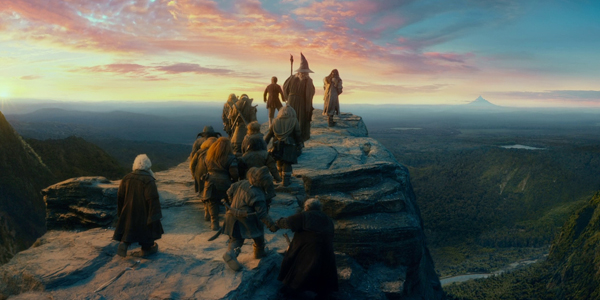
The general consensus is that The Hobbit Trilogy doesn't come close to The Lord Of The Rings. Or at least in fan circles. To the general public there's less of a disparity between the two. In fact, there are plenty of similarities between them, and the decade or so since the release of Lord of the Rings has definitely added the nostalgia factor to how the first three films are viewed, and allowed the fans to forget some of their flaws. You know, the overly long ending (after ending, after ending), shield surfing, how Gimli son of Glóin was used for comic relief far too much in the series, and so on. Add in the removal of the Scouring of the Shire, and the lack of Saruman in the third film (theatrical, at least - he was worked back in for the Extended Edition release), and there are plenty of nitpicks, and areas where we can see The Hobbit trilogy actually excel. Blasphemy, right? We'll admit, the Lord of the Rings is the stronger set of movies (thus far at least, as the third film in The Hobbit trilogy is yet to be released). That doesn't mean there aren't areas where it can surpass Jackson's earlier efforts however. Where? Well lets take a look - here are ten things The Hobbit does better than The Lord of the Rings.

10. Conveying A Childlike Sense Of Wonder
The Hobbit was written as a children's book, while the Lord of the Rings, a much longer work, was more high fantasy, and was written when J.R.R. Tolkien's publisher requested a sequel to his beloved original. It's not surprising, then, that the first book more easily captures the minds of children, while The Lord of the Rings is something many readers tackle in their early teens (maybe with an old Zepplin record playing in the background). The same is true of the films: the sense of wonder, the childlike awe of exploring a new world, is better conveyed in The Hobbit series, right from the get-go. It's there when we meet Bilbo, the mischievously mysterious Gandalf, the whimsical arrival of the Dwarves, but it's still there when we get to the trolls, and even when Bilbo meets the legendary Smaug. The Lord of the Rings, on the other hand, captured this feeling briefly in The Fellowship of the Ring, but dropped it soon after as the film and its later chapters became darker in tone.

9. Defining The Difference Between Goblins And Orcs
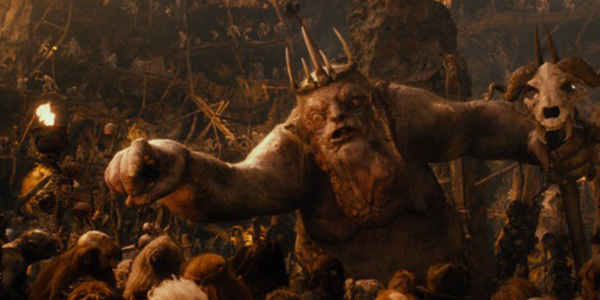
In all honesty, the creatures of the Dark Lord Sauron were almost indistinguishable in The Lord of the Rings, with the exception of the Uruk-Hai, and even those stood out mostly because of the White Hand of Sarumon being painted on their armor. Otherwise, they were just all ugly goblin-like creatures. Were those encountered in Moria (clearly meant to be Goblins, as Legolas even points the fact out) really that distinct from the orcs we see elsewhere in the series? Not particularly. The Hobbit films learn from this. The goblins encountered in the first film are pale, differ in size, and are more distinct. Goblins are goblins in these films, and orcs are orcs. Even the Pale Orc, Azog, stands apart from the goblin hordes. Part of the confusion may stem from the fact that Tolkien used goblin and orc generally interchangeably, however the terms themselves have become more distinct over the years, and for the sake of a visual medium, it's nice to see differences between the clans, if you will. The Goblin King in The Hobbit was particularly memorable.

8. Portraying Gandalf As A Playful Trickster
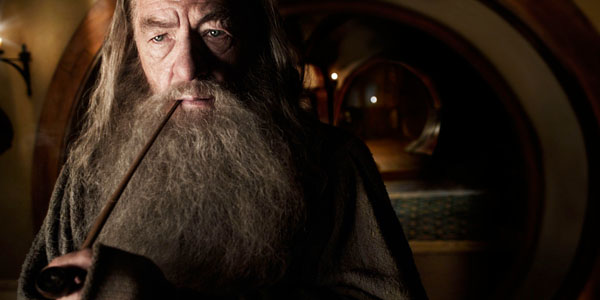
Gandalf was always something of a playful trickster, coming and going in the novels, and really, ambushing Bilbo into the mission to the Lonely Mountain. He was mischievous, and apt to vanish, then pop up just when he was needed. The vanishing act shows up in both films, but the mischievous side was better portrayed in The Hobbit; the Gandalf of Lord of the Rings is a more thoughtful, calculated character. Gandalf in the Hobbit was perfectly willing to hijack the life of a total stranger, on little more than a whim, and send him on his way. It owes a lot to the source material, of course, but it's a more rounded Gandalf.

7. Providing A Memorable Orc Character
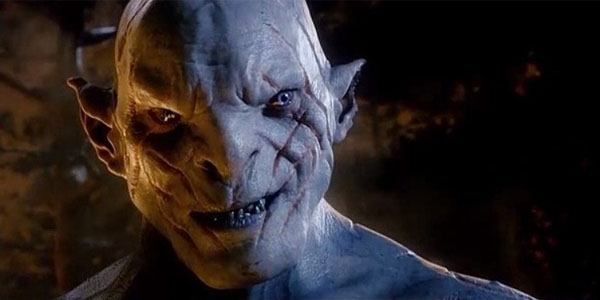
Azog is not mentioned much in The Hobbit, but appears in other Tolkien works as well. His role in the films was greatly expanded from the source material, but it does serve to give the movies their first really memorable orc character. In The Hobbit (novel), Gandalf says to Thorin "'Your grandfather Thrór was killed, you remember, in the mines of Moria by Azog the Goblin" - and that's just about the only mention of him. More is said in the Simarillion, and some of what you see of Azog in the films is lifted from there, while other bits have been added/altered, such as Azog surviving the Battle of Azanulbizar and hunting the Dwarves and Bilbo.

6. Portraying Dwarves As More Than One-Note Characters
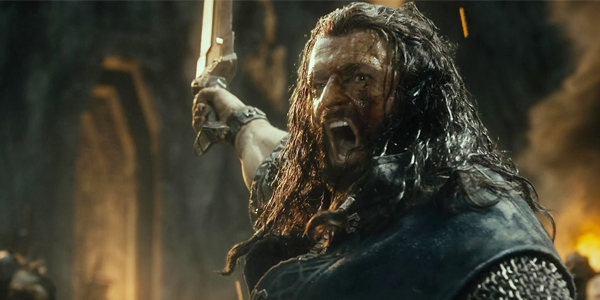
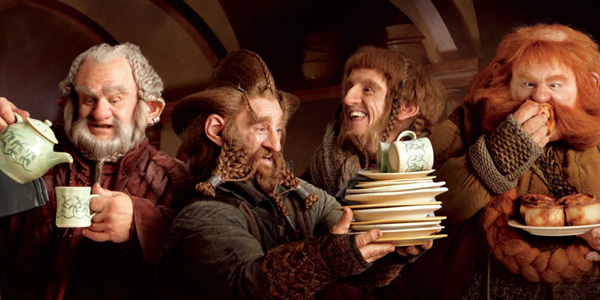
"I'm wasted on cross-country. We dwarves are natural sprinters!" Between Gimli's line above, dwarf tossing jokes, and other little comedic bits, Gimli was perhaps given the short end of the stick in The Lord of the Rings. He was something of a one-note character, and rarely got a moment to shine. It's a credit to John Rhys-Davies that he was able to do as much with the character as he did. The Hobbit managed to diversify through numbers. Balin, Thorin, Fili and Kili in particular stand out, and while there are still comedic one-offs (Bombur in particular), it's not as unwelcome in a movie with a lighter tone and more dwarves to choose from.

5. Getting The Motion/Movement Of The Wargs Right
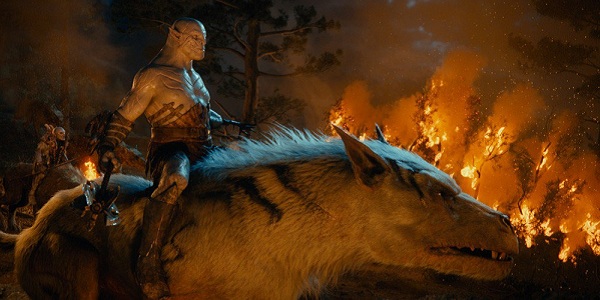
On the way to Helm's Deep in The Two Towers, the people of Rohan were ambushed by orcs riding Wargs - giant wolf-like creatures. Frankly, to us, they look more like a wolf crossed with a hyena, but maybe we're alone on that. In any case, it wasn't really the look of the Wargs that bothered us, it was their movement. In The Lord of the Rings, they just seemed stiff. Seeing one fall down dead was like watching a model topple over. Given how good the CGI in the movies was, it was jarring to see a moment when it wasn't up to snuff. Thankfully, this has been improved in The Hobbit series, and the Wargs move much more naturally. There is also considerably more variation between individual Wargs, thanks no doubt in part to improvements in CGI tech over the past decade.

4. Providing A Believable Dragon/Flying Beast
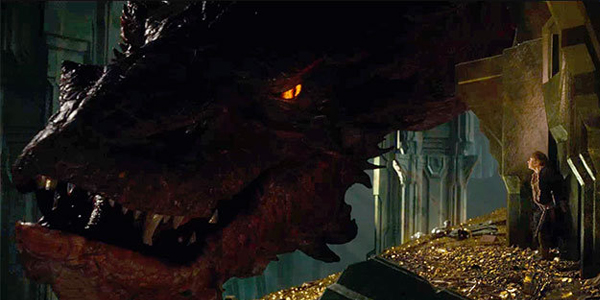
Similar to the issue we had with the Wargs in Lord of the Rings, the Fell Beasts (the dragons the ring wraiths rode) were hit and miss in the movie. At times they looks fantastic, at others they seemed stiff. None of them compared to Smaug. Smaug is what we were all waiting for when it came to a big screen adaptation of The Hobbit. Never mind Bilbo, Gandalf, Thorin Oakenshield, or Gollum. Smaug was the character that had to be right. Botch the design, and the movie would be considered a failure. Weta got this one right, and Smaug is absolutely fantastic. He's fluid, and moves how we imagine a dragon should.

3. Including Characters That Were Difficult To Transition To The Screen
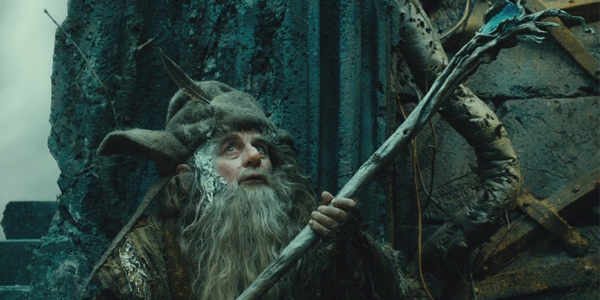
Simply put, Radagast the Brown could have been left out of The Hobbit entirely. He's a bit silly, a bit off, if you will - and even though it's a story originally for kids, a lot of people probably would have welcomed the more serious tone. We'll let you in on a little secret, however: Radagast is one of our favourite guilty pleasures of the new films. Yes, he's an oddball, but watching him rush through the forest with his team of sled-rabbits was, simply put, fun. Compare that to how another "silly" character, the singing Tom Bombadil, was dropped from the Lord of the Rings adaptations, much to the disdain of Tolkien purists. Yes, that was a longer, darker work, but we feel Jackson made the right choice this time around. It's not just Radagast, either. Getting twelve Dwarves to stand out is no easy task, nor was Beorn. These were issues The Lord of the Rings simply avoided.

2. Showing The World Of Men As More Than Set Pieces
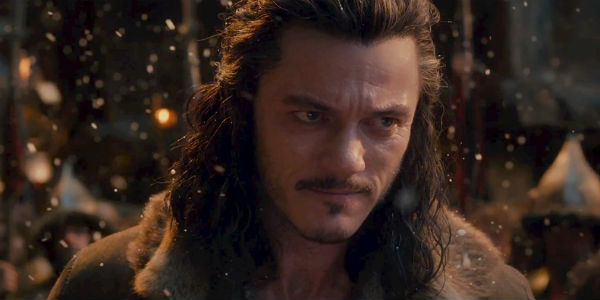
Did we see anything besides fortresses and palaces in Lord of the Rings, when it came to the world of men? Did we see any actual semblance of organized, or even disorganized, civilization? People's homes? Markets? Sure, we saw the Shire, and it was a functional, frankly fantastic setting that left us in awe. However, Isengard, Rohan, Helm's Deep (to be fair, that was supposed to just be a fortress), and Gondor - they were never really fleshed out. They were simply set pieces, and very little was really seen of how the people in them lived and worked. How on earth did Gondor grow food, for example? Was everything brought in via wagon? The Hobbit gets it right. In The Desolation of Smaug we see an actual, functional city of men (Laketown), pretty much for the first time in the Middle Earth films Jackson has given us. It may not be as grandiose as Gondor, but it's more believable. In that, the Hobbit surpasses the Rings films.

1. Bilbo

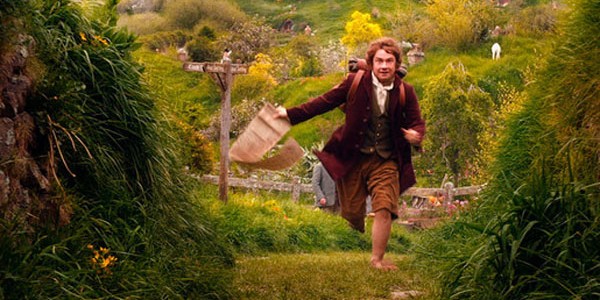
Ian Holm was a fantastic Bilbo in The Lord of the Rings, so much so that we wondered how anyone would be able to take his place. Sure, they de-aged him by way of make-up in the Rings trilogy, but it was clear that such an approach would never work for a full-fledged adaptation of The Hobbit. So we were a little nervous about the casting of Martin Freeman - but he has absolutely come through and knocked his portrayal of Bilbo out of the park. He wisely avoided simply aping Holm's mannerisms, and made the younger Bilbo his own. It could have just as easily been an Anakin situation, and we are very, very thankful that it's not. More importantly, however, Freeman manages to surpass the original with his portrayal of the character Agree? Disagree? Add your thoughts below.

Contributor
Contributor

Primarily covering the sport of MMA from Ontario, Canada, Jay Anderson has been writing for various publications covering sports, technology, and pop culture since 2001. Jay holds an Honours Bachelor of Arts degree in English from the University of Guelph, and a Certificate in Leadership Skills from Humber College.