10 Totally Confusing Hollywood Screenwriting Disputes
Who actually wrote these Hollywood movies?

Think you know who wrote your favourite movies? There’s a good chance what you know is wrong.
One of the most controversial subjects in film production is writing credits. While the romanticised view of screenwriting involves one or two writers collaborating on a screenplay, scripts for Hollywood movies are often passed from writer to writer, with no actual discussion until the film goes into production. Worse, even if a dozen writers work a screenplay, only a handful will receive on-screen credit. Deciding who gets that credit often causes behind-the-scenes issues.
Many of those issues stem from the Writers Guild of America (WGA). In theory, the WGA exists to ensure that executives do not unintentionally or intentionally strip a screenwriter of well-deserved credit. While most screenwriting credits are assigned without argument, the WGA arbitrates any disputed credits with the intention of giving credit to the writer(s) who established the initial concepts and/or did the most work on the script. Unfortunately, this is an imperfect system that sometimes results in writers getting credit for scripts that they had little or nothing to do with.
Because writing credits are extremely valuable on a screenwriter's resume (opening doors for future work and higher fees), some fights over proper credit have been extremely bitter. The following ten movies each had controversial and confusing battles over the authorship of the screenplays.
10. Two Teams Of Writers Get Credit For Jurassic World

The movie that would become Jurassic World had been in gestation for over a dozen years and had numerous creative talents associated with it. In June 2012, Rise Of The Planet of The Apes screenwriters Rick Jaffa and Amanda Silver were hired to write the Jurassic Park 4 screenplay. However, when Colin Trevorrow signed on to direct the film in early 2013 he and writing partner Derek Connolly wrote a new script. According to Trevorrow and Connolly, the only elements that remained from Jaffa and Silvers script were the concepts of trained raptors and a previously unknown super-dinosaur as the main villain.
A few weeks before the movie’s release the WGA ruled that Jaffa and Silver would be given both “Story by” credit (suggesting they developed the story) and also “Screenplay by” credit, which they shared with Trevorrow and Connolly despite not having written a single word of the final shooting script. Trevorrow later expressed disappointment in having to split screenplay credit with the other writing team. One thing is for certain: now that Jurassic World is number three on the all-time box office list, it’s not surprising people want to take credit for it.
9. Terry Gilliam Is Told He Didn't Write Fear And Loathing In Las Vegas

Terry Gilliam has fought several wars with Hollywood throughout his career, but one of his most contentious battles was over credit for his adaptation of Hunter S. Thompson’s 1971 novel Fear And Loathing In Last Vegas. Writers Alex Cox and Tod Davies completed a script in the mid 1990s that Thompson found unsatisfactory. Gilliam was hired to direct the film with only ten days to write a new script. Still, he and frequent collaborator Tony Grisoni wrote an entirely new screenplay that Thompson preferred and was subsequently filmed.
Shortly before the film’s release, the WGA insisted that Cox and Davies would be the only writers to receive on-screen credit because it deemed Gilliam’s script substantially similar to the original. Gilliam argued that different scripts that were adapted from the same novel would obviously be similar. Though the WGA allowed Gilliam and Grisoni to be mentioned first in the credits, Cox and Davies still receive on-screen credit for a screenplay they didn’t write.
In retaliation, Gilliam and Grisoni published their screenplay as “Fear And Loathing In Las Vegas: Not The Screenplay” and Gilliam burned his WGA card during a public appearance. In addition, Gilliam and Grisoni were denied co-writing credit on their next film The Brothers Grimm despite substantially rewriting the screenplay. They credited themselves as “Dress Pattern Makers” instead.
8. David Mamet Writes Wag The Dog Script; Forced To Share Credit

Barry Levinson was hired to direct a film based on the novel American Hero, which is about a U.S. President staging a war to gain popularity. However, Levinson thought the existing screenplay by Road House screenwriter Hilary Henkin was inadequate. He hired David Mamet, one of the most acclaimed American writers of stage and screen, to write an entirely new screenplay. Without reading the novel or Henkin’s screenplay, Mamet created the co-lead character of Hollywood producer Stanley Motss, who would be played by Dustin Hoffman. Mamet also introduced many other elements that were unique to his screenplay, so it was expected that Mamet alone would be credited for the script that was now titled Wag The Dog.
Not only did the WGA disagree with that expectation, but Henkin was acknowledged before Mamet in the credits (“Screenplay by Hilary Henkin and David Mamet”). Henkin and Mamet were both nominated for the Academy Award for Best Adapted Screenplay, despite Mamet not using any of Henkin’s material.
The following year, director John Frankenheimer asked Mamet to similarly entirely rewrite the screenplay for his movie Ronin. Rather than again accept co-writing credit with the original writer, Mamet chose to be credited under the pseudonym “Richard Weisz.”
7. George Clooney Rewrites Whole Leatherheads Script; Gets No Credit

In the case of Leatherheads, a 2008 sports comedy about the early days of American football, director, producer, and star George Clooney did not dispute that original screenwriters and sportswriters Duncan Brantley and Rick Reilly deserved credit for the screenplay.
However, their screenplay was written way back in 1991, and shortly before the film went into production Clooney completely rewrote all but two scenes in the script to turn it into a comedy. Clooney appealed to the WGA to receive co-writing credit along with Brantley and Reilly, but his request was denied. It was speculated that, as director, producer, and star, the union believed Clooney already received enough credit for the movie.
Furious, Clooney went “financial core” with the WGA, meaning that he all but resigned from the organisation and became a non-voting member (a full resignation would have caused issues with him working with writers who were part of the Guild in the future). To add insult to injury, Leatherheads received mediocre reviews and was a box office bomb.
Clooney has since been credited with co-writing the screenplay for The Monuments Men, though like Leatherheads it was also a flop.
6. Michael Bay Says Writing Credits For The Rock Are "A Sham"

Though director Michael Bay’s movies are not often cited as examples of masterful screenwriting, the 1996 action blockbuster The Rock is still often brought up as a written movie. One of the reasons for that is because of the talented that was involved in writing the screenplay. Both Aaron Sorkin and Quentin Tarantino worked on it, though according to Bay the primary writer was Jonathan Hensleigh, who had previously written Die Hard With A Vengeance. Star Sean Connery even brought in two writers to specifically work on his character's dialogue.
However, none of those writers received on-screen credit for the screenplay. Writers David Weisberg and Douglas S. Cook, who originated the screenplay, received the “Story By” and “Screenplay By” credit. Of the other major contributors to the screenplay, which included producer Don Simpson who died during the production, only Mark Rosner also received credit from the WGA for the screenplay because he was the first to rewrite the film.
To make things worse, Hensleigh was the only writer to actually be on set during the shoot and actually rewrote most of the film's dialogue to make it more humorous. Bay later called the WGA's decision not to credit Hensleigh "a sham, a travesty."
5. Writer Gets Credit For X-Men: First Class; Didn't Work On The Script

There were almost as many writers of X-Men: First Class as there are X-Men characters. The credits for the movie lists four writers of the screenplay (Ashley Miller, Zack Stentz, Jane Goldman, Matthew Vaughn) and gives “Story By” credits to Sheldon Turner and Bryan Singer. Gossip Girl and Chuck co-creator Josh Schwartz and Street Kings co-writer Jamie Moss also wrote versions of the screenplay but they both were uncredited.
The breakdown of the finished product is this; Thor writing team Miller and Stentz wrote the screenplay based on a treatment by Singer, while Vaughn and Goldman provided substantial rewrites. So what did Turner do?
Though credited for the film’s story, Turner didn’t write a word of the screenplay. Turner had written a screenplay for a Magneto origin script about his youth in a Nazi concentration camp that was never put into production. Because the first several minutes of X-Men: First Class involved similar material, the WGA ruled that Turner deserved “Story By” credit despite Singer arguing that no material from Turner’s script was used.
It wasn't the first time Turner was involved in a screenplay dispute. He previously received credit for co-writing the film adaptation of Up In The Air when it was revealed that co-writer/director Jason Reitman had used elements of a previous adaptation that Turner originally wrote. That script was later nominated for an Oscar for Best Adapted Screenplay.
4. Eddie Murphy Takes Credit For Beverly Hills Cop II Story

After the Eddie Murphy action comedy Beverly Hills Cop became the biggest hit of 1984, Paramount wanted to do a sequel. Highlander screenwriter Larry Ferguson came up with the “alphabet crimes” plot of the film and wrote the screenplay after Murphy liked the idea. Before the film was released, Ferguson found out the credits would read “Story by Eddie Murphy and Robert Wachs” and “Screenplay by Larry Ferguson and Warren Skaaren.” Ferguson didn't understand why three other people were sharing credit for a concept and a script he had developed himself, including Murphy’s manager Wachs, who had never been credited for writing anything in his life.
While famed script doctor Skaaren did a few days of rewrite work on the script, he was furious that Murphy and Wachs were receiving credit for the story when Paramount could produce no treatments or drafts to prove that they wrote anything. The easy assumption was that Murphy and Wachs demanded credit simply because they could. Ferguson sued the Guild, but the suit was thrown out on the grounds that as a member of the WGA Ferguson already agreed in principle to abide by the Guild’s decisions on screenplay accreditation.
3. Nobody Can Say For Sure Who Actually Wrote Cliffhanger

The 1993 Sylvester Stallone action film Cliffhanger has perhaps the most confusing writing credits in Hollywood history.
Screenwriter Michael France sold his Cliffhanger script to Carolco Pictures, which Stallone revised himself. Outside producers Gene Hines and Jim Zatalokin approached Carolco with claims that they had developed the story with famous climber John Long prior to France’s involvement and produced a half-page synopsis written by Long. The WGA awarded Long a never-before-used “Based on a premise by” credit, and so the film’s final credits unwieldy state “Screenplay by Michael France and Sylvester Stallone, screen story by Michael France, based on a premise by John Long.”
Hines and Zatalokin were awarded co-producer credits in lieu of screenwriting credit. Furthermore, Carolco paid settlements to other uncredited writers who claimed that they came up with the story. In other words, it’s impossible to figure out exactly who wrote what in the Cliffhanger script.
Cliffhanger wasn’t the first or last time that Stallone faced issues with screenplay credits. He won two separate lawsuits over claims that he ripped off the stories for both Rocky IV and The Expendables. Stallone also settled a lawsuit by Chuck Wepner after the boxer claimed he was the inspiration behind the script for Rocky.
2. Credited Writer Of The Bridge On The River Kwai Didn't Speak English

According to the original credits of the 1957 David Lean World War II epic The Bridge On The River Kwai, the script was written by French novelist Pierre Boulle, who wrote the historical novel (Le Pont de la Rivière Kwai) that the film was based on. The film became a huge hit and Boulle was nominated and later won the Academy Award for Best Adapted Screenplay. There was only one problem: Boulle didn’t write the screenplay. In fact, he couldn’t even speak or write in English at the time.
Boulle was given credit because the actual writers of the script, Carl Foreman and Michael Wilson, were on the Hollywood blacklist for refusing to answer questions during U.S. Congressional hearings regarding their past involvement in the American Communist Party. Because of that, neither could receive on-screen credit for their work.
Though both Foreman and Wilson wrote screenplays in Europe and under pseudonyms until the blacklist ended, the Academy did not award them their Oscars until 1985. Unfortunately, both men had died before then – in fact, Foreman died the day after the WGA announced it was revising credit in 1984. Foreman and Wilson have received on-screen credit for the screenplay in all subsequent reissues of the film.
1. Mike Myers Says His Own Script Is Unacceptable
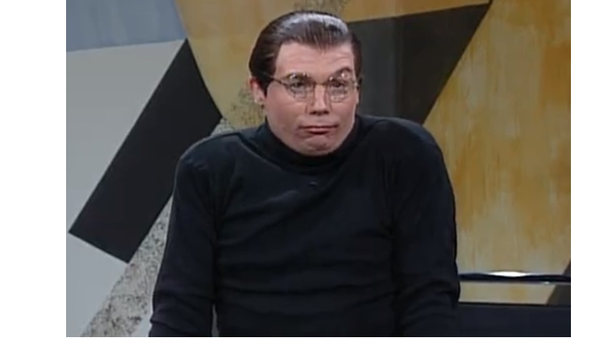
Unlike the other entries, the script for Dieter never even made it to a controversial ruling by the WGA. In the late 1990s, comedian Mike Myers co-wrote a script with Austin Powers: The Spy Who Shagged Me co-writer Michael McCullers and longtime Saturday Night Live writer Jack Handey based on his German expressionist talk show host SNL character Dieter. However, after Austin Powers: The Spy Who Shagged Me was a gigantic hit Myers pulled out of the film and said that after fourteen drafts he didn’t approve of his own screenplay.
Yes, Myers claimed his own writing wasn’t good enough. Universal and producer Brian Grazer had already spent several million dollars signing Will Ferrell and Jack Black to star alongside Myers and sued him. Myers countersued. Many just assumed that Myers didn’t want to make the movie now that he was a huge star.
The suits were eventually settled and the movie was never made. Myers later worked with Universal and Grazer when he starred in The Cat In The Hat, which the press speculated was one of the terms of their settlement (which Grazer denied). Since The Cat In The Hat is considered one of the worst films ever made, Myers probably should have written a fifteenth draft of Dieter instead.
Which screenwriting dispute was the most ridiculous? Tell us your thoughts in the comments!