10 Ways 9/11 Completely Changed Movies

The effect it had on movies can still be felt today.

The attacks on September 11, 2001, where terrorists hijacked commercial planes and targeted New York and Washington, changed the world in just about ever manner. The political landscape shifted dramatically, with the War on Terror, which was officially begun in the aftermath of the disaster, still (unofficially) continuing. Popular culture was likewise irreversibly altered. The Twin Towers had been an iconic part of the New York skyline for almost thirty years, while the attack itself had an impact on every member of the global community. There was no way the arts could be unaffected by this. There's obviously been movies that directly deal with the attacks themselves, which we've already looked at in this article. Ranging from documentaries looking at the wide-reaching impact of the attacks to films looking at the in-the-moment emotions of that fateful day, there's been some very interesting features made that directly deal with the tragedy. But the impact the tragedy had on cinema was a lot more than just a few movies; the entire industry was irreversibly altered. Today we're going to look at what impact 9/11 had movies, going from the immediate aftermath all the way through to the modern day.

10. Movies Were Cancelled

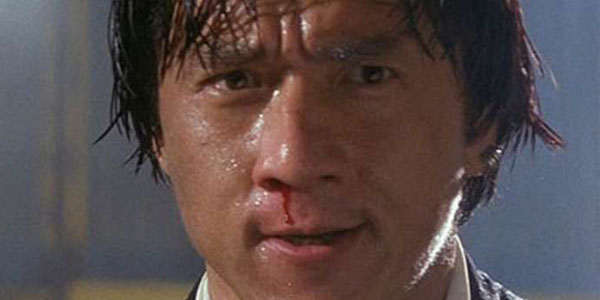
Following the attacks many of people melodramatically claimed they could have easily been at Ground Zero that day, narrowly escaping death thanks to a mix of coincidence and fate. One of the more fantastical stories, reported in the Chinese press, was that Jackie Chan was scheduled to be shooting on the World Trade Center for his new movie, Nosebleed, but by some piece of luck he was delayed. While the odds that Chan was actually going to be shooting there is a bit too far, 9/11 did have a big impact on Chan. In the film he plays who a window cleaner on the Towers who ends up foiling a terrorist plot, which in the immediate aftermath of the tragedy was striking just too close to home. The film, which was more than likely in pre-production that gearing up for actual shooting, was scrapped; the producers could think of no way to make it in any way acceptable. You may think that the window cleaner element could have been reworked to make something reverential, but even that would have been too much in late-2001, as we'll see next.

9. Upcoming Movies Were Edited

The September 11 attacks shook the world and in the days, weeks and months following 9/11 a lot of effort was put into making sure the arts didn't step too far. In an attempt to keep things as inoffensive as possible, the movie industry at large went about adjusting upcoming films to play down these elements. On top of the removal of the WTC from most (but not all) New York set films, many plots and sequences had to be played with. The Bourne Identity was originally going to lean strongly on a terrorist plot, which was removed in editing, while Lilo And Stitch was going to end in the titular alien hijacking a Boeing 747 (which goes to highlight how unexpected the attacks were). The biggest casualty was Spider-Man. On top of featuring the Twin Towers prominently in the movie itself, the marketing leaned heavily on the World Trade Center's iconic part of the New York skyline. Posters featured the Towers reflected in Spidey's eyes and a teaser trailer climaxed with bank robbers escaping in a helicopter getting caught in a web spun between them. It wasn't all negative for the film though; it gave the scene of New Yorkers ganging up on the Green Goblin an added sense of poignancy.

8. Old Films Were Censored

Editing upcoming releases is all well and good, but there's a wealth of movies out there that feature the Twin Towers or themes related to 9/11 readily available on home video and on TV. That's what saw some movies edited or totally ignored The most perplexing from a modern standpoint is Back To The Future. Any mention to the Libyan's who Doc stole the plutonium from as terrorists was removed from TV broadcasts. The original version has since replaced this edit as time has gone by. Other films weren't so lucky, having been almost written out of existence. The 1976 King Kong has become something of a curio in recent years. Although that's partially down to Peter Jackson's version replacing it as the most prominent remake, the fact that the film ends with Kong climbing the Twin Towers (instead of the Empire State Building) can't have helped. The Simpsons episode The People Of New York Vs. Homer Simpson was removed from the air for about five years. The Twin Towers feature prominently (on a bender Barney's parked Homer's car between them), although the lack of any really offensive material makes it highlights just how sensitive times they were.

7. Hollywood Tried To Go Lighter

In the first couple of years after the attacks what was noticeably absent was down-to-Earth action, with fantasy worlds removed from our own dominating the box office. The nineties had been dominated by massive, world-threatening action, but now it all felt a little too close to home; there was no escapism in Independence Day's destruction of the world's monuments. Instead, the likes of The Lord Of The Rings, Harry Potter and Pirates Of The Caribbean became the big franchises, offering something different to what was on the news. The big releases in 2002/2003 are pretty much across the board this sort of family-friendly fare. Controversy would still arise every now and then, but for a while the industry went in a very inoffensive direction. The one film with an overtly contemporary setting that did appear with great success was Spider-Man, but that was so deliriously fantastical (and, as we pointed out, boasted a united New York) that it was far removed from the tragedy. So immediately following 9/11 Hollywood tried to give us something totally different. Although that wouldn't last for long...

6. New Imagary

Steven Spielberg's The War of the Worlds features an unexpected attack that throws regular people into a terrifying situation. Released in 2005, only four years after 9/11, it's clear by this point Hollywood was coming to terms with what happened. And it's not just in the events of the film that it's invoking the attacks either; visually the film leans heavily on footage of that day. People walking dazed past downed planes and destroyed buildings, families cowering as explosions ring out and, most striking, victims coated in dust; the film is not only entering the same territory, but actually invoking the tragedy. Being a large scale attack in a metropolitan area, something movies so often went for, it really was only a matter of time before cinema started to integrate the imagery of 9/11 into its toolbox. If a film features an attack in any form, particularly in a contemporary setting, odds are the video from new reports are a close visual reference. The zenith of this is Cloverfield. In essence a 9/11 monster movies, everything about it is built on how the tragedy unfolded. The monsters is unexpected and unexplained, throwing the people of New York into terror without them understanding why. Shot from a camcorder it feels incredibly modern; the shot of citizens quietly pausing to snap photos of the Statue of Liberty's severed head seem a little silly, but it's pretty on the money. Since then it's only escalated, with a trait dubbed destruction-porn becoming increasingly prevalent in effects-heavy cinema; the likes of Man Of Steel boast destruction that makes 9/11 look insignificant.

5. The Middle East Became A Key Setting

9/11 directly led into the War on Terror, which shifted the world's focus to the Middle East. And, as you'd expect, Hollywood followed. Obviously you get films like The Kingdom or The Hurt Locker, which explore conventional stories (CIA thriller and the horrors of war respectively) in a Middle Eastern setting, but with those there's an argument for relevance; there's plenty of totally unrelated films that use this location. Look at Body Of Lies, one of the few bad marks on Leonardo DiCaprio's filmography, which takes the usual conspiracy story and puts in in Jordan because relevance. Iron Man, a character who was initially conceived to reflect the political situation of the Cold War, found his origin story transplanted to Afghanistan, with a al-Qaeda-esque terrorist group holding him hostage. Even though it turns out they're actually part of a more Americanised plot, the influences are clear; Iron Man turning up and blowing up all their weapons is essentially cinematic retribution for attack America. It's natural for films to follow the news, but this is still a shift in focus heavily influenced by 9/11.

4. The Twin Towers Became Shorthand For Period New York

Films always rely on visually iconic shorthand to get locations across. It's irritatingly crass, but every film set in Paris has to feature the Eiffel Tower; there's no easier way to get it across. Likewise, the New York skyline is so iconic in itself that to tell an audience a film was set in the Big Apple all a director needed to do was show one shot of the Twin Towers. Of course, since 9/11 that isn't the case. The Empire State Building has become the go to NYC building again (although the new towers may soon replace it), with the Twin Towers now used for a totally different purpose; to tell us it's a period movie. Mere years after the disaster films set in New York pre-2001 were digitally adding the Twin Towers and soon it was a required element of film set in the past. This practice resolutely puts the Towers in the past, showing an emerging acceptance of what happened. Given how blanket the censoring of themes marginally related to the events was initially this marks an interesting shift towards the events becoming a historical mark, rather than something in the present.

3. Terrorists Became Go To Bad Guys

Just as the source of the September 11 attacks became an ideal place to set films, those who instigated them became the go to screen bad guys. Again, it's only natural for films to follow the news (look at how the seventies and eighties were ruled by Cold War paranoia), but in this case it's so geared towards the events of 9/11 it's ridiculous. Extremists working on ideals have always stood as villains alongside big business and corrupt governments, but now they're almost exclusively Muslim fundamentalists. Before they were suave German robbers or VW-driving Libyans, but in the media the word has become so synonymous with al-Qaeda that all other manner of fundamentalists are downplayed. In Source Code, which features repeated attempts to figure out who was behind a train bombing, Colter Stevens immediately assumes it was the muslim passenger on the train who is the bomber, with the reveal its actually a disillusioned American being a proper twist. Things are starting to let up as time goes by, but the notion of terrorists as big villains still dominates; they can commit atrocious acts with their beliefs serving as a substitute of real explanation.

2. The Attacks Themselves Became Background Noise

As we've looked at, there's been a wide range of films spinning off from the September 11 attacks that look at varying elements of the tragedy; the horror of the event itself and the political situation it created. But once the initial splurge was over - documentaries examining exactly what happened and dramatisations - there's been a marked lack of directly 9/11-inspired films; even as it completely changed the industry as it did the greater world its presence has shifted. Remember Me, the Robert Pattinson romantic drama, made the above list for just this reason. The film ends with his character, Tyler, in the North Tower on the morning of the attack, but 9/11 and its impact on the wider world isn't explored; the film looks solely on the effect it has on its characters, making it little more than a plot device. Extremely Loud and Incredibly Close (and unbelievably boring), which somehow got nominated for the Best Picture Oscar, uses the attacks as a motivation to gets its character on its journey, but again doesn't really use the event other than an excuse to kill the protagonists father. What this suggests is that while the effects of the attacks can still be felt in movies, the event itself has become a diluted piece of history for movies to use without any real reason beyond emotional manipulation. The poor box office returns from the likes of World Trade Center and United 93 no doubt played a part in this, making films that straight-up deal with tragedy not seeming worth the studio's time, but its interesting that on top of the evoking the imagery being common-place, the event is now just another cinematic tool.

1. Realism Took Over

You can argue the realism that blockbuster cinema turned into in the mid-naughties was inevitable. The garish films of the nineties had made jovial jaunts incredibly uncool and film needed to go in another direction, but there's no way that the 9/11 attacks didn't play a central part of it. Look at the films that came out pre-9/11 that attempted to offset the likes of Batman And Robin; X-Men and Spider-Man both feel incredibly light in tone and content by modern context. The two films that made realism vogue have strong links to the attacks; Casino Royale's villain is using his poker winnings to fund terrorism, while The Dark Knight looks at unexpected metropolitan destruction. There's the usual 9/11-style to things (just look at that image of Batman stood in the ruins of a destroyed building), but there's an attempt to use it to make previously removed characters part of our own world. Heck, The Joker's speech about events being "all part of the plan" is essentially an explanation of just what made the destruction of the World Trade Center so shocking. The world had seen real terror at home. Movies didn't need to go to crazy lengths to create major threat anymore and given how shook up the world was audiences didn't want that either.

Contributor
Contributor

Film Editor (2014-2016). Loves The Usual Suspects. Hates Transformers 2. Everything else lies somewhere in the middle. Once met the Chuckle Brothers.