12 Directors Who Have Never Made A Bad Movie
Can Tarantino make it to 10 movies without a bomb?
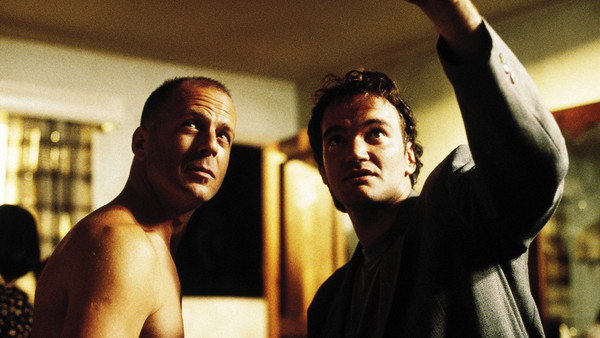
It's not controversial to say that the majority of films shovelled out to theatres every year are pretty bad. Making movies is hard, messy work, but there are some directors that are more reliable than others, and their name being attached to a project breeds a sense of confidence that a film should be good.
But not everyone gets it right 100% of the time, and even the most well-regarded directors are prone to dropping a few stinkers now and then. Whether they've been around long enough where a couple of duds are inevitable (looking at you Spielberg) or budding new creatives who started out strong and then lost their footing (got your number, M. Night Shyamalan), even the most talented filmmakers are prone to directing movies they'd rather not have on their IMDb page.
However, there's a small selection of filmmakers - either long retired or still working today - who have never put a foot wrong. Somehow they've pulled off the unimaginable and enjoyed a career of constant success, and while some of their work is obviously better than others, they've been lucky enough avoid releasing anything that's outright bad.
12. Wes Anderson

Ever since he burst onto the scene with 1997's unrefined-but-energetic Bottle Rocket, Wes Anderson has continued to cultivate his own uniquely oddball, romantic, and symmetrical, filmmaking style.
It's a signature aesthetic that you either adore or get can't get on board with, but while the majority of Anderson's lovable movies share a similar general feeling, they vary wildly when it comes to the stories and characters (though you can always bank on Bill Murray being involved in some form).
Rushmore's teen-comedy leanings are a far cry from the surprisingly dark adaptation of Fantastic Mr. Fox, but while these projects have always broached new subjects, they do all share one thing in common: they've been adored by both critics and fans alike.
Nary putting a foot wrong, and only going from strength to strength if his last few features - including the utterly mesmerising Grand Budapest Hotel and the upcoming Isle of Dogs - are anything to go by, Wes Anderson is yet to mess up, and has more than proved himself as being more than a one-trick pony.
11. David Fincher
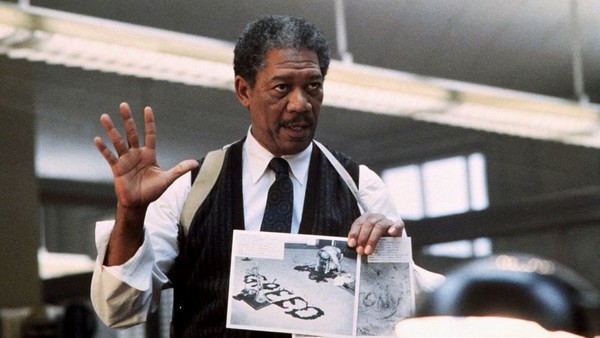
Unlike some of the other directors on this list, David Fincher has come close to ruining his flawless streak on more than one occasion. Hell, his debut feature, Alien 3, was famously troubled, to the point where the director barely ever brings it up when talking about his filmography, while the likes of Panic Room and The Game don't quite do his talents justice.
Still, these are far from bad movies, and although they don't hit the iconic highs of Fight Club, Se7en, and even Gone Girl, very few films can. His lowest points still make for great viewing, jam-packed with interesting ideas and propped up by an intensely engaging directing style that has the ability to elevate material even as daft as the needlessly-convoluted plot of The Game.
Despite not releasing classic after classic, Fincher has been able to cultivate a sickly-but-stylish oeuvre of thrillers, and although he isn't flawless, is still is yet to make an outright terrible movie.
10. Edgar Wright

Known primarily for his comedies, Edgar Wright has never been confined by one genre, jumping from the zombie mayhem of his breakout hit Shaun of the Dead to the buddy cop aping Hot Fuzz, and even defied them entirely in movies like Scott Pilgrim vs. The World.
Shaun and Hot Fuzz are perhaps what he's most revered for (the "we'll wait for it all to blow over" jokes are getting a little old now, guys), but outside of the so-called Cornetto trilogy, Wright has continued to edge closer to finally breaking the mainstream with increasingly daring flicks.
His latest feature after infamously jumping ship on Ant Man, the musically-driven Baby Driver, was an unexpected hit, and proved that the director has both the action and emotional chops needed to create serious movies that don't fall back on comedy as a crux.
Wright's most contentious movie is undoubtedly The World's End, a flick which had the unenviable job of capping off the cult-classic Cornetto trilogy. Despite being less consistent than the instalments that preceded it though, this attempt at social sci-fi is still a thoroughly good time, and packs the biggest emotional punch of any of his movies so far.
9. Denis Villeneuve

One of the hottest directors working today (and coming off the back of dropping one of the best sequels of all time), Denis Villeneuve has been creating unappreciated masterpieces for years now, gaining attention with foreign-language epics like Polytechnique and Incendies before onto American-centric stories.
Arrival was the film to properly break him into the mainstream though, and received some rightly-deserved praise in 2016 for using a classic alien invasion tale to tell a deeply person story (although I'll never be over Amy Adams being robbed at the Academy Awards).
His previous movies before this were just as good, with Prisoners and Enemy gaining a dedicated following, while even Sicario, perhaps the shakiest Villeneuve has been since moving over to American cinema, ended up being a deliciously twisted spin on big-budget crime thrillers.
Admittedly, it hasn't been a totally perfect run, and the director's very early work is a bit rough and unrefined. His distinctive fingerprints are still present though, and through these early efforts you can see him slowly find his feet and settle on a vision that would eventually result in some of the best genre pieces of the past few decades.
8. Quentin Tarantino

Despite never leaving the limelight for well over 20 years now, Quentin Tarantino has only actually made eight films so far. From being a scrappy upstart and blowing the doors off Hollywood with the one-two punch of Reservoir Dogs and Pulp fiction, to crafting Wild West epics like Django Unchained and The Hateful Eight, every new project has served to completely shake up what audiences can expect from a Tarantino movie.
Because while sure, there are staples that show up in every release - mile-a-minute dialogue, over-the-top violence and a liberal use of the n-word to name a few - the director reliably delivers some of the best original stories in Hollywood.
Unfortunately, an over-reliance on his worst habits sometimes results in movies that are hindered by how obnoxious they are, with the likes of Jackie Brown at times feeling like it was made by another director doing their best QT impression.
Tarantino has often claimed that he'll retire after ten movies, and as long as nothing goes wrong, he could bow out of the directing game without making a single bad flick.
7. Paul Thomas Anderson

Arthouse darling Paul Thomas Anderson has wowed critics with every release since he dropped Hard Eight in 1996, quickly going on to gain mainstream success thanks to the double bill of Boogie Nights and Magnolia soon after. The former of which Mark Wahlberg has since admitted he wished he never acted in, which means it must be good.
Later works in his career have refined the raw aggression that always lurked beneath the surface of his first movies, resulting in features which are difficult to totally grasp with one viewing, like the recently-nominated Phantom Thread or The Master, but that only makes them all even more impressive on subsequent rewatches.
Hell, PTA is so good that he even did the unthinkable back in 2002 with Punch Drunk Love: he made you realise that Adam Sandler can actually act.
Of course there have been blips here and there, with the erratic, drug-fuelled anarchy of Inherent Vice being viewed as an incomprehensible self-indulgent mess or a modern masterpiece depending on who you ask, but even that's still generally considered as being a flawed-if-ambitious experiment.
6. Hayao Miyazaki

The man who's become the face of the acclaimed animation house Studio Ghibli, Hayao Miyazaki's expressionistic movies have shaped the childhood of an entire generation, while the likes of Princes Mononoke, Spirited Away and My Neighbour Totoro were undeniably influential in legitimising anime as a respected art form.
Announcing his retirement numerous times throughout the years, Miyazaki always seems to have one more movie left in him. Fortunately, this usually means that when he does return to head up another production, it's something that he pours his heart and soul into, with this passion and creativity being felt in every frame of his films, even the ones that don't quite reach the ridiculous heights of his most recognisable flicks.
You'll be hard pressed to find a director more beloved than Miyazaki working today, and his name being attached to anything is an immediate seal of approval, ensuring that it'll be instantly adopted as the greatest thing of all time by his rabid fans.
5. Guillermo Del Toro

Although Guillermo Del Toro has spent his entire career thus far creating mystifying, original movies, the majority of them have been criminally overlooked by mainstream moviegoers.
Sure, Pan's Labyrinth is viewed as one of the greatest films of the 2000s, but it took a long time to amass that reputation and recognition, while flicks like Hellboy and Pacific Rim enjoyed a strong critical reaction, but failed to register at the box office.
It's a shame, as nobody working today does genre flicks like Del Toro, but it's exactly because of his love for fantasy, creature features and dark fairy tales that he's rarely recognised in prestigious awards or ranked amongst other mainstream directors he's clearly just as good as (if not better than).
Fortunately, the Oscar nominations The Shape of Water has received could be a sign that the times are a-changing, and will hopefully go a long way in validating genre directors more widely.
4. David Lynch

From his debut with instant cult-classic Eraserhead to his last feature film, 2006's Inland Empire, Lynch's career has birthed some of the most iconic characters, settings, and, weirdly enough, catchphrases, in American cinema.
However the main differentiator between Lynch and his imitators, who have tried and failed to ape the intoxicatingly obtuse nightmares that Lynch so vividly brings to life, is you always get the sense that he's having fun with his work.
He understands how ridiculous it is to have The Good Witch show up in Wild At Heart, or to put so much focus on the overly-cheery grandparents in Mulholland Drive, but that inherent silliness never detracts from the impact and resonance of his thought-provoking abstract material.
The director did make a couple of mistakes when he was first breaking into Hollywood, and the sci-fi epic Dune completely wasted his talents, but even at his worst, Lynch is still far more interesting than the majority of filmmakers could ever hope to be.
3. Stanley Kubrick

Stanley Kubrick was famously known as being a perfectionist, but his obsessive need to labour over movies meant that while the director didn't make many flicks over his almost 50-year career, each and every one was a new opus.
However, while the popular image of Kubrick is that of a serious auteur who crafted dark, violent tales like The Shining, Eyes Wide Shut and A Clockwork Orange, his full body of work is much more diverse, and often lighter than you'd expect. From establishing the framework of every modern sci-fi film with 2001: A Space Odyssey to cranking out hilarious black comedies like Dr Strangelove, there wasn't a genre Kubrick didn't master.
His earliest features lack the visual flair and narrative preoccupations which would later define him, but they're still solid movies in their own right, and acted as a playground for the budding visionary to hone his skills in.
Likewise, Full Metal Jacket and Eyes Wide Shut don't have the same polish as his go-to classics, but the latter in particular still boasts some of the most provocative and daring material in the director's entire back catalogue.
2. Akira Kurosawa

Perhaps known best for his samurai stories like Yojimbo and Seven Samurai, Akira Kurosawa's influence on the medium is unparalleled, and it's not contentious to say that a good majority of the filmmakers on this list wouldn't be as great as they are if it wasn't for his work.
From the 1940s through to the 1960s, Kurosawa released must-watch movies every couple of years, jumping around genres to deliver standouts like the crime thriller Stray Dog, the romantically-tinged The Idiot, while also regularly returning to the samurai stories that made him a household name.
He wound down in his later years, but his ambition never waned. If anything, some of his final movies such as Ran are arguably his best, acting as a culmination of everything the director learned over the years to create genuine epics which constantly pushed the boundaries of what cinema could be.
They weren't as accessible as his earlier work, but that only made them all the more interesting to pick apart, and rounded out his long, flawless filmography on a high note.
1. Christopher Nolan

Just because Chris Nolan has topped out this list, it doesn't mean he's the best director ever, but it means he's perhaps the most consistently enjoyable. Beginning out by delivering astonishingly unconventional indie thrillers like Following and Memento before moving onto big studio fare (arguably creating the best superhero trilogy of all time in the process), Nolan is one of the only creatives in Hollywood with the freedom to create big-budget, original concept blockbusters.
Consequently, audiences have been given everything from brilliant, intelligent sci-fi in the form of Inception to sparse, harrowing war tales like Dunkirk that continue to push the envelope of blockbuster filmmaking. Even overlooked gems such as Insomnia shouldn't be underestimated when considering the full strength of the director's body of work.
He's not without fault, of course, and Interstellar was probably the closest the director has come to making a movie that wasn't instantly viewed as a masterpiece, but although its nonsense ending became divisive, it's still a genuinely jaw-dropping intergalactic tale in its own right.
Likewise, The Dark Knight Rises is considered another of his lesser works, but considering the ridiculous expectations which were lumped on that movie, Nolan should still be commended for rounding out the trilogy in a respectable and (mostly) satisfying way.