20 Best Films Of 2015

11. Star Wars: The Force Awakens

As a movie, The Force Awakens is, well, just a movie. It isn't a transcendent experience, it isn't going to change your world outlook and it isn't going to alter cinema forever (bar smashing every box office record going). It isn't, objectively, a perfect film - it has pacing issues and gives itself more backstory and mythology to fill in than perhaps was necessary - and it's fair to say that the fact it can't do any or all of those things makes the past years of ever-building hype seem bizarre. But Star Wars is more than just a movie franchise (and I'm not referring to all the merchandising). As a cultural experience there's been nothing like The Force Awakens since The Phantom Menace (and there the reaction in the face of those stupidly high expectations was much more negative) and while it can be frustrating watching Episode VII and knowing a bit of tightening here and alterations there would make it the movie we all dreamed of, it's hard not to get swept up the wonder of the world J.J. Abrams has advanced (especially on rewatch, when you've had a chance to accept its failings). After years of at best mediocrity, at worst the nadir of the franchise, Star Wars is finally great again. The Force Awakens brings together the past with tempered nostalgia and moves forward with unique, interesting characters making the future as bright as the past. And isn't that brilliant? Read the full review here.

10. Macbeth

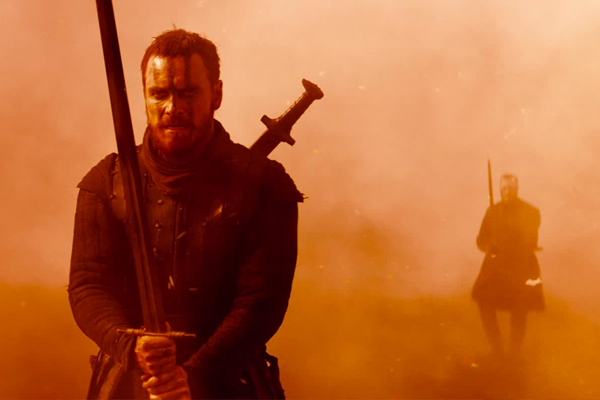
Orson Welles? Roman Polanski? Akira Kurosawa? Nah, the best ever cinematic adaptation of Macbeth is Justin Kurzel's. Yes, his gritty, battle-hardened take on the Scottish Play is just that good. Or should that really be Scottish Film? Because what really makes this version stand out from the rest of the Shakespearean pack is its indelible balance of faithfulness to the Bard's text and lack of compromise when transferring it to the big screen. This is both as accurate a tale as possible - we're in 11th Century Scotland, with the heavy dialogue delivered in thick accents - while also not afraid to make alteration to better fit the medium - there's massive brutal, bloody action beats throughout and the central duo now have sex while plotting regicide. The result is something that is visually resplendent as it is verbal, lending modern readings to the story (Macbeth is suffering from PTSD) without dulling what Bill originally intended; we're not on a stuffy soundstage doing something that could be transferred to the Globe with a bit of altering to the blocking - this is a film, through and through. That's not to say it doesn't deliver in the necessary areas; the acting is, of course, top notch, likewise providing twists and convention; Michael Fassbender's Macbeth is more immediately ruined than conventional takes, but he still manages to sell the descent, while Marion Cotillard's Lady Macbeth is highly sympathetic. Read the full review here.

9. Brooklyn

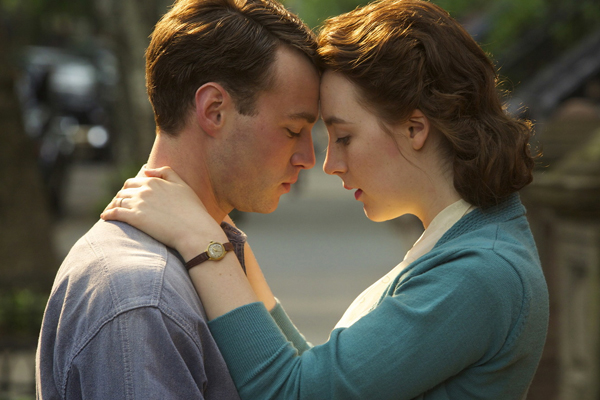
There's a shot in Brooklyn shortly after Eilis Lacey arrives in America where she stands amongst a crowd on the sidewalk she instinctively stands out as an outsider, despite no tangible element making her any different to the hordes of extras around her. It's a genius use of mise en scene, costume and performances that runs throughout the film, slowly reducing until Eilis becomes part of the firmament. What's so impressive is that the extent of her change doesn't become fully clear until the film's close, even after she's come to terms with her emotional distance from her native Ireland. On the way back to America she guides a new immigrant just in the way she was nurtured initially; she has, without the audience or herself noticing it obliquely, matured and become her own person. It's one of the year's most cathartic climaxes, coupled nicely with the underlying sense that confidence isn't something that must be fought to achieve. The handling of this key arc is what makes Brooklyn stand out from the rather trite period coming-of-age tale it could have been, with Saoirse Ronan's transformation gradually realised against the backdrop of several engaging subplots. Timeless. Read the full review here.

8. Beasts Of No Nation

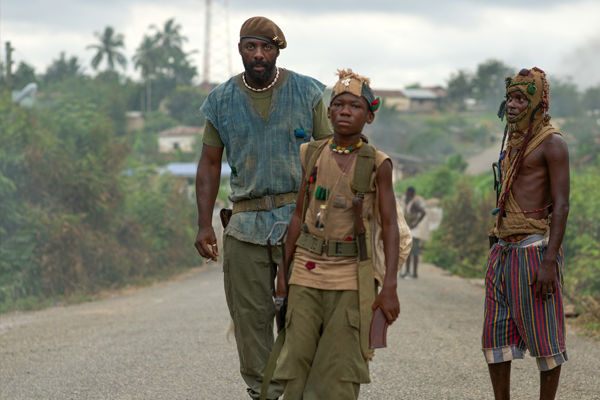
Directing TV used to be a glass ceiling - you'd maybe get to leave a fingerprint or two on whatever the project was, but essentially you were a gun for hire who'd statically realise the showrunner's ideas. Now it's a different landscape - the Golden Age has led to the person behind the camera defining an episode as much as the writer, something that was an odd exception even five years ago. Nobody's profited from this more than Cary Fukunaga. He directed every episode of the near-perfect first season of True Detective (he was astute enough to turn down the sophomore offering), in the process turning himself from exciting cinematographer with an interesting CV to one of the biggest names in the visual medium. So hopes were naturally high for Beasts Of No Nation, his first post-Yellow King project. And boy did he deliver. There's the visual panache that's become his calling card executed with contextual care, but the way he crafts the story of Abu, an orphan in a war-torn African country who becomes indoctrinated as a child soldier to Idris Elba's war lord is astute and involving. It's so measured that while Elba gives a powerhouse performance, it's Abraham Attah's final monologue on his broken psyche that sticks with you; young actor and director working together building to something shocking. Oh, it was also the first movie ever distributed primarily through Netflix. But the film's so good that's hardly worth commenting on any more. Read the full review here.

7. A Most Violent Year

Had A Most Violent Year come out in early 2016, it would have been massive - the coolest guy from The Force Awakens as an anti-Scarface in the most subversive gangster film since Goodfellas directed by one of American cinemas' biggest rising talents. As it is, it was an arthouse hit destined to be rediscovered as Oscar Isaac and J. C. Chandor become more household names. For now it'll have to settle for seventh on this list, an award it fully deserves. This is a gangster flick, but rather than doing that typical thing of just repeating the rise-and-fall arc of Goodfellas (see Black Mass), A Most Violent Year goes against that with real awareness. Abel Morales is the owner of an oil company trying to expand his business in New York at its crime-ridden peak while maintaining his integrity. He doesn't want to embrace the seedy underbelly of the city, but it's a necessary evil as tensions escalate, making for a difficult journey that has its moral compass almost pointing in the right direction. It's a delicious idea and everything about it is brilliant executed, with Chandor presenting all this internal conflict in a subtle, nicely drawn-out way, mastering yet another genre (after banking crash thriller Margin Call and one-man-in-a-boat drama All Is Lost) in the process.

6. Mad Max: Fury Road

If you told me at the start of 2015 that a long-gestating reboot of a sci-fi franchise that first revolutionised cinema in the late seventies and became a cult staple in the decades that followed would emerge as the year's best blockbuster, I certainly wouldn't have picked this one. Mad Max: Fury Road was a revelation, an antithesis to pretty much every common thought in blockbuster cinema. We need young indie directors to helm big budget flicks? CGI is a one track route? Revisionism is the only order of the day? No - just give a genuine talent the financial freedom to be creative and they'll turn in something incredibly special. Much has been made of the film's streamlined narrative - go from A to B, find out B isn't what it once was, go back to A - but what the praise so often misses is that Fury Road isn't lacking in character; every player in the story - even the much-sidelined titular hero - and the world of the wasteland, from the totalitarian Citadel to the gangs that populate the surrounding sands is explored and developed through the action. It's not all explained explicitly or in detail (just take those marshland stilt-walkers), but the sheer level of detail make it's clear there's a purpose to everything on screen. That's what it really takes to make an action movie for the ages - love and care. Read the full review here.

5. Carol

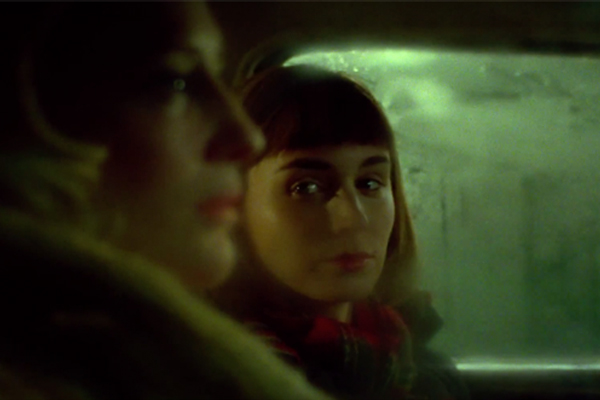
As its release approached I heard Carol described as the arthouse equivalent to Star Wars: The Force Awakens - a highly-anticipated, once a generation type deal. While that may be a little hyperbolic (even adjusting to scale, nothing can quite match the proliferation of Star Wars), it's hard to deny this isn't something very special. In Cannes it was by far the most popular movie, with every one of the press screenings jammed well before start time, and its high praise proved to be more than just excitement from the bubble of the Palais. And it is just that good. For the first time (at least since 1960's Purple Noon) the subtle underlying character motivations of Patricia Highsmith's writing has been uncompromisingly transferred to the screen, a particular achievement given that we're dealing with romance, rather than alternatively greedy or self-preserving sociopaths. Cate Blanchett and (to a crazily greater extent) Rooney Mara are excellent as repressed lesbian lovers, while Todd Haynes has the restraint to not sensationalise - prejudice plays a part, but, as best seen through Kyle Chandler's disgruntled husband, much of the societal anger comes from a pure inability to understand their love. Also, if you live in London, be sure to check out the Through A Lens: Saul Leiter And Carol photo exhibition at Somerset House - it only serves to highlight the viscerally of Edward Lachman's cinematography. Read the full review here.

4. Whiplash

I don't think I've met someone who's seen Whiplash and doesn't love it. That's not to say there's legions of people who hate the other movies on this list, but no other film has had such an overwhelming outpouring than the little indie that could. And this is a film about jazz drumming, something that if given the choice between it and an all-night Michael Bay marathon people would seriously have to think twice. While so much of the base enjoyment of the film comes from the mental sparring between J.K. Simmons and Miles Teller as teacher-cum-bully and aspirational genius respectively, with both riding above any mentor-student cliches (seriously, these are two astounding performances), much of the film's success comes down to director Damien Chazelle. It's an expertly built piece, with Chazelle gradually tuning you into the technicalities of drumming to the point where, without realising, you're on the edge of your seat for a finale that hinges entirely on complex music. His editing is exemplary (so subtle in fact that the film's win in that category at the Oscars was a genuine surprise), and throughout it

3. Love

Love is the 3D sex movie; the one that describes itself as being made with "blood, sweat and tears"; the one that halfway through, just to aghast anyone who's not fully bought into the explicit film, features a giant stereoscopic penis ejaculating over the audience. Visceral doesn't cut it. But it's all anchored with an internalised, emotional story that stops this being two-plus hours of mere titillation. Murphy discovers that his ex-girlfriend Electra has been missing for the past few months and, while assessing his new life with the girl he cheated on her with and his new son, regresses into his memories of their relationship. Which, invariably, features a lot of f*cking. That's the jumping off point for the entire movie, leading to a dissection of memory, relationships and, when you get to the nitty gritty, sex that all comes together into beautiful, surprisingly touching, breath-taking movie that defies any smutty origins. Of course, being Gaspar Noé, that it's meticulous constructed should be obvious, but, like more unsavoury lengthy elements in the rest of his oeuvre, the lengthy sex bits likewise carry extreme thematic heft (he ain't no Lars Von Trier). Their placement in the narrative highlights the underlying feelings behind them, making the film something whose biggest effect is on your heart. Masterpiece. Read the full review here.

2. Birdman

Birdman was released in the UK on 2nd January 2015. So yes, not only does it qualify for this list (it was otherwise too late to make the 2014 list), but it means we saw one of the best movies of the year when the New Year's Eve hangover was still a very real memory. Rather than speak of a lacklustre twelve months after though, all this really does is show how good Alejandro Iñárritu's dissection of ego really is. The Unexpected Virtue Of Ignorance is a triumph on almost every level. It's got an indelible script that is simultaneously feels incredibly of its time (the jumping off point for the whole thing is the current state of cinema) and regrettably timeless (its themes are grand, and the short story it's based on is over thirty years old). And also an enviable cast who all bring their all in off-kilter self-portrayals they fully invest in. And also a cinematic eye that makes for an image that is variably expansive and claustrophobic. And also the revealing one-take illusion that pushes things even more into the theatrical. There's just so much going on in this full house of a movie that it could probably win the hand with just one of its aces. It may have been a shame that it ultimately beat the marginally superior Boyhood (last year's #1) to the Best Picture Oscar, but when you're dealing with a film that is damn near flawless in just about every way, that's a minor quibble; it's the most deserving winner of the prize since The Lord Of The Rings and destined to be regarded as a classic.

Contributor
Contributor

Film Editor (2014-2016). Loves The Usual Suspects. Hates Transformers 2. Everything else lies somewhere in the middle. Once met the Chuckle Brothers.