20 Best Films Of 2015

The Force Awakens or Fury Road?
With one final massive, box office smashing movie, 2015 comes to end. And what a year it's been. Box office records have been proven as targets to be destroyed and cinema attendance is on the rise. Even with the threat of streaming and home cinema creeping in, film in its conventional form still has a place. In terms of quality, things have been a bit more mixed, a stark contrast to what we had in 2014. Many of the high-budget blockbuster releases arrived as thundering disappointments - all overblown plots and head-banging CGI - while there was little in the way of edgy pre-awards season knock-outs - no Nightcrawler or Gone Girl equivalents I'm afraid. But, despite a slew of tosh, that doesn't mean the past twelve months haven't offered up some brilliant stuff - we've just had to sift through a lot of mediocrity to find it. Here are the twenty best movies of 2015. A bit of bookkeeping. This list is based on UK release dates, so there are some films on this list that were released in 2014 in other countries and some big "2015" movies (Spotlight, Room) that have been omitted due to their late release in the British Isles (and vice versa). The list has hit later than some, primarily to ensure December releases (including a certain behemoth I'm pleased to say made the cut) could be considered for inclusion.

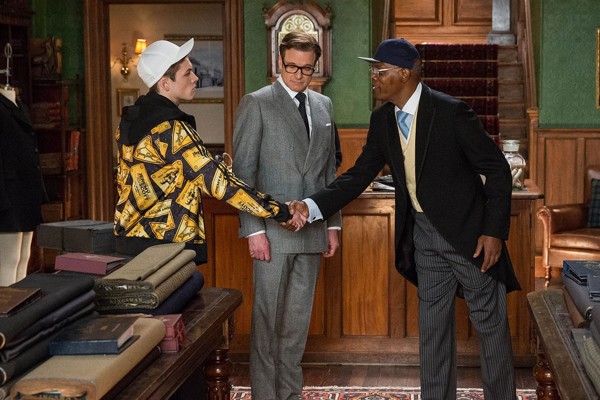
20. Kingsman: The Secret Service

It's pretty telling of the current state of action cinema that a film like Kingsman: The Secret Service can be viewed as a "surprise hit". It was directed by someone who'd already this decade made a cult superhero smash and what many deem the best in the X-Men franchise and featured a slew of bankable names. I guess that it goes to show just how uncertain an unknown property can be (and how tapped out spy movies, even of a more parodic sensibility, appear). But you should never underestimate Matthew Vaughn. Working with Mark Millar again (the pair collaborated in a similar quasi-joint-development on Kick-Ass), the film is simultaneously a hyper-kinetic action flick, a genre pastiche and genuinely engaging thriller that executes each of these elements, if anything, better than the pair's superhero equivalent. There's an escalating disregard for whatever any detractors may have to say that creates an almost childlike thrill, gawping at things that are "wrong" - a random over-the-top attack on religious fundamentalism, killing off the bankable Oscar winner, blowing up all the world leaders in a burst of colour, that anal moment (which, for the record, was perfectly pitched). Deliriously enjoyable. Read the full review here.

19. Ex Machina

Ex Machina is going to go on to be a sci-fi cult classic. Heck, it kinda already is, making waves bigger than it did upon first release by winning the BIFA for Best British Independent Film. But my point is, that with a cast including two of the stars of The Force Awakens and an actress destined for her first taste at awards hype next year (albeit not for the most deserving film), a director who's made himself a genre staple and a lean, pointed story, this is the sort of movie that will stand up in years to come and be looked back on as something pretty important. A three-way battle of wits between a near-human android, her creator and an outside party, the film is about the role of technology in modern lives and what that does to the very meaning of being human on, both a thematic and narrative level. The subtext is the text, but it never gets preachy or pretentious - it's a cerebral sci-fi in the ideas-driven vein of the '70s given a modern sheen. Alicia Vikander is the standout, her Ava presenting a facsimile of humanity that causes the audience to question her existence as much as Caleb does. This flawed Turing test is the whole point of the movie, but it's made to really work thanks to her electric, robotic performance.

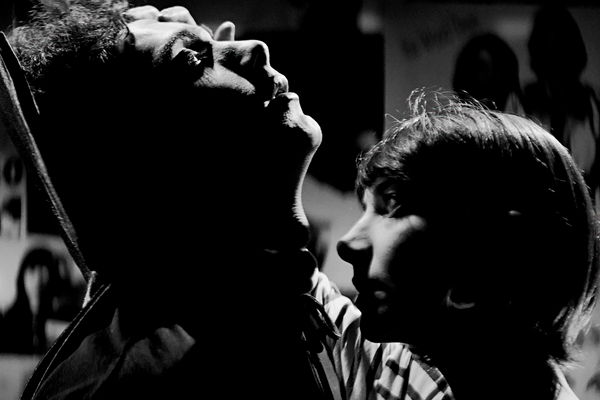
18. A Girl Walks Home Alone At Night

The reason vampire movies manage to stick around, despite the sub-genre seemingly tapped out, is because, like zombies, they're not really about what their supernatural force is at face value. All horror comes from some form of tangible, real world fear, and with changing times come changing meanings (this isn't the only reason Twilight sucked, but it certainly didn't help). So it is that A Girl Walks Home Alone At Night repositions the legendary monster to be in stark contrast to standard gender roles (particularly in Islamist countries) - the unnamed blood sucker stalks the streets of the fictitious Bad City doling out vengeance on those who wrong women (her menacing cape is even made from a hijab). There's a lot more to it than just that though - although she makes every effort to come across like it to others, there's a naivety to her, with conflict over when to kill and how to fit into normal society. This allows for one of the most unexpectedly complex love stories of the year. One night she meets Arash, who is position of a similar, if differently rooted, innocence, leading to a relationship where all traditional power positions are reversed. The pivotal scene where, to the scoring of White Lies' Death, Arash stalks up behind the girl with what would have been menacing chillness, only for her to be the one having to resist violence, is one of the most attention-grabbing scenes from this year.

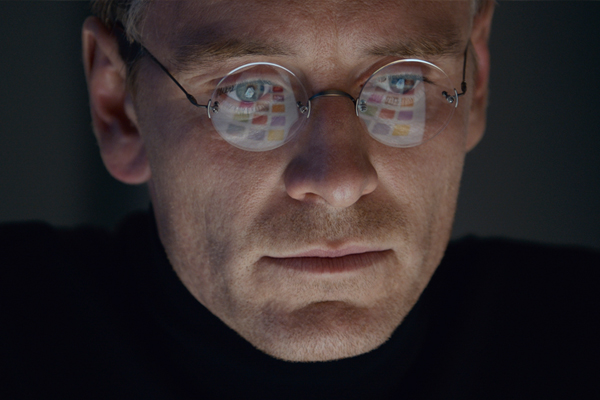
17. Steve Jobs

Urgh, do we need another Steve Jobs movie? That's what pretty much everybody seemed to be moaning as this film ambled its way through a troubled pre-production and a rather muted release. But c'mon, really? Sure, there was that Ashton Kutcher mess a few years back, but otherwise there's very little argument that the long-gestating Aaron Sorkin project was a waste of everyone's time. I'll say that again - it's an Aaron Sorkin script. And it's great, with a wicked self-awareness that accompanies the usual witty barbing. Michael Fassbender is also shockingly good - not that he was ever going to be bad, but he's just incredible as a man who believes he's God. The only real issue with the film is that it comes across very much as "An Aaron Sorkin Picture". Whereas The Social Network, which is far and away the film's nearest comparison point (it even boasted similar claims of inaccuracy), felt like a David Fincher movie, Danny Boyle's fingerprints are rather faint here; he does a great job of crafting visual sense of Sorkin's multi-threaded conversations, but at no point does it ever feel more than he's playing catch-up. But hey, he does still keep the pace, so there's that. The film was a sizeable box office bomb, no doubt a side effect of the "do we need it?" school of though. Jokes on those who sat it out, because this was brilliant. Read the full review here.

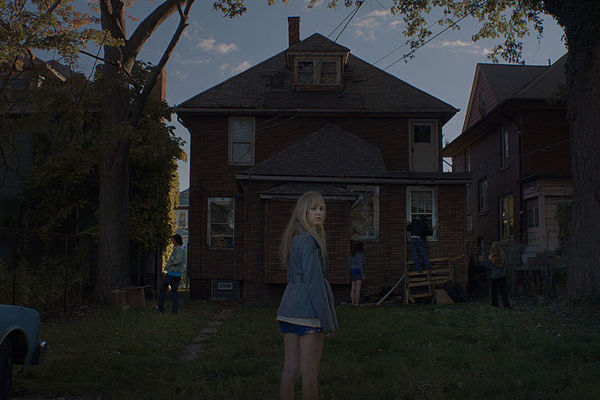
16. It Follows

Homaging a style is tricky enough, but to do so while giving a film its own unique edge is damn near impossible. Even great directors can fail here, delivering strong replicas that don't give up anything in their own right. So let's hand it to David Robert Mitchell. It Follows was deeply inspired by the revolutionary genre work of the early eighties - it features a backdrop and visual style just two blocks over from John Carpenter's Halloween and music that feels like it could have sprung from Vangelis' synthesiser - but also a unique, progressive horror film in its own right. The key genius decision, however, doesn't come from style, but from concept. The movie's monster (the titular It, which quite literally follows its victim forever) is set up as a simple STD allegory - haunting is passed on to other people through sex - but as the film progresses it becomes clear "It" is actually a metaphor for something much more universally haunting and imposing - death itself. The ultimate suggestion of acceptance through the power love is a strong one that goes up against any expectations of a more sexually inclined film. In the wake of its immensely positive reception, some have laid into the film for being an overrated - it doesn't follow its own rules fully and isn't as transgressive as those which inspired it - which smack of knee-jerk reactions to overhype; taken on its own terms it's impossible to not conclude It Follows is 2015's best horror film.

15. The Martian

It's somewhat crazy that having the guy behind seminal classics Alien and Blade Runner directing a sci-fi movie that hinges on visual splendour and high-reaching questions about humanity could sound risky, but that's just how off-the-boil Ridley Scott has been in recent years. He was always a little hit-and-miss, but when the highlight of his recent filmography is Prometheus it was clear he was a slump. So The Martian isn't just a fun, entertaining, thoughtful ride, but also an incredibly pleasant surprise. It's Scott's best film since Gladiator (and in contrast one that is likely to only get better with time), showing he's still very much the same great director he was in his youth, with the right material. Heck, there's even some strong Oscar buzz. The real ace is its humour, which lends a human side to the very dour prospect of pure loneliness (something we've seen covered to death recently care of Gravity and Interstellar) and also allows for unexpected realism - the only way to mentally survive such overwhelming odds is to keep it light. Like the scientific accuracy of the story, much of this is thanks to self-published author Andy Weir, although that the tense breaking down of botany and the gleeful playing of ABBA's Waterloo doesn't clash with the bigger science picture is all Scott. Read the full review here.

14. Slow West

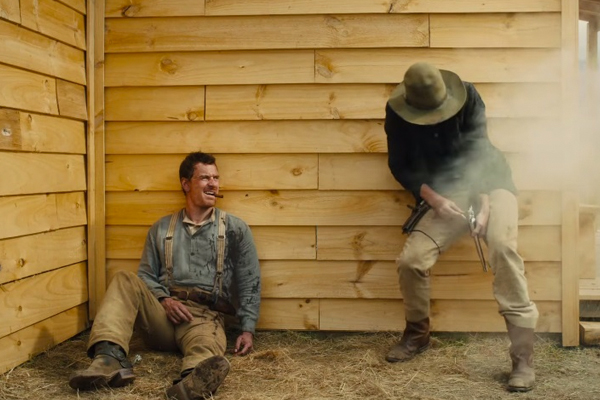
You can't bring up the western genre without commenting on how it dropped so sharply in prolificness after a Golden Age of Hollywood heydey. It's almost as much a trope now as Mexican standoffs or badasses so badass you'll never view their actor in the same way again, even if it's not totally apt. Of course, it may not be as prolific at the box office as superheroes (a genre everyone's expecting to follow a similar rise and fall), but there's not exactly being a shortage of solid wild west movies - next year's Oscar race looks to be dominated by highly classy versions from beloved auteurs (The Revenant and The Hateful Eight). Slow West isn't just the best of the recent offerings (both Iñárritu and Tarantino's films count as 2016 releases), but also one that embraces this whole shift; although in many parts looking at friendship, on a grander scale John MacLean's debut feature is about the end of the era, with Michael Fassbender's murderous bounty hunter finding his very existence suspect as the rules of the land change. The ultimate conclusion is, in a similar turn to It Follows, that love is the key - Fassbender's anti-hero is the only outlaw to make it out of the film alive, and that's only because he actually chooses to take a step into a civilised, modern society, giving up on his old ways for romance. Read the full review here.

13. Bridge Of Spies

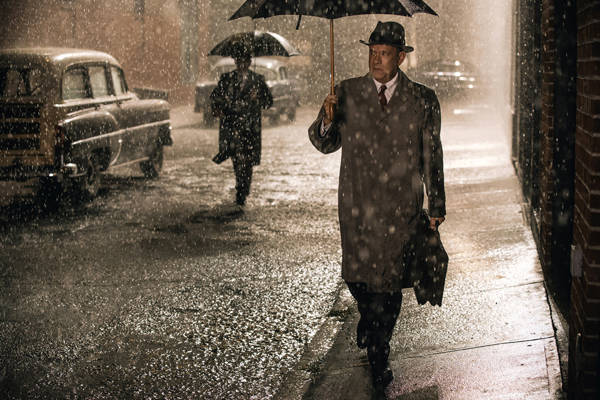
Steven Spielberg, Tom Hanks, period setting; OK, everyone knows exactly what they're getting in for, but why the complacency? The anticipation for Bridge Of Spies was oddly muted, as if two cinematic juggernauts once again working together was a passé event. Nobody was expecting a dud (Spielberg doesn't always strike gold, but he is pretty consistent), but the general critical body didn't seem to be expecting anything classic. Ha. So yeah, Bridge Of Spies is something really special. Not quite a Schindler's List or Saving Private Ryan, but a highly entertaining thriller set at the peak of the Cold War with a great sense of the time and a confidence to tell its story is a well-paced, methodical manner. Many Spielberg-isms rear their head here, but like in his best work they're all adjusted to fit his wider goal. So while everything is back-lit intensely, it's framed to build to the Cold War (in particular the newly divided Berlin) feeling like a moral purgatory, while stark edits only ramp up the contrast and parallels between Russia and America. It's this sort of naturalistic symbolism that a lesser director could have easily mishandled, but in the hands of a master it never feels forced. At points it goes overly sentimental and in the third act Tom Hanks is at his most Tom Hanksiest, but what do you expect from these guys?

12. The Theory Of Everything

While the movies that felt like Oscar bait from this awards season have turned out to be just that (The Danish Girl, Truth, although Suffragette at least had some edge to it), last year (in a release that hit in the UK in 2015) gave us something utterly unthinkable - a deeply affecting prestige picture built about a famous Brit that didn't let awe of the subject get in the way of telling a great story. The Theory Of Everything was the Steven Hawking biopic, and thus expectations hung in a very "Oh, great..." part of the spectrum. Thankfully, James Marsh didn't just rest on showing the debilitating disease or a marriage ripped apart by stress - he used this as a jumping off point to present a touching portrait of love (the everything of the title) that didn't flinch in its complications. We see the characters, neither of whom are bad people, torn apart by powers beyond their control without ever losing the ability to care for the other. It's a tricky thing to convey, but the filmmaker did it brilliantly, even brining in some very specific filmmaking tricks that could only work when looking at this great man. Eddie Redmayne and Felicity Jones were on equally top form; Redmayne may have won the Oscar, likely due to the physical edge to his performance, but Jones was just as apt in her tortured internal portrayal of love. It'll be interesting to see them go up against each other in the Winter 2016 spin-off/prequel box office battle - Redmayne in Fantastic Beasts And Where To Find Them, Jones in Star Wars: Rogue One.

Contributor
Contributor

Film Editor (2014-2016). Loves The Usual Suspects. Hates Transformers 2. Everything else lies somewhere in the middle. Once met the Chuckle Brothers.