20 Greatest Opening Lines In Movie History

11. Citizen Kane

"Rosebud." Really, what can we say about this movie that hasn't already been said a million times by hundreds of different critics eager to prove their film school cred? Citizen Kane is a cinematic masterpiece, and it should come as no surprise that it features what is not only only one of the greatest ever opening lines, but also the biggest spoiler in film history. What is rosebud? That question drives the entire film, the obsession of the media to figure out exactly what Charles Foster Kane meant by his last words. (Surprisingly enough, none of the crack journalists seem to wonder how anyone even knew what his last words were, considering that he was alone when he died.)

10. Trainspotting

"Choose life. Choose a job. Choose a career. Choose a family, Choose a f--king big television. Choose washing machines, cars, compact disc players, and electrical tin openers. Choose good health, low cholesterol and dental insurance. Choose fixed-interest mortgage repayments. Choose a starter home. Choose your friends. Choose leisure wear and matching luggage. Choose a three-piece suit on hire purchased in a range of f--king fabrics. Choose DIY and wondering who the f--k you are on a Sunday morning. Choose sittin' on that couch watching mind-numbing, spirit-crushing game shows, stuffing f--king junk food into your mouth. Choose rottin' away at the end of it all, pissing your last in a miserable home, nothing more than an embarrassment to the selfish, f--ked-up brats that you've spawned to replace yourself. Choose a future. Choose life... But why would I want to do a thing like that? I chose not to choose life. I chose somethin' else. And the reasons? There are no reasons. Who needs reasons when you've got heroin?" That's it. That's the entire movie. They may as well have just let the end credits roll after that, because nothing in the following hour and a half is going to do a better job of explaining their film than that top notch speech by Ewan McGregor at the start of his career.

9. Goodfellas

"As far back as I can remember, I always wanted to be a gangster." One of the biggest criticisms leveled at Martin Scorcese is that he has a tendency to glamorize the mob. That's a dubious assertion for most of his films, but it's definitely true of Goodfellas, and the first line of the movie speaks to that. This is a man who has romanticized the idea of being a gangster since childhood. It wasn't something he fell into, it was a career that he actively sought out, one that he stuck with even after seeing all the darker aspects of the profession, and one that he experienced pretty much no negative repercussions from.

8. Mallrats

€œOne time my cousin Walter got this cat stuck up his ass. True story. He bought it at our local mall, so the whole fiasco wound up on the news. It was embarrassing for my relatives and all, but next week, he did it again. Different cat, same results, complete with another trip to the emergency room. So, I run into him a week later in the mall and he's buying another cat. And I says to him, €˜Jesus, Walt! What are you doing? You know you're just gonna get this cat stuck up your ass too. Why don't you knock it off?€™ And he said to me, €˜Brodie, how the hell else am I supposed to get the gerbil out?€™ My cousin was a weird guy." What is this even? You know exactly what kind of movie Mallrats is going to be right from Jason Lee's bizarre, rambling opening monologue that will make you never be able to look at cats or gerbils the same way again. It almost seems to openly mock the idea of a film opening with a statement of what the film is going to be about. Mallrats' opening line does none of that -- it teaches no lessons, provides no information of value, and is almost beautiful in its sheer pointlessness. It says loud and clear that whatever you're giving to get out of Mallrats, it isn't going to be a message.

7. Rounders

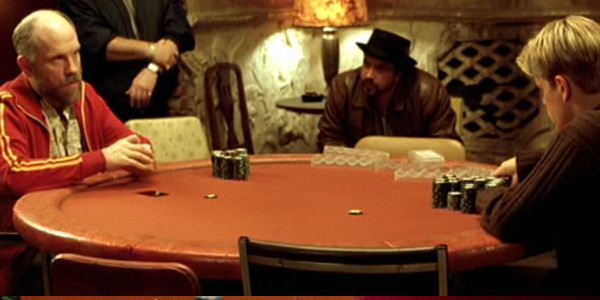
"Listen, here's the thing. If you can't spot the sucker in your first half hour at the table, then you ARE the sucker." The first lesson of Rounders, one that we learn in a matter of minutes, is that everyone is a mark. Everyone can be manipulated and taken advantage of, and if you're not willing to acknowledge that, then you're the one who is going to be walked all over. This opening immediately puts us in the head space of the characters, the sort of kill or be killed mentality they all have at the card table.

6. The Godfather

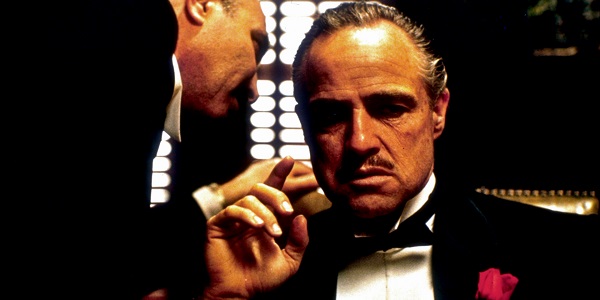
"I believe in America. America has made my fortune. And I raised my daughter in the American fashion. I gave her freedom but I taught her never to dishonor her family. She found a "boy friend," not an Italian. She went to the movies with him. She stayed out late. I didn't protest. Two months ago he took her for a drive, with another boy friend. They made her drink whiskey and then they tried to take advantage of her. She resisted. She kept her honor. So they beat her. Like an animal. When I went to the hospital her nose was broken. Her jaw was shattered, held together by wire. She couldn't even weep because of the pain. But I wept. Why did I weep? She was the light of my life. A beautiful girl. Now she will never be beautiful again." A lot of people just quote the first line of The Godfather's opening speech, but we think you need the whole thing for the full effect. In Bonasera's heartbreaking story of his daughter, we see both the promise and the inherent ugliness of the American dream. There's an implicit understanding that the ultimate goal is to get ahead, and whatever unsavory actors required are to be overlooked. Under these conditions, organized crime is able to thrive. The irony here is that the very system that failed to protect Bonasera's daughter is the same thing that, through its negligence and corruption, will allow the Godfather to avenge her.

5. Drive

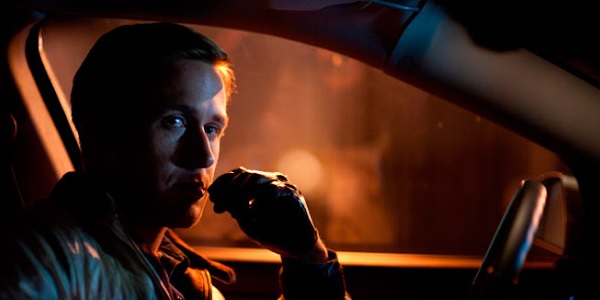
"There's a hundred-thousand streets in this city. You don't need to know the route. You give me a time and a place, I give you a five minute window. Anything happens in that five minutes and I'm yours. No matter what. Anything happens a minute either side of that and you're on your own. Do you understand?" Throughout pretty much all of Drive, the Driver is a remarkably enigmatic character. We don't even know his name, he's always just called either "Kid" or "Driver". So it's interesting to note that when it comes to his identity, this first statement lets us know more than anything else in the movie. He's a pragmatic individual, willing to take the risks involved in this line of work but remaining rigidly devoted to his own personal set of rules.

4. Patton

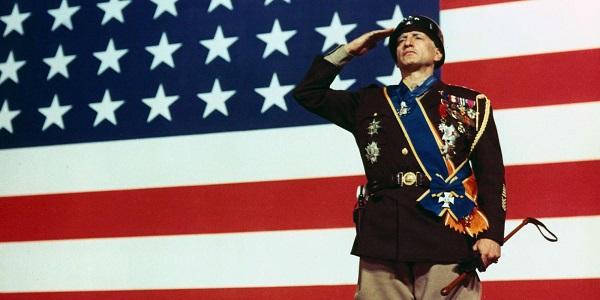
"Now I want you to remember that no bastard ever won a war by dying for his country. He won it by making the other poor dumb bastard die for his country." What's the best way to get to know Patton, one of America's most legendary generals of World War II? Listen to one of his motivational speeches to the troops. You'll immediately learn exactly what this mercurial figure was all about, and you'll be intrigued enough to watch the rest of George C. Scott's towering performance as General Patton. The speech goes on for several more minutes, an iconic piece of cinema history filmed against a star spangled backdrop, but nothing sums up his philosophy about war more succinctly than those first two sentences.

3. The Prestige

"Are you watching closely?" It's not just a question for the characters, it's a warning to the audience. You need to be paying super close attention to this film because, as is only natural for a movie about magicians, nothing is quite as it seems. The entire film is a study in pretense, filled with people who are trying to trick and deceive others. Throughout the movie, the audience gets just as caught up as the characters in trying to figure out what is real and what is just a clever illusion. Just as "Don't Panic" serves as a perfect complement to Hitchhiker's Guide to the Galaxy, "Are you watching closely?" fully encapsulates everything that The Prestige is about.

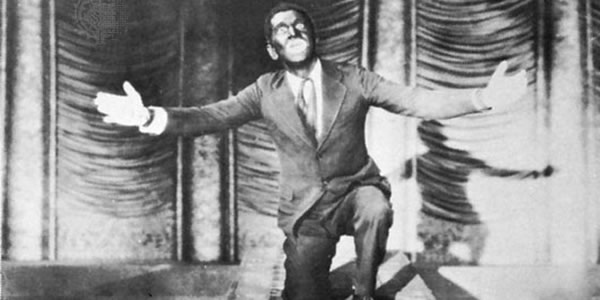
2. The Jazz Singer

"Wait a minute, wait a minute. You ain't seen nothin' yet!" The Jazz Singer has gone down in history as the first sound film, one that featured both music and spoken dialogue. When you look at film history, the two biggest innovations have been the introduction of sound and color. Color took a while to catch on, partially because of its expense and the fact that directors disliked the garish unnaturalness of Technicolor, but also because it wasn't deemed necessary to tell a story. That's why you see the majority of The Wizard of Oz in color as early as the 1930s, but films were still usually made in black and white for the next thirty years. But sound, on the other hand...sound was huge. And when audiences went to The Jazz Singer and the first thing they heard was Al Jolson's real, actual voice saying, "You ain't seen nothin' yet," well, it's hard to overstate the impact that had on the film world.

Contributor
Contributor

Audrey Fox is an ex-film student, which means that she prefers to spend her days in the dark, watching movies and pondering the director's use of diegetic sound. She currently works as an entertainment writer, joyfully rambling about all things film and television related. Add her on Twitter at @audonamission and check out her film blog at 1001moviesandbeyond.com.