20 More So-Called Happy Movie Endings That Absolutely Aren't
Was there actually any redemption at Shawshank?

It's almost instinctive for an audience to want, and typically expect, to see a happy ending to a film. Of course, there are some exceptions, but it's often the satisfying conclusion, to see the heroes ride off into the sunset with the conflict of the story fully in the rear view mirror, that cinema-goers came to see.
This is particularly true when connections have been formed with certain characters, even over such a short period of time, and for the most part, filmmakers tend to give the masses what they want in this regard.
Good usually prevails over evil, the will-they-won't-they narrative tends to end with "of course they will", and anyone trying to get home for Christmas typically does. Again, there are exceptions to this, some that are actually hidden beneath what may seem to be a happy ending on the surface, but in truth are anything but.
Maybe audiences are happy with such a finish that they don't like to look beyond the obvious, or maybe the writers themselves didn't actually think of what happens next at the time. Either way, whether facing unknown time-travelling consequences, merely delaying inevitable defeat, or even saving the day but at the cost of casualties too many to count, there are endings that can deceive you into thinking that all really does end well.
20. X-Men: Days Of Future Past
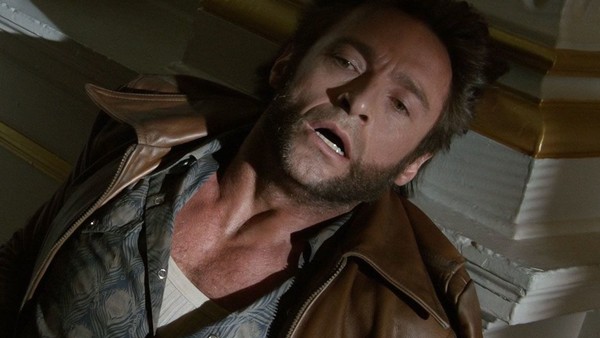
Time travelling stories can be a tricky business, as there is typically always some loophole or some aspect that doesn't quite make perfect sense. X-Men: Days of the Future Past was actually pretty tight in this regard, but there were still certain consequences that weren't truly explored.
When Professor X and Magneto (Patrick Stewart and Ian McKellen) sent Wolverine (Hugh Jackman) back in time to save the world from a terrible dystopian fate, they were successful in that when Logan returned to the present, things were much better.
This essentially retconned everything that happened in the original trilogy, and though several members of the team survived through to 2023 this time, there is no telling what other consequences there were. The theory is that even the tiniest changes in the past could cause a huge ripple effect, and in doing something as big as this, who could possibly say what else changed.
Tony Stark (Robert Downey Jr.) once said that when you mess with time, it tends to mess back, and there is absolutely no way that every single change, no matter how big or small, was for the better. There's not even a guarantee that such a future was actually stopped and not just delayed, and who knows, such meddling may have directly put the universe on the path that led to Logan's ultimate death, and the subsequent crumbling of the entire reality.
19. Jurassic World: Rebirth

Jurassic World: Rebirth was undoubtedly an improvement over the last two Chris Pratt-led efforts, but both Fallen Kingdom and Dominion were so bad that this isn't exactly saying much. The story was certainly flawed, and the final moments didn't quite wrap things up as well as it seemed.
The story revolved around a group of people heading to Île Saint-Hubert in order to extract DNA from the biggest dinosaurs left on the planet for the sake of huge medical advances. However, evil businessman Martin Krebs (Rupert Friend) would of course have likely made it far too expensive to actually help anybody, because of evil businessman reasons.
As Henry and Zora (Jonathan Bailey and Scarlett Johansson) left the island, and with Krebs in the belly of the D-Rex, they decided not to give the DNA to a heartless corporation, but to allow the entire world to share in it. A lovely idea, sure, but flawed and all but impossible.
Where would they even start? Neither were in the medical industry, and would have no idea how to actually navigate it to get the matter to the right people. How would they ascertain for sure which companies would have the same outlook as Krebs and which wouldn't? It's a huge assumption that Henry and Zora would just walk into a world they know nothing about and ask to speak to the least money-driven people available. In all likelihood, it still either ends up with another Martin Krebs or with no one at all.
18. El Camino: A Breaking Bad Movie
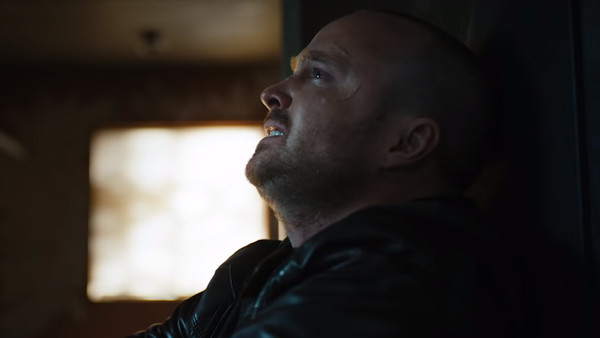
Breaking Bad is arguably one of the few TV series that ended on a perfect note, with no loose ends to speak of and an almost universally satisfied audience. There really was no need to follow up with El Camino: A Breaking Bad Movie.
The story detailed Jesse Pinkman's (Aaron Paul) journey after Walter White (Bryan Cranston) helped him escape his captivity at the hands of Jack and Todd (Michael Bowen and Jesse Plemons). However, Jesse driving off as a free man was all the ending that was needed. El Camino isn't a bad film by any stretch, but it didn't feel as if it really added anything to the overall story or the character.
Essentially, Jesse worked to build up the money needed for Ed (Robert Forster) to give him a new life and a new identity, as he previously did for Walt, but there is only so much a new name could offer him after everything he went through.
Ed told Jesse he was lucky to get the chance to start fresh, but that's not what this was. The tragic circumstances in which Jesse lost both Jane and Andrea (Kristen Ritter and Emily Rios), the years of abuse and manipulation he suffered at the hands of Mr. White and others, and the scars of being held as a captive against his will for as long as he was are things that will stay with him no matter where he lives or what he calls himself.
17. Zootopia 2
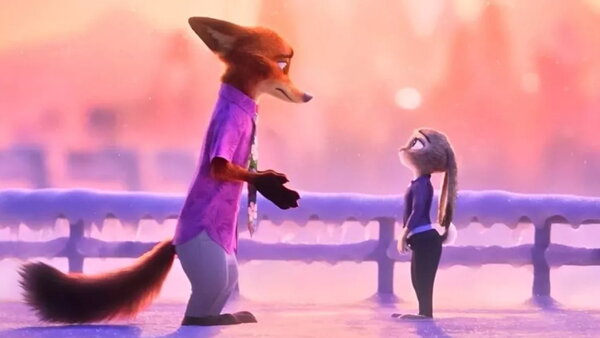
Though it may have been beaten by Ne Zha 2 at the global box office, Zootopia 2 was by far the highest-grossing western film of 2025, which is saying a lot considering its competition was the third chapter of the ridiculously lucrative Avatar story.
It was the biggest hit of the year, and saw Nick Wilde and Judy Hopps (Jason Bateman and Ginnifer Goodwin) come together again, this time as true ZPD partners, to take down the criminal Lynxley family. However, even with an official badge, Nick was still the same sly, street-smart fox he had always been.
At one point, as he and Judy got separated, Nick found himself inside a jail cell, and probably not for the first time in his life. But with the help of Nibbles Maplestick (Fortune Feimster), he was able to escape, reunite with his partner, and along, with Ke Huy Quan's Gary De'Snake, save the day.
A happy ending for both Nick and Judy as partners, and for Zootopia as a city, but not wholly. It was only briefly mentioned, but when Nick escaped jail, so did 200 other dangerous criminals, some who were bound to be a huge threat to society. This was surely worthy of more than the passing comment it got, and though the next scene showed them tracking the escaped ex-Mayor Bellweather (Jenny Slate), there were still 199 more out there, meaning Zootopia was definitely a more dangerous place than at the start of the film.
16. Materialists

As a romantic comedy boasting the kind of star power given by Dakota Johnson, Chris Evans, and Pedro Pascal, Materialists didn't exactly set the world on fire. It told the story of a love triangle, typifying the choice between love and financial security.
Lucy (Johnson) had previously dated John (Evans), but ultimately broke up with him because he couldn't give her the financial security she deemed an essential in her romantic life. Harry (Pascal) could, but she never truly loved him; he simply ticked the boxes of someone she felt should be desirable.
The film didn't exactly reinvent the wheel with its ending, as Lucy chose the poor love interest, but would this have been as happy an ending as it appeared? Since she broke up with him due to his financial restrictions, there was nothing to suggest she ever actually let go of the value she put on her partner having money, and no matter how nice the honeymoon period, it feels as though they were bound to fall into the same situation again.
Then there is the fact that the film acted as though Harry and John were Lucy's only two choices in the world. It's perfectly reasonable for neither man to completely satisfy what the materialistic Lucy wanted in a partner, and there was no need for her to settle for someone she knew couldn't make her happy. As nice as John was, he clearly wasn't the right man for her.
15. Avatar

When Avatar released back in 2009, it was nothing short of a cultural phenomenon, as it smashed its way to becoming the highest-grossing movie of all time. Though it may have taken well over a decade, sequels were always going to happen.
Not only was it widely known that James Cameron had a plan for five films, but the story ended in such a way that invited trouble coming back to Pandora, though this was disguised slightly as a happy ending for Jake (Sam Worthington) and his Na'vi tribe.
Led by Jake and Neytiri (Zoe Saldaña), the native Pandorans were able to fight back against the Sky People and defend their land, though not without first suffering huge losses, both physically and spiritually. Eventually, the humans were defeated and sent back to Earth with their tails between their legs. The Na'vi had won, right?
Except they weren't exactly sent home with any kind of deterrent to stop them from coming back. All the humans were ever going to do was regroup and return harder than before, something that was ultimately proved true in Avatar: The Way of Water and Fire and Ash, as the humans' occupation of Pandora was stronger than ever before.
14. Passengers

Movie characters die all the time, whether you're watching an action, horror, thriller, superhero, or even comedy film. There have naturally been countless different ways people have lost their lives on the big screen, but few in such a unique way as Jennifer Lawrence's Aurora in Passengers.
On a 120-year trip across space, Jim (Chris Pratt) found himself awake and alone after his cryo tube failed, leaving him with no choice but to face the rest of his life in such a way. That is, until he purposefully awoke Aurora and condemned her to live her entire life with him on the ship, with no way of changing it.
Yes, Jim was put into a horrific position, but stealing Aurora's entire life away from her essentially because he liked the way she looked was heinous. When she finally found the truth, that her pod didn't malfunction and that Jim deliberately pulled her out of her sleep early, that should have been it.
She may not have had anywhere to go, but the ship was big enough that Aurora didn't need to see or speak to him ever again. Instead, she fell in love with Jim and lived to old age with him. A happy ending? Not really, when you consider the possibilities and the life she had in front of her before having it ripped away.
13. Monsters Inc.

Anyone who has watched a Pixar film or two will know that they are not all smiles and sunshine. There are some truly harrowing, emotionally traumatic moments throughout the likes of Toy Story, Up, Finding Nemo, Coco, and more, but generally, at least the stories tend to end on a happy note.
That may seem to be the case with Monsters Inc., as Mike and Sully (Billy Crystal and John Goodman) discovered the power of laughter as an alternate and more potent energy source to screams, but there was far more of a fallout to such a change than was shown.
Imagine completely flipping such a huge and vital industry to Monstropolis on its head like that. Monsters who had been scarers all their lives would simply not be able to make it as comedians, and would in all likelihood wind up unemployed. The same could be said for any of the students going through Monsters U. with a view to being a scarer.
The latter was actually explored in Monsters at Work on Disney+, which showed Tylor (Ben Feldman) struggling with transitioning to comedy after leading his class as the best scarer since James P. Sullivan. Teething problems and dangerous power outages, as well as widespread unemployment and wasted education as a result of the big Monsters Inc. change, would mean the world would arguably have been thrown into more turmoil than before.
12. The Usual Suspects

This entry is something of an oddity on this list, as it focuses on a happy ending for the villain of the film. Kevin Spacey may well have played the protagonist, in that the story was centered around him, but he was unequivocally the villain in The Usual Suspects.
The debate can be had over whether Keyser Söze truly ever existed, but Verbal Kint spun such a story to the police using the character, as well as some of the things he saw in the background, that he got away scot-free.
The moment where the camera focused on Kint's limp as it melted away into a normal walk is iconic, and signified that he had been lying the entire time. He was the almost mythical crime lord who operated from within the shadows, and just perfectly convinced the police that the man they were looking for was someone else entirely.
However, what also happened at the end is that Agent Dave Kujan (Chazz Palminteri) put everything together, only just as Kint left the station. So Spacey's character wasn't exactly walking to freedom, was he? Kujan then knew who and what Kint was, and it was surely only a matter of time before he was caught out and put behind bars.
11. Rollerball

Within the subgenre that is dystopian futures heavily influenced by televised games, there are different ways the story can go. 1987's The Running Man saw Arnie's Ben Richards bring down the titular reality show, while in The Hunger Games, Katniss Everdeen did the same, but used it as a spark to revolt against the entire regime of oppression across the country.
Rollerball was different. There wasn't much in the way of world-building presented in Norman Jewison's 1975 effort, nor were there any real rules to the game explained, but Rollerball was used as a way of portraying the futility of individualism on the biggest stage of all.
Jonathan E's (James Caan) popularity as a player threatened the dominant position of the energy corporations who ran the country, and when they couldn't persuade him to retire, they changed the rules to try to get him killed on the field of play. Again, this was to no avail.
The final scenes showed Jonathan celebrating victory in the final game of the season, but what did he expect to happen next? The win didn't change the way the government operated, and it likely only pushed them to harsher and more certain ways of getting him removed from the picture. He may have stood by his principles, but they almost certainly got him killed.
10. 1917

As far as war movies go, there are few that force their audience to immerse themselves in the story quite like 1917. This is a result of it being designed to look like two continuous shots in real time, as Lance Corporals Blake and Schofield (Dean-Charles Chapman and George MacKay) crossed German-occupied territory to save an entire regimen of British soldiers.
The company in question was the 2nd Devons, who were stationed in Northern France and had been given false information that would see them walk straight into a trap. A massacre of 1,600 men.
Blake and Schofield headed out to stop the slaughter with a crucial message, and though Blake died along the way, Schofield reached Colonel Mackenzie (Benedict Cumberbatch) and got the attack called off. The lives of hundreds of men were saved, thanks to Schofield's heroism and the sacrifice of Blake.
However, Schofield didn't get there until after the first wave of the 2nd Devons were sent over the top to their unnecessary deaths. The story also raises questions about the British Army's communication, about their strategy, and how they could become so easily and simply misled by the enemy. Even Mackenzie conceded that ultimately the events changed nothing, as new orders to attack would likely come within the week, with the end of the war coming only with the last man standing. Schofield may have brought those men as little as seven more days of breathing.
9. Avengers: Endgame

As it acted as the final chapter for over a decade of storytelling involving dozens of characters, there were plenty of endings throughout Avengers: Endgame. Most of these were done incredibly well; however, there were some more questionable decisions made.
Plenty can be said for Steve Rogers (Chris Evans) living a lie in the past, and all the issues coming from 3.5 billion people reappearing after five years which were addressed by the likes of Falcon and the Winter Soldier, Hawkeye, and both Spider-Man: Far From Home, and No Way Home, but arguably the time travel aspect itself caused more issues.
Bruce Banner (Mark Ruffalo) made it very clear that, no matter what, the Avengers could not change the past. It was impossible. Instead, they could essentially create a new branch of reality away from their own, and though his idea of returning the Infinity Stones to where they were taken was his get-out clause, this in itself would have been changing the past, which, as established, was impossible.
The time travel rules laid out in Endgame were confusing and messy, but where the Avengers ultimately arrived at is a new branch of reality where they defeated Thanos (Josh Brolin), leaving behind their old reality to suffer and crumble without the stability of the stones.
8. The Jungle Book

When Disney Animation adapted Rudyard Kipling's The Jungle Book into the iconic classic we all know and love, creative license was taken to aim the film more at children. It certainly isn't as dark as the source material could have allowed it to be.
Having said that, though it may seem a far happier story, there is still one largely distressing aspect that is hidden quite well, in that it is what would unequivocally have happened after the credits began to roll.
After Mowgli (Bruce Reitherman), the man-cub raised in the jungle by a combination of wolves, a panther, and a bear, escaped the clutches of the evil tiger, Shere Khan (George Sanders), he finally took his place back in the human village. A decision that was largely taken because he liked the look of one of the girls from the village, but in theory, it was where he belonged.
However, living in the jungle was literally all the young boy had ever known, and any acclimatisation to a human settlement would be next to impossible, filled with struggles and persecution, and likely a longing to return to the home he had known since his birth. Jon Favreau's 2016 live-action version of the story is far darker for the most part, but, with Mowgli (Neel Sethi) choosing to stay in the jungle, it ironically has a happier ending.
7. Happy Death Day

Some of the films on this list have presented an ending as an absolute win when, in reality, it is merely a delaying of the inevitable, at best. This is truer for none more so than Happy Death Day.
The unique and fun horror movie saw Tree Gelbman (Jessica Rothe) stuck in a time loop with her own killer. At the moment of her death, she woke up to relive the same day again and again and again, eventually using the curse to figure out who murdered her and stop it from happening again. Then, finally, she was able to continue to live a normal life.
However, while the end of the movie was certainly a win for Tree, as she didn't die on that day, there was nothing to suggest that she ever actually escaped the time loop. Yes, she avoided dying on that specific day, but there will come a day when she does pass, and what will happen then?
The sequel confirmed that her murder had nothing to do with why she was stuck in a time loop, so, by the end of the film, she was still technically stuck; it just wouldn't reset until she died again. Even if she lived a long, full, and rich life, she was bound to die and wake up on that fateful 18th September again.
6. The Shawshank Redemption

Widely regarded as one of the finest films of all time, and certainly one of the most popular, The Shawshank Redemption fittingly has an iconic and memorable ending. Andy and Red (Tim Robbins and Morgan Freeman) reuniting outside of Shawshank is cinematic bliss, and a fantastic conclusion to the story.
Fantastic, but not necessarily as happy as it first seemed. The two grew close for the 19 years they shared the inside of the prison walls together after Andy Dufresne was wrongly incriminated for the murder of his wife. So yes, seeing them together on the outside is better than them being on the inside, but it's not quite that straightforward.
While Red was officially released from Shawshank, Andy escaped along with the means to blow the lid on Warden Norton's (Bob Gunton) illegal activity, as well as getting a pretty penny for himself. But after Red violated his parole to meet Andy in Zihuatanejo, the two would have been highly wanted men.
On the run from the law, they would always be looking over their shoulders, waiting to be caught, but even outside of that, there is the misleading title of the film. There was no redemption for Andy. He was never proven innocent, he was still believed to be a killer, and he lost 19 years of his life to the false accusations that he will never get back.
5. The Purge

It may have eventually become oversaturated by multiple sequels, all declining in quality, but that first Purge film from 2013 was incredibly unsettling. Not only did it feel close enough to reality that it could potentially happen in the future, but there is something about losing all security in your own home that is utterly unthinkable.
The initial story focused on one wealthy family, and how they navigated the daughter's rebellious boyfriend, jealous neighbours, and a group of purgers trying to get inside to the homeless man they were protecting.
Things ultimately boiled down to Mary Sandin (Lena Heady) and her neighbours sitting at the dining table, waiting until the horn that signified the end of the Purge. Mary and her children had survived the night, and their would-be killers were sent home with their tails between their legs.
However, ultimately, their survival in this world isn't particularly cause for celebration. This would ignore the fact that the Purge is an annual thing, and the Sandin household would arguably be even more of a target than ever before. Not only because their small community would hate Mary even more than before, and because they played their hand already, but also because the Sandin security systems were shown to be completely flawed, making them vulnerable. Did they seriously expect not to have everything thrown at them the next year, and the year after, until they were eventually killed?
4. Scream

In a time when slashers were about as formulaic and predictable as could be, Wes Craven brought Scream to life, which not only subverted such expectations but played on them and made fun of them, spawning one of the most successful horror franchises of all time.
The reveal that Billy Loomis and Stu Macher (Skeet Ulrich and Matthew Lillard) were working together in order to kill Neve Campbell's Sidney Prescott was genius, and made for one hell of an ending. Though Sidney ultimately survived and won the day, her role in the franchise was far from over.
You could say the same about pretty much any slasher flick, but let's focus in on Sidney herself. No matter how many times she escaped with her life, she was consistently hunted down again, and even when the killer didn't actually target her in 2022's Scream, she still managed to find herself in the middle of the situation with her life at risk.
And it's not just her own life. Sid's trauma naturally greatly affected her, but also how she raised her children, with Tatum (Isabel May) being drawn into the horror as well in Scream 7. No matter how many times a final girl can survive, there will always be the trauma to deal with, the upsetting number of deceased friends and family members, and the effect on their lives that really means no movie ending could ever truly be happy for them.
3. Guardians Of The Galaxy

While Guardians of the Galaxy is one of the most fun entries in the entire MCU, it also gets pretty dark. The tone was set early with a young Peter Quill (Wyatt Oleff) having to see his mother's cancer finally beat her, with the film then book-ended by some of the most harrowing scenes in franchise history.
In fairness, James Gunn did a decent job of hiding much of these scenes and their aftermath, but there can be no denying they happened. The Guardians of the Galaxy formed, and Xandar was saved, but at what cost?
Through Captain America: Civil War, Thunderbolt Ross (William Hurt) scolded the Avengers for the civilian losses in New York, Washington, D.C., Sokovia, and Lagos, which totaled 74, 23, 177, and 26, respectively. The death toll in the fight between the Guardians and Ronan (Lee Pace) above and on Xandar, however, was over 83,000, which eclipsed the Avengers' figure over 275 times, and is reportedly the highest on-screen death count in the history of cinema.
The only real reference made back to the planet following this movie was when it was destroyed by Thanos at the beginning of Avengers: Infinity War, but even the years in between would have been full of pain and loss, with society likely never truly being able to get back on its feet.
2. Whiplash

You'd be forgiven for thinking that when a story about a character's desperate struggle for greatness ends with their success, it would be a happy one. For the most part, that would be true, but Whiplash goes far deeper than just Andrew's passion for drumming.
Yes, Miles Teller's character was at the center of the narrative as the protagonist, but the film is all about Terence Fletcher, played by J.K. Simmons, as one of the most detested cinematic characters in recent memory. His abusive methods, both physical and mental, had driven one student to suicide before attacking Andrew in a similar way.
The target was for his protégé to become great, and for him to feel some vicarious success through him. Upon receiving Fletcher's approval at the very end of the film, Andrew essentially got everything he ever wanted. His greatness was confirmed.
However, it's not always about the destination as much as the journey, and Fletcher's horrific methods were abhorrent. And yet, in Andrew still trying to impress him after everything, and in becoming as good as he did, such tactics and abuses of power were validated, meaning that Fletcher would surely go on to treat more young musicians in the same way, to and past breaking point.
Be aware, the next entry contains major spoilers for Project Hail Mary...
1. Project Hail Mary
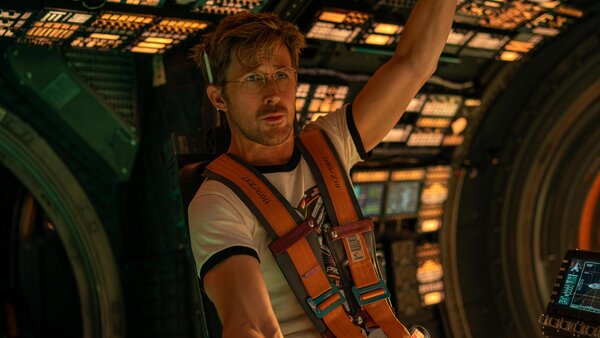
Ten years after The Martian came another adaptation of an Andy Weir novel, and you could absolutely argue that Project Hail Mary is every bit as good, if not better, than its Oscar-nominated predecessor.
The film had a career-best effort from Ryan Gosling, it made you laugh and cry in equal measure, and it was incredibly life-affirming. But was the ending as happy for Ryland Grace (Gosling) as it would first seem? Grace and Rocky (James Ortiz) ultimately found out how to save the sun, but lacking the fuel to return to Earth, Grace sent the information back and began a new life on Erid with Rocky.
Yes, Grace was doing what he loved, teaching young minds, and yes, he saved the world, but there was no way for him to actually know that. How could Grace ever be certain that the information found its way home, and even if it did, that Earth scientists could replicate what he and Rocky did on the Hail Mary?
The short answer is he couldn't. He may have seemed okay, but as he said earlier in the film, being at peace with something is just what you say, not actually how you feel. How long until that uncertainty over the fate of the entire human race, and in particular those he came to call friends, began to eat at him?